Best Neighborhoods in Madrid for Expats: Malasaña, Chueca, Salamanca, and More
Last updated: May 15, 2026
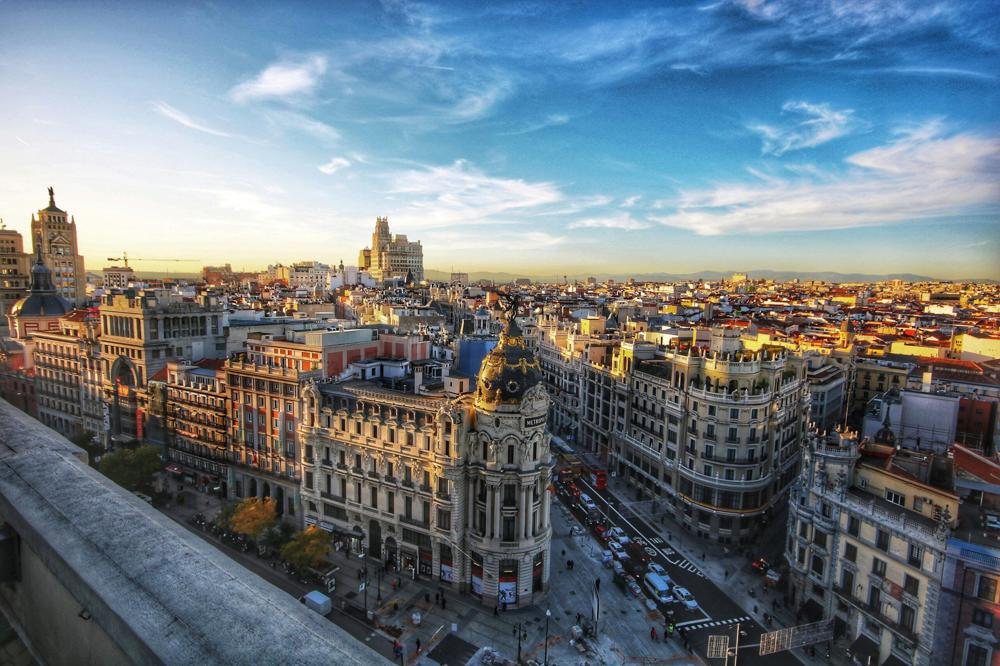
Madrid has 21 districts and 131 neighborhoods, and where you land changes almost everything about your day-to-day life: your rent, your commute, your social circle, even how easy it is to register at the town hall. This guide breaks down the neighborhoods that work best for foreign residents in 2026, with current rents, transport costs, and the practical paperwork you'll face after you sign a lease.
Last updated: May 15, 2026
- Madrid for Expats in 2026: The Big Picture
- Salamanca: The Polished Choice
- Chamberí: Quiet, Central, and Increasingly Popular with Expats
- Malasaña: Creative, Loud, and Walkable
- Chueca: Lively, Central, Inclusive
- La Latina and Lavapiés: Old Madrid, Mixed Budgets
- Retiro and Chamartín: Family-Friendly
- Tetuán: Best Value Within the M-30
- Carabanchel, Puente de Vallecas, Villaverde: Affordable Madrid
- Transport Costs and the Low Emission Zone
- Paperwork: What You'll Deal With After Choosing a Neighborhood
- Common Pitfalls When Choosing a Neighborhood
Madrid for Expats in 2026: The Big Picture
Madrid municipality has 3,422,416 residents per the November 2024 INE census, and roughly 19% of them are foreign nationals. The city is dense, walkable, and well-connected by Metro, which means choosing a neighborhood is less about commute time and more about lifestyle, budget, and noise tolerance.
A few citywide numbers to anchor your search:
- Average asking rent in May 2026: €1,800/month (up 2.9% year-on-year).
- Average sale price: €475,000, or about €5,588/m².
- HousingAnywhere 2026 averages: private room €625, studio €1,199, full apartment €1,695.
- Citywide rent per m²: around €23, ranging from €16/m² in Villaverde to €28/m² in Salamanca.
- The IRAV index caps annual rent increases on existing contracts at 2.14% in 2026.
Madrid has not been declared a stressed zone citywide, so the deeper rent caps you may have read about for Catalonia don't apply broadly here. Short-term rental supply has tripled since 2023, which has tightened the long-term market, especially in the center.
Salamanca: The Polished Choice
Salamanca is Madrid's premium district, home to the "Golden Mile" of luxury retail along Calle Serrano. It's also the safest district in the city, with about 25 reported incidents per 1,000 residents in 2025 police data.
Who it suits: families, executives on relocation packages, retirees on the Non-Lucrative Visa, and anyone who prioritizes order and security over nightlife.
The numbers:
- Rent: around €28/m² (the city's highest).
- Sale price: €9,000–11,000/m², with some streets above €11,500/m².
- Population: 149,778; nearly 30% foreign-born, up from 18% in 2015.
- About 21,740 South American residents live in the district, giving parts of it a distinctly Latin American character despite the upscale reputation.
Metro lines 4, 5, 6, 7, and 9 cross the district. Retiro Park is the western boundary, which is a serious quality-of-life perk.
Watch-outs: limited nightlife by Madrid standards, expensive groceries, and parking is brutal. The whole district sits inside Madrid's Low Emission Zone (ZBE), so non-compliant vehicles face a €200 fine (€100 if paid within 20 days).
Chamberí: Quiet, Central, and Increasingly Popular with Expats
Chamberí sits just north of the city center and has become the go-to choice for foreign professionals who want central living without the chaos of Sol or Gran Vía. It has 141,984 residents and a leafy, residential feel, especially around the Plaza de Olavide and Calle Ponzano (Madrid's tapas street).
- Rent: around €26/m².
- Sale price: €7,800–9,600/m².
- Crime rate: around 30 per 1,000 residents (among the lowest in the city).
Metro coverage is strong (lines 1, 2, 4, 5, 6, 7, 10), and you can walk to the center in 15–20 minutes. Chamberí is a strong pick if you want long-term roots and don't mind paying for them.
Malasaña: Creative, Loud, and Walkable
Malasaña, part of the Centro district, is the city's countercultural heart. Independent boutiques, third-wave coffee, vintage shops, and a heavy concentration of bars make it the default landing pad for creatives, freelancers, and younger Digital Nomad Visa holders.
- Centro district rent: around €27/m².
- Sale price (Centro): €6,500–8,500/m² depending on the street.
- Centro district population: 145,411.
Metro Tribunal, Bilbao, and Noviciado serve the area. Almost everything you need is walkable, including coworking spaces.
Watch-outs: nightlife noise is real and ongoing, especially Thursday through Sunday. Apartments tend to be older, smaller, and split across multiple staircases without elevators. Centro also sits inside the strictest ZBEDEP (Distrito Centro), where only DGT label 0 and ECO vehicles have unrestricted access in 2026.
Chueca: Lively, Central, Inclusive
Chueca, also inside Centro, is Madrid's historic LGBTQ+ neighborhood and the social hub for many foreign residents. It's smaller and slightly more polished than Malasaña, with better restaurants and more design-forward apartments.
Pricing tracks Centro averages (around €27/m² for rent), but Chueca's most-sought streets push higher. Metro Chueca (line 5) and Gran Vía (lines 1 and 5) serve the area. Like Malasaña, it suffers from short-term rental pressure, so long-term leases move fast.
If you want walking-distance access to nightlife, gyms, and English-speaking medical clinics, Chueca delivers.
La Latina and Lavapiés: Old Madrid, Mixed Budgets
La Latina is the classic Sunday-vermouth neighborhood, with Plaza de la Cebada and the El Rastro flea market. Lavapiés, just east, is one of the most multicultural pockets in Spain, with strong South Asian, North African, and Latin American communities.
- Both sit within Centro (rent ~€27/m²), but Lavapiés is usually 10–15% cheaper than La Latina or Chueca.
- Heavy short-term rental pressure; supply is thin.
- Lavapiés has more affordable food and a faster cultural mix; La Latina has more weekend tourism.
Metro Tirso de Molina, La Latina, Lavapiés, and Embajadores cover the zone.
Retiro and Chamartín: Family-Friendly
Retiro (119,757 residents) wraps around the eastern side of the park and is one of the calmest central districts. Chamartín (148,111 residents), further north, is a business-and-family hub with wide streets, decent schools, and easy access to the high-speed train station.
- Retiro crime rate: about 30 per 1,000, similar to Chamberí.
- Both districts run €5,500–8,000/m² to buy and €18–24/m² to rent depending on the sub-neighborhood.
- Chamartín hosts several international schools and the head offices of many multinationals.
If you have kids, a hybrid job, or you simply want quiet, these are the safer bets than the central districts.
Tetuán: Best Value Within the M-30
Tetuán sits just north of Chamberí, has 166,211 residents, and a 22% foreign population. It's one of the few centrally located districts where rent is still reasonable.
- Rent: €10–16/m².
- Sale price: €3,500–5,000/m².
- Strong Metro coverage on lines 1, 6, 7, 9, and 10.
The northern half (Bravo Murillo, Cuatro Caminos) is the most popular for newcomers. The southern half can be more uneven block-to-block; visit before signing.
Carabanchel, Puente de Vallecas, Villaverde: Affordable Madrid
If budget is the top constraint, look south. Carabanchel (274,406 residents, Madrid's largest district) has gained an arts-scene reputation and is steadily attracting expats priced out of the center. Puente de Vallecas and Villaverde sit at the bottom of the price ladder.
- Villaverde rent: ~€16/m²; sale ~€2,500–3,000/m².
- Puente de Vallecas sale: €2,800–3,400/m².
- Carabanchel: €3,000–4,200/m² to buy; rents typically €13–17/m².
Commutes to the center are 25–40 minutes by Metro. These districts are where the Spanish government's January 2026 "Operation Campamento" plan to build 10,700 affordable public homes through the new "Casa 47" entity will eventually have impact.
For a deeper price breakdown across these districts, see this cost of living in Madrid neighborhoods guide.
Transport Costs and the Low Emission Zone
Madrid froze public transport prices through December 31, 2026. The 2026 Abono Normal (ages 26–64) monthly pass:
Zone | Monthly price |
|---|---|
Zona A (city) | €32.70 |
B1 | €38.20 |
B2 | €43.20 |
B3 / C1 / C2 | €49.20 |
The Abono Joven (ages 15–25) is €10/month for unlimited regional travel. A 10-trip Metrobús ticket is €7.30. Travel is free for children up to age 7 and for residents over 65.
Driving in Madrid is harder every year. Under Ordinance 2/2026 (in force April 7, 2026), only label-A vehicles registered in Madrid's local tax (IVTM) can still circulate until December 31, 2026. Inside Distrito Centro and Plaza Elíptica (ZBEDEPs), only DGT label 0 and ECO cars have unrestricted access. Most expats skip car ownership entirely.
Paperwork: What You'll Deal With After Choosing a Neighborhood
Once you sign a lease, the bureaucratic clock starts. Key steps and 2026 fees:
- NIE (foreigner identification number): €9.84 application + €12 Form 790. Required before almost anything else.
- TIE (residence card): €16.32 initial fee; must be applied for within 30 days of entering Spain on a long-term visa. Collection typically takes 30–45 days after fingerprinting.
- Empadronamiento (padrón): free, mandatory if you live in Spain more than 6 months. Book at sede.madrid.es or call 010 (or 914 800 010 from outside Madrid). The certificate is valid 3 months. Non-EU residents must renew every 2 years or face automatic cancellation (baja por caducidad).
- EU citizen registration certificate: €12.
- Long-term residency TIE renewal: €21.87.
- Spanish citizenship application: €104.05.
If you're applying for a Digital Nomad Visa, the 2026 income threshold is €2,849/month (200% of the SMI, retroactive to January 1, 2026), plus €1,069/month for a spouse and €357/month per additional dependent. Applying from inside Spain gives a 3-year permit; from a consulate abroad, a 1-year visa. Official processing runs 10–45 days. Details in our Spain Digital Nomad Visa requirements walkthrough.
If you have passive income instead of remote work, the Spain Non-Lucrative Visa for expats is the alternative route.
One tax note worth confirming with a gestor: the Beckham Law gives a 24% flat rate on Spanish-source employment income up to €600,000 (47% above), for the year of arrival plus 5 years. You must file Modelo 149 within 6 months of registering with Spanish Social Security, and you can't have been a Spanish tax resident in the prior 5 years.
Common Pitfalls When Choosing a Neighborhood
- Signing without seeing the building at night. Sound travels in Madrid's older buildings. A quiet Calle Pez at 11 a.m. is a different street at 1 a.m.
- Assuming all of "Centro" is the same. Sol, Malasaña, Chueca, Lavapiés, La Latina, and Las Letras have radically different vibes and price points.
- Underestimating the ZBE. If you bring a foreign-plated car, check DGT labels before you commit. A €200 fine per camera trigger adds up.
- Paying agency fees you don't owe. Under Spain's Housing Law (Law 12/2023), landlords pay real estate agency fees for long-term residential leases. Walk away from any agency demanding fees from the tenant.
- Skipping the padrón. Without it, you can't enroll kids in public school, get a public health card, or renew most residence documents.
- Relying on short-term listings. The supply has tripled since 2023 and the government announced new restrictions on January 12, 2026. Long-term leases (contrato de arrendamiento de vivienda habitual) give you far more legal protection.
FAQs
Which Madrid neighborhood is best for a single professional in their 30s?
Chamberí for quiet and central living, Malasaña or Chueca for nightlife and walkability, Salamanca if budget isn't a constraint and you value safety above all.
Where should families with kids look?
Retiro, Chamartín, and the calmer parts of Salamanca and Chamberí. Chamartín in particular has several international schools.
What's the cheapest safe option close to the center?
Tetuán (especially Cuatro Caminos and Bravo Murillo) and northern Carabanchel offer the best price-to-location ratio in 2026.
Do I need a car?
No. Madrid's Metro covers the entire city, the 2026 monthly pass is €32.70 for Zona A, and the ZBE makes car ownership impractical in the central districts.
How long does it take to get fully set up as a resident?
Plan on 2–3 months from arrival: TIE appointment within 30 days, fingerprinting and card collection over the following 30–45 days, padrón within the first week of having a lease, and a local bank account in parallel.
If you're moving to Madrid, the easier you can follow Spanish news, leases, and conversations with your portera, the smoother the first year goes. Migaku is built to learn Spanish from the shows, YouTube channels, and articles you'd be watching anyway, so try Migaku once you've got a neighborhood shortlisted.