Best Neighborhoods in Seoul for Foreigners to Live In
Last updated: May 27, 2026
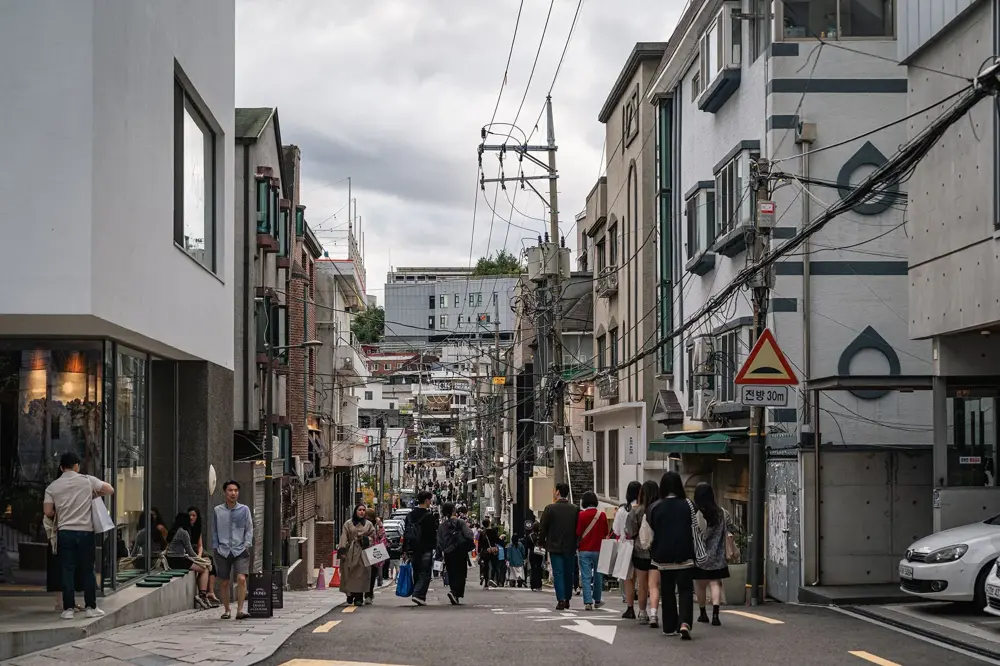
Seoul's best neighborhoods for foreigners depend on your budget, visa type, and whether you prioritize an international community, school access, or commute. For most newcomers, the strongest options are Yongsan-gu (Itaewon, Hannam-dong), Mapo-gu (Hongdae, Yeonnam-dong), Gangnam-gu and Seocho-gu, Seongbuk-dong, and Yeongdeungpo-gu, each with very different rents and atmospheres.
Last updated: May 27, 2026
- How to Choose a Seoul Neighborhood as a Foreigner
- Yongsan-gu: Itaewon and Hannam-dong
- Mapo-gu: Hongdae, Yeonnam-dong, Yeonhui-dong
- Gangnam-gu and Seocho-gu
- Seongbuk-dong and Pyeongchang-dong
- Yeongdeungpo-gu and Yongsan's Ichon: Working Families on a Budget
- Affordable Districts: Guro, Geumcheon, Nowon
- Rent, Deposits, and Lease Types You'll Encounter
- Visa, Registration, and Insurance Essentials
- Transport: How Your Neighborhood Connects
- Schools: Where Families Should Look
- Common Pitfalls When Choosing a Neighborhood
How to Choose a Seoul Neighborhood as a Foreigner
Before looking at specific districts, narrow the field with a few practical filters. Seoul is large (25 gu, or districts), and a wrong choice can mean a two-hour daily commute or a lease you struggle to break.
Things to weigh before you sign anything:
- Commute: Identify your office, school, or campus station first, then look at neighborhoods within 30–40 minutes by subway. Seoul's metro is the practical backbone of daily life.
- Visa and immigration office: Your gu determines which immigration office handles your Residence Card. The main Seoul Immigration Office (Omokgyo Station) covers Yongsan-gu, Seocho-gu, Songpa-gu and others; the Sejongno Branch covers Jongno-gu, Jung-gu, and Nowon-gu; the Seoul Southern Immigration Office covers Mapo-gu, Gangseo-gu, and Yeongdeungpo-gu.
- Lease type: Over 55% of new Seoul leases in 2026 are monthly rent (wolse) rather than jeonse (large lump-sum deposit), partly because of high interest rates and ongoing Jeonse-Sagi (deposit fraud) cases.
- Schools: If you have children, school location often drives the neighborhood choice more than anything else. International schools cluster in Gangnam, Seongbuk-dong, Yongsan, and Pangyo (just outside Seoul).
- Language environment: Itaewon, Hannam-dong, and parts of Gangnam have the highest density of English-speaking landlords, agents, and services. Outside those zones, expect to work in Korean or bring a translator.
Keep in mind that as of March 2026, the average monthly rent for a standard Seoul apartment passed ₩1,500,000 for the first time. Budget realistically.
Yongsan-gu: Itaewon and Hannam-dong
Yongsan-gu is the historic center of foreign life in Seoul. It sits in the middle of the city, just north of the Han River, and includes Itaewon, Hannam-dong, Hangangjin, and Ichon (which has a long-established Japanese community).
Who it suits: Embassy staff, executives, journalists, families wanting an international community, and anyone who wants to function in English from day one.
Atmosphere: Hannam-dong has quiet hillside villas, designer boutiques, and the Leeum Museum. Itaewon is denser, louder, and more nightlife-driven, with halal restaurants, mosques, and a long-standing Middle Eastern and African presence. Ichon feels suburban and is popular with Japanese families.
Rents (2026):
Type | Typical monthly rent | Notes |
|---|---|---|
Studio (one-room) in Yongsan | ~₩1,020,000 | ~141% of Seoul mean; typical deposit ₩10,000,000 |
Decent villa in Hannam-dong | ~₩1,350,000 | Wolse; higher deposits common |
Jeonse (Yongsan average) | ~₩237,000,000 deposit | Slightly above the citywide average of ₩218,000,000 |
Downsides: Premium prices, limited parking, and steep hills in Hannam-dong. Itaewon nightlife noise on weekends is real.
If you'll be eating out often, the Halal Food in Seoul guide is useful for mapping Itaewon and the surrounding Yongsan area.
Mapo-gu: Hongdae, Yeonnam-dong, Yeonhui-dong
Mapo-gu, west of Yongsan, is the favorite of younger expats, students, remote workers, and creatives. Hongdae (around Hongik University) is the nightlife and indie music capital of Seoul. Yeonnam-dong and Yeonhui-dong, just north, are calmer, cafe-heavy, and increasingly popular with long-term foreign residents.
Who it suits: Students, English teachers on E-2 visas, freelancers, D-10 job-seekers, and anyone who wants Seoul without paying Gangnam prices.
Practical notes:
- Served by the Seoul Southern Immigration Office for Residence Card matters.
- Excellent transport: subway lines 2 and 6, the Airport Railroad (AREX) from Hongik University station to Incheon, and the Gyeongui-Jungang Line.
- One-rooms and officetels in Hongdae and Sinchon are widely available, with monthly rents commonly in the ₩600,000–₩1,000,000 range plus deposits of ₩5–10 million.
Downsides: Hongdae proper is loud at night. If you want to sleep, look at Yeonnam-dong, Mangwon-dong, or Sangsu rather than directly next to Hongik University station.
Many foreigners in this area attend Korean classes at Yonsei, Sogang, or Ewha, all within Seodaemun-gu next door. For program comparisons see this Seoul language education programs review.
Gangnam-gu and Seocho-gu
South of the Han River, Gangnam-gu (Yeoksam, Samseong, Sinsa, Apgujeong, Cheongdam) and the adjacent Seocho-gu are Seoul's corporate, medical, and luxury retail core. The Japanese expat community is concentrated here, near the Japanese school in Seocho.
Who it suits: Corporate transferees, finance and tech workers at Samsung, families using international schools in the area, and anyone with a generous housing allowance.
Rents (2026): A small officetel in Yeoksam, Samseong, or Sinsa starts at a minimum of ₩1,200,000 per month, with deposits typically ₩10–20 million. Full-size apartments run well above the Seoul average of ₩1,500,000.
Pros: Excellent hospitals (Samsung Medical Center, Gangnam Severance), wide streets, dense subway coverage (lines 2, 3, 7, 9, and the Shinbundang line), and 24-hour services.
Cons: Sterile streetscape compared with the north of the river, weekend traffic, and prices that climb every year.
Seongbuk-dong and Pyeongchang-dong
In the northern hills of Seoul, Seongbuk-dong (Seongbuk-gu) and Pyeongchang-dong (Jongno-gu) are quiet, leafy diplomatic neighborhoods. Many ambassadors' residences are here.
Who it suits: Diplomatic staff, senior executives, and families attending Seoul Foreign School or Korea International School. Privacy and space are the main draws.
Trade-offs: Subway access is weaker than in Mapo or Gangnam, so most residents rely on cars or taxis. Rents are high and stock turns over slowly. Expect to work through a relocation agent rather than browsing listings yourself.
Yeongdeungpo-gu and Yongsan's Ichon: Working Families on a Budget
Yeongdeungpo-gu, including Yeouido (Seoul's finance district) and Daerim-dong (a large Chinese-Korean community), offers solid commutes and a wider rent range. Yeouido itself is pricey, but neighborhoods like Mullae-dong have become popular with younger foreigners drawn by converted-warehouse cafes and lower rents.
The Seoul Foreign Resident Center is located in Yeongdeungpo-gu and offers real estate transaction consulting to help prevent jeonse scams and lease disputes. If you sign a jeonse contract anywhere in Seoul, also look into deposit protection through HUG (Korea Housing and Urban Guarantee Corporation).
Affordable Districts: Guro, Geumcheon, Nowon
If budget is the top priority, look at Guro-gu, Geumcheon-gu, and Nowon-gu. In 2026 these are the most affordable districts in Seoul, with one-room studios sometimes available under ₩500,000 per month.
- Guro-gu: Strong Chinese-Korean community, IT companies, decent transport on lines 1, 2, and 7. The NHIS Seoul foreigner branch is located in Guro-gu (3F, 97 Saemal-ro).
- Geumcheon-gu: Industrial roots, now improving rapidly, with cheaper rents and Line 1 access.
- Nowon-gu: Far northeast, popular with students because of multiple universities nearby. Commute into central Seoul is 40–60 minutes.
These areas demand more Korean ability than Yongsan or Mapo, but stretch your money significantly further.
Rent, Deposits, and Lease Types You'll Encounter
Korean leases are unlike most Western systems. Understand the three structures before you tour apartments:
- Wolse (monthly rent): Deposit plus monthly rent. Foreigner deposits typically start around ₩5–10 million for studios and climb sharply for family apartments. This is the dominant lease type in 2026.
- Jeonse: One large lump-sum deposit (often ₩200 million or more) with no monthly rent. The landlord returns it at the end of the lease. Risk of fraud has risen, so insist on HUG deposit protection.
- Banjeonse: A hybrid with a medium deposit and reduced monthly rent.
Foreign buyers (rather than renters) must report property acquisitions to local government within 60 days of contract signing under the Foreign Exchange Transactions Act. Acquisition tax and fees typically run 1–3% of the purchase price.
Visa, Registration, and Insurance Essentials
Wherever you live, the same administrative chain applies. Plan for these in your first 90 days:
- Residence Card (formerly ARC): Required for any foreigner staying over 90 days. Apply within 90 days of entry. Issuance fee is ₩30,000, paid in cash at the immigration appointment. Missing the deadline triggers fines of ₩100,000–₩1,000,000.
- Address changes: Report any change of address within 14 days or face fines.
- Digital ID: As of January 2025, foreign residents can apply for digital ID cards through the Mobile IDentification App, with the same legal validity as the physical card.
- National Health Insurance (NHIS): Mandatory for any foreigner staying over 6 months. The 2026 employee contribution rate is 3.545% of salary (1.7725% employee share, with employer matching). For local subscribers (self-employed, students, dependents) the minimum monthly premium is approximately ₩78,000–₩80,000, with the average premium around ₩150,000–₩160,000. D-2 (degree) and D-4 (language) students get a 50% discount, putting their monthly cost at roughly ₩76,000–₩80,000.
- NHIS arrears: Unpaid premiums above ₩500,000 trigger Immigration Office restrictions on visa extensions. Pay on time.
- D-10 (job-seeker) visa: Requires a minimum of 60 points (out of 180) in the immigration points system. Maximum stay is up to 2 years for Korean university graduates and up to 1 year from D-4. Application fee is ₩130,000. Korean university graduates within 1 year of graduation are exempt from the points system.
- Hotline: The Korea Immigration Contact Center is reachable at 1345 (no area code) with multilingual support.
- NHIS Foreigner Call Center: 033-811-2000 (English, Chinese, Vietnamese).
Transport: How Your Neighborhood Connects
Seoul's subway is what makes "distant" neighborhoods livable. Key 2026 facts:
- Subway base fare is ₩1,550 with T-money (up from ₩1,400 after the June 28, 2025 fare increase). A single-ride paper ticket is ₩1,650.
- The Seoul Climate Card offers unlimited subway and bus rides inside Seoul. Short-term tourist passes launched in 2026: 1-day ₩5,000, 3-day ₩10,000, 5-day ₩15,000. Long-term residents have monthly options.
- From March 17, 2026, Seoul Metro installed kiosks at 273 stations across lines 1–8 that accept Visa, Mastercard, and UnionPay for ticket purchase and T-money/Climate Card recharge.
- Standard taxi base fare is ₩4,800 for the first 1.6 km, with ₩100 added per 131 meters thereafter.
If you're still scouting and want to spend a week visiting candidate neighborhoods, this Korea itinerary for visitors is a useful starting point.
Schools: Where Families Should Look
For families using international schools, the school's location usually dictates the neighborhood. Seoul international schools cluster in Gangnam, Seongbuk-dong, Yongsan (Itaewon/the former garrison area), and Pangyo just south of Seoul.
2026 figures to budget for:
- Tuition typically ₩28,000,000 to ₩45,000,000 per year.
- First-year capital fees add ₩5,000,000 to ₩15,000,000.
- Application fees ₩350,000–₩800,000.
- Seoul International School (SIS) requires a non-refundable Initial Registration Fee of ₩4,000,000 within 7 days of acceptance for new students for the 2026/2027 school year.
- Applications for the August 2026 intake were submitted between November 2025 and March 2026. Check the official school sites for the next cycle.
Common Pitfalls When Choosing a Neighborhood
- Signing a jeonse without HUG protection: Deposit fraud cases have hit foreigners hard. Use the Seoul Foreign Resident Center's free consulting and insist on protection.
- Underestimating commute time: A 20 km map distance can be 70 minutes by subway during rush hour.
- Choosing nightlife districts to sleep in: Hongdae and Itaewon are loud on weekends. Pick the next neighborhood over.
- Ignoring the immigration office your gu reports to: Appointments at the main Seoul office (Omokgyo) book out further in advance than the Sejongno or Southern branches.
- Missing the 14-day address change rule: Update your Residence Card promptly after every move.
- Skipping NHIS payments: Arrears above ₩500,000 will block your visa extension.
FAQs
Where do most Western expats live in Seoul?
Americans, Europeans, and Australians cluster in Yongsan-gu (Itaewon and Hannam-dong) and Mapo-gu (Hongdae and Yeonnam-dong). Japanese residents concentrate in Gangnam-gu and Seocho-gu near the Japanese school. Chinese nationals are heavily represented in Guro-gu and Yeongdeungpo-gu (Daelim-dong). As of 2024, roughly 159,000 registered foreign residents lived in Seoul.
What is the cheapest part of Seoul to live in as a foreigner?
In 2026, Guro-gu, Geumcheon-gu, and Nowon-gu are the most affordable districts, with one-room studios sometimes under ₩500,000 per month.
Can I rent in Seoul without speaking Korean?
Yes, in Yongsan-gu (especially Itaewon and Hannam-dong) and parts of Gangnam-gu, many agents work in English. Outside those zones, you'll usually need a Korean-speaking friend, a relocation agent, or strong working Korean.
Do I need health insurance from day one?
Mandatory NHIS enrollment begins after 6 months for most visa categories. D-2, D-4-3, E-9, F-5, and F-6 visa holders are enrolled from the date of entry. A (diplomat), B (tourist), C (short-term), and G-1 visa holders are exempt.
How long does the Residence Card take?
Processing times vary by office and season. Apply well within the 90-day window and pay the ₩30,000 fee in cash at the appointment.
If you're settling into Seoul long term, picking up Korean will open up neighborhoods, leases, and friendships that English-only expats never see. Migaku turns Korean YouTube, dramas, and articles into study material, so try Migaku and learn from the content you'd watch anyway.