Best Portuguese Podcasts for Listening Practice in 2026
Last updated: March 23, 2026

If you're trying to learn Portuguese, podcasts are honestly one of the best tools you can use. They let you practice listening while commuting, doing dishes, or just lying in bed. The problem? There are hundreds of Portuguese podcasts out there, and most aren't designed for learners. Some speak way too fast, others assume you already know advanced grammar, and plenty just aren't that interesting. I've spent way too much time testing these, so here's what works for different levels.
- Why podcasts work for learning Portuguese
- Beginner podcasts with slow and clear speech
- Intermediate podcasts for natural conversations
- Podcasts with transcripts and study materials
- Cultural and advanced topic discussions
- European vs Brazilian Portuguese distinction
- Where to find the best Portuguese podcasts to learn
- Tips for using podcasts effectively
Why podcasts work for learning Portuguese
Podcasts give you natural speech patterns that textbooks can't replicate. When you read grammar explanations, you're learning rules. When you listen to actual Portuguese speakers, you're absorbing how the language flows, where people pause, and which words get emphasized.
Podcasts also help you build vocabulary in context. Instead of memorizing random word lists, you hear new words used in sentences. Your brain connects the sound to the meaning naturally. Plus, you can replay tricky sections as many times as you need without annoying anyone.
The other advantage? You can find podcasts about literally anything. Once you get past the beginner stage, you can listen to content about Brazilian history, European politics, cooking, true crime, whatever keeps you engaged.
Beginner podcasts with slow and clear speech
When you're just starting out, you need podcasts specifically made for learners. Native content will overwhelm you fast.
Portuguese Lab Podcast
This one's designed for absolute beginners. The host speaks slowly and clearly, explaining grammar concepts in English before switching to Portuguese examples. Each episode is around 10-15 minutes, which is perfect when your attention span for foreign language content is still developing.
They cover practical topics like ordering food, asking for directions, and talking about your day. The vocabulary builds gradually, so you're not drowning in new words every episode. Pretty solid choice if you're in your first few months of learning.
Practice Portuguese
This podcast focuses on European Portuguese, which is less common in learner resources. The hosts speak at a slower pace than native content but faster than typical beginner materials. Each episode comes with full transcripts, which are very helpful for beginners.
What makes this podcast stand out is the cultural context. They don't just teach you words, they explain when and why Portuguese people use certain expressions. You'll learn about Portuguese holidays, food traditions, and social customs alongside the language.
Intermediate podcasts for natural conversations
Once you can handle basic conversations, you need podcasts that sound more natural but still accommodate learners.
Carioca Connection
This Brazilian Portuguese podcast bridges the gap between beginner and native content. The hosts speak at a normal pace but choose topics and vocabulary that intermediate learners can follow. Episodes run about 20-30 minutes.
They discuss everyday situations like going to the beach, dealing with Brazilian bureaucracy, and navigating social situations. You'll pick up tons of slang and colloquial expressions that textbooks skip. The transcripts are available on their website, which helps when you miss something.
Portuguese With Leo
Leo creates content for intermediate learners of European Portuguese. His podcast covers cultural topics, current events, and language tips. The speech is natural but clear, and he avoids overly complex vocabulary.
What's cool about this podcast is Leo occasionally brings on guests, so you hear different accents and speaking styles. Some episodes focus purely on listening practice, while others break down grammar or pronunciation challenges specific to European Portuguese.
Fala Gringo
This one's for Brazilian Portuguese learners who want to understand real conversations. The hosts are Brazilian and speak naturally, but they choose topics that don't require specialized vocabulary. Think discussions about Brazilian music, daily routines, and travel experiences.
Episodes include some English explanations for tricky concepts, but most of the content is in Portuguese. They also discuss the differences between formal and informal speech, which is super useful for learners who want to sound natural.
Podcasts with transcripts and study materials
Transcripts turn a good podcast into an excellent learning tool. You can read along while listening, look up unfamiliar words, and review difficult sections.
PortuguesePod101
This platform offers hundreds of podcast episodes organized by level. Every single episode comes with a full transcript, vocabulary lists, and grammar explanations. The lessons are structured, building on previous concepts.
The podcast format includes dialogue examples, cultural notes, and pronunciation tips. You get both European and Brazilian Portuguese options. The free version gives you access to basic content, but the paid subscription unlocks the full library and study tools.
Portuguese With Carla
Carla creates episodes specifically for intermediate learners, and every episode includes downloadable transcripts and vocabulary lists. She focuses on Brazilian Portuguese with clear pronunciation.
The topics range from grammar deep-dives to cultural discussions. Carla explains tricky concepts in English, then provides Portuguese examples. Her website has additional exercises and quizzes that complement the podcast content.
Cultural and advanced topic discussions
Once you hit the advanced stage, you want podcasts that native speakers actually listen to. These won't hold your hand, but they'll push your skills forward.
Anticast
This Brazilian podcast covers politics, culture, and current events. The hosts speak quickly and use advanced vocabulary, slang, and cultural references. Episodes run 1-2 hours, giving you serious listening practice.
The discussions are smart and often funny. You'll need a strong foundation in Brazilian Portuguese to follow along, but it's excellent for understanding how educated Brazilians discuss complex topics.
45 Graus
A Portuguese podcast about society, politics, and culture in Portugal. The hosts debate current issues with sophisticated language and rapid-fire exchanges. This is what actual Portuguese conversations sound like.
The vocabulary includes political terms, academic language, and cultural references specific to Portugal. Challenging, but incredibly valuable if you want to understand Portuguese media and participate in serious conversations.
Mamilos
This Brazilian podcast tackles social issues, politics, and cultural debates. The hosts bring on experts to discuss topics like education reform, environmental policy, and social justice. The language is advanced and the topics require cultural context to fully understand.
Episodes are long, usually 90 minutes or more. The vocabulary spans multiple domains depending on the topic. You'll learn how Brazilians discuss complex social issues and pick up tons of specialized vocabulary.
European vs Brazilian Portuguese distinction
Okay, so this matters more than most people realize. European Portuguese and Brazilian Portuguese differ significantly in pronunciation, vocabulary, and even some grammar structures.
- European Portuguese has a more closed sound. Vowels get reduced or even dropped, making it harder for learners to distinguish individual words. The intonation is flatter compared to Brazilian Portuguese. If you've studied Spanish, European Portuguese might sound surprisingly similar in rhythm.
- Brazilian Portuguese sounds more melodic and open. Brazilians pronounce vowels more clearly, which generally makes it easier for beginners to understand. The "s" at the end of words sounds like "sh" in Rio but like "s" in São Paulo. Regional accents vary a lot across Brazil.
Vocabulary differences pop up constantly.
- In Portugal, you take the "comboio" (train), but in Brazil, it's the "trem".
- A cell phone is a "telemóvel" in Portugal and a "celular" in Brazil.
These aren't just minor variations, they affect everyday conversations.
Which should you learn? Depends on your goals. If you're planning to live in or frequently visit Portugal, go with European Portuguese. If you're more interested in Brazil or South American connections, Brazilian Portuguese makes more sense. Brazil has about 215 million speakers compared to Portugal's 10 million, so there's way more Brazilian content available.
Where to find the best Portuguese podcasts to learn
Most of these podcasts are available on Spotify, Apple Podcasts, and Google Podcasts. You don't need special apps or subscriptions for the majority of them.
- Spotify actually has a decent selection of Portuguese learning podcasts, and you can download episodes for offline listening. Pretty convenient for studying during commutes or flights.
- YouTube also hosts many Portuguese podcasts, which can be helpful if you want to see the speakers' faces and read body language. Some creators add Portuguese subtitles to their YouTube versions.
- Several podcasts maintain their own websites with additional study materials. Practice Portuguese, Portuguese With Carla, and PortuguesePod101 all offer transcripts, exercises, and community forums on their sites.
Tips for using podcasts effectively
Just passively listening won't cut it. You need active engagement. Listen to each episode at least twice.
- The first time, focus on general comprehension. What's the main topic? Can you follow the conversation flow? On the second listen, try to catch specific words and phrases. Pause and repeat sections out loud. This builds your pronunciation and helps cement the vocabulary in your memory.
- Use transcripts strategically. Don't read along on your first listen, that makes it too easy. Listen first, struggle a bit, then check the transcript to see what you missed. This struggle actually helps you learn better.
- Take notes on new vocabulary and grammar patterns you notice. Write down phrases that sound natural and try using them in your own speaking practice.
- Mix podcast types. Don't just stick to learner podcasts. Once you're intermediate, alternate between learner content and native podcasts. The learner podcasts reinforce fundamentals, while native content pushes your boundaries.
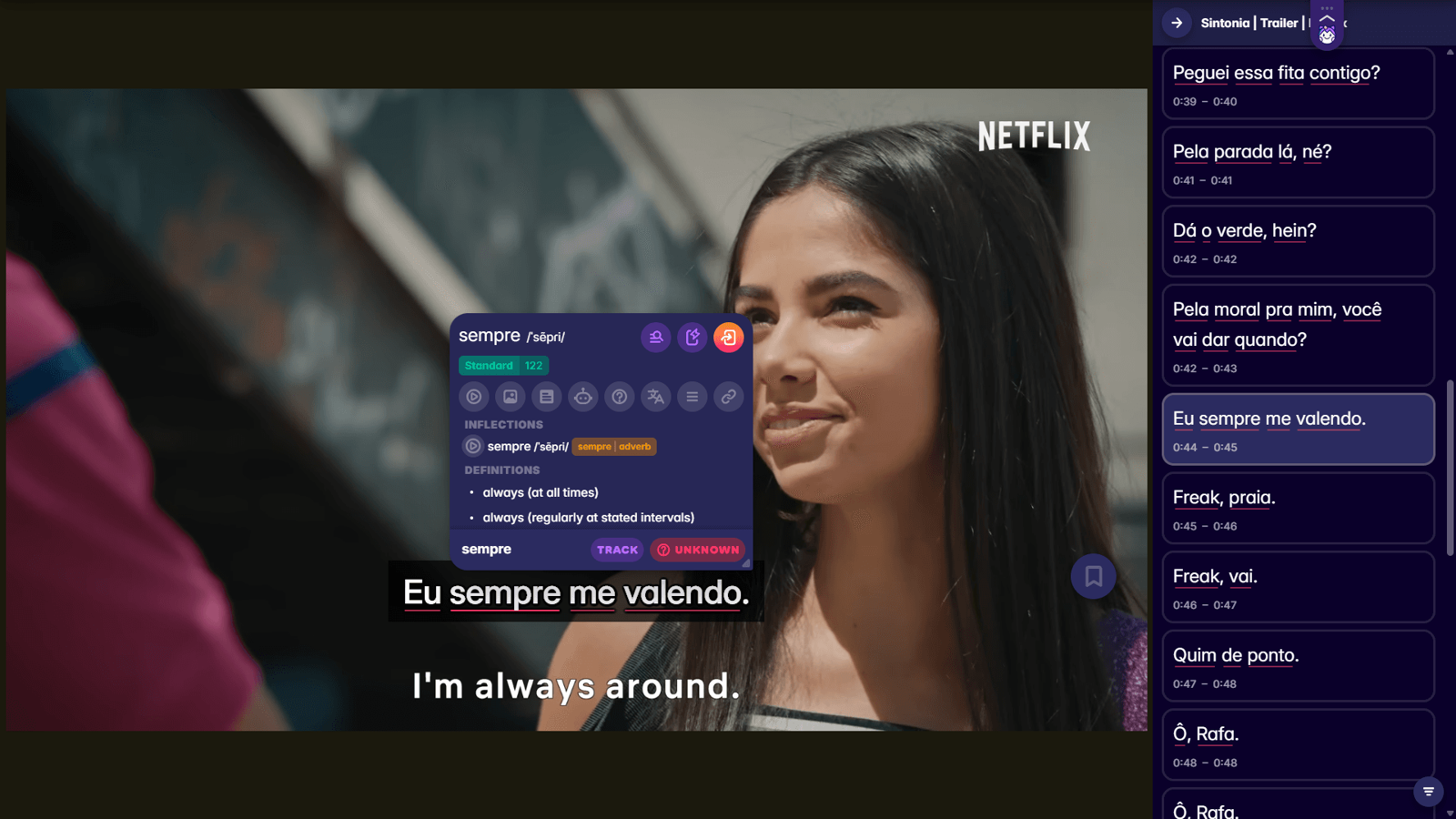
Anyway, if you want to combine podcast listening with reading practice, Migaku's browser extension and app let you look up Portuguese words instantly while reading articles or watching videos. Makes it way easier to build vocabulary from real content. There's a 10-day free trial if you want to check it out.
Building a podcast routine that works
Consistency beats intensity. Listening to Portuguese for 15 minutes every day works better than cramming for two hours once a week. Your brain needs regular exposure to build listening skills. Start your day with a Portuguese podcast during breakfast or your commute. Match podcast difficulty to your energy level. Save challenging native podcasts for when you're focused. Use easier learner podcasts for tired moments when you can't concentrate as hard.
If you consume media in Portuguese, and you understand at least some of the messages and sentences within that media, you will make progress. Period.
Build a gradual progression that keeps you engaged without overwhelming you.🎧🍵