Best Taipei Night Markets: A Food Lover's Guide to Raohe and Shilin
Last updated: May 15, 2026
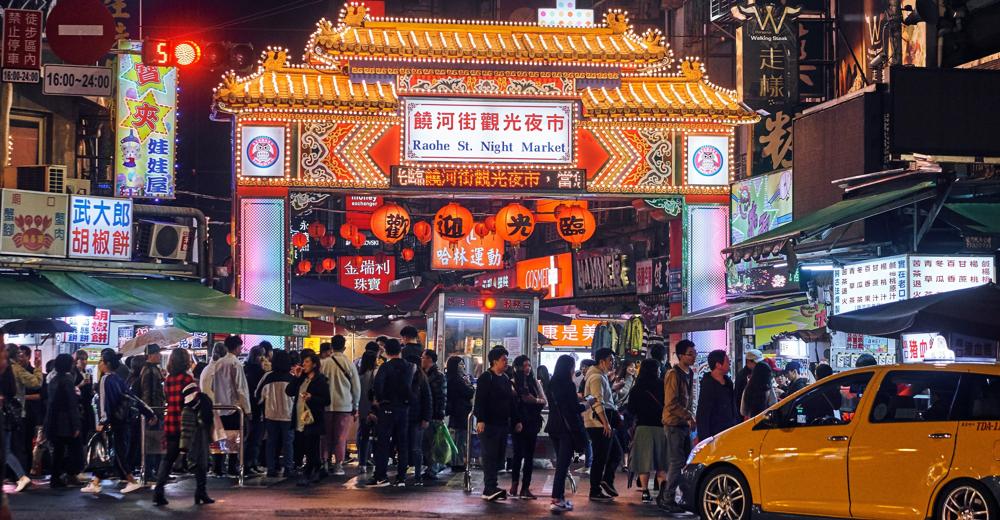
Taipei's two most famous night markets, Raohe and Shilin, are the easiest way to eat your way through Taiwanese street food in a single trip. This guide covers what to order, what it costs, how to get there, and how to avoid the rookie mistakes that ruin a first visit.
Last updated: May 15, 2026
Why Raohe and Shilin Are the Two Markets to Prioritize
Taipei has more than a dozen tourist-grade night markets, but Raohe (饒河街觀光夜市) and Shilin (士林夜市) consistently top food rankings and earn the most Michelin Bib Gourmand recognition. Raohe was established by the Taipei city government in 1987 as the city's second official tourist night market, and runs 600 meters along Raohe Street in Songshan District. Shilin is older, dating back to 1909 under Japanese colonial rule and formally inaugurated as a market in 1913.
The two markets feel different. Raohe is a single linear street, easy to walk end to end in 30 minutes, with around 400 stalls packed tightly between two ornate gates. Shilin sprawls across several blocks in the Dadong, Danan, Wenlin, and Jihe Road neighborhood, with an underground food court holding 539 stalls that reopened in April 2025 after a renovation lasting more than two years.
If you only have one night, choose Raohe for compactness and Michelin density. If you have two nights or want broader variety (including non-food shopping, games, and a younger student crowd), add Shilin.
Getting There: MRT, EasyCard, and Timing
Both markets sit directly on top of MRT stations, which is the only reasonable way to arrive. Taxis get stuck in the surrounding traffic, and parking is hopeless.
- Raohe Night Market: Songshan Station, Exit 5, on the Songshan–Xindian (Green) Line. You exit almost at the market's western gate.
- Shilin Night Market: Jiantan Station on the Tamsui–Xinyi (Red) Line. Note that the station is named Jiantan, not Shilin. The actual Shilin Station is one stop further and is not the right exit.
EasyCard basics
Buy a standard adult EasyCard at any MRT station or chain convenience store. As of 2026:
Item | Amount (NT$) |
|---|---|
Card issuance fee (non-refundable) | 100 |
Minimum single MRT trip | 20 |
Bus-to-MRT transfer discount (within 1 hour) | 8 |
Refund service fee at MRT info desk | 20 |
Children aged 0 to 5 or 115 cm tall and under ride free on the Metro and buses when accompanied by a paying passenger, up to four children per adult.
When to arrive
Raohe officially operates 17:00 to 23:00 year-round. Shilin vendors begin opening around 16:00, with crowds peaking between 20:00 and 23:00. Arrive at Raohe between 17:30 and 18:30 to walk the street before the worst crowds and to be in line at the famous pepper bun stall when the first batch comes out of the oven. At Shilin, arriving between 18:00 and 19:00 lets you eat through the underground food court before it becomes shoulder-to-shoulder.
Raohe Night Market: What to Eat
Raohe has held six Michelin Bib Gourmand awards since 2018. The strategy is simple: enter from the Songshan Station (west) end, pace yourself, and split everything with a travel companion so you can try more.
Must-order stalls
- Fuzhou Shizu Black Pepper Buns (福州世祖胡椒餅): Around NT$70 per bun. This is the stall with the line that wraps around the gate. The buns are stuck to the inside wall of a clay tandoor-style oven and pulled out blistered and crackling. Expect to wait 20 to 45 minutes between 18:00 and 21:00. Cash only at most queue stalls, so come prepared.
- Chen Dong Pork Ribs Medicinal Herbs Soup (陳董藥燉排骨): NT$100 per bowl. Pork ribs simmered with 12 Chinese herbs, served with a small dish of soy paste for dipping. A good warm-up dish on a cold evening.
- Shilin-style oyster omelet (蚵仔煎): Multiple vendors. A glutinous, egg-bound omelet of small oysters and greens, finished with a sweet-savory red sauce.
- Stinky tofu (臭豆腐): Try the deep-fried version with pickled cabbage if you are new to it. The smell intimidates first-timers; the taste is closer to aged cheese than the aroma suggests.
- Grilled squid and seafood skewers: Several stalls toward the middle of the street.
Raohe Food Festival
If you are in Taipei in December, the Raohe Food Festival brings around 50 street chefs from across Taiwan to the market for a multi-day event. Dates shift each year, so check the Taipei Travel official site closer to your trip.
Safety and hygiene
Raohe Night Market received the Taipei City Food Safety Smile Certification in 2022, with 157 food vendors certified across Raohe and Jingmei (150 gold awards, 7 silver) and a 98% passing rate. The certification, run by the Taipei City Department of Health, has been issued for night markets since 2018 and covers 14 tourist markets to date. Look for the smile sticker on stall signage.
A separate Taiwan FDA amendment announced on October 8, 2025 expanded food safety monitoring obligations for food business operators, with phased implementation starting January 1, 2026. For travelers, the practical effect is that prepared food labeling and traceability continue to tighten; for stall-side eating, behavior is unchanged.
Shilin Night Market: What to Eat
Shilin holds four Michelin Bib Gourmand stalls as of 2025. The underground food court, reopened in April 2025, is cleaner, better ventilated, and easier to navigate than during its previous decade of operation.
Must-order stalls
- A Hui Vermicelli Noodles (阿輝麵線): NT$55 for a bowl of oyster and intestine vermicelli. Located at 52 Danan Road, open daily 15:30 to 23:30.
- Chung Chia Sheng Jian Bao (鍾家原上海生煎包): NT$32 per Shanghai-style pan-fried bun. Located at 38 Xiaodong Street, closed Wednesdays. Order pork or cabbage; the bottoms should be deeply browned and crisp.
- Good Friend Cold Noodles (好朋友涼麵): NT$50 small, NT$65 large. Located at 31 Danan Road, closed Thursdays. Sesame-peanut sauce noodles served with a thin egg-drop miso soup on the side. Worth the detour in summer.
- Hot Star Large Fried Chicken (豪大大雞排): NT$90 for the jumbo chicken cutlet that birthed an international chain. The Shilin original is still the benchmark.
- Bubble tea, shaved ice (雪花冰), and tianbula (甜不辣): Throughout the market.
Underground vs. street level
The underground food court (539 stalls) is best for sit-down dishes like noodles, soups, and rice plates. Street level is better for handheld snacks and the queue-famous stalls. A typical Shilin run alternates between the two: grab a fried chicken cutlet upstairs, eat it while walking, then descend for noodles and dessert.
Budget: What an Evening Actually Costs
A realistic per-person spend at either market, eating well without overordering:
Item | Approx. NT$ |
|---|---|
4 to 6 stall items (split with companion) | 250 to 400 |
Drink (bubble tea, beer, or tea) | 50 to 90 |
Dessert (shaved ice, taiyaki) | 60 to 100 |
MRT round trip from central Taipei | 40 to 60 |
Total | 400 to 650 |
Most stalls take cash only. Bring small bills (NT$100 and NT$500 notes). ATMs at the nearby 7-Eleven and FamilyMart accept foreign cards.
Visa, Entry, and Practical Setup
US passport holders enjoy visa-free entry to Taiwan for 90 days as of 2026. Other nationalities should check current rules via the Taiwan Tourism Administration site before booking. Confirm your passport has at least six months of validity.
For connectivity, pick up a prepaid SIM or eSIM at Taoyuan Airport on arrival. Google Maps works well for both markets, and most stall reviews on Google are reasonably current.
Common Pitfalls
- Going on Monday or after a heavy rain: Some stalls close one weekday per week (often Monday at Raohe; Wednesdays or Thursdays for individual Shilin Michelin stalls listed above). Rain thins the street-level crowd but also closes some open-front grills.
- Eating one giant thing first: The fried chicken cutlet at Shilin is bigger than your face. Order it last or split it; otherwise you will be too full for the noodles and soups that are arguably better.
- Confusing Jiantan and Shilin stations: Use Jiantan for the night market. Shilin Station is residential.
- Trying to use credit cards at stalls: Cash is standard. The card readers you see are often only for the larger storefronts.
- Drinking the tap water: Bottled or boiled only. Bubble tea and soups are safe.
- Wearing strong fragrance: You will smell like grilled squid, stinky tofu, and oil regardless. Wear clothes you can wash.
- Bringing a stroller or large backpack at peak hours: The aisles at Raohe and the underground Shilin court are narrow. After 20:00 it becomes difficult.
FAQs
Which market is better, Raohe or Shilin?
Raohe is denser, more compact, and has more Michelin recognition. Shilin is larger, more varied (food plus games and shopping), and easier for groups with mixed interests. If you only have one night, choose Raohe.
Are the markets open every night?
Yes, both run nightly. Raohe officially operates 17:00 to 23:00. Shilin opens around 16:00 with peak hours 20:00 to 23:00. Individual stalls have their own days off.
Is the food safe for foreign visitors?
The Taipei City Department of Health has run a Food Safety Smile Certification for tourist night markets since 2018, covering 14 markets. Both Raohe and Shilin participate. Stick to stalls with visible turnover and freshly cooked items.
Can I eat at Raohe or Shilin as a vegetarian?
Yes, but it takes effort. Look for Buddhist vegetarian stalls (素食), scallion pancakes (蔥油餅) without egg, shaved ice, taro balls, and grilled corn. Many noodle and soup stalls use meat-based broths by default.
How much cash should I bring?
NT$800 to NT$1,000 per person is enough for a generous evening with leftovers for transit and snacks.
Are there English menus?
Michelin-listed stalls usually have English or photos. Smaller stalls may not. Pointing works. Learning a few menu words in Mandarin helps for ordering quickly and being understood about spice levels.
If you are settling into Taipei longer-term and want to actually understand what is written on the stall signs (and order without pointing), learning Mandarin alongside daily life is the most useful skill you can build. Migaku turns native Chinese content like menus, dramas, and YouTube into your study material. Try Migaku or read the practical 2026 guide to learning Chinese before your next market run.