Brittany in One Week: Coastal Towns, Crepes, and Celtic Heritage
Last updated: May 25, 2026
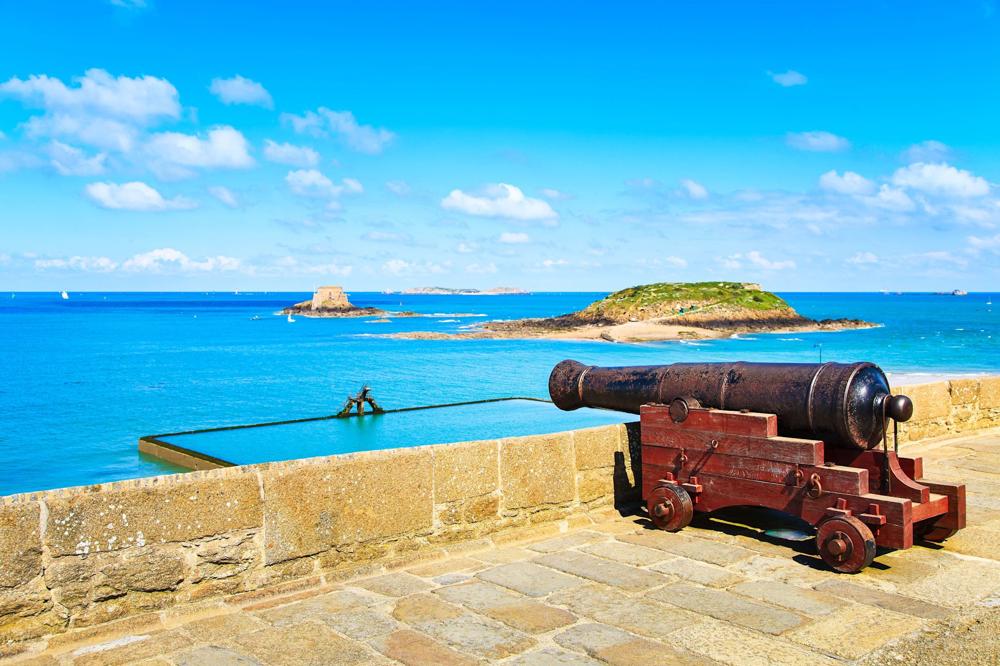
Seven days is enough to circle the best of Brittany if you base yourself along the coast and move clockwise from Saint-Malo to Brest. This itinerary covers walled cities, prehistoric stones, fishing ports, and the buckwheat-crepe heartland, with current 2026 transport and entry details for non-EU travelers.
Last updated: May 25, 2026
Why Brittany Works as a One-Week Trip
Brittany (Bretagne in French, Breizh in Breton) sits in France's northwestern corner. The region has roughly 3,500 km of coastline and around 5,000 km of marked walking tracks, so even a week-long loop only scratches the surface. The advantage for short visits is density: Saint-Malo, Dinan, Mont-Saint-Michel Bay, the Pink Granite Coast, Quimper, and the Carnac megaliths all sit within a few hours of each other by train, bus, or car.
The region also has its own identity. Breton is a Celtic language related to Welsh and Cornish, still used on road signs and in cultural festivals. Expect bagpipes (the biniou) at summer events, black-and-white striped flags (the Gwenn-ha-du) flying from town halls, and bilingual menus offering both French classics and Breton specialties like kig ha farz.
Entry Rules for 2026
If you're coming from outside the EU, two systems now affect your arrival:
- The EU Entry/Exit System (EES) became fully operational on 10 April 2026. Non-EU travelers arriving in France no longer get a passport stamp. Instead, fingerprints and a facial image are recorded electronically at the border. Allow extra time on your first entry.
- ETIAS (European Travel Information and Authorisation System) is expected to launch in the last quarter of 2026. When live, eligible visa-exempt travelers will need to apply online before departure. The fee is €20 (free for under-18s and over-70s), valid for three years and multiple entries, authorizing stays of up to 90 days in any 180-day period across the 30 participating countries.
Check the French Ministry of Europe and Foreign Affairs website close to your travel date, as the ETIAS go-live date has shifted multiple times.
Getting to Brittany
Most itineraries start in Paris or arrive by ferry from the UK.
- Paris–Rennes by TGV: the fastest service is 1 hour 25 minutes, with about 20 trains a day. Rennes is Brittany's transit hub.
- Paris–Saint-Malo by TGV: about 2 hours 20 minutes direct. Rennes–Saint-Malo by regional TER train is roughly 55 minutes.
- Paris–Brest by TGV: 3 hours 31 minutes at the fastest, with around 12 daily departures over the 504 km route.
- Portsmouth–Saint-Malo by ferry: Brittany Ferries' 2026 season started 15 February with up to 8 sailings per week on the MV Saint-Malo, an LNG-electric hybrid in service since February 2025. The standard outbound is an overnight crossing of about 10h 45min; the daytime return takes around 7h 50min. Fares range from €85 to €475 depending on season and booking window. The ship carries 1,290 passengers with 386 cabins, including 28 pet-friendly cabins (a pet passport is required for UK–France travel).
Inside the region, BreizhGo is the public transport network combining coaches, minibuses, boats, and TER trains. The TER BreizhGo 2-day or 7-day tourist pass gives unlimited regional train travel and is valid for groups of 1 to 5 people. Renting a car is still the most flexible option, especially for the Pink Granite Coast and the Crozon Peninsula.
The 7-Day Itinerary
Day 1: Saint-Malo
Arrive into Saint-Malo by TGV or ferry. The walled old town (Intra-Muros) is free to enter, and the ramparts form a circuit of about 2 km with views over the Channel and the offshore forts at low tide. The city was the home port of the corsairs (state-licensed privateers), and the maritime museum inside Solidor Tower in the Saint-Servan district is worth an hour.
Eat dinner inside the walls: try galette saucisse (a grilled sausage rolled in a buckwheat crepe) or a full galette complète with ham, cheese, and egg. Pair it with a bowl of local cider rather than wine.
Day 2: Mont-Saint-Michel and the Bay
Mont-Saint-Michel sits just over the regional border in Normandy, but it's a standard add-on from Saint-Malo and worth the day. By car, the visitor parking is 2.5 km from the rock; you reach the island on foot or by free shuttle, with a 400 m walk from the drop-off to the entrance.
- Abbey adult ticket: €11 in 2026.
- Reduced ticket of €11.50 (note: this is the published reduced rate) is offered on presentation of an SNCF Paris–Mont-Saint-Michel train ticket within 5 days, or a Brittany Ferries boarding pass.
- Free entry for under-18s travelling with family, and for EU citizens or permanent residents aged 18–25 with ID.
- The Abbey is closed on 1 January, 1 May, and 25 December, and exceptionally on Monday 1 June 2026. Last entry is one hour before closing.
Return to Saint-Malo for the night, or shift base to Dinan.
Day 3: Dinan and the Rance Estuary
Dinan is a half-timbered medieval town 30 km inland from Saint-Malo, easily reached by train or bus. Walk down the steep Rue du Jerzual to the small port on the Rance, then back up for lunch on Place des Merciers. In summer (April to October), the cross-estuary "sea bus" between Dinard and Saint-Malo also runs in about 10 minutes, so you can combine an afternoon in Dinard (a Belle Époque seaside resort) before heading back.
Day 4: Pink Granite Coast and Crossing West
Pick up a rental car in Saint-Brieuc or Lannion and drive the Côte de Granit Rose between Perros-Guirec and Ploumanac'h. The footpath GR34 (the sentier des douaniers) runs along the cliffs past wind-sculpted pink boulders. Stop in Tréguier to see the cathedral, then push on to Morlaix or Roscoff for the night. If you're not driving, plan this day around a guided coach tour from Saint-Brieuc, since BreizhGo bus service to Ploumanac'h is limited.
Day 5: Brest, Crozon, or Quimper
You have two reasonable options from Morlaix:
- Brest and the Crozon Peninsula for dramatic Atlantic cliffs and the Pointe de Pen-Hir. Brest itself was rebuilt after heavy bombing in 1944, so the appeal is the harbor and the Océanopolis aquarium rather than the streets.
- Quimper, the historic capital of Cornouaille, with its Gothic cathedral, faience pottery workshops, and the Musée Départemental Breton inside the old bishop's palace.
Quimper is the better base for travelers more interested in food and Breton culture; Brest suits travelers focused on maritime history.
Day 6: Carnac and the Morbihan Coast
Drive south to Carnac. The Megaliths of Carnac and the shores of Morbihan were inscribed on the UNESCO World Heritage list on 12 July 2025, making them Brittany's first UNESCO site. The standing stones (menhirs) here are around 7,000 years old and stretch for several kilometers in parallel rows.
A few practical notes for 2026:
- Free unguided access to the alignments is allowed from October to March. From April to September, only guided tours led by the Maison des Mégalithes are permitted on the fenced areas.
- The Maison des Mégalithes visitor center is closed on 1 January, 1 May, and 25 December.
- A French decree (no. 2025-582 of 27 June 2025) made the entire alignments site smoke-free.
- The Pass des Mégalithes gives a reduced-fee combined entry to the Carnac stones, the Carnac Prehistory Museum, the Cairn of Petit-Mont, the Cairn of Gavrinis, and the Locmariaquer megalith site after you pay full price at the first one.
- If you're in the area in August, the Skedanoz light show on the Ménec alignments runs 18–26 August 2026, with two 35-minute sessions a night at 10:00 PM and 10:45 PM. Tickets are €6 in advance or €8 at the door.
Current admission rates for the alignments themselves change year to year; check the official menhirs-carnac.fr site close to your visit.
End the day with oysters at Cancale or a sunset over the Gulf of Morbihan.
Day 7: Rennes and Departure
Drop the car in Rennes and spend the morning in the old town around Place Sainte-Anne and the Parlement de Bretagne. The Saturday Marché des Lices is one of the largest food markets in France if your dates line up. Catch an afternoon TGV back to Paris (1h 25min) or fly out of Rennes-Saint-Jacques airport.
If you have more time and want to extend westward with a different French region, see our companion guide One Week in France: Paris, Loire Valley, and Normandy, or the chateaux-focused 3-Day Loire Valley Châteaux Itinerary.
What to Eat in Brittany
Bretons distinguish between two pancake types:
- Galette: savory, made from buckwheat flour (blé noir or sarrasin), usually filled with ham, cheese, egg, mushrooms, or sausage.
- Crêpe: sweet, made from wheat flour, topped with salted butter caramel, chocolate, chestnut cream, or apple.
Other things to order:
- Kouign-amann: a dense buttered pastry from Douarnenez.
- Far breton: a flan-like dessert with prunes.
- Cotriade: a fisherman's stew from the south coast.
- Plateau de fruits de mer: a shared cold seafood platter, best in Cancale, Roscoff, or Concarneau.
- Cidre brut: dry Breton cider served in ceramic cups (bolées).
For a wider regional eating context, see our French Regional Cuisine Explained.
Budget Snapshot
Item | Typical 2026 cost |
|---|---|
Mont-Saint-Michel Abbey adult ticket | €11 |
TGV Paris–Rennes (booked early) | from around €25 one way |
Portsmouth–Saint-Malo ferry | €85 to €475 |
Galette complète at a crêperie | €9 to €14 |
Mid-range hotel double room, coast | €90 to €160 |
Compact rental car, 4 days | from around €180 |
Skedanoz Carnac light show (Aug 2026) | €6 advance / €8 door |
Residents of certain low-income brackets can apply for the BreizhGo Solidarity Card, which gives up to 67% off regional buses, trains, and ferries to Belle-Île, Groix, Houat, and Hoëdic. It's valid for one year (two years for AAH disability allowance recipients), with processing of about two weeks. Most short-stay tourists won't qualify, but long-stay expats might.
Common Pitfalls
- Underestimating tides. Mont-Saint-Michel Bay has some of the largest tidal ranges in Europe. Never walk on the sand around the rock without a licensed guide. The same applies to the Saint-Malo offshore forts.
- Driving in walled towns. Saint-Malo Intra-Muros, Dinan's old quarter, and Vannes' historic center are restricted-access zones. Park outside the walls.
- Assuming everything is open. Many small crêperies close on Mondays. Museums in smaller towns shorten hours in October and reopen fully at Easter.
- Skipping a coat in July. Coastal Brittany can be 16°C and breezy in summer. Pack layers and a waterproof shell.
- Booking ferries last minute. The Portsmouth–Saint-Malo route fills early for August weekends and half-term breaks. The €85 lower-band fares disappear first.
FAQs
Is one week enough for Brittany? Enough for the headline sights along the north coast plus Carnac, yes. For the south coast islands (Belle-Île, Groix) and the Crozon Peninsula in depth, plan ten days or more.
Do I need a car? Not for Saint-Malo, Dinan, Rennes, Quimper, or Vannes (all reachable by TER train). You'll want a car for the Pink Granite Coast, Crozon, and the smaller villages around Carnac.
When is the best time to go? Late May through September for reliable weather and full ferry schedules. June and September give you the coast without peak-August crowds.
Can I see Mont-Saint-Michel from Saint-Malo without a car? Yes. Several day-tour operators run coaches from Saint-Malo, and there are seasonal BreizhGo bus services. Check current schedules on the BreizhGo site.
Is English widely spoken? In tourist offices, hotels, and major restaurants, yes. In smaller villages and at rural crêperies, basic French goes a long way. Breton signage is decorative; you don't need to read it.
Are credit cards accepted everywhere? In towns and at chain outlets, yes, including contactless. Some rural producers, market stalls, and small crêperies still prefer cash or set a €10–€15 card minimum.
A week in Brittany rewards travelers who slow down. Pick two or three bases, build in time for a long lunch and a coastal walk each day, and let the weather decide your order.
If you're spending real time in France and want to move past tourist French, Migaku turns French shows, news, and YouTube into your study material. Take a look at Migaku for French.