Can Foreigners Buy Property in China? Rules and Process in 2026
Last updated: May 25, 2026
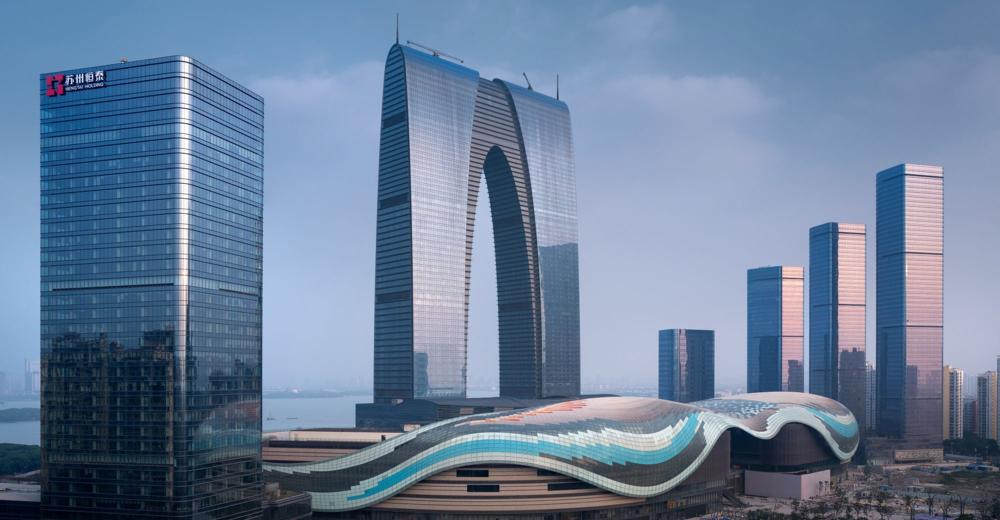
Yes, foreigners can buy property in China in 2026, but only under specific conditions: you generally need at least one year of residence on a valid permit, you are limited to one residential unit for personal use, and you must pass enhanced source-of-funds and foreign exchange checks. The September 2025 SAFE reforms made the payment process easier, while the underlying eligibility rules stayed essentially the same.
Last updated: May 25, 2026
Who is eligible to buy property in China in 2026
China has maintained the same core gatekeeping rule for over a decade: foreign individuals must have lived, worked, or studied in the country for at least one consecutive year on a valid residence permit before they are allowed to purchase residential property. Tourist visas, short business visas, and remote arrangements do not qualify.
The key restrictions for foreign individuals in 2026 are:
- One residential property only, and it must be used as your own dwelling. Renting it out commercially is not permitted under the foreign-buyer framework.
- The property must usually be purchased in the city where you hold your residence permit and work or study.
- Foreign entities without a PRC subsidiary or representative office, and foreign individuals who do not meet the residency condition, cannot directly buy real property in China. This is confirmed under the property ownership rules as of February 28, 2026.
- Foreign representative offices or branch offices may purchase non-residential property only for office use, and only in the city where they are registered.
City-level rules add another layer. Beijing, for example, may require non-local residents to show five consecutive years of social security and tax payments to qualify for purchase. Shanghai applies its own thresholds, which should be verified with the Shanghai Municipal Housing Administration Bureau before signing anything. Nanjing currently aligns with the national framework but imposes a 30% minimum down payment for foreign buyers.
If your residence status is still in progress, see this overview of China visa requirements for foreigners before starting a property search, since your visa category determines whether the one-year clock has even begun.
What you actually own: land-use rights, not land
A point that catches most first-time buyers off guard: in China, all land is owned by the state or by rural collectives. Individuals, including Chinese nationals, do not own land. What you buy is a long-term land-use right plus ownership of the building on it.
Standard term lengths are:
- Residential: 70 years
- Commercial: 40 to 50 years
- Industrial: 50 years
Under Article 359 of China's Civil Code, which has been in effect since 2021, land-use rights for residential construction renew automatically when the 70-year term expires. The renewal fee mechanism is still being clarified in practice, but the legal default is automatic continuation. Commercial and industrial terms do not enjoy the same automatic renewal guarantee.
The September 2025 SAFE reform: what changed for foreign buyers
On September 15, 2025, the State Administration of Foreign Exchange (SAFE) issued the Notice on Deepening the Reform of Foreign Exchange Administration for Cross-Border Investment and Financing. It introduced nine new FX measures, several of which directly affect foreign property buyers.
The two changes that matter most:
- Qualified overseas individuals can now settle and pay foreign exchange funds for a home purchase using a signed purchase contract, before obtaining the home purchase registration certificate. Previously this flexibility existed only as a pilot in the Guangdong-Hong Kong-Macao Greater Bay Area. It has now been expanded nationwide.
- The SAFE "negative list" was shortened, removing the prior restriction that prohibited using capital account FX income to buy non-self-use residential property.
It is important to understand what this reform did not change. It is procedural. The underlying real estate eligibility rules, including the one-year residence requirement and the one-property limit, remain governed by housing regulators and local qualification rules. SAFE made it easier to move money in; it did not make it easier to qualify.
Layered on top of this, effective January 1, 2026, the People's Bank of China, banking regulator, and securities regulator (in an October 31, 2025 regulation) imposed stricter KYC verification for outbound transfers exceeding RMB 5,000 or USD 1,000. In Jiangsu Province, enhanced KYC and source-of-funds checks are now standard for cross-border transactions above RMB 1 million.
Document checklist
Exact paperwork varies by city, but the following set is consistently required as of 2026:
- Passport with valid Chinese residence permit (work, study, or family reunion)
- Proof of one continuous year of residence in China (residence registration, employer letter, university enrollment record)
- Tax payment records and social security contributions in the purchase city, if required locally
- Signed purchase contract (filed with the local housing bureau)
- Personal declaration that the property is for self-use
- Proof of marital status (single declaration or marriage certificate, often notarized and translated)
- Source-of-funds documentation for any cross-border transfer, especially above the new KYC thresholds
- Chinese bank account in your name (essential for the down payment and mortgage)
- Tax identification documents
Opening the local account is a prerequisite step that often takes longer than buyers expect. If you have not done this yet, this guide on opening a bank account as a foreigner is written for Spain but the structural lessons (residency proof, in-person visits, document translations) apply broadly.
Step-by-step process
- Confirm eligibility locally. Visit the housing administration bureau in your city, or have a licensed agent confirm that you meet the residency, tax, and social security thresholds.
- Get pre-qualified for a mortgage. Chinese banks lend to qualifying foreign residents. The 5-year Loan Prime Rate (the mortgage benchmark) stood at 3.5% in May 2026, the 12th consecutive month at that record low. The weighted average rate on new mortgages was 3.06% as of June 2025.
- Find the property and sign a preliminary agreement. Pay an earnest money deposit, typically refundable only under defined conditions.
- Apply for the purchase qualification certificate. The local housing bureau verifies that you meet foreign-buyer eligibility for that specific city.
- Sign the formal purchase contract and have it filed with the housing bureau.
- Transfer funds. Under the post-September 2025 SAFE rules, you can now bring in foreign currency, convert it, and pay using the signed contract, without first holding the home purchase registration certificate. Source-of-funds documentation is required.
- Pay the deed tax and stamp duty at the tax authority.
- Complete title registration at the real estate registration center. In Jiangsu, registration timelines for foreign-invested enterprises were cut from 15 to 8 business days in May 2026; individual buyer timelines are typically similar.
- Receive your real estate ownership certificate.
Fees, taxes, and mortgage costs
Item | Rate / Amount (2026) | Notes |
|---|---|---|
Deed tax (only home or second home, up to 140 sqm) | 1% | Nationwide preferential rate effective Dec 1, 2024 |
Deed tax (over 140 sqm, first home) | 1.5% | |
Deed tax (over 140 sqm, second home in tier-1 cities) | 2% | |
Standard deed tax range before preferential rates | 3% to 5% | Varies by location |
Stamp duty | 0.05% of contract value | Both buyer and seller |
VAT on real estate sales | 9% | General rule |
Land Value Appreciation Tax (seller) | 30% to 60% of gains | Progressive |
Annual real estate tax (if business use / leased) | 1.2% of building value, or 12% of rent | Not applicable to a self-use residence |
5-year LPR (mortgage benchmark) | 3.5% | May 2026 |
First-home mortgage rate, Beijing/Shanghai/Shenzhen/Guangzhou | 3.05% | 2026 |
Minimum down payment, first-time buyers (national floor) | 15% | State Council |
Effective minimum down payment, first home | 20% | Locally enforced |
Effective minimum down payment, second home | 30% to 35% | Locally enforced |
Foreign buyer minimum down payment, Nanjing | 30% | 2026 |
As of October 2025, the average price of newly built residential property across 100 monitored Chinese cities was RMB 16,973 (about USD 2,389) per square meter. Second-hand homes averaged RMB 13,268 (about USD 1,867) per square meter. Shanghai led first-tier cities with new-home price growth of +10.70% year-on-year, while second-hand prices fell in all first-tier cities.
Common pitfalls
- Assuming tourist time counts. It does not. Only time on a residence permit qualifies.
- Trying to buy a second property under a spouse's name. This is heavily scrutinized. The one-property rule is applied at the household level in many cities.
- Ignoring source-of-funds rules. With the January 2026 KYC tightening, transfers above RMB 5,000 or USD 1,000 face stricter checks, and large incoming transfers in places like Jiangsu trigger enhanced review above RMB 1 million.
- Forgetting about tax residency consequences. Owning property does not by itself create Chinese tax residency, but spending more than 183 days a year there can. Read up on tax residency rules for expats to understand how the day-count test typically works.
- Overlooking city-specific qualification rules. Beijing's five-year social security history requirement for non-locals can disqualify recent arrivals.
- Confusing the SAFE reform with eligibility loosening. The September 2025 changes are about how you pay, not who can buy.
- Buying commercial property assuming it works like residential. Term length is shorter (40-50 years), automatic renewal is not guaranteed, and tax treatment is different.
Frequently asked questions
Can a foreigner buy property in China without living there?
No. You must have at least one consecutive year of residence on a valid permit before purchase, as of 2026.
Can I buy property through a company instead?
Foreign entities without a PRC subsidiary or representative office cannot directly purchase real property. Representative offices may buy non-residential property for office use only, and only in their registered city.
Can I rent out the property I buy?
The foreign-buyer framework requires the property to be for personal use. Commercial leasing of your one allowed residence is not permitted under those rules.
Do I really own the land for 70 years?
You own the building and hold a 70-year residential land-use right. Under Article 359 of the Civil Code, that right renews automatically when it expires.
What happens at resale?
The seller pays VAT at 9% under general rules, plus Land Value Appreciation Tax of 30% to 60% on the taxable gain, plus 0.05% stamp duty. Holding period and property type can change the effective burden, so get a local tax professional involved before listing.
Can I get a mortgage as a foreigner?
Yes, qualifying foreign residents can obtain mortgages from Chinese banks. Expect a 30% minimum down payment as a foreign buyer in cities like Nanjing, with rates currently benchmarked to the 3.5% 5-year LPR.
Where do I verify the latest official rules?
For foreign exchange: SAFE (safe.gov.cn). For deed tax and national fiscal rules: the Ministry of Finance (mof.gov.cn). For city eligibility: your local housing administration bureau, such as fgw.sh.gov.cn for Shanghai.
If you are seriously preparing for life in China, navigating the housing bureau, bank, and tax office in Mandarin will save you significant time and money. Migaku helps you build Mandarin skills from the kinds of native materials you will actually encounter on the ground. Try Migaku if that fits where you are headed.