Cost of Living in Madeira: Funchal Prices for Long Stays
Last updated: May 21, 2026
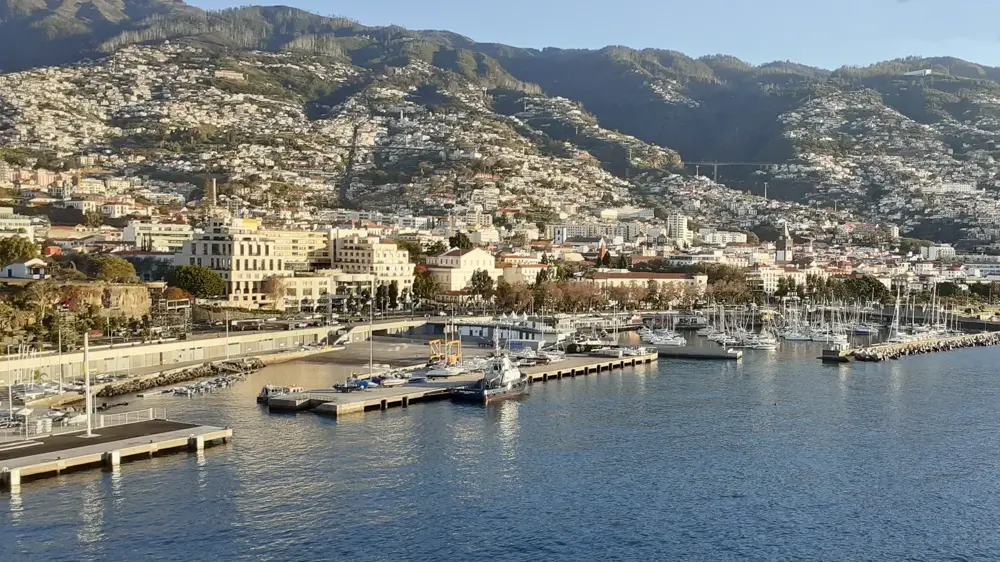
Madeira is one of the cheaper places in Western Europe to live well, with a single person typically spending €1,400 to €2,000 per month in Funchal once rent is included, and couples landing around €2,500 to €3,500 for a comfortable lifestyle. This guide breaks down what those numbers actually buy in 2026, with figures sourced from Portuguese government and regional authorities.
Last updated: May 21, 2026
- Who This Guide Is For and What "Long Term" Means
- Housing: What Rent and Property Cost in Funchal
- Utilities, Internet, and Phone
- Transport: Getting Around the Island
- Food, Eating Out, and Groceries
- Healthcare, Schools, and Other Recurring Costs
- Visa Income Thresholds and Taxes
- Sample Monthly Budgets for Funchal in 2026
- Common Pitfalls
Who This Guide Is For and What "Long Term" Means
Long-term stays on Madeira generally fall into three categories: retirees on Portugal's D7 visa, remote workers on the D8 digital nomad visa, and EU citizens relocating without a visa. Each group has different income floors and tax exposure, which we'll cover in the relevant sections.
A few baseline facts that frame every budget on the island:
- Madeira's regional minimum monthly wage rose to €980 effective January 1, 2026 (Regional Legislative Decree no. 1/2026/M of 3 February), higher than Portugal's national minimum of €920.
- Wages are paid over 14 instalments (12 monthly plus 13th Christmas and 14th holiday bonuses), so the annual gross at minimum wage is €13,720 in Madeira and €12,880 on the mainland.
- The IRS "mínimo de existência" for the 2026 State Budget is €12,880/year, effectively zeroing income tax for minimum-wage earners.
If you're an expat living off foreign income, those numbers matter less for your wallet directly, but they set the price floor for everything from rents to a coffee.
Housing: What Rent and Property Cost in Funchal
Housing is the single biggest variable. Funchal is more expensive than the rest of the island; rural parishes like Porto Moniz or Calheta are significantly cheaper but also further from hospitals, international schools, and the airport.
Buying
According to 2026 market data, average residential prices look like this:
Location | Average price per m² |
|---|---|
Madeira island (overall) | €3,715 |
Funchal | €3,473 |
Porto Moniz | €2,117 |
Buyers should budget for these one-time taxes on top of the purchase price:
- IMT (Property Transfer Tax): primary-residence exemption applies up to €127,396 in Madeira (higher than the €101,917 mainland threshold). Above that, IMT is charged on a sliding scale.
- Stamp Duty: a flat 0.8% of purchase price or VPT (taxable value), whichever is higher.
- Notary, registration, legal fees: typically 1% to 2% combined.
After purchase, the annual IMI (Municipal Property Tax) is 0.3% to 0.45% of the VPT for urban residential property in Madeira, 0.8% for rural, and up to 6% for vacant or underused buildings. IMI is paid in May if the bill is under €50, May and November for €50 to €100, and five instalments from July to November for bills above €100.
Renting
Long-term rentals (12-month contracts) in Funchal in 2026 typically run:
- Studio or 1-bedroom in central Funchal: €750 to €1,100/month
- 2-bedroom apartment in central Funchal: €1,100 to €1,600/month
- 2-bedroom in São Martinho, Santo António, or São Gonçalo: €850 to €1,300/month
- 3-bedroom house outside Funchal (Caniço, Câmara de Lobos): €1,000 to €1,500/month
Short-term furnished rentals on platforms aimed at digital nomads can be 40% to 80% higher, and a winter (October to March) deal will be much cheaper than a summer let. If you can sign a yearly contract directly with a landlord, do it.
Utilities, Internet, and Phone
Madeira's electricity supplier is Empresa de Eletricidade da Madeira (EEM), the regional utility. There is no competitive market for power on the island, unlike the mainland. The 2026 ERSE Directive No. 1/2026 (7 January) raised regulated BTN tariffs by an average of 1.0%; a reference household on the mainland (couple + 2 kids, 6.9 kVA contracted power, 5,000 kWh/year) pays about €95.03/month including taxes. Madeira households on similar consumption profiles pay in the same ballpark.
The social tariff discount in 2026 is 33.8% and is available to low-income households with contracted power up to 6.9 kVA at their primary residence.
- Water and waste: Águas e Resíduos da Madeira (ARM) holds the public-service concession. Combined water, sewerage, and waste collection for a couple typically runs €25 to €45/month. Check ARM's published tariffs at aguasdamadeira.pt for the latest figures.
- Internet: fiber is widely available in Funchal and most coastal towns. Expect €30 to €45/month for a 500 Mbps to 1 Gbps fiber plan bundled with TV.
- Mobile: prepaid SIMs with generous data run €10 to €20/month; postpaid family plans €25 to €40.
- Gas: most homes use bottled butane (botija) for cooking; a 13 kg bottle is roughly €30 and lasts a small household a month or two.
A realistic all-in utilities budget for a couple in a 2-bedroom apartment: €130 to €200/month in mild weather, more in winter if you run electric heaters (most apartments lack central heating).
Transport: Getting Around the Island
Funchal and Madeira recently rolled the regional buses under a single ticketing brand, SIGA, with a smartcard called the GIRO card. Card itself costs €5 and is valid for 5 years.
Pass / Ticket | 2026 Price |
|---|---|
SIGA Funchal monthly municipal pass | €40 |
SIGA island-wide (inter-municipal) monthly pass | €50 |
Giro 24 (24-hour visitor pass, all SIGA lines) | €12.50 |
Horários do Funchal single on-board ticket | €2.00 |
Aerobus (airport to Funchal) one-way, cash to driver | €6.50 |
Residents over 65 and students up to age 23 ride free on the SIGA network after registering and paying the €5 card fee. That is a serious quality-of-life perk for retirees.
A car is not essential if you stay in Funchal, but it makes the rest of the island vastly more accessible. Owning a car runs €250 to €450/month all-in once you include insurance, IUC (annual road tax), fuel, parking, and maintenance. Fuel on Madeira is slightly cheaper than mainland Portugal due to regional tax breaks. Taxis from Funchal to the airport are €20 to €30; rideshare is limited.
Food, Eating Out, and Groceries
Groceries in Madeira are comparable to mainland Portugal, with imported goods (anything not produced locally) priced 10% to 20% higher because of shipping. Realistic monthly grocery budgets:
- Single person, mostly home cooking: €180 to €280
- Couple: €350 to €500
- Family of four: €550 to €800
Local markets like the Mercado dos Lavradores in Funchal are good for produce and fish; Pingo Doce, Continente, and Lidl are the dominant supermarkets. A few price reference points:
- Espresso (bica) at a café: €0.85 to €1.20
- Beer (Coral, on tap, 0.33L): €1.50 to €2.50
- Daily worker lunch (prato do dia): €8 to €12
- Dinner for two at a mid-range restaurant with wine: €40 to €70
- Fresh tuna or black scabbard fish at the market: €8 to €14/kg
- 1L local milk: €0.85 to €1.10
- Bottle of decent Portuguese red wine at the supermarket: €4 to €8
Madeira wine and poncha (the local rum-based drink) are both cheaper here than anywhere else on earth.
Healthcare, Schools, and Other Recurring Costs
Healthcare in Madeira is provided under Portugal's SNS (Serviço Nacional de Saúde). Registered residents access the public system for free or for small user fees (taxas moderadoras); care is free for residents under 18 and over 65. The main hospital is Dr. Nélio Mendonça in Funchal. For current taxa moderadora rates, check sns.gov.pt.
Most expats also carry private insurance for faster specialist access. Plans run €40 to €120/month per adult depending on age and coverage.
- University of Madeira tuition: approximately €2,000/year for undergraduate and postgraduate programs in 2025–2026.
- International schools in Funchal: roughly €6,000 to €11,000/year.
- Gym membership: €30 to €55/month.
- Yoga or surf school drop-in class: €12 to €18.
Visa Income Thresholds and Taxes
If you need a visa to live in Madeira, your monthly budget has to clear an official floor.
D7 Visa (passive income / retirement)
For 2026, the D7 requires:
- €920/month (€11,040/year) for the main applicant, equal to the national minimum wage.
- +50% (€460/month) for a spouse.
- +30% (€276/month) per dependent child.
- A Portuguese bank account holding roughly one year of income as savings (about €11,040 for a single applicant; ~€19,872 for a couple with one child).
Consular fees are around €90 for the visa, plus approximately €156 for the AIMA permit and biometrics. The consular processing time is up to 60 calendar days; the full timeline from application to residence permit in hand is typically 6 to 9 months.
D8 Digital Nomad Visa
The D8 requires 4× the minimum wage, which is €3,680/month in 2026. This is gross income, usually demonstrated through three months of payslips or invoices plus a work contract or client letters.
Income Tax (IRS) for Residents
Portugal's progressive IRS rates for 2026 run from 13.25% up to 48%, with an additional 2.5% or 5% solidarity surcharge on high earners. Non-residents pay a flat 28% on Portuguese-source income. Employee social security is 11% of gross salary; employers pay 23.75%.
The old NHR (Non-Habitual Resident) regime is closed to new applicants. A more limited successor regime (often called IFICI or NHR 2.0) is available for certain skilled professionals and researchers; rules are narrow and worth checking with a Portuguese tax advisor before you move.
Citizenship Timeline Has Changed
Portugal's revised nationality law, reapproved by Parliament on April 1, 2026 and signed by the President on May 3, 2026, extended the general citizenship residency period from 5 to 10 years (7 years for EU and CPLP nationals). This is a major change from what was advertised in earlier expat guides. If long-term Portuguese citizenship is part of your plan, build the new timeline into your decision. For background on how the previous system worked, see Portuguese Citizenship After 5 Years.
Sample Monthly Budgets for Funchal in 2026
Category | Single, modest | Couple, comfortable | Family of 4 |
|---|---|---|---|
Rent (long-term) | €850 | €1,300 | €1,600 |
Utilities + internet | €110 | €170 | €230 |
Groceries | €240 | €450 | €700 |
Transport | €40 (SIGA pass) | €90 | €350 (car) |
Eating out | €120 | €280 | €400 |
Health insurance (private top-up) | €60 | €130 | €260 |
Phone | €15 | €30 | €60 |
Leisure / gym / misc | €100 | €200 | €350 |
Total | €1,535 | €2,650 | €3,950 |
These assume a 12-month lease, not short-term furnished rentals. Add 30% to 60% if you're booking month-to-month furnished apartments aimed at remote workers.
Common Pitfalls
- Underestimating winter heating. Most Madeira apartments have single-glazed windows and no central heating. January and February nights drop into the low teens; electric oil heaters can add €60 to €120 to your power bill.
- Assuming the old NHR tax break still applies. It doesn't for new arrivals. Get current advice.
- Signing a short-term lease and renewing forever. Long-term contracts are dramatically cheaper but require a Portuguese tax number (NIF) and usually a bank account.
- Buying a car before you know where you'll live. Funchal parking is genuinely difficult. Many central residents do fine with buses and occasional rentals.
- Ignoring inter-island costs. If you plan to visit mainland Portugal or the Azores often, flights add up. For trip planning, see the Azores Island Hopping Guide.
- Forgetting IMI in your buy-vs-rent math. Annual property tax plus condo fees can add €100 to €300/month to ownership costs.
FAQs
Is Madeira cheaper than Lisbon?
Yes, particularly on rent. A central 2-bedroom apartment in Funchal runs roughly 30% to 45% less than the equivalent in central Lisbon. Groceries and restaurants are 10% to 20% cheaper. For comparison, see Best Neighborhoods in Lisbon for Expats.
Can I live in Madeira on €1,500/month?
As a single person on a long-term lease outside the most central Funchal streets, yes. It will be modest but pleasant. As a couple, €1,500 is tight; €2,500 is comfortable.
Do I need to speak Portuguese?
For day-to-day life in tourist-facing parts of Funchal, no. For dealing with AIMA, hospitals, landlords, banks, and the tax office, yes, or you'll be paying a lawyer or translator regularly.
Is the island-wide bus pass worth it over the Funchal-only pass?
If you leave Funchal more than twice a month, yes. The €10/month difference pays for itself quickly given how scenic and frequent the SIGA inter-municipal routes are.
Is Madeira a good place to retire on a US Social Security check?
For most retirees with €1,800+/month in net income, comfortably yes. The D7 income floor (€920/month) is low, the climate is mild year-round, and the public health system is solid. Confirm tax treatment with a cross-border advisor before moving assets.
Getting comfortable in Portuguese, even at a basic level, makes everything from rental contracts to doctor's visits dramatically easier. If you want to build that ability with real Portuguese shows, news, and YouTube content rather than textbook drills, try Migaku.