Cost of Living in Shenzhen for Tech Workers and Engineers
Last updated: May 19, 2026
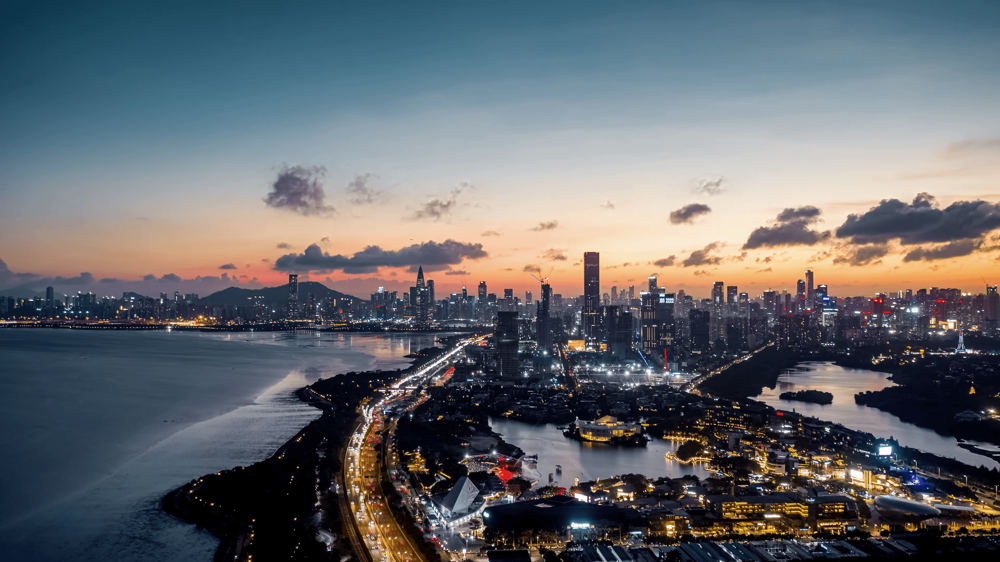
Shenzhen remains China's most expensive tech hub after Beijing and Shanghai, but salaries at Tencent, Huawei, DJI, BYD, and the Qianhai-based startups have largely kept pace. For a mid-level software engineer earning between RMB 400,000 and 740,000 a year, the city is comfortable; for a junior on a Category B work permit, the math is tighter than it looks on paper.
Last updated: May 19, 2026
What Tech Workers Actually Earn in Shenzhen
Salary data for 2026 paints a fairly consistent picture across the major employers. The numbers below are total compensation (base plus bonus plus equity or restricted stock where applicable).
Role / Employer | Annual Total Comp (RMB) |
|---|---|
Software Engineer, Shenzhen average | 537,223 (range 401,270–740,174) |
Tencent Software Engineer (median, China) | 394,759 (T4 ~272K, T12 up to 2.2M) |
Huawei Software Engineer, Shenzhen | 395,500 (25th–75th pct: 280K–542.5K) |
Foreign-invested firm average wage (Shenzhen) | 157,964 |
Urban non-private average wage (Shenzhen) | 124,110 |
For context, Shenzhen's monthly minimum wage rose to RMB 2,520 effective January 1, 2026, and Guangdong's first-tier hourly minimum is RMB 23.7. A tech worker on the Shenzhen software engineer average earns roughly 18 times the minimum wage, which is a wider gap than in most Western cities.
Levels.fyi reports the average annual salary for tech workers in Shenzhen at over RMB 317,000, with average monthly rent of around RMB 5,900. That gives a rough rent-to-gross-income ratio of about 22%, which is healthier than San Francisco or Singapore.
Work Permit Salary Thresholds You Need to Clear
Before the rent and the metro card, the first cost-of-living question for a foreigner is whether you qualify to work here at all. China tightened enforcement of its tiered work permit system on February 5, 2026, with the unified online portal now systematically checking salary against local averages.
- Category A (high-end talent): monthly salary must be at least 6× the local average social wage.
- Category B (professional): monthly salary must be at least 4× the local average social wage.
- Category C: unskilled or seasonal, rarely issued to engineers.
The exact RMB figure changes annually because it tracks Shenzhen's official average wage. Confirm the current threshold with the Shenzhen Foreign Experts Bureau or the unified portal at fwp.safea.gov.cn before signing any offer letter. As of March 2026, Shenzhen has also been rejecting most Category B and C renewals for applicants aged 60 or older, with only narrow exceptions.
Hong Kong-based engineers commuting into Shenzhen, or those considering the Singapore Employment Pass eligibility route as a comparison, should note that Shenzhen's threshold is calculated as a multiple of a moving average rather than a fixed floor.
Housing: The Biggest Line Item
Rent varies sharply by district. Nanshan (home to Tencent, DJI, and most of the tech park ecosystem) and Futian (CBD, finance, consulates) are the most expensive. Longhua, Bao'an, and Longgang offer 30 to 50% lower rents but add 45 to 75 minutes of commuting.
Typical 2025–2026 rent ranges in Nanshan and Futian:
Apartment Type | Monthly Rent (RMB) |
|---|---|
Studio | 3,000–5,000 |
1-bedroom | 4,000–7,000 |
2-bedroom | 6,000–10,000 |
Decent 85–90 sqm in Futian | ~7,500 |
Properties within 500 meters of a metro station carry a 15 to 25% premium. Security deposits are usually 2 to 3 months' rent, paid alongside the first month, so budget 3 to 4 months' rent in cash upfront.
Two regulatory points that catch newcomers off guard:
- Foreign tenants must register at the local police station within 24 hours of moving in. Your landlord or agent can usually accompany you, but the obligation is yours.
- Starting September 2025, unfiled rental contracts in Shenzhen may result in penalties. Insist on a properly filed lease (备案), not just a private agreement, especially if you plan to claim the housing rent special deduction on your taxes.
Taxes: The IIT Picture for Foreign Engineers
China's Individual Income Tax (IIT) on comprehensive income uses 7 progressive brackets, applied after a standard annual deduction of RMB 60,000:
Annual Taxable Income (RMB) | Rate |
|---|---|
0–36,000 | 3% |
36,001–144,000 | 10% |
144,001–300,000 | 20% |
300,001–420,000 | 25% |
420,001–660,000 | 30% |
660,001–960,000 | 35% |
Above 960,000 | 45% |
On paper, a software engineer earning RMB 537,000 pushes into the 30% bracket. In practice, Shenzhen offers two significant reliefs:
Greater Bay Area (GBA) talent subsidy. Qualified foreign high-end and in-demand talent receive a refund of IIT paid above 15% of taxable income. The subsidy itself is exempt from IIT and is capped at RMB 5 million per taxpayer per year. The policy is currently valid through December 31, 2027.
Qianhai Cooperation Zone. The 120.56 km² Qianhai zone applies a 15% reduced Corporate Income Tax for qualified companies and offers the same IIT subsidy structure for foreign talent through December 31, 2027. Hong Kong residents working in Qianhai pay no more IIT than they would in Hong Kong.
Foreign workers also retain the following fringe benefit tax exemptions through December 31, 2027:
- Housing allowance (when paid as reimbursement against invoices)
- Children's education
- Language training
- Home leave travel (reasonable)
- Meal and laundry allowances
These are an either/or choice against the standard additional deductions (children's education at RMB 24,000/child/year, housing rent at RMB 9,600–19,200/year depending on city tier, etc.). Run both calculations before the annual reconciliation window of March 1 to June 30.
One deadline worth circling: after 183+ days of residence in China for 6 consecutive years, foreign individuals become liable for tax on worldwide income. Leaving China for more than 30 consecutive days within those years resets the clock.
Social Insurance and Housing Fund
Shenzhen's social insurance contribution base in 2026 ranges from a minimum of RMB 4,492/month to a maximum of RMB 27,501/month. Contributions are split between employer and employee:
- Pension: employer 16%, employee 8%
- Medical: employer 5–10%, employee 2%
- Housing fund: 5–12% each side
- Unemployment, work injury, maternity: smaller employer-side rates
For a software engineer with a base salary near or above the cap, the combined deduction lands at roughly 10 to 11% of monthly gross. Employers that fail to make contributions face penalties of 1 to 3 times the unpaid amount, so this is non-negotiable on the payroll side.
Shenzhen is one of the few Chinese cities that lets foreign expatriates make voluntary housing fund contributions. The fund is tax-deductible and can be withdrawn against a mortgage or, in some cases, when you leave China permanently. If you plan to stay 3+ years, opting in is usually worth it.
Daily Costs: Transport, Food, Utilities
Metro. Shenzhen Metro operates 17 lines, 421 stations, and 622 km of track as of late December 2025. Fares are distance-based, from RMB 2 for a short hop to RMB 14 for the longest journeys. A Shenzhen Tong card (RMB 20 deposit + RMB 80 minimum top-up) gives a 5% discount on metro fares. Tourists can buy a One-Day Ticket for RMB 25 or a Three-Day Ticket for RMB 75, but for residents the Tong card or a linked Alipay/WeChat QR is the norm.
Typical monthly transport cost for a tech worker living near a metro line: RMB 250–400, depending on commute length and weekend taxi habits.
Groceries and eating out. Shenzhen has a wider gap between local and imported prices than almost any other Chinese city. A bowl of noodles at a neighborhood shop runs RMB 20–35. A meal at a mid-range restaurant in Coco Park or Sea World is RMB 100–180. Imported groceries at Ole', BLT, or Sam's Club run 2 to 4 times the price of equivalent local items. Plan on RMB 2,500–5,000/month for food, depending on how much you cook and how often you eat Western.
Utilities and internet. A 2-bedroom apartment runs RMB 300–600/month for electricity (much higher in summer with air conditioning), RMB 60–120 for water and gas, and RMB 100–150 for 500 Mbps fiber internet.
Mobile. China Mobile, Unicom, or Telecom postpaid plans with 30–60 GB data start at RMB 80–150/month.
Setting up payments is a separate exercise. Without a local bank account, you cannot fully use Alipay or WeChat Pay for everyday spending. Read our guide to opening a bank account in China before you arrive, because most landlords and many smaller restaurants no longer take cash.
Sample Monthly Budget for a Mid-Level Engineer
Gross salary: RMB 45,000/month (about RMB 540,000/year before bonus). After IIT (with GBA subsidy applied at year-end reconciliation) and social insurance, take-home lands around RMB 32,000–34,000/month.
Category | Monthly RMB |
|---|---|
Rent (1-bed, Nanshan, near metro) | 6,000 |
Utilities + internet + phone | 600 |
Groceries + eating out | 3,500 |
Metro + occasional taxi | 350 |
Gym / fitness | 400 |
Entertainment / weekends | 1,500 |
Domestic travel / buffer | 2,000 |
Total spending | ~14,350 |
Savings (approx.) | 17,000–19,000 |
A savings rate above 50% of net is realistic for engineers without dependents who avoid the imported-everything trap. For comparison, a similar exercise on the cost of living for tech professionals in Barcelona typically lands at a savings rate closer to 20 to 30%.
Common Pitfalls
- Salary structure traps. Some employers offer a low base with a large "13th month" or annual bonus. The annual bonus separate-taxation favorable formula is extended until end of 2027, but you need to actively elect it on the annual reconciliation. Get this in writing.
- Housing allowance confusion. Reimbursed housing allowance against fapiao (official invoices) is exempt; a flat cash allowance lumped into salary is fully taxable. Negotiate the structure, not just the gross.
- Police registration. The 24-hour rule applies every time you move, return from international travel, or change visa status. Missing it can complicate work permit renewal.
- Healthcare expectations. Public hospitals are inexpensive once you're enrolled in social insurance, but international clinics (United Family, Raffles, ParkwayHealth) run RMB 800–2,500 per consultation. Most foreign engineers carry private international health insurance on top, RMB 15,000–40,000/year depending on coverage.
- Schools. International school tuition in Shekou and Futian runs RMB 200,000–350,000 per child per year. Factor this in early if relocating with family, and check whether the employer covers it as a tax-exempt benefit.
- Tax residency. Track your days. The 6-year worldwide income rule can be reset with a 30+ day continuous absence, but only if planned in advance.
FAQs
Is Shenzhen cheaper than Shanghai or Beijing for tech workers? Rent is roughly comparable to Shanghai's Pudong and slightly below Beijing's Haidian, while salaries at the top employers are similar. Day-to-day food and transport are marginally cheaper in Shenzhen.
Can foreigners buy property in Shenzhen? Yes, after 1 year of continuous residence and work, and only one residential property. Mortgage terms for foreigners are typically less favorable (higher down payment, shorter tenor).
Do I need to speak Mandarin to work in tech in Shenzhen? English is workable inside Tencent, Huawei R&D campuses, and most foreign-invested firms. Outside the office, basic Mandarin makes daily life significantly cheaper and smoother, especially when negotiating rent or dealing with utility companies.
What's the deal with the GBA tax subsidy application? Eligibility is determined by your employer and by Shenzhen's annual catalog of in-demand talent. The subsidy is paid as a refund after annual reconciliation, not deducted at source. Plan cash flow accordingly.
Are tech salaries paid in RMB or USD? RMB, almost always. Outbound currency conversion is capped at USD 50,000 per person per year under current State Administration of Foreign Exchange rules; verify the current cap with your bank.
If you're moving to Shenzhen, picking up Mandarin from native shows, news, and tech-industry content makes the rental hunt, tax filings, and Friday dinners far less stressful. Migaku is built for learning a language directly from the media you already want to consume, so you can try Migaku if that fits how you want to ramp up.