CSC Scholarship Guide: Studying in China on a Full Government Ride
Last updated: May 15, 2026
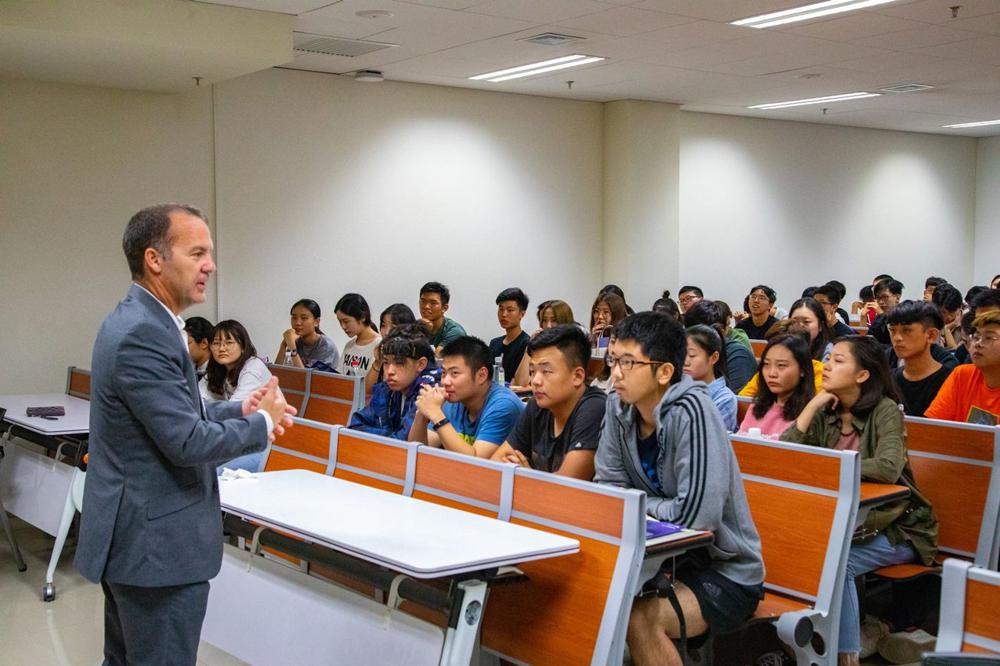
The Chinese Government Scholarship (CGS), administered by the China Scholarship Council (CSC), funds full degree and non-degree study in China, including a large catalog of English-taught bachelor's, master's, and doctoral programs. For the 2026/2027 intake, applications run through the official CSC Information System at www.campuschina.org, with country-specific deadlines mostly falling between February and late April 2026.
Last updated: May 15, 2026
What the CSC Scholarship Actually Covers
The CGS is a full government-funded award. Depending on the program category (Type A through the embassy/consulate, Type B through the university, or Type C bilateral), the standard package for the 2026/2027 academic year includes:
- Full tuition waiver at the host Chinese university
- On-campus accommodation or a housing subsidy
- Comprehensive medical insurance for international students in China
- A monthly living stipend, paid from the date of registration
The living stipend rates published for 2026 are:
Program level | Monthly stipend (RMB) |
|---|---|
Undergraduate | 2,500 |
Master's | 3,000 |
Doctoral | 3,500 |
The University of Chinese Academy of Sciences confirms the 3,000 RMB master's and 3,500 RMB doctoral figures, transferred monthly from the date of registration. General scholar and senior scholar categories receive different rates set by the host institution.
One hard rule worth knowing up front: CGS recipients are not permitted to hold any other scholarship funded by the Chinese government at the same time. Violators have their qualifications canceled and must return funds already disbursed.
Who Is Eligible (and the New CSCA Requirement)
The basic eligibility criteria are consistent across embassies:
- Non-Chinese citizen in good health
- Holds the required prior degree for the level applied to (high school diploma for bachelor's, bachelor's for master's, master's for doctoral)
- Meets the age limit for the chosen level
- Meets the language requirement for the program (English or Chinese)
Age limits, using Shanghai University's 2026 CGS rules as a representative example, are:
- Bachelor's applicants: under 25
- Master's applicants: under 35
- Doctoral applicants: under 40
- General scholars: under 45
- Senior scholars: under 50
The CSCA test (bachelor's applicants only)
Starting with the 2026/2027 academic year, all undergraduate CGS applicants must register for and take the China Scholastic Competency Assessment (CSCA) before their application deadline. Master's and doctoral applicants are not required to take CSCA.
Key points on CSCA for English-taught bachelor's applicants:
- The first global CSCA test was held on December 21, 2025. From 2026 onward, CSCA runs five times per year: January, March, April, June, and December.
- Applicants planning to enroll in September 2026 had to sit CSCA on December 21, 2025, or January 25, 2026.
- Registration is exclusively through the official site www.csca.cn. Payment is accepted via Alipay, WeChat Pay, UnionPay, VISA, and MasterCard.
- For English-taught bachelor's programs, applicants are exempt from the Professional Chinese subject. Mathematics is compulsory; Physics and Chemistry are optional depending on the intended major.
- From 2028 onward, CSCA will be required for all undergraduate applicants to Chinese universities, with formal minimum admission standards to be announced.
Language requirements for English-taught programs
Every embassy notice for 2026/2027 states that English-taught program applicants must submit a recognized language proficiency certificate (IELTS or TOEFL) according to the host university's requirements. As a representative benchmark, China University of Petroleum-Beijing requires master's and doctoral candidates for English-taught programs to present IELTS 6.5 or TOEFL 80, or an official letter confirming that prior studies were conducted in English for at least two years.
Native English speakers should still expect to provide an official medium-of-instruction letter from their previous institution if they don't have a test score.
Document Checklist
Documents are uploaded through the CSC Information System. Paper submission is no longer required in most countries (Indonesia's embassy, for example, explicitly states no paper materials are needed for 2026/2027).
Standard documents for English-taught CGS applications:
- Passport scan (photo page). If validity is less than 12 months from the expected start of study, the passport must be renewed before applying.
- Highest degree certificate and academic transcripts (notarized English or Chinese translation if originals are in another language)
- Language proficiency certificate: IELTS, TOEFL, or an official medium-of-instruction letter
- Two recommendation letters from associate professors or higher (for master's and doctoral applicants)
- A Study Plan or Research Proposal in English or Chinese, with these minimum word counts: 200 words for undergraduates, 500 words for non-degree students, and 800 words for postgraduates
- Foreigner Physical Examination Form (the official PRC version), valid for six months
- Non-criminal record certificate (required in most embassy jurisdictions)
- Published academic work or portfolio, where applicable
- For bachelor's applicants: CSCA score report
- For Quebec residents applying through Montreal: a recommendation from Quebec's ministère de l'Enseignement supérieur
For EU Member State applicants, the EU Window CGS Program for 2026/2027 is open via the Chinese Mission to the EU and covers tuition, accommodation, medical insurance, and the monthly stipend across undergraduate, master's, doctoral, and visiting scholar categories.
How to Apply: Step by Step
- Pick your program category. Type A (embassy/consulate route) is the most common path for new applicants. Type B (university route) is direct to the institution. Type C is for designated bilateral or institutional programs.
- Choose universities and English-taught programs. Each CGS-designated university publishes its own catalog. You may list up to three preferences in the system. Check that the program is offered in English for your chosen intake.
- Note your country's Agency Number. This routes your application correctly. Confirmed 2026 examples include Indonesia 3602, Sweden 7521, Estonia 2331 (Type A), Bahamas (Program Category A) 0441, and Shanghai University (Type B) 10280.
- Register on the CSC Information System at www.campuschina.org and complete the online form. Upload all required documents as PDFs.
- Bachelor's applicants only: register separately at www.csca.cn, sit the CSCA on a date that precedes your embassy's CGS deadline, and upload the score.
- Apply directly to the university as well if it requires a parallel application. Tsinghua University, for example, only selects CGS candidates from students who have already been pre-admitted through its regular graduate admissions process.
- Submit before your country's deadline and wait for the host university to review, interview if required, and forward your file to the CSC.
- Receive the Admission Notice and JW201 form from the host university (usually June to August), then apply for the X1 student visa at your nearest Chinese embassy or consulate.
For the visa stage and arrival logistics, see our guide to China X1 Student Visa Requirements.
Fees, Deadlines, and Processing Time
The CGS application itself is free on the CSC side, but you should budget for:
- CSCA registration fee (bachelor's applicants), paid on www.csca.cn
- IELTS or TOEFL test fees
- Document notarization and translation
- Medical examination at an authorized clinic
- Visa fees once admitted
- A processing or registration fee charged by some universities (varies)
Deadlines vary significantly by country. Confirmed 2026/2027 deadlines include:
Embassy/Consulate | 2026/2027 deadline |
|---|---|
Fiji | February 1, 2026 |
Indonesia | February 8, 2026 |
Sweden (Gothenburg) | February 8, 2026 |
Estonia | February 8, 2026 |
Bahamas | February 14, 2026 |
Shanghai University (Type B) | February 15, 2026 |
Canada (Quebec, via Montreal) | February 22, 2026 |
Many other embassies set deadlines in March or April. Always check the website of the specific Chinese embassy or consulate that handles your country before planning your timeline.
From submission to final result, expect roughly:
- Embassy or agency screening: 2 to 6 weeks after the deadline
- University academic review and interviews: March to May
- CSC final review and results: late June to early August
- Admission Notice and JW201 dispatch: July to August
- Visa issuance: 4 to 10 working days after submitting the visa application
Common Pitfalls
- Missing the CSCA window. Bachelor's applicants who waited too long in late 2025 lost their shot at September 2026 enrollment. Register on www.csca.cn as early as possible.
- Treating the CSC application as the only application. Many top universities (Tsinghua, Peking, Fudan, Zhejiang) require you to apply through their own admissions portal in parallel. No university application, no scholarship.
- Weak study or research plan. The 800-word postgraduate research proposal is the most heavily weighted soft document. Generic statements about "interest in Chinese culture" do not compete with concrete proposals naming a supervisor and a research direction.
- Submitting without a confirmed supervisor (for PhD). Doctoral applicants who already have a written acceptance from a potential supervisor at the host university have a measurably higher acceptance rate.
- Holding another Chinese government scholarship. You cannot stack CGS with other PRC-funded awards. Provincial and Confucius Institute scholarships are administered separately and have their own restrictions.
- Passport about to expire. If your passport has less than 12 months of validity from the expected start of study, you must renew it before applying.
- Notarization mistakes. Transcripts and degree certificates not in English or Chinese must be officially translated and notarized. An unstamped translation will get the file rejected at screening.
- Mixing up Type A, B, and C. The Agency Number you enter routes your application. The wrong number sends your file to a body that cannot process it.
Frequently Asked Questions
Can I apply to English-taught programs without any Chinese language ability?
Yes. English-taught bachelor's, master's, and doctoral programs do not require HSK at application. Many programs include a free Chinese language course during your studies, and English-taught bachelor's applicants are exempt from the Professional Chinese subject of CSCA. Picking up daily Chinese during your degree will still make life in China far easier.
Do I need to be a top student to win the scholarship?
Grades matter, but the CGS is not purely GPA-driven. A focused research plan, relevant work or publications, strong recommendations, and a clear fit with a specific program at a specific university often outweigh small differences in GPA.
Can I work part-time while on CGS?
International students in China may take on limited internships or part-time work only with prior approval from both the host university and the relevant authorities. Unauthorized work can result in scholarship cancellation.
What happens after I graduate?
Many graduates return home or move on to graduate study elsewhere. If you want to stay and work in China, you'll need to transition to a Z visa and work permit; see our walkthrough of the China Z Visa and Work Permit. Long-term residents may eventually qualify for Permanent Residency in China.
Is the scholarship renewed automatically each year?
No. Renewal is conditional on an annual review of academic performance and conduct. Students who fail to meet the standard can have funding suspended or terminated.
Can I switch universities or programs after I arrive?
Generally no. The CGS is tied to the specific program and university listed on your Admission Notice. Transfers require approval from both the original and new institutions and from the CSC.
Living in China is far smoother when you can hold a conversation in Mandarin, even if your degree is taught in English. If you want a faster, more enjoyable way to build that everyday Chinese, try Migaku and learn directly from the shows, news, and content you already enjoy.