E-7 Specialty Visa in Korea: A Practical Guide for Foreign Professionals
Last updated: May 22, 2026
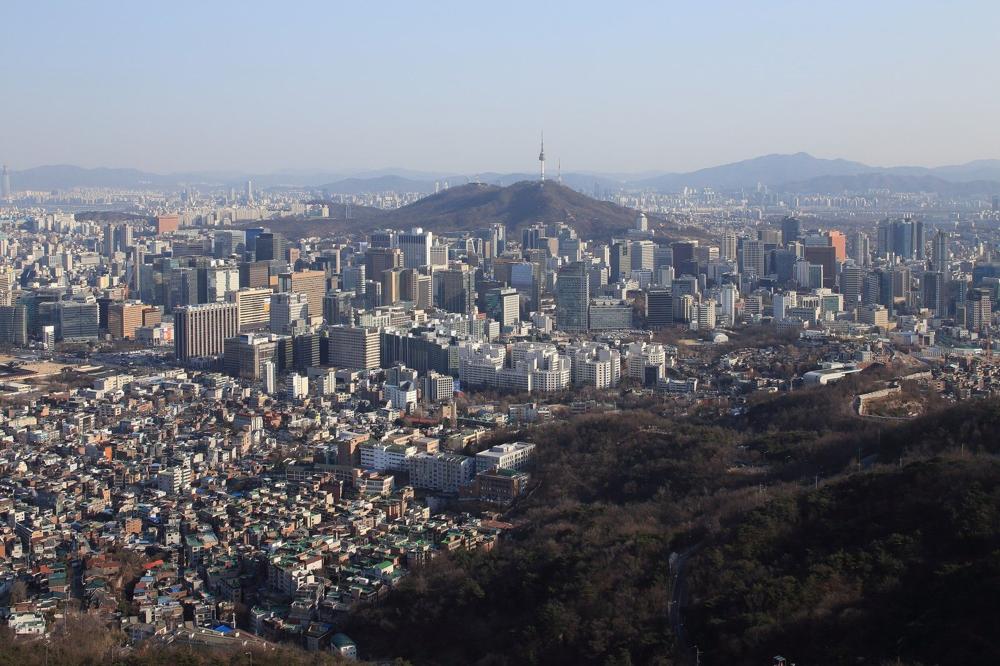
Korea's E-7 visa is the main long-term work permit for foreign professionals with specialized skills, sponsored by a Korean employer in one of the occupations designated by the Ministry of Justice. This guide covers who qualifies in 2026, what documents you need, current fees and salary thresholds, and the pitfalls that tend to derail applications.
Last updated: May 22, 2026
What the E-7 Visa Actually Is
The E-7 is officially the "Foreign National of Special Ability" or Specific Activity visa. It is granted to foreigners who sign a contract with a Korean public or private organization to perform work that the Ministry of Justice has formally designated as suitable for foreign professionals. Unlike the E-2 (foreign language instructor) or the H-1 working holiday, the E-7 is built around occupation codes, employer sponsorship, and salary thresholds.
There are four subcategories, and which one applies to you depends on the job, not your preference:
- E-7-1 Professionals: 67 designated occupations covering managers, engineers, IT specialists, designers, researchers, and similar roles.
- E-7-2 Semi-professional workers: 10 occupations including specific service and technical positions.
- E-7-3 General skilled laborers: 10 occupations covering shipbuilding welders, aircraft mechanics, and similar trades.
- E-7-4 Skilled tradespersons (points system): 3 occupations, used mainly as a promotion path from the E-9, E-10, or H-2 visa categories via the K-Point System.
If you are a software engineer, marketing manager, designer, or researcher being recruited from abroad, you are almost always looking at the E-7-1.
Eligibility: Who Qualifies in 2026
The general qualification rule for E-7-1 is that you must meet one of three combinations:
- A master's degree or higher in a field relevant to the job, or
- A bachelor's degree plus at least 1 year of related work experience, or
- 5 years of relevant work experience without a degree.
There is also a salary-based exemption. If your total annual remuneration in Korea will exceed three times the previous year's per capita GNI, both the education and experience requirements can be waived regardless of profession. This is the route most often used for senior hires and is also the income bar used for the new Top-Tier Visa track.
Beyond your own credentials, the employer matters. For occupations on the national employment protection list, foreigners can generally be hired only up to 20% of the company's national (Korean) employee headcount. A two-person startup, in other words, usually cannot sponsor four foreigners.
Salary thresholds for 2026
On December 29, 2025, the Korean Ministry of Justice announced the salary standards that govern E-7 applications filed between February 1 and December 31, 2026:
Subcategory | 2026 minimum annual salary (KRW) |
|---|---|
E-7-1 Professionals | 31,120,000 |
E-7-2 Semi-professionals | 25,890,000 |
E-7-3 General skilled | Check HiKorea / Ministry of Justice for the latest figure |
Compared to the previous standard, the E-7-1 minimum rose by 2,450,000 KRW, while E-7-2 and E-7-3 minimums each rose by 740,000 KRW. Since April 2025, the same wage requirement applies to all sponsoring companies regardless of size; the older GNI-tiered scale based on company size is no longer in effect.
If your offer is below these floors, immigration will reject the application even if every other document is perfect. Negotiate the contract salary with this in mind before your employer files anything.
Document Checklist
The Korean consulate or HiKorea office handling your case will publish a current list, but in practice you should prepare the following well in advance. Originals plus copies, and Korean translations of foreign documents where applicable:
From you (the applicant):
- Passport valid at least 6 months beyond the intended stay, plus a copy of the bio page.
- Completed visa application form with a recent color passport photo.
- Diplomas and transcripts (with apostille or consular legalization).
- Career certificates from previous employers, with dates, role, and duties.
- Professional licenses or certifications relevant to the position.
- Criminal background check from your country of nationality and any country you have lived in for more than 6 months recently.
- Health certificate if your occupation requires one.
From the Korean employer (sponsor):
- Business registration certificate.
- Employment contract specifying job title, duties, salary (meeting the 2026 threshold), and term.
- Company financial statements and tax payment records.
- List of national employees (to confirm the 20% ratio where applicable).
- Confirmation of Visa Issuance number (more on this below).
If you are applying through the E-7-4 points system, you will also need evidence of legal employment history in Korea (typically 4+ years within the last 10 years on an E-9, E-10, or H-2 visa) and a current employment contract of at least 2 years.
Application Steps
Most E-7 applicants follow this sequence:
- Receive a job offer from a Korean employer who is willing and eligible to sponsor.
- Sign the employment contract with a salary that meets the 2026 minimum for your subcategory.
- Employer files for a Confirmation of Visa Issuance (CVI) with the local Korea Immigration Service office in Korea. This is the substantive review where the Ministry of Justice checks the company, the job, the salary, your credentials, and the employment ratio.
- Receive the CVI number from your employer once approved.
- Apply at a Korean embassy or consulate in your country of residence with the CVI number and your full document set.
- Enter Korea within the validity period of the issued visa.
- Apply for the Alien Registration Card (ARC) at the local immigration office within 90 days of arrival. Without the ARC you cannot open a proper bank account, get a long-term phone plan, or use the national health insurance system.
The initial period of stay granted is typically 1 year, with a maximum of 3 years per issuance and extensions of up to 5 years in special cases.
Fees and Processing Time
Government fees are modest, but the surrounding costs (document legalization, translations, courier) add up.
Item | Amount (approx.) |
|---|---|
Single-entry E-7 visa (3-month validity) | USD 60 |
Multi-entry E-7 visa | USD 100 |
Alien Registration Card | 30,000 KRW (check the latest) |
German nationals applying for E-7 visas tied to marketing activities are exempted from the visa fee under a reciprocal agreement; some other nationalities have similar carve-outs, so check the fee schedule at your specific consulate.
Processing time after the CVI is issued is generally 2 to 4 weeks at consulates abroad. The Korean Consulate General in Seattle, for example, currently quotes 3 to 4 weeks with no expedited service available. The CVI step itself usually adds another 2 to 4 weeks before you can even apply at the consulate, so plan on roughly 1 to 2 months from contract signing to arriving in Korea.
Top-Tier Visa and the 2026 Reform
If you work in semiconductors, biotechnology, secondary batteries, displays, robotics, or defense, look at the Top-Tier Visa before defaulting to the standard E-7. Introduced on April 2, 2025 by the Ministry of Justice, it is structured as three linked statuses: D-10-T for job seekers, E-7-T for the employed, and F-2-T for long-term residents.
Requirements are stricter:
- Annual income of at least 3 times Korea's per capita GNI.
- A master's degree from a top-100 university.
- Work experience at a Global 500 company.
In exchange, Top-Tier holders can apply for permanent residency (F-5) after just 3 years instead of the usual 6-year path.
On March 3, 2026, the Ministry of Justice announced the "2030 Immigration Policy Future Strategy," expanding Top-Tier Visa eligibility to STEM professors and researchers and introducing a new E-7-M visa for foreign graduates of Korean technical colleges working in manufacturing. The strategy also signals that Korea's current 39 employment visa types across 10 categories will be simplified into three skill levels (high, medium, low). The E-7-4 skilled worker quota for 2026 is set at 33,000.
If you are negotiating an offer now, ask the employer's HR which track they intend to file. The Top-Tier route is faster and offers a quicker path to residency, but it is gated by industry.
Bringing Family
E-7 holders can sponsor immediate family on dependent visas:
- Spouse and unmarried children under 18: F-3 dependent visa. F-3 holders cannot work in Korea without separate authorization.
- Parents: F-1 visiting status is possible if your annual income exceeds twice the previous year's per capita GNI. This income bar is eased to GNI-level income if you hold a bachelor's degree or higher from a Korean university.
For children's schooling, factor in international school fees early, since they are not covered by your visa or employer in most cases.
Common Pitfalls
Most E-7 rejections and delays come from a small set of avoidable problems:
- Job-degree mismatch. A marketing role filed under an engineering occupation code, or a degree in an unrelated field, is the single most common reason for denial. The occupation, the job duties, and your background must line up.
- Salary below the 2026 floor. Recruiters sometimes quote a base salary that, when stripped of bonuses and allowances, falls under 31.12 million KRW for E-7-1. Confirm the base in writing.
- Employer fails the 20% ratio. Small companies hiring their first or second foreigner can run into the national employment protection cap. Ask HR to confirm the headcount math.
- Missing apostille on diplomas. Korean immigration will not accept uncertified foreign degree documents. Get the apostille before you book your flight to the consulate.
- Missing the 90-day ARC window. Even one day late triggers a fine and complicates future extensions.
- Job change without notification. E-7 status is tied to a specific employer and occupation. Changing jobs requires a fresh approval, not just a new contract.
Frequently Asked Questions
Can I apply for the E-7 from inside Korea?
If you are already in Korea on another long-term status (such as D-10 job-seeker or a student visa), you can typically change status from inside Korea once your employer's Confirmation of Visa Issuance is approved. Tourists on visa-waiver entries usually cannot.
How long does the E-7 last?
Maximum 3 years per issuance, often granted as 1 year initially, extendable up to 5 years in special cases. Extensions are filed at your local immigration office before the current visa expires.
Does the E-7 lead to permanent residency?
Yes. The standard path to F-5 permanent residency runs about 6 years for E-7 holders meeting income, tax, and integration criteria. Top-Tier (E-7-T) holders can apply after 3 years.
Can my spouse work on an F-3?
Not without separate authorization. Many F-3 spouses pursue their own work visa, a student visa, or an F-2 residence visa over time.
Is Korean language proficiency required?
Not for the standard E-7-1. However, TOPIK scores (typically Level 3 or higher) strengthen extension applications, points-system applications (E-7-4), and the path to F-2 and F-5 down the line.
What if my company goes under or fires me?
You generally have a grace period to find a new sponsor and transfer your E-7, but you must notify immigration. Working for a different employer without approval voids your status.
Where do I check the official rules?
Use the Korea Immigration Service portal at HiKorea and the Ministry of Justice Immigration Policy Bureau. Consulate websites in your country will list the document checklist that applies to you specifically.
For other ways to work or study in Korea, see our guides on other Korea work visa options, teaching jobs in Korea, and study opportunities in Seoul.
Moving to Korea on an E-7 is much smoother when you can read your contract, navigate your immigration office, and talk to coworkers in 한국어. If you want to build that ability with real Korean content rather than textbook drills, try Migaku.