# Extensive Reading Language Learning: Benefits of Extensive Reading Compared to Intensive Reading
> Discover how extensive reading builds fluency and vocabulary in language learning through massive input and contextual exposure.
**URL:** https://migaku.com/blog/language-fun/extensive-reading-language-learning-fluency
**Last Updated:** 2026-03-07
**Tags:** resources, discussion, deepdive
---
If you've been [learning a second language](https://migaku.com/) for a while, you've probably heard people say you need to "read more." But here's the thing: there's a massive difference between how you should read for [language learning](https://migaku.com/blog/language-fun/3-things-to-learn-a-language) versus how you read in school. Extensive reading is basically the practice of reading lots of easy, interesting material in your target language without stopping to look up every single word. It's how you build fluency and vocabulary that sticks, and the research backing it up is pretty solid.
---
## What extensive reading means
Extensive reading is when you read large amounts of text that's slightly below or at your current [comprehension level](https://migaku.com/blog/language-fun/comprehensible-input-method-language-learning).
> 💡 The Goal of Extensive Reading 💡
The goal is to **understand the general meaning and enjoy what you're reading**, not to analyze every grammar structure or memorize every unknown word.
When you read extensively, you're picking books or articles where you already understand around **95-98%** of the words. That means if there's one new word every 20-50 words, you're in the sweet spot. You can usually figure out what those unknown words mean from context, and you keep moving forward instead of stopping constantly.
Most language learners who read extensively will go through graded readers, which are books specifically written or adapted for learners at different proficiency levels. A grade 1 reader might use only 300-500 unique words, while a grade 6 reader could use 3,000+ words. The stories get more complex as you move up through the grades.
The key principle here is **volume**. You want to read books, articles, manga, whatever interests you, and you want to read a lot of it. Some researchers suggest learners should aim to read extensively for at least 30 minutes daily to see real gains in fluency.
---
## How intensive reading is different
Intensive reading is the opposite approach. This is when you **read short, difficult texts very carefully, analyzing grammar structures, looking up every new word in a dictionary**, and really picking apart how the language works.
In a classroom setting, intensive reading might involve spending an entire lesson on one paragraph. You'd discuss vocabulary, identify verb tenses, talk about cultural context, and maybe translate sections. It's slow, deliberate, and focused on accuracy.
Both intensive and extensive reading have their place in language learning.
- Intensive reading helps you understand complex grammar and build analytical skills.
- Extensive reading builds fluency, speed, and natural vocabulary acquisition.
The problem is that most traditional language classes focus almost entirely on intensive reading and ignore extensive reading completely.
---
## Benefits of extensive reading for vocabulary growth
Here's where extensive reading in language learning really shines. When you have extensive reading experience, you encounter new second language vocabulary in context, multiple times, in slightly different situations. This is how your brain actually learns words for the long term.
Research from vocabulary acquisition studies shows that you typically need to see a word 7-15 times in different contexts before it really sticks in your memory. Extensive reading gives you those repeated exposures naturally. You're not memorizing word lists or flashcards (though those help too). You're seeing words used in real sentences, with real meaning attached.
Studies on extensive reading programs, particularly the "book flood" experiments run by Elley and Mangubhai in 1996, showed that students who did extensive reading gained significantly more vocabulary than control groups.
---
## Building fluency through repeated exposure
Fluency is about speed and automaticity. When you're fluent, you don't have to [think about translating individual words](https://migaku.com/blog/language-fun/how-to-think-in-a-foreign-language) or constructing sentences piece by piece. The language just flows.
Extensive reading builds this automaticity because you're processing large amounts of text quickly. You're training your brain to recognize common sentence patterns, frequent vocabulary, and typical ways of expressing ideas without conscious effort.
When you are reading in a foreign language extensively, you start to internalize grammar patterns without explicitly studying them. You see the same structures over and over: "I have been thinking about..." or "She would have gone if..." or whatever patterns are common in your target language. Your brain picks up on these patterns and starts to predict what's coming next.
This prediction ability is a huge part of reading fluency as one of the language skills. Fluent readers don't read every single letter. They recognize word shapes, predict based on context, and skim over familiar patterns. The only way to develop this skill is through massive amounts of reading practice.
---
## How grammar comprehension improves naturally
You don't need to memorize every grammar rule to use a language correctly. Extensive reading helps you absorb grammar naturally through exposure.
When you read graded readers that are at your level, you see correct grammar in context thousands of times. Your brain starts to recognize what "sounds right" even if you can't explain the rule. This is exactly how kids learn their first language, and it works for second language learners too.
Let's say you're learning English and you keep seeing sentences like "I've been studying for three hours" or "She's been working since morning." You might not know the formal name for present perfect continuous tense, but after seeing it used correctly in dozens of different contexts, you start to understand when to use it.
---
## Motivation and confidence through success
One of the biggest benefits of extensive reading is psychological. When your reading skills allow you to read books in your target language and understand them, that's incredibly [motivating](https://migaku.com/blog/language-fun/language-learning-motivation-how-to-stay-motivated).
This motivation matters a lot for long-term success. Language learners who develop reading habits in their target language are way more likely to stick with it and reach advanced levels. They're engaging with the language regularly because they want to, not because they have to.
---
## Practical strategies to read extensively
So how do you implement extensive reading? Here are some practical approaches that can improve your reading comprehension and help you learn new vocabulary.
1. First, find reading material at the right level. If you're a beginner, start with grade 1 or 2 graded readers. Don't try to read Harry Potter in your target language if you only know 500 words. That's intensive reading at best, frustration at worst.
2. Set a regular reading time. Even 15-20 minutes daily is way better than an hour once a week. Consistency builds the habit and gives you regular exposure to the language.
3. Don't use a dictionary for every unknown word. This is hard for perfectionists, but it's important. If you can understand the general meaning from context, keep going. Only look up words that appear frequently or seem crucial to understanding the plot.
4. Track what you read. Some learners use apps like Accelerated Reader or just keep a simple list. Seeing your progress is motivating, and it helps you notice when you're ready to move up to the next grade level.
5. Read what interests you. Experienced language learners choose their own reading materials. There are graded readers on every topic: mysteries, romance, science fiction, biographies, history. If you're bored, you won't stick with it. Find material you want to read.
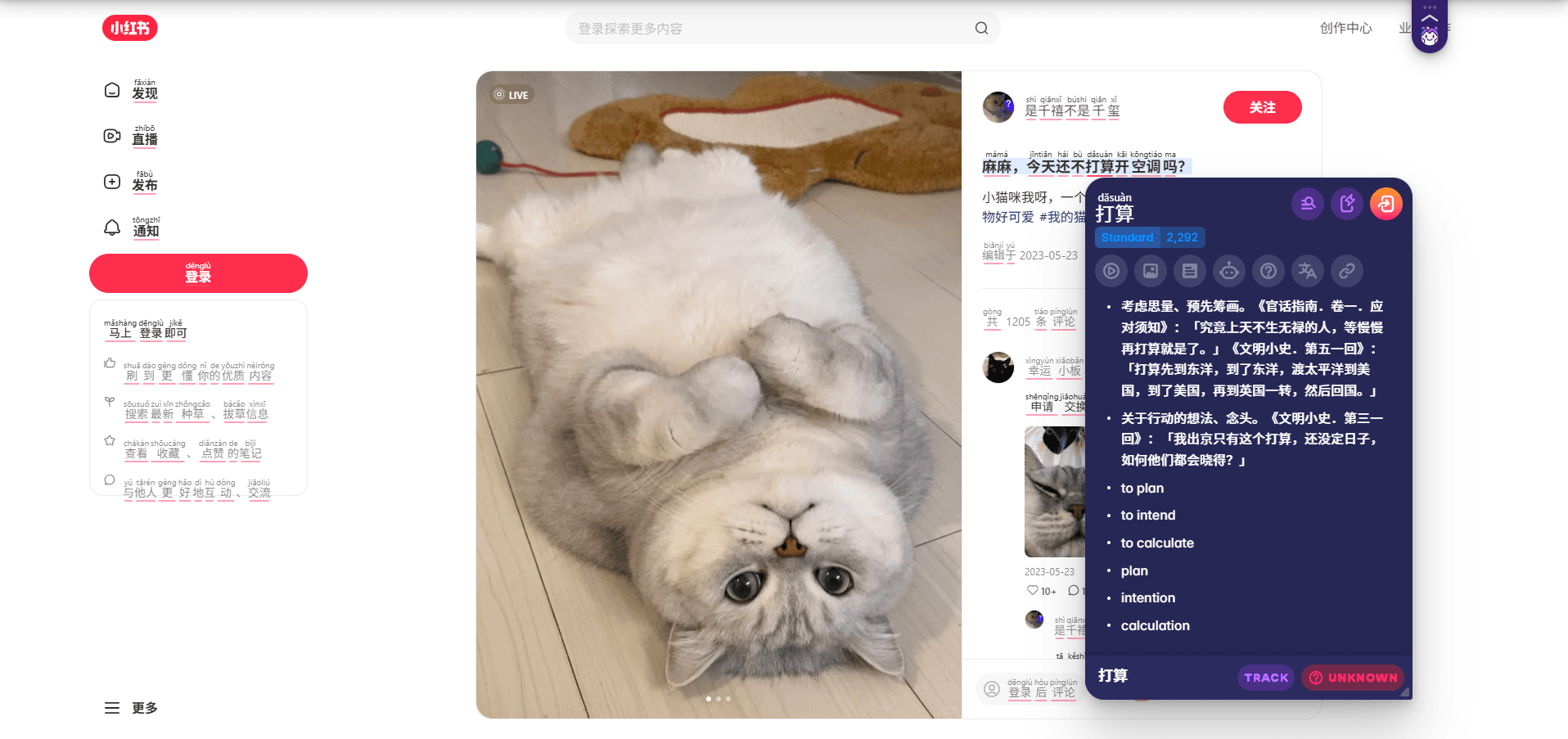
Anyway, if you enjoy reading books and learning new words, Migaku's browser extension and app let you look up words from context instantly for your second language acquisition. It's pretty useful for when you hit those few unknown words but don't want to break your flow completely. There's a 10-day free trial if you want to check it out.
 ---
## FAQs
Based on decades of research, yes. They're one of the most effective ways to build vocabulary, fluency, and overall language proficiency. They're not the only method you should use, but they should definitely be part of your routine.
Absolutely. Reading provides massive amounts of input, exposes you to formal and informal language, teaches you about culture, and builds skills that transfer across all areas of language use.
---
## Moving beyond graded readers
Eventually, you'll want to transition from graded readers to authentic materials written for native speakers. This transition usually happens around B1 or B2 level. That's when the real magic happens. Now you can explore more genres and stories that genuinely interest you without feeling intimidated by new words. And you can fully unlock the fun of cross-cultural reading.
> If you consume media in the language you want to learn, and you understand at least some of the messages and sentences within that media, you will make progress. _Period_.
Read more, live more!📖
---
## FAQs
Based on decades of research, yes. They're one of the most effective ways to build vocabulary, fluency, and overall language proficiency. They're not the only method you should use, but they should definitely be part of your routine.
Absolutely. Reading provides massive amounts of input, exposes you to formal and informal language, teaches you about culture, and builds skills that transfer across all areas of language use.
---
## Moving beyond graded readers
Eventually, you'll want to transition from graded readers to authentic materials written for native speakers. This transition usually happens around B1 or B2 level. That's when the real magic happens. Now you can explore more genres and stories that genuinely interest you without feeling intimidated by new words. And you can fully unlock the fun of cross-cultural reading.
> If you consume media in the language you want to learn, and you understand at least some of the messages and sentences within that media, you will make progress. _Period_.
Read more, live more!📖