# First Words and Phrases to Learn in Any Language: Start Here
> Learn which first words to learn in any language for fastest progress. Focus on these 100-200 essential words before anything else.
**URL:** https://migaku.com/blog/language-fun/first-words-to-learn-in-any-language
**Last Updated:** 2026-04-05
**Tags:** vocabulary, discussion, deepdive
---
When you're starting to [learn a language](https://migaku.com/), the biggest question is always: where do I even begin? You could spend months memorizing random vocabulary from a textbook, or you could focus on the words that actually matter for real conversations. The truth is, you don't need thousands of words to start communicating. You need the right words. This guide will show you exactly which first words to learn in any language, why they matter, and how to use them to build a foundation that actually works.
----
## Why your first 100 words matter more than you think
Here's the thing about [language learning](https://migaku.com/blog/language-fun/3-things-to-learn-a-language): not all words are equally important. Some words show up constantly in everyday conversation, while others you might never use in your entire life. The 100 most common words in any language typically account for about 50% of all spoken communication. That's pretty wild when you think about it.
When you focus on learning the most useful words first, you can start having basic interactions way faster than if you just work through a textbook from page one. This matters because early wins keep you motivated, and motivation is what keeps you going when grammar gets tough or pronunciation feels impossible.
The key is understanding that these first words aren't just random vocabulary. They're building blocks that let you construct basic sentences, ask for what you need, and actually survive in situations where you need to use your target language.
----
## The core categories you should learn first
### Basic greetings and social basics
Every single conversation starts with a greeting, right? That's why these should be your absolute first priority. In any language, you need to know how to say hello, goodbye, good morning, good evening, and how are you. These phrases open doors and show respect.
Beyond just "hello," learn the appropriate greetings for different times of day and levels of formality. In many languages, what you say to your friend differs from what you say to your boss or a stranger on the street. Native speakers notice when you get this right.
Also grab "nice to meet you" and "my name is" because introductions happen constantly when you're new somewhere. These aren't just polite, they're practical tools for making connections.
### The magic words: please, thank you, sorry
In any foreign language, "please," "thank you," "you're welcome," "excuse me," and "sorry" will carry you through countless situations. These words show cultural awareness and respect, which matters way more than perfect grammar when you're just starting out.
I'd also throw "help" into this category. When you're lost, confused, or in trouble, being able to say "help" or "can you help me" is essential. Combine it with "please" and you've got a lifeline.
### Yes, no, and basic responses
This seems obvious, but you'd be surprised how many people skip over the simple stuff. Learn yes, no, maybe, I don't know, and I don't understand. These let you participate in conversations even when your vocabulary is limited.
"I don't understand" is especially crucial. Pair it with "do you speak English?" and "can you speak more slowly?" and you've got a survival kit for real interactions with native speakers.
### Numbers from 1 to 100
Numbers are everywhere. Prices, addresses, phone numbers, times, dates. You can't function without them. Start with 1 through 10, then 11 through 20, then the tens (30, 40, 50, etc.). Once you have these down, you can construct any number you need.
Learning numbers early pays off immediately because you'll use them every single day. Ordering food, shopping, telling time, and making plans. All of it requires numbers.
### Time-related vocabulary
Speaking of time, you need days of the week, months, today, tomorrow, yesterday, now, later, morning, afternoon, evening, and night. These words let you talk about when things happen, which is pretty fundamental to human communication.
Add in "what time is it?" and "when?" and you can navigate schedules and appointments. This vocabulary becomes even more important if you're traveling or living somewhere that uses your new language.
----
## Essential verbs when you start to learn a new language
Here's where things get interesting. Verbs are action words, and they're what make sentences actually mean something. The most common verbs in any language are usually irregular (because of course they are), but they're also the most useful.
### The big three: to be, to have, to do
These three verbs appear in almost every conversation.
- "To be" lets you describe things and introduce yourself.
- "To have" expresses possession and need.
- "To do" covers actions and questions about activities.
In English, we use these constantly: I am tired. I have a question. What do you do? Learn how to conjugate these in present tense at minimum, and you'll be able to construct hundreds of basic sentences.
### Movement and direction verbs
Learn "to go," "to come," "to leave," "to arrive," "to walk," and "to run." These verbs let you talk about getting from place to place, which is super practical when you're navigating a new environment.
Combine these with basic prepositions (to, from, in, on, at) and you can give and understand directions. That alone makes them worth prioritizing early.
### Daily action verbs
"To eat," "to drink," "to sleep," "to want," "to need," "to like," "to speak," and "to understand" cover your basic human needs and preferences. These verbs show up in restaurants, hotels, shops, and casual conversations constantly.
When you can say "I want water" or "I need help" or "I like this," you can communicate your needs and start expressing preferences. That's a huge step up from just knowing nouns.
### Thinking and communication verbs
"To think," "to know," "to see," "to hear," "to say," and "to ask" let you talk about mental processes and communication itself. These are slightly more advanced but still belong in your first 200 words because they're so frequent in everyday speech.
----
## Important nouns language learners should pick up for daily life
Nouns give you the objects and concepts you need to talk about the world around you. Focus on categories that matter for your immediate needs.
### People and relationships
Learn the words for person, man, woman, child, friend, family, mother, father, sister, brother. These come up constantly in conversations about who you are, where you're from, and who you're with.
### Food and drink essentials
Water, bread, coffee, tea, meat, fish, vegetables, fruit, rice, and beer cover the basics of eating and drinking. Add "breakfast," "lunch," and "dinner" and you can navigate restaurants and grocery stores.
You don't need to know every food item right away. Start with what you actually eat and drink regularly, then expand from there.
### Places and locations
House, hotel, restaurant, bathroom, hospital, pharmacy, train station, airport, street, city, and country. These nouns let you ask for directions and talk about where you're going or where you've been.
The word for bathroom deserves special mention. Trust me, you want to learn this one early.
### Time and quantity
Day, week, month, year, hour, minute, time, money, price. These nouns work together with your numbers to handle practical situations like shopping, scheduling, and planning.
----
## Question words in language learning that open conversations
The ability to ask questions transforms you from someone who just responds to someone who can actually drive a conversation forward. Learn these question words early: what, where, when, why, who, how, and how much.
These words let you gather information, show interest, and navigate unfamiliar situations. "Where is the bathroom?" "How much does this cost?" "When does the train leave?" These are survival questions.
Combine question words with your basic verbs and nouns, and suddenly you can ask hundreds of different questions even with a limited vocabulary.
----
## Common adjectives and descriptors
Adjectives let you describe things and express opinions. Start with basic opposites: good/bad, big/small, hot/cold, expensive/cheap, old/new, easy/difficult.
Add in some essential descriptors like beautiful, delicious, interesting, important, and possible. These words let you move beyond just identifying things to actually describing and evaluating them.
Colors are useful too, especially for shopping or describing objects. Learn black, white, red, blue, green, yellow, and you can handle most situations.
----
## Pronouns and basic grammar glue
You need pronouns to construct sentences: I, you, he, she, it, we, they. Also possessive forms: my, your, his, her, our, their. These are the framework that holds your sentences together.
Don't forget demonstratives: this, that, these, those. They let you point things out and specify what you're talking about.
Articles (a, an, the in English) and basic prepositions (in, on, at, to, from, with, for) are tiny words that make a huge difference in being understood clearly.
----
## Building your personal vocabulary list
Once you've got the core words down, your next vocabulary should reflect your actual life and interests.
- If you love cooking, learn food and kitchen vocabulary.
- If you're into sports, prioritize that terminology.
- If you need the language for work, focus on professional vocabulary.
This personalized approach keeps you motivated because you're learning words you'll actually use. Generic textbook vocabulary lists often include random words that might not matter for your specific situation.
Keep a running list of words you wish you knew how to say. When you're trying to express something and get stuck, write it down. Those gaps in your vocabulary are telling you exactly what to learn next.
----
## The role of context in learning words and phrases
Here's something important: learning isolated words from a list is way less effective than learning words in context. When you see how a word is actually used in sentences, you understand its meaning more deeply and remember it better.
This is where consuming media in your target language becomes crucial. Even as a beginner, you can watch simple videos, read children's books, or listen to podcasts designed for learners. When you encounter your first words in real contexts, they stick.
Flashcards and vocabulary lists are useful tools, but they work best when combined with exposure to authentic language use. The words become real when you see native speakers actually using them.
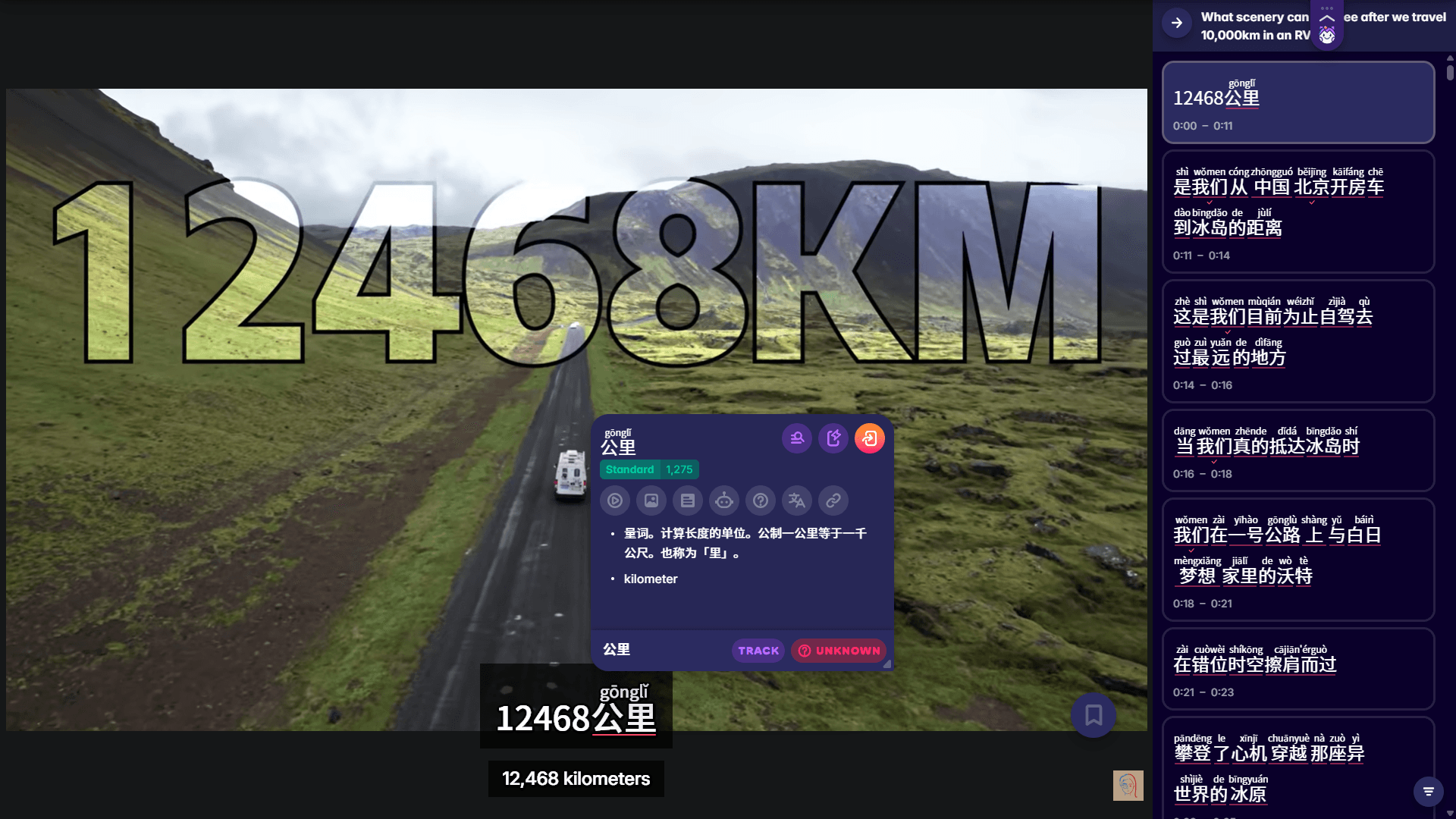
If you want to speed up this whole process, Migaku's browser extension and app let you look up words instantly while watching shows or reading articles in your target language. You can save new vocabulary directly to flashcards without breaking your flow. There's a 10-day free trial if you want to check it out.
 ----
## FAQs
This depends entirely on your goals. If you're learning for an upcoming trip, then yes, absolutely prioritize travel vocabulary. Learn words for transportation, accommodation, food, emergencies, and basic navigation. But if you're [learning a new language](https://migaku.com/blog/language-fun/best-language-learning-methods) for long-term fluency, career purposes, or connecting with family, you might want to adjust. Someone learning for business needs different vocabulary than someone learning to watch movies or read books.
Research on vocabulary frequency shows that knowing around 800 to 1,000 word families gives you about 75% comprehension of everyday conversation. That sounds like a lot, but remember that a word family includes related forms (run, running, ran, runner all count as one family). For basic survival and simple conversations, you can get by with 200 to 300 well-chosen common words. That's enough to express basic needs, ask questions, and handle everyday situations like shopping or ordering food.
----
## Prioritize this list first when learning a language, but don't overlook the context
The first words to learn in any language give you a foundation, but real progress comes from using those words in context. You can memorize lists all day, but until you're consuming real content and trying to understand actual messages, you're not really learning the language. Pick your core 100 to 200 words, drill them until they're automatic, then dive into content that interests you. Movies, shows, books, podcasts, whatever keeps you engaged. That's where vocabulary comes alive.
> If you consume media in your target language, and you understand at least some of the messages and sentences within that media, you will make progress. *Period*.
A good beginning can motivate you greatly!
----
## FAQs
This depends entirely on your goals. If you're learning for an upcoming trip, then yes, absolutely prioritize travel vocabulary. Learn words for transportation, accommodation, food, emergencies, and basic navigation. But if you're [learning a new language](https://migaku.com/blog/language-fun/best-language-learning-methods) for long-term fluency, career purposes, or connecting with family, you might want to adjust. Someone learning for business needs different vocabulary than someone learning to watch movies or read books.
Research on vocabulary frequency shows that knowing around 800 to 1,000 word families gives you about 75% comprehension of everyday conversation. That sounds like a lot, but remember that a word family includes related forms (run, running, ran, runner all count as one family). For basic survival and simple conversations, you can get by with 200 to 300 well-chosen common words. That's enough to express basic needs, ask questions, and handle everyday situations like shopping or ordering food.
----
## Prioritize this list first when learning a language, but don't overlook the context
The first words to learn in any language give you a foundation, but real progress comes from using those words in context. You can memorize lists all day, but until you're consuming real content and trying to understand actual messages, you're not really learning the language. Pick your core 100 to 200 words, drill them until they're automatic, then dive into content that interests you. Movies, shows, books, podcasts, whatever keeps you engaged. That's where vocabulary comes alive.
> If you consume media in your target language, and you understand at least some of the messages and sentences within that media, you will make progress. *Period*.
A good beginning can motivate you greatly!