France PACS Visa: Civil Union as a Path to French Residency
Last updated: May 24, 2026
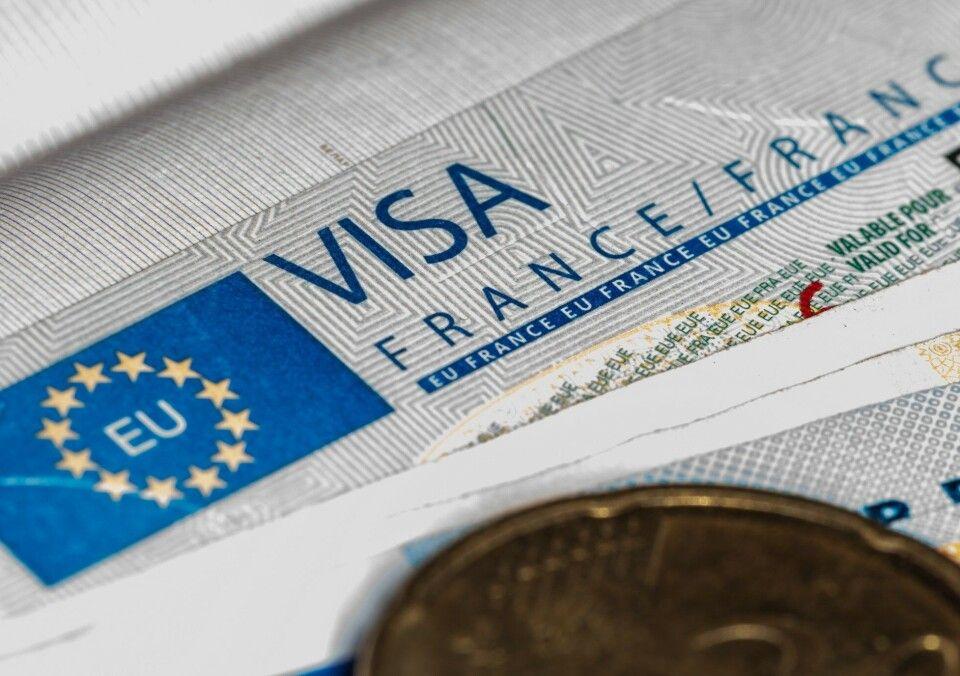
If you're a non-EU citizen partnered with someone living in France, a PACS (Pacte civil de solidarité) can support your path to long-term residency, but it is not itself a visa. You'll still need to enter France on a separate long-stay visa, then use the PACS plus shared life evidence to obtain a residence card.
Last updated: May 24, 2026
What a PACS Actually Does for a Foreign Partner
The PACS is a civil partnership available to two adults regardless of nationality or gender. It can be signed between two French citizens, a French citizen and a foreigner, or two foreigners, as long as at least one partner resides in France. Around 209,827 PACS were registered in 2022 (the latest INSEE figure widely cited), and roughly 10% involve at least one foreign partner.
Where expats often get the rules wrong: France-Visas, the official portal of the Ministry of Foreign Affairs, states clearly that a PACS does not by itself create a right to enter France or to be granted family reunification. Service-public.gouv.fr also confirms that a PACS alone does not entitle a foreign partner to a residence card. Instead, the PACS is one piece of evidence (an important one) used by the préfecture to assess your "personal and family ties" in France under Article L423-23 of the CESEDA.
In practice, this means the PACS route works in two stages:
- Enter France legally on an appropriate long-stay visa (most commonly the visitor visa, VLS-TS "visiteur").
- Once in France and PACSed, apply at your préfecture for a one-year "vie privée et familiale" (private and family life) residence card, then renew into a multi-year card.
If your partner is French, that pathway leads, over several years, to a 10-year resident card and eventually to naturalization.
Eligibility: Who Can Use the PACS Route
To benefit from the PACS-based residency pathway, you generally need:
- A French citizen partner, or a non-EU partner legally settled in France (the second case is harder and usually routes through family reunification rather than a PACS-based card).
- At least one partner residing in France (required to register the PACS).
- Proof of a genuine, ongoing community of life (vie commune). For the "vie privée et familiale" card based on a PACS with a French national, the préfecture typically requires at least one year of continuous shared life, documented with joint bills, tenancy, bank accounts, and similar.
- No existing marriage or PACS, and no close family relationship between the two partners.
- Clean criminal background and valid identity documents.
If your partner is French and you want to bring family members later, see our overview of the France Family Reunification Visa for how the broader system fits together.
Which Visa to Apply for Before You PACS
There is no dedicated "PACS visa." The visa you choose depends on your situation:
- Long-stay visitor visa (VLS-TS visiteur): The most common choice for partners who want to move to France, sign a PACS, build the year of vie commune, and then switch to a vie privée et familiale card. It allows you to live in France for up to 12 months without working. You must show stable resources roughly equal to the French SMIC (around €1,400 to €1,500 net per month in 2026, with a gross monthly reference figure of €1,843.12 used by some consulates), plus private health insurance covering at least €30,000 in medical costs.
- Student visa (VLS-TS étudiant): If you are enrolling at a French institution, this is often cheaper and allows part-time work. You can still PACS during your studies.
- Salarié or other work visa: If you have a French job offer, applying under the work route is usually faster and gives you working rights immediately.
Applications for any long-stay visa cannot be submitted more than 3 months before your intended arrival date.
Document Checklist
The documents fall into three buckets: the visa application, the PACS registration, and later the residence card.
For the long-stay visa (typical visitor file)
- Passport valid at least 3 months beyond intended stay, with blank pages
- Completed France-Visas long-stay form and OFII/ANEF appendix
- Two recent biometric photos
- Proof of accommodation in France (lease, attestation d'hébergement from your partner, or property deed)
- Proof of resources (bank statements, pension, investment income)
- Private health insurance covering at least €30,000
- Letter of intent explaining your project and relationship
- Civil status documents (birth certificate)
- Visa fee receipt
For PACS registration at the mairie or French consulate
- Joint PACS declaration (Cerfa no. 15725*03)
- PACS convention (a simple template is available, or you can draft a customized one)
- Full copy birth certificate (copie intégrale) issued less than 6 months before registration; no time limit if your country does not update civil records
- Valid ID for both partners
- Certificat de non-PACS for the foreign partner, issued by the Service central d'état civil in Nantes, less than 3 months old
- Attestation sur l'honneur of common residence and absence of close family ties
- For some mairies: a "certificat de coutume et de célibat" from your country's embassy (the US Embassy in Paris charges $50 per seal as of 2026)
Documents from other EU member states no longer require apostille or legalization under EU Regulation 2016/1191. Documents from the US, Canada, Australia, the UK, and most other non-EU countries still need an apostille, plus a sworn French translation.
For the vie privée et familiale residence card (after the PACS)
- Proof of PACS registration
- Evidence of at least one year of vie commune: joint lease, shared utility bills (EDF, internet), joint bank statements, joint tax declaration, mutual insurance, photos and correspondence as supporting items
- Your partner's French nationality certificate or ID
- Proof of accommodation
- Recent passport photos meeting French biometric norms
- Payment of the timbre fiscal (tax stamp)
Application Steps, Start to Finish
- Choose your visa category on France-Visas and book an appointment with the consulate or VFS/TLS center that handles your country.
- Submit the visa application no earlier than 3 months before departure. Standard processing is around 15 days, but US, Indian, and Chinese consulates often take 30 to 45 days at peak times, and complex files can reach 60 days.
- Travel to France with your visa. Within 3 months of arrival, validate your VLS-TS online via the ANEF portal (administration-etrangers-en-france.interieur.gouv.fr). If you skip this, the visa is invalidated and you become irregular.
- Set up vie commune: rent together, open a joint account, register for joint utilities, declare taxes together once eligible. Keep every document.
- Sign the PACS at the mairie of your shared residence (free of charge) or before a notaire (around €250 to €450 for a tailored convention, about €100 for basic notarial registration).
- After approximately one year of vie commune, request a change of status to a one-year "vie privée et familiale" card at your préfecture, via the ANEF portal. File at least 2 months before your current visa or card expires.
- Renew into a multi-year card, in principle valid for 4 years, then potentially a 10-year carte de résident after at least 3 years on the vie privée et familiale card, subject to French B1 language proficiency and the republican integration assessment.
Fees and Processing Times in 2026
Item | Cost (2026) | Notes |
|---|---|---|
Long-stay visa application | €99 | Non-refundable. Spouses of French nationals often exempt; reduced €50 for some students |
PACS at the mairie | Free | Cerfa 15725*03 required |
PACS at a notaire | €100 to €450 | Higher if you want a customized convention |
Certificat de non-PACS (Nantes) | Free | Allow 2 to 4 weeks |
US Embassy notarized celibacy attestation | $50 per seal | Some mairies request this |
VLS-TS validation stamp (online) | About €225 | €200 tax + €25 stamp duty for many categories; rose ~5% in January 2026 |
Anticipated standard validation stamp from May 2026 | Around €300 | Reduced rates for students and seasonal workers; confirm on France-Visas |
Renewal into multi-year vie privée et familiale card | €350 | €300 tax + €50 stamp duty via timbres fiscaux |
Sworn translation per document | €40 to €80 | Required for most non-French civil documents |
Processing times to plan around:
- Visa decision: typically 15 days, up to 45 to 60 days in peak periods.
- PACS appointment at a busy Paris mairie: often 4 to 8 weeks of wait.
- Préfecture decision on a change of status to vie privée et familiale: from 3 to 8 months depending on the department; you receive a récépissé in the meantime.
Get your private insurance in place before the consulate appointment, and plan for French top-up coverage once you're enrolled in the public system. Our guide to Mutuelle health insurance for expats explains why most residents add a complementary policy.
Common Pitfalls
- Treating the PACS as a visa. It is not. You must enter France on an independent visa first. Booking a flight on a tourist Schengen entry and trying to PACS your way into residency does not work and can leave you irregular.
- Insufficient vie commune evidence. Préfectures look closely at the start date of joint bills, tenancy, and bank activity. Move-in dates that match your partner's address from day one carry more weight than retroactive declarations.
- Out-of-date civil documents. The certificat de non-PACS must be less than 3 months old, and your birth certificate generally less than 6 months old at registration. Order them late so they are still valid when the mairie reviews your file.
- Missing the VLS-TS validation. The 3-month online validation on ANEF is non-negotiable. If you forget, the visa is void and you cannot apply for the residence card from inside France.
- Filing the residence-card renewal too late. File at least 2 months before expiry. Late filing can mean fees, gaps in legal status, and loss of work rights if applicable.
- Underestimating language requirements. The 10-year resident card requires French at B1 level and an integration interview. Decree no. 2025-648 of July 15, 2025 also introduced a mandatory civic exam (QCM) for first delivery and renewal of multi-year residence cards, in force since July 18, 2025. From January 1, 2026, the civic exam is mandatory for naturalization by decree as well.
- Comparing PACS to marriage timelines. PACS lets you build residency, but for naturalization, marriage to a French citizen allows applying after 4 years, while a PACS requires the standard 5 years of residence.
FAQ
Can I PACS my French partner on a Schengen tourist stay and then stay in France?
You can technically register a PACS while on a short stay, but you cannot convert it into a residence card from inside France without an appropriate long-stay visa. Almost all préfectures will require you to return home and apply for a long-stay visa first.
Do I need to speak French to sign a PACS or get the first residence card?
No formal language test is required to PACS or to obtain the first one-year vie privée et familiale card. French is required (B1) only when you apply for the 10-year carte de résident or for naturalization, and an integration assessment plus civic exam now applies to multi-year cards as well.
Can I work on the visitor visa while waiting for the residence card?
No. The VLS-TS visiteur prohibits salaried work in France. Once you switch to a vie privée et familiale card, you have full working rights, including employment and self-employment. Many partners use the waiting period to prepare a French-format application file. Our walkthrough on How to Write a French CV covers format, photo norms, and common mistakes.
Does PACS work for same-sex couples?
Yes. The PACS is open to same-sex and different-sex couples on identical terms, and the residency pathway is the same.
Can my partner be a non-French EU citizen instead?
Yes, but the legal basis is different. EU citizens exercising free movement in France can sponsor a non-EU partner under EU rules, which is usually faster than the French national route, but the documentary expectations around vie commune are similar.
What if we break up before getting the multi-year card?
The PACS can be dissolved unilaterally. If this happens before you have a stable residence card, your right to remain may be challenged at renewal, especially if vie commune cannot be evidenced for the required period. Some cases qualify for protection (domestic violence, in particular), but in general, the residency pathway depends on the relationship continuing.
Moving to France as a PACSed partner is administratively heavy but well-defined. The faster you handle the documents in French, talk to your mairie, and read préfecture notices yourself, the smoother every step becomes. Migaku helps you learn French from real shows, news, and conversations, so by the time you're handling your préfecture appointment, the paperwork feels familiar instead of foreign, try Migaku.