# French Banking Vocabulary: Essential Terms for Banking in France
> Master French banking vocabulary for opening accounts and handling daily transactions. Learn terms like compte courant, carte bancaire, and more.
**URL:** https://migaku.com/blog/language-fun/french-banking-vocabulary
**Last Updated:** 2026-04-08
**Tags:** vocabulary, phrases
---
Walking into a French bank for the first time can feel pretty intimidating, especially when you're trying to explain what you need in your second language. You'll hear terms like "compte courant" and "carte bancaire" thrown around, and suddenly you're nodding along hoping you didn't just agree to something weird. Here's the thing, banking vocabulary isn't the most exciting part of [learning French](https://migaku.com/learn-french), but it's absolutely essential if you're planning to live, work, or study in France. This lesson covers everything from opening your first bank account to understanding those confusing fees that show up on your statement.
----
## Understanding French banking basics
French banks operate a bit differently than what you might be used to, and the vocabulary reflects that. The word **"banque" ** means bank, pretty straightforward. But once you step inside, you'll need to know specific terms to navigate the system.
**The most common type of accounts are:**
| French | English |
|--------|---------|
| compte courant | Checking account |
| compte d'épargne | Savings account |
| compte joint | Joint account |
| compte professionnel | Professional account |
When you first arrive in France, opening an account requires specific **documentation**.
| French | English |
|--------|---------|
| pièce d'identité | Id card or passport |
| justificatif de domicile | Proof of address |
| justificatif de revenus | Proof of earnings |
Banks are pretty strict about this stuff, so make sure you have everything ready before your appointment.
----
## Essential account operations you'll use daily
Once your account is open, you'll be doing regular transactions.
| French | English |
|--------|---------|
| dépôt / versement | Deposit |
| retrait | Withdrawal |
| virement bancaire | Bank transfer |
| chéquier | Checkbook |
| chèque | Check |
| solde | Account balance |
| relevé bancaire / relevé de compte | Bank statement |
| à découvert | Overdrawn |
The phrase "Combien de temps faut-il pour recevoir mon chéquier et ma carte bancaire?" (How long does it take to receive my checkbook and bank card?) is something you'll probably ask when opening your account. Usually takes about a week or two.
----
## Cards, cash, and payment methods in France
The French banking system runs heavily on card payments.
| French | English |
|--------|---------|
| carte bancaire / carte bleue | Bank card / Debit card (originally a brand, now used generically) |
| paiement sans contact | Contactless payment (tap your card for small purchases) |
| terminal de paiement électronique (TPE) | Electronic payment terminal (the device you tap or insert your card into) |
| distributeur automatique de billets (DAB) | ATM (machine for withdrawing cash) |
| guichet automatique bancaire (GAB) | ATM (same as DAB) |
| espèces / liquide | Cash (physical money) |
| code confidentiel / code PIN | PIN code (secret number to authorize transactions) |
Credit cards work differently in France than in some other countries. What Americans call a credit card is often a **"carte de crédit," ** but many French cards are actually deferred debit cards where the money comes out of your account at the end of the month rather than immediately.
----
## Essential French vocabulary for banking fees and charges
French banks love their fees, and understanding the vocabulary here can save you money.
| French | English |
|--------|---------|
| frais bancaires | Banking fees (monthly maintenance, card fees, transaction fees) |
| commission | Fee charged for specific services (e.g., international transfers) |
| taux | Rate (interest rate on loans or exchange rate for currency conversion) |
| prélèvement | Direct debit (company automatically takes money from your account) |
| prélèvement automatique | Automatic direct debit (for regular payments like phone bills or rent) |
The fee structure can get complex. Some banks charge for every check you write, others give you a certain number free per month. Understanding these terms helps you avoid surprise charges.
----
## Loans, mortgages, and credit products
| French | English |
|--------|---------|
| prêt | Loan |
| prêt immobilier / crédit immobilier | Mortgage |
| capital | Principal (the amount you borrow) |
| intérêts | Interest |
| taux d'intérêt | Interest rate |
| TEG (taux effectif global) | Overall effective rate (includes all fees and charges) |
| mensualités | Monthly payments |
| durée du prêt | Loan term |
| remboursement anticipé | Early repayment (paying off loan before due date) |
Credit in France also includes things like "assurance-vie" (life insurance), which is actually a popular investment vehicle, and various savings products. The vocabulary gets technical fast, but these basic terms cover most situations.
----
## Digital banking terminology
French banks have modernized pretty well, and digital banking vocabulary has become essential.
| French | English |
|--------|---------|
| espace client / banque en ligne | Online banking portal |
| applications bancaires / applis bancaires | Mobile banking apps |
| identifiant | Username |
| mot de passe | Password |
| authentification à deux facteurs / double authentification | Two-factor authentication |
| portefeuille numérique / portefeuille électronique | Digital wallet |
| Apple Pay | Apple Pay |
| Google Pay | Google Pay |
| virements instantanés | Instant transfers (complete in seconds instead of days) |
----
## Investment vocabulary
Beyond basic checking accounts, you might want to invest.
| French | English |
|--------|---------|
| actions | Stocks |
| obligations | Bonds |
| fonds communs de placement / OPCVM | Mutual funds |
| conseiller en investissement | Investment advisor |
| portefeuille | Portfolio (same word as wallet) |
| dividendes | Dividends |
| plus-values | Capital gains |
----
## Common phrases for everyday banking in France
Beyond individual words, you need phrases to communicate at the bank. Here are some useful expressions that come up constantly.
**"Je voudrais ouvrir un compte" ** means "I would like to open an account." Simple and gets the job done. If you need to speak with someone specific, you might say **"Je voudrais parler à un conseiller" ** (I would like to speak with an advisor).
When making a payment, you might ask: **"Vous acceptez les cartes?" ** (Do you accept cards?) or **"Je peux payer par chèque?" ** (Can I pay by check?). To pay is "payer" or "régler."
If there's a problem with your account, you might need to say **"Il y a une erreur sur mon relevé" ** (There's an error on my statement) or **"Ma carte a été volée" ** (My card was stolen). Knowing these phrase patterns helps you handle issues quickly.
For transfers, **"Je voudrais faire un virement" ** (I would like to make a transfer) gets you started. You'll need to provide the recipient's "RIB" (Relevé d'Identité Bancaire), which is their bank account details, or their "IBAN" (International Bank Account Number) for international transfers.
----
## How French banking terms have evolved
Banking terminology in French has actually changed quite a bit over the decades. Did French banking vocabulary change over time? Absolutely. The introduction of the euro in 2002 changed everything. Before that, people used francs, and all the old vocabulary around that currency became obsolete overnight.
Digital banking brought in tons of new terms. Twenty years ago, nobody talked about "virements instantanés" or "paiement sans contact" because those technologies didn't exist. The vocabulary adapts as banking technology evolves.
English terms have also crept into French banking, especially around technology. You'll hear people say "smartphone" and "online" even in French conversations about banking. The Académie Française tries to create French alternatives, but English terms often stick anyway.
----
## Practical tips for learning banking vocabulary
Learning this vocabulary works best when you combine methods.
1. Start with the most common terms you'll actually use. "Compte," "carte," "retrait," "virement," and "solde" should be automatic.
2. Create real-world scenarios in your head. Imagine going to the bank and opening an account. What would you say? What would they ask you? This mental practice helps the vocabulary stick better than just reading lists.
3. Use your actual French bank account as a learning tool. Every time you get a statement, read it carefully. Look up any terms you don't know. Your monthly statement becomes a recurring vocabulary lesson.
4. Watch French YouTube videos about banking. French banks post tutorials, and personal finance YouTubers discuss banking all the time. Hearing the terms used naturally in context helps tremendously.
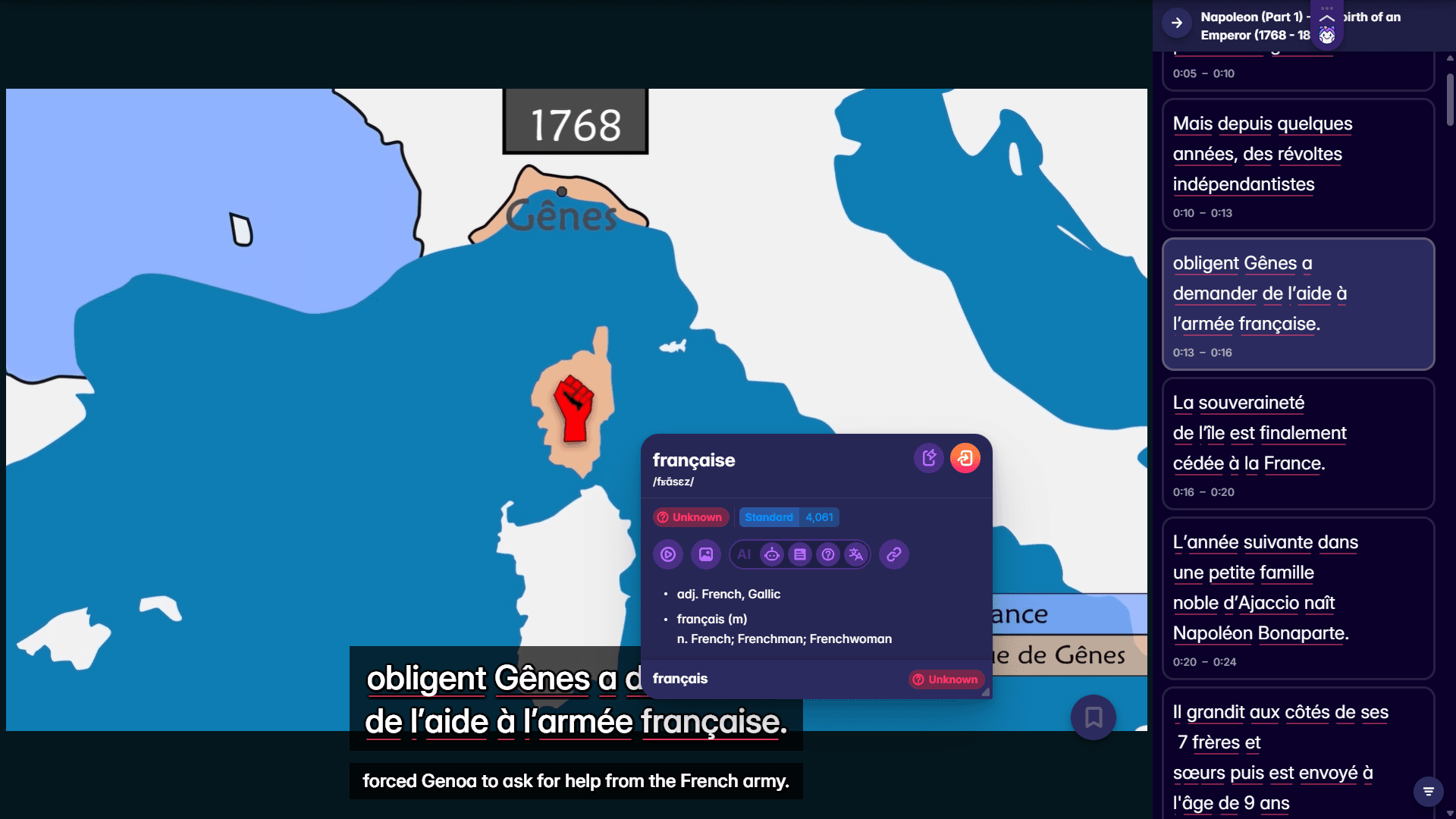
If you want to pick up vocabulary like this naturally while watching French shows or reading French news, Migaku's browser extension and app let you look up words instantly without breaking your flow. Makes immersion learning actually practical instead of constantly pausing to check dictionaries. There's a 10-day free trial if you want to check it out.
 ----
## The best way to prepare for your next bank visit
Learning French banking vocabulary might not be as fun as learning how to order wine or discuss philosophy, but it's way more practical for daily life. You'll use these terms constantly if you live in France, whether you're checking your balance on your phone, writing a check for rent, or setting up automatic bill payments. The best way to learn these words is to go through several bank websites. Focus on the banking activites you often need first, and gradually expand your other vocabulary.
> If you consume media in French, and you understand at least some of the messages and sentences within that media, you will make progress. *Period*.
Learn what matters to your life now.💵
----
## The best way to prepare for your next bank visit
Learning French banking vocabulary might not be as fun as learning how to order wine or discuss philosophy, but it's way more practical for daily life. You'll use these terms constantly if you live in France, whether you're checking your balance on your phone, writing a check for rent, or setting up automatic bill payments. The best way to learn these words is to go through several bank websites. Focus on the banking activites you often need first, and gradually expand your other vocabulary.
> If you consume media in French, and you understand at least some of the messages and sentences within that media, you will make progress. *Period*.
Learn what matters to your life now.💵