# French Imperative Mood: Master the French Imperative Mood to Give Commands
> French imperative mood explained. Here's how to give commands, make requests, and offer suggestions. Master conjugations for tu, vous, and nous forms.
**URL:** https://migaku.com/blog/language-fun/french-imperative-mood-commands
**Last Updated:** 2026-02-22
**Tags:** fundamentals, vocabulary, phrases, grammar
---
If you've been [learning French](https://migaku.com/learn-french) and wondering how to tell someone to pass the salt or suggest grabbing coffee together, you're in the right place. The imperative is actually one of the simpler verb moods to learn because it only has those three forms and usually matches what you already know from the present tense. Check all you need to know about the imperative mood in this post!
---
## What is the imperative mood in French
The imperative mood in French (l'impératif) is one of several grammatical moods used to express **commands, requests, advice, or suggestions**. When you use the imperative, you're directly addressing someone and telling them to do something. Think of it like this: instead of saying "You should close the door," you're saying "Close the door!"
French has different moods for different purposes. The indicative mood states facts and describes reality. The subjunctive mood expresses doubt, wishes, or hypothetical situations. The imperative mood, though, is all about direct action. You're telling someone what to do, right now.
Here's the thing about the French imperative: it only exists in three forms. You can give commands to tu (someone you're informal with), vous (someone you're formal with or multiple people), and nous (a group that includes yourself). There's no imperative for "he," "she," or "they" because you can't directly command someone you're talking about rather than talking to.
---
## How to conjugate verbs for the imperative in French
The French imperative is actually pretty straightforward once you understand the pattern.
> 📖For most verbs, you take the present tense conjugation and simply drop the subject pronoun. That's basically it.
### -er verbs
Let's look at **a regular -er verb** like "parler" (to speak):
- Tu parles (you speak) becomes Parle! (Speak!)
- Nous parlons (we speak) becomes Parlons! (Let's speak!)
- Vous parlez (you speak) becomes Parlez! (Speak!)
Notice something about the tu form? For -er verbs, you drop the final "s" from the present tense. So "tu parles" becomes just "parle." This is one of the key rules that trips people up at first.
### -ir and -re verbs
**For regular -ir and -re verbs**, you keep the present tense conjugation exactly as it is, just without the subject pronoun.
Take "finir" (to finish):
- Finis! (Finish! - tu form)
- Finissons! (Let's finish! - nous form)
- Finissez! (Finish! - vous form)
The verb "attendre" (to wait) works the same way:
- Attends! (Wait!)
- Attendons! (Let's wait!)
- Attendez! (Wait!)
Most French verbs follow this pattern, which makes the imperative mood pretty manageable compared to some other verb tenses.
---
## Irregular verbs in the imperative
Of course, French wouldn't be French without some irregular verbs throwing a wrench in things. The good news? There are only three verbs with truly irregular imperative forms: être (to be), avoir (to have), and savoir (to know).
For **être**:
- Sois! (Be!)
- Soyons! (Let's be!)
- Soyez! (Be!)
For **avoir**:
- Aie! (Have!)
- Ayons! (Let's have!)
- Ayez! (Have!)
For **savoir**:
- Sache! (Know!)
- Sachons! (Let's know!)
- Sachez! (Know!)
These don't come from the present indicative forms, so you just have to memorize them. The verb "vouloir" (to want) also has an imperative form "veuille/veuillez," but it's mainly used in formal requests like "Veuillez patienter" (Please wait).
Verbs like "aller" (to go) look irregular but actually follow the normal pattern. You take the present tense: tu vas, nous allons, vous allez. Drop the subject pronouns and the tu form's final "s," and you get: va, allons, allez.
---
## Using pronouns with the imperative
This is where things get interesting. When you use the imperative with object pronouns (words like "me," "you," "it," "them"), the pronoun placement changes depending on whether your command is affirmative or negative.
> 😊In **affirmative** commands, object pronouns come after the verb and attach with a hyphen:
- Donne-moi le livre !
*Give me the book!*
- Regarde-le !
*Look at it!*
- Écris-leur !
*Write to them!*
Notice that "me" becomes "moi" and "te" becomes "toi" when they come after the verb in affirmative commands. So you'd say "Lève-toi!" (Get up!) not "Lève-te!"
> 🙃In **negative** commands, pronouns go back to their normal position before the verb:
- Ne me donne pas le livre !
*Don't give me the book!*
- Ne le regarde pas !
*Don't look at it!*
- Ne leur écris pas !
*Don't write to them!*
When you have **multiple object pronouns**, they follow a specific order.
- In affirmative commands: verb + direct object + indirect object. "Donne-le-moi!" (Give it to me!).
- In negative commands, they follow the regular pronoun order before the verb: "Ne me le donne pas!"
---
## Reflexive verbs and the imperative
Reflexive verbs add another layer because they always need a reflexive pronoun. These are verbs like "se lever" (to get up), "se dépêcher" (to hurry), or "s'amuser" (to have fun).
> 😊In **affirmative** commands with reflexive verbs, the reflexive pronoun comes after the verb with a hyphen, and "te" becomes "toi":
- Lève-toi !
*Get up!*
- Dépêchons-nous !
*Let's hurry!*
- Amusez-vous !
*Have fun!*
> 🙃In **negative** commands, the reflexive pronoun stays before the verb in its normal form:
- Ne te lève pas !
*Don't get up!*
- Ne nous dépêchons pas !
*Let's not hurry!*
- Ne vous amusez pas !
*Don't have fun!*
The reflexive pronoun changes based on who you're addressing: toi for tu commands, nous for nous commands, and vous for vous commands.
---
## Making negative commands
Forming negative commands in French is actually simpler than affirmative ones in some ways.
> You just put "ne" before the verb and "pas" after it, exactly like you would in a regular negative sentence.
- Ne parle pas !
*Don't speak!*
- Ne finissons pas !
*Let's not finish!*
- N'attendez pas !
*Don't wait!*
Remember that "ne" becomes "n'" before a vowel, so "Ne écoute pas" becomes "N'écoute pas!" (Don't listen!).
Other negative words work the same way. You can use "ne...jamais" (never), "ne...plus" (no more/no longer), or "ne...rien" (nothing):
- Ne mange jamais ça !
*Never eat that!*
- Ne fais plus ça !
*Don't do that anymore!*
- Ne dis rien !
*Don't say anything!*
The structure stays consistent: ne + verb + negative word. This makes negative commands pretty straightforward once you know the basic pattern.
---
## When to use tu, vous, or nous in French imperative mood
Choosing the right form of the imperative depends on who you're talking to and what you're suggesting.
1. Use the tu form when you're giving a command to one person you're on **informal** terms with. This could be a friend, family member, child, or pet. "Viens ici!" (Come here!) or "Mange tes légumes!" (Eat your vegetables!).
2. Use the vous form in two situations:
- when you're addressing someone **formally** (like a stranger, teacher, or boss)
- or when you're **talking to multiple people** regardless of formality.
- "Entrez, s'il vous plaît!" (Come in, please!) works whether you're being formal with one person or talking to a group.
3. Use the nous form when you're **including yourself** in the command or suggestion. This is like saying "let's" in English. "Allons au cinéma!" (Let's go to the movies!) or "Mangeons ensemble!" (Let's eat together!). The nous form turns a command into a group suggestion.
---
## Common imperative expressions you'll hear in French language
Some imperative phrases pop up constantly in everyday French. Here are examples you'll encounter:
| French | English |
| - | - |
| Attends! | Wait! |
| Écoute! | Listen! |
| Regarde! | Look! |
| Fais attention! | Be careful! |
| Tais-toi! | Be quiet! (literally "shut yourself up") |
| Dépêche-toi! | Hurry up! |
| Laisse-moi tranquille! | Leave me alone! |
| Dis-moi! | Tell me! |
| Viens ici! | Come here! |
| Assieds-toi! | Sit down! |
For the vous form, you'll often hear:
| French | English |
| - | - |
| Excusez-moi! | Excuse me! |
| Pardon! | Sorry! |
| S'il vous plaît! | Please! |
| Asseyez-vous! | Sit down! |
And for nous:
| French | English |
| - | - |
| Allons-y! | Let's go! |
| Voyons! | Come on! / Let's see! |
These expressions become automatic once you start using them regularly. They're part of the natural flow of French conversation.
---
## The imperative vs other moods in French grammar
Understanding how the imperative fits into the broader picture of French verb moods helps clarify when to use it.
1. **The indicative mood** is your default for statements and questions about facts. "Tu fermes la porte" (You close the door) is indicative.
2. **The subjunctive mood** shows up after certain expressions of doubt, emotion, or necessity. "Il faut que tu fermes la porte" (You must close the door) uses the subjunctive after "il faut que."
3. **The imperative mood** is direct and immediate. "Ferme la porte!" (Close the door!) There's no subject pronoun, no subordinate clause, just the action you want someone to take.
Each mood serves a different purpose in communication. You wouldn't use the imperative to describe what someone is doing, and you wouldn't use the indicative to give a direct command. The mood changes based on what you're trying to express.
---
## Tips to master the French imperative and [pronouns](https://migaku.com/blog/language-fun/french-pronouns)
The best way to get comfortable with the imperative is to practice it in context.
1. Start by learning common commands you'd actually use. If you're learning French for travel, focus on phrases like "Donnez-moi" (Give me) or "Montrez-moi" (Show me). If you're learning for conversation, practice suggestions with the nous form.
2. Pay attention to how native speakers use the imperative in movies, shows, or conversations. You'll notice it comes up constantly in natural speech. Someone's always telling someone else to do something, whether it's "Attends une seconde!" (Wait a second!) or "Regarde ça!" (Look at that!).
3. Remember that the imperative can sound harsh without softening words. Adding "s'il te plaît" (informal please) or "s'il vous plaît" (formal please) makes commands more polite. Compare "Ferme la porte!" (Close the door!) with "Ferme la porte, s'il te plaît!" (Close the door, please!). The second one sounds way less demanding.
4. Practice conjugating verbs you use frequently. If you know how to conjugate a verb in the present tense, you basically know the imperative already. Just drop the subject pronoun and, for -er verbs in the tu form, drop that final "s."
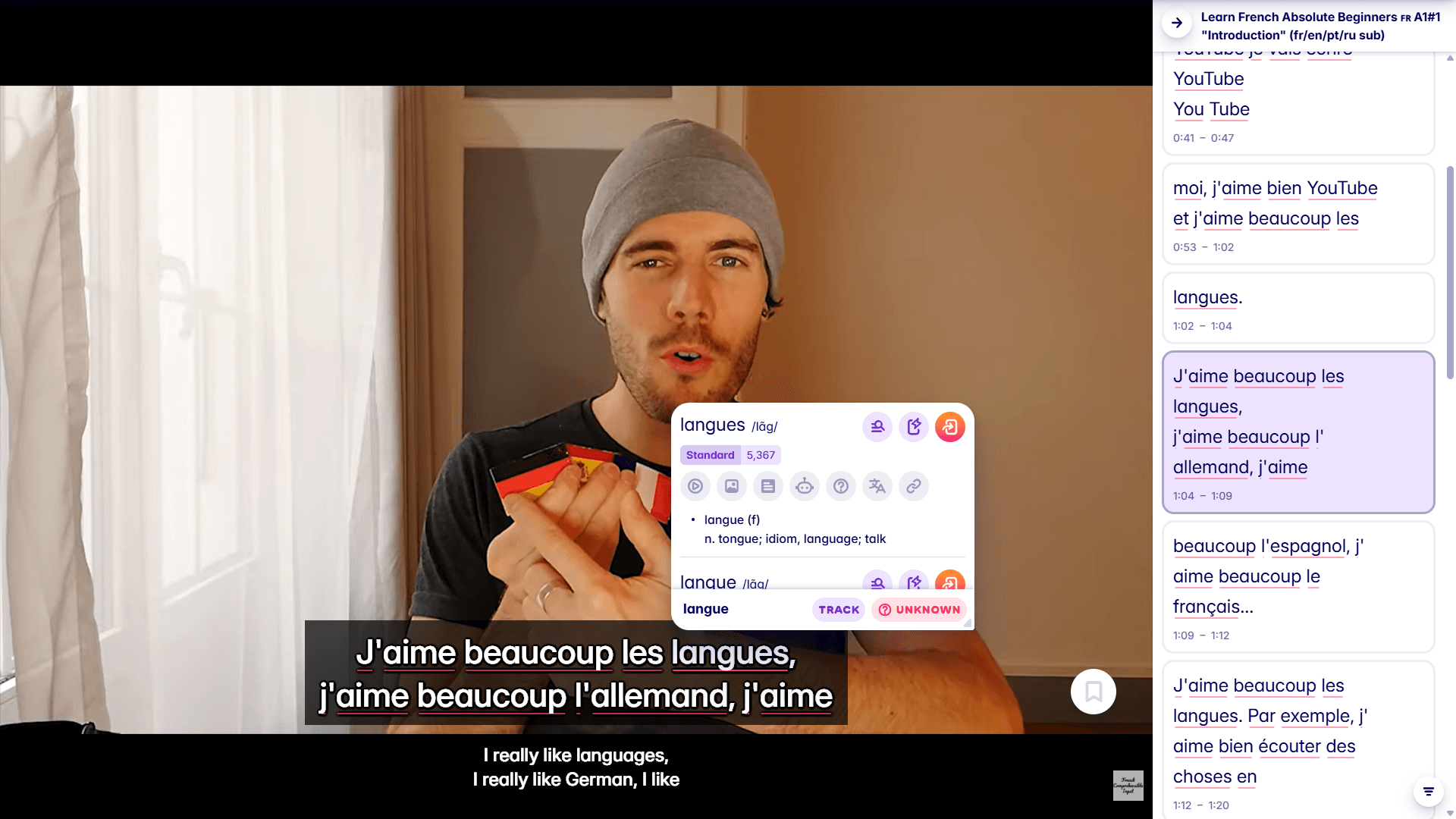
Anyway, if you want to practice French in context, Migaku's browser extension and app let you look up verbs and phrases instantly while watching French shows or reading articles. You can see the imperative in action and learn how native speakers actually use it. There's a 10-day free trial if you want to check it out.
 ---
## Learning French imperative and pronouns is more practical than you might think 🍵
The imperative mood in French is actually one of the more practical things you'll learn. Unlike some verb tenses that mainly show up in formal writing, you'll use the imperative constantly in real conversations. Whether you're making plans with friends, asking for directions, or just telling someone to pass the salt, the imperative is your go-to tool. Considering that it is one of the high-frequency grammar points, you will encounter the imperative conjugations pretty commonly in media content as well!
> If you consume media in French, and you understand at least some of the messages and sentences within that media, you will make progress. _Period_.
Memory loves repetition. Feed it daily!
---
## Learning French imperative and pronouns is more practical than you might think 🍵
The imperative mood in French is actually one of the more practical things you'll learn. Unlike some verb tenses that mainly show up in formal writing, you'll use the imperative constantly in real conversations. Whether you're making plans with friends, asking for directions, or just telling someone to pass the salt, the imperative is your go-to tool. Considering that it is one of the high-frequency grammar points, you will encounter the imperative conjugations pretty commonly in media content as well!
> If you consume media in French, and you understand at least some of the messages and sentences within that media, you will make progress. _Period_.
Memory loves repetition. Feed it daily!