# French Negation: How to Form French Negative Sentences
> Step-by-step guide covering French negation placement rules, compound tenses, and common mistakes. Learn ne...pas and other negation expressions.
**URL:** https://migaku.com/blog/language-fun/french-negation-negative-sentences
**Last Updated:** 2026-02-23
**Tags:** fundamentals, grammar
---
[Learning French](https://migaku.com/learn-french) negation can feel tricky at first because the structure works differently than English. Instead of just adding "not" after the verb, French wraps the verb with two words: **ne** and **pas**. This double-word system applies across all tenses and gets even more interesting when you start using other negative words like jamais (never) or rien (nothing). Once you understand the basic pattern and where to place these words, forming negative sentences becomes pretty straightforward. Let's break down exactly how French negation works so you can start using it confidently.
---
## The basic ne...pas structure
> 💡 The Foundation of French Negation 💡
You place ne before the verb and pas after it. The verb gets sandwiched between these two words.
Take a simple positive sentence like "Je parle français" (I speak French). To negate it, you add ne before "parle" and pas after: "Je ne parle pas français" (I don't speak French).
The formula looks like this:
**Subject + ne + verb + pas**
More examples:
- Tu manges (You eat) becomes Tu ne manges pas (You don't eat)
- Il aime le café (He likes coffee) becomes Il n'aime pas le café (He doesn't like coffee)
- Nous habitons à Paris (We live in Paris) becomes Nous n'habitons pas à Paris (We don't live in Paris)
Notice in that second example, ne becomes n' before a vowel. This happens with any word starting with a vowel or silent h. So "elle écoute" becomes "elle n'écoute pas" and "ils ont" becomes "ils n'ont pas."
---
## Placement with compound tenses
When you're working with compound tenses like the passé composé, the placement changes slightly. The ne and pas **wrap around the auxiliary verb (avoir or être)**, not the past participle.
Let's look at "J'ai mangé" (I ate). The negative form is "Je n'ai pas mangé" (I didn't eat). The pas goes after ai, before mangé.
More examples:
- Elle est partie (She left) becomes Elle n'est pas partie (She didn't leave)
- Nous avons fini (We finished) becomes Nous n'avons pas fini (We didn't finish)
- Tu as vu le film (You saw the film) becomes Tu n'as pas vu le film (You didn't see the film)
This same pattern applies to other compound tenses like the plus-que-parfait. "J'avais compris" (I had understood) becomes "Je n'avais pas compris" (I hadn't understood).
---
## Other negative words in French
French has several negative words beyond pas, and they all work with ne. The structure stays the same: ne goes before the verb, and the other negative word goes after.
### Ne...jamais (never)
"Je ne vais jamais au cinéma" means "I never go to the cinema." The jamais replaces pas in the structure.
With compound tenses: "Je ne suis jamais allé en France" (I have never gone to France). The jamais still goes after the auxiliary verb.
### Ne...rien (nothing)
"Je ne vois rien" translates to "I see nothing" or "I don't see anything."
In compound tenses, rien follows the same placement as pas: "Je n'ai rien mangé" (I ate nothing/I didn't eat anything).
### Ne...personne (nobody/no one)
"Je ne connais personne ici" means "I don't know anyone here."
Here's where things get interesting. With compound tenses, personne goes AFTER the past participle: "Je n'ai vu personne" (I saw nobody). This makes personne different from pas, jamais, and rien.
### Ne...plus (no longer/no more)
"Je ne fume plus" means "I don't smoke anymore" or "I no longer smoke."
In passé composé: "Je n'ai plus d'argent" (I don't have money anymore).
### Ne...que (only)
This one acts like a negative but actually means "only." "Je ne bois que de l'eau" translates to "I only drink water."
The que goes right before the thing you're limiting: "Je n'ai mangé qu'une pomme" (I only ate an apple).
---
## Article changes with French negation
When you negate a sentence that has un, une, des, du, de la, or de l', these articles change to **de (or d' before a vowel)**. This happens with direct objects.
- Positive: "J'ai un chat" (I have a cat)
- Negative: "Je n'ai pas de chat" (I don't have a cat)
More examples:
- "Elle mange du pain" becomes "Elle ne mange pas de pain"
- "Nous avons des enfants" becomes "Nous n'avons pas d'enfants"
- "Il boit de la bière" becomes "Il ne boit pas de bière"
The definite articles (le, la, les) don't change though. "J'aime le chocolat" becomes "Je n'aime pas le chocolat." The le stays.
This rule applies with other negative words too. "Je ne vois jamais de films français" (I never watch French films). "Il n'y a plus de lait" (There's no more milk).
---
## French negative sentences with infinitives
When you want to negate an infinitive verb, both **ne and pas go BEFORE the infinitive**. They stick together.
"Je préfère ne pas parler" means "I prefer not to speak." Both negative words come before parler.
More examples:
- Il décide de ne pas venir.
*He decides not to come.*
- Nous essayons de ne rien dire.
*We try to say nothing.*
- Elle veut ne jamais retourner.
*She wants to never return.*
This pattern feels weird at first because you're used to wrapping the verb, but with infinitives, the negative words team up and go before the verb together.
---
## Spoken French and the disappearing ne in negation expressions
Here's something you'll notice when listening to actual French speakers: **they often drop the ne in casual conversation.** You'll hear "Je sais pas" instead of "Je ne sais pas" or "C'est pas vrai" instead of "Ce n'est pas vrai."
This happens constantly in spoken French. **The pas alone carries the negative meaning**, so the ne gets skipped. You'll hear "J'ai pas le temps" (I don't have time) or "Elle veut pas venir" (She doesn't want to come).
Should you do this when speaking? In casual conversation with friends, absolutely. It sounds more natural. But in formal writing, job interviews, or academic settings, keep the ne. Written French almost always includes it.
The [pronunciation](https://migaku.com/blog/language-fun/french-alphabet-pronunciation-guide) changes too. When French speakers do say ne, it often sounds very quick, almost like "zhuh-nuh-say-pah" runs together as one sound for "je ne sais pas."
---
## Using multiple negatives in French grammar
French allows you to combine certain negative expressions in ways that English doesn't.
"Je ne dis jamais rien à personne" literally translates to "I never say nothing to nobody," but it means "I never say anything to anyone." Unlike English, where double negatives cancel each other out, French **stacks them for emphasis**.
You can combine:
- Ne...plus jamais (never again): "Je ne veux plus jamais te voir" (I never want to see you again)
- Ne...jamais rien (never anything): "Il ne fait jamais rien" (He never does anything)
- Ne...plus rien (nothing anymore): "Je n'ai plus rien à dire" (I have nothing more to say)
---
## Negation in questions
When asking negative questions in French language, the structure stays the same. You're just using question formation with the negative pattern.
"Ne parles-tu pas français?" (Don't you speak French?) uses inversion with the negative.
More commonly in spoken French, you'd use rising intonation: "Tu ne parles pas français?" or drop the ne: "Tu parles pas français?"
With est-ce que: "Est-ce que tu ne viens pas?" (Aren't you coming?)
The question "As-tu jamais voyagé en France?" means "Have you ever traveled to France?" This might look confusing because jamais usually means "never," but in questions without pas, jamais can mean "ever." The answer could be "Non, je ne suis jamais allé en France" (No, I have never gone to France).
---
## Negative commands
For commands (the imperative), you still use ne...pas around the verb.
- Ne parle pas !
*Don't speak!*
- Ne mangez pas ça !
*Don't eat that!*
- N'oublie pas !
*Don't forget!*
With reflexive verbs, the pronoun stays attached: "Ne te lève pas!" (Don't get up!)
---
## Common expressions with negation
Some French negative expressions work as set phrases that you'll use all the time.
- "Pas de problème" (no problem) is super common. Notice there's no ne because there's no verb.
- "Pas mal" literally means "not bad" but French speakers use it to mean "pretty good" or "quite a lot." If someone asks "Comment ça va?" you might answer "Pas mal!" (Pretty good!).
- "Pas du tout" means "not at all." "Tu es fatigué?" "Pas du tout!" (Are you tired? Not at all!)
- "Je ne sais pas" (I don't know) is probably the most common negative sentence you'll use. In casual speech it becomes "Je sais pas" or even "Chais pas."
- "Ça ne fait rien" means "It doesn't matter" or "Never mind."
---
## Special examples and exceptions of negation in French
1. Some verbs change meaning slightly in the negative. "Savoir" means "to know," but "Je ne sais pas" can also express uncertainty or hesitation beyond just not knowing something.
2. "Pouvoir" in the negative can express inability or refusal. "Je ne peux pas venir" means "I can't come," but the reason could be inability or unwillingness depending on context.
3. With "oser" (to dare), the negative is common: "Je n'ose pas demander" (I don't dare to ask).
4. The expression "ne" can appear alone in formal or literary French with certain verbs like cesser, pouvoir, or oser. "Je ne peux vous le dire" (I cannot tell you). This formal usage is rare in everyday French though.
---
## Practice makes perfect
The best way to internalize French negation rules is to practice forming negative sentences from positive ones.
1. Do the exercise of taking any French sentence you know and negating it. Pay attention to where ne and pas go, whether you need to change articles, and how the meaning shifts.
2. Listen to modern French media and notice when speakers drop the ne. Watch for the different negative words (jamais, rien, personne, plus) and how they're used in context. Read French texts and observe how negation appears in writing versus speech.
3. Start with simple present tense sentences using ne...pas, then move to compound tenses, then try other negative words. Finally, learn the special expressions in French negation. Build up your comfort level gradually.
4. The [grammar](https://migaku.com/blog/language-fun/french-grammar-guide) rules give you the framework, but exposure to real French helps you develop an intuitive sense for negation. You'll start to feel when a sentence needs ne...jamais versus ne...plus to be grammatically correct, and the placement will become automatic.
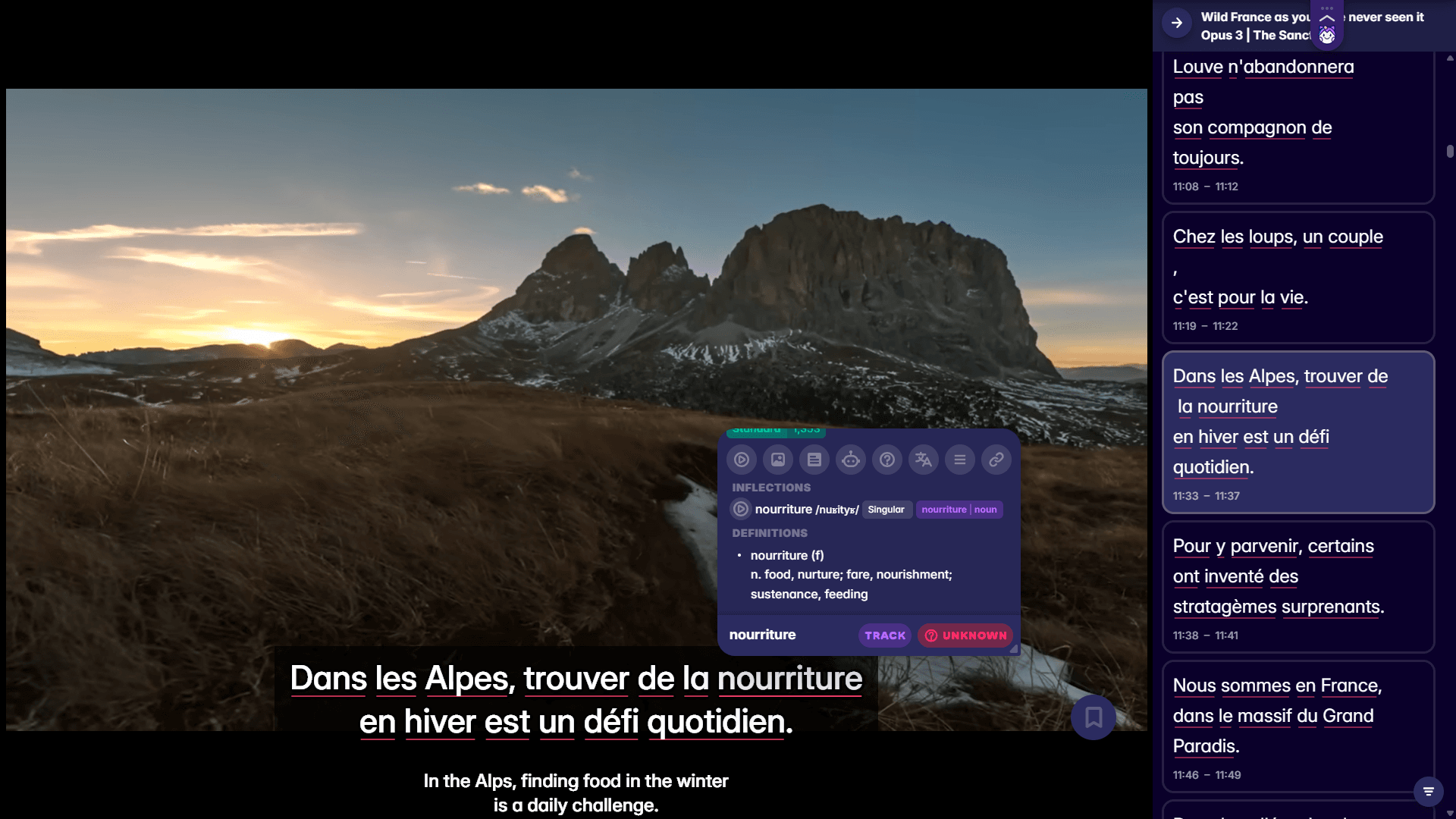
Anyway, if you want to practice these negation patterns with real French content, Migaku's browser extension and app let you look up words and save sentences while watching French shows or reading articles. Makes learning grammar in context way more practical. There's a 10-day free trial if you want to check it out.
 ---
## Want to find more examples and resources about French negation?
French media is your best try to mine vocab and [sentences](https://migaku.com/blog/language-fun/sentence-mining-guide-learn-vocabulary-faster)! Press pause every time you see a negation sentence that you are not sure how it is grammatically structured. Save it to your flashcards and take a minute or two to analyze it. The system might seem complicated compared to just adding "not" in English, but it becomes natural with practice like this. You'll find yourself thinking in the French negative pattern rather than translating from English.
> If you consume media in French, and you understand at least some of the messages and sentences within that media, you will make progress. _Period_.
Don't just watch without taking notes!📓
---
## Want to find more examples and resources about French negation?
French media is your best try to mine vocab and [sentences](https://migaku.com/blog/language-fun/sentence-mining-guide-learn-vocabulary-faster)! Press pause every time you see a negation sentence that you are not sure how it is grammatically structured. Save it to your flashcards and take a minute or two to analyze it. The system might seem complicated compared to just adding "not" in English, but it becomes natural with practice like this. You'll find yourself thinking in the French negative pattern rather than translating from English.
> If you consume media in French, and you understand at least some of the messages and sentences within that media, you will make progress. _Period_.
Don't just watch without taking notes!📓