French Phone Conversation Phrases: Beginner's Guide to Handling French Phone Calls
Last updated: April 3, 2026

Making a phone call in French can feel way more intimidating than chatting face-to-face. You can't rely on hand gestures or facial expressions, and the formal etiquette around French phone conversations throws a lot of learners off. Here's the thing though: once you learn the essential French phone conversation phrases and understand the basic structure, it gets so much easier. This guide covers everything from picking up the phone to ending the call smoothly, with all the vocabulary you actually need.
- Starting a French phone call the right way
- Asking to speak with someone specific
- French phone vocabulary for smooth conversations
- Handling common phone call situations in French
- Professional and business phone language
- French phone phrases for ending a call
- French phone expressions for emergencies
- Practice makes phone calls less scary
Starting a French phone call the right way
Basic phone call greetings
When you answer the phone in French, you don't just say "bonjour" like you would on the street. The standard greeting is "Allô?" which is specifically for phone conversations. Pretty much everyone uses this, whether it's a casual call with friends or a business conversation.
Etiquette of identifying yourself
If you're the one calling someone, you'll want to identify yourself right away. French phone etiquette expects you to say who you are before launching into conversation. A simple structure works best: "Bonjour, c'est (your name)" or "Allô, c'est (your name) à l'appareil." That last phrase "à l'appareil" literally means "on the device" and sounds more formal, so save it for professional calls.
When calling a business or formal setting, you might hear "Société (company name), bonjour" or just the company name followed by a greeting.
The person answering will often add "je vous écoute" which means "I'm listening to you." This phrase signals they're ready to help and waiting for you to explain why you're calling.
Asking to speak with someone specific
One of the most common scenarios is calling and needing to reach a particular person. The phrase you'll use most often is "Est-ce que je pourrais parler à (name)?" which translates to "Could I speak to (name)?" For a slightly less formal version, try "Je voudrais parler à (name)" meaning "I would like to speak to (name)."
Another super useful expression is "Bonjour, c'est (your name), (person's name) est là/disponible?" This asks if the person is there or available. The pronunciation of "disponible" trips people up sometimes, but just remember it sounds like "dee-spo-nee-bluh."
If you're returning someone's call, say "Je rappelle (name)" or "Je retourne l'appel de (name)." These phrases make it clear you're calling back and help the person who answers connect you faster.
When the person you're calling for picks up, they'll usually say "Oui, c'est moi" (Yes, it's me) or "Lui-même/Elle-même" (Speaking, literally "himself/herself"). You might also hear "C'est de la part de qui?" which means "Who's calling?" This is their way of asking who you are before they confirm they're available.
French phone vocabulary for smooth conversations
Building your French phone vocabulary beyond just greetings makes everything flow better. Here are the words and expressions that come up constantly:
- "Un message" means a message, and you'll use this when asking to leave one: "Est-ce que je peux laisser un message?"
- The word "rappeler" means to call back, so "Je peux vous rappeler?" asks if you can call them back later.
- "La ligne" refers to the phone line. If you hear "La ligne est occupée," it means the line is busy. When connection quality is bad, you might say "La ligne est mauvaise" or "J'entends mal" (I can't hear well).
- The verb "patienter" means to wait or hold. You'll definitely hear "Veuillez patienter" or "Ne quittez pas" which both mean "Please hold" or "Don't hang up."
- The word "quitter" means to leave or hang up, so "Je dois vous quitter" means "I have to go" or "I have to hang up."
- For phone numbers, "le numéro de téléphone" is straightforward, but remember French speakers usually give phone numbers in pairs. Instead of saying each digit individually, they'll say "zéro six, quarante-deux, vingt-trois" and so on.
Handling common phone call situations in French
Sometimes you dial and get the wrong number. The phrase you need is "Excusez-moi, j'ai fait un mauvais numéro" or simply "Désolé, je me suis trompé de numéro." Both apologize for the mistake and let the person know you'll hang up.
Leaving a message involves a few key phrases. "Pourriez-vous lui dire que j'ai appelé?" means "Could you tell him/her I called?" Add your callback number with "Mon numéro est le..." or ask them to call you back: "Pourriez-vous lui demander de me rappeler?"
For voicemail, you'll hear "Vous êtes sur la messagerie de..." (You've reached the voicemail of...). The standard instruction is "Veuillez laisser un message après le bip" (Please leave a message after the beep). When leaving your message, keep it structured: greeting, your name, reason for calling, your number, and "merci" at the end.
Professional and business phone language
Business calls in French require more formal vocabulary. Instead of "tu" forms, you'll use "vous" exclusively. The greeting becomes "Bonjour Monsieur/Madame" and you identify yourself with your full name and company: "Bonjour, je m'appelle (full name) de la société (company name)."
When stating your reason for calling professionally, use "Je vous appelle au sujet de..." (I'm calling you about...) or "Je vous contacte concernant..." (I'm contacting you regarding...). These expression sound professional without being stuffy.
Taking notes during a call? You might say "Permettez-moi de noter" (Allow me to take note) or "Un instant, je prends note" (One moment, I'm taking note). If you need them to repeat something, "Pourriez-vous répéter, s'il vous plaît?" works perfectly.
Scheduling callbacks or meetings over the phone uses phrases like "Quand seriez-vous disponible?" (When would you be available?) and "Je vous propose (day) à (time)" (I suggest (day) at (time)). Confirming details requires "Donc, pour confirmer..." (So, to confirm...).
French phone phrases for ending a call
Ending a phone call smoothly matters just as much as starting it well. You can't just hang up abruptly. French language conventions expect a proper closing sequence.
The most common way to signal you're finishing is "Bon, je ne vous retiens pas plus longtemps" (Well, I won't keep you any longer) or simply "Bon, je vous laisse" (Well, I'll let you go). These phrases politely indicate the conversation is ending.
Thank the person with "Merci beaucoup pour votre temps" (Thank you very much for your time) or "Je vous remercie" (I thank you). In casual calls with friends, a simple "Merci" works fine.
Before hanging up, you'll often hear or say "Bonne journée" (Have a good day), "Bonne soirée" (Have a good evening), or "Bon week-end" (Have a good weekend) depending on the timing. The response is usually "Vous aussi" (You too) or "À vous également." (To you as well).
For goodbye, "Au revoir" is standard, but you might also use "À bientôt" (See you soon) if you expect to talk again soon, or "À plus tard" (See you later) in casual contexts. Really informal calls between friends might end with just "Salut" or "Ciao."
French phone expressions for emergencies
Emergency situations require different vocabulary. The emergency number in France is 112 (European standard) or specific services: 15 for medical (SAMU), 17 for police, 18 for fire department.
Key emergency phrases include:
- J'ai besoin d'aide.
I need help. - C'est urgent.
It's urgent. - Il y a eu un accident.
There's been an accident. - Envoyez une ambulance.
Send an ambulance.
Give your location clearly: "Je suis au (address)" or "Je suis à (landmark)." If you don't know exactly where you are, say "Je ne sais pas exactement où je suis, mais..." and describe what you can see.
Stay calm and speak as clearly as possible. Emergency operators are trained to help non-native speakers, but knowing these basic phrases beforehand can make a critical difference.
Practice makes phone calls less scary
Honestly, the only way to get comfortable with phone calls in French is to actually make them.
- Start small with low-pressure situations. Call a restaurant to ask about their hours. Phone a hotel to inquire about availability. These interactions are brief and follow predictable patterns.
- Language exchange partners can help you practice phone conversations in a safe environment. Set up calls where you role-play different scenarios: business calls, calling to make appointments, casual catch-up conversations. This builds confidence without real-world consequences if you mess up.
- Listen to French phone conversations in movies, TV shows, and podcasts. Pay attention to the rhythm, the phrases people use, and how they transition between topics. French media from 2026 often includes realistic phone conversations that reflect current usage.
- Recording practice conversations and listening back reveals pronunciation issues and awkward phrasing you might not notice while speaking. It feels weird at first, but it's incredibly effective for improvement.
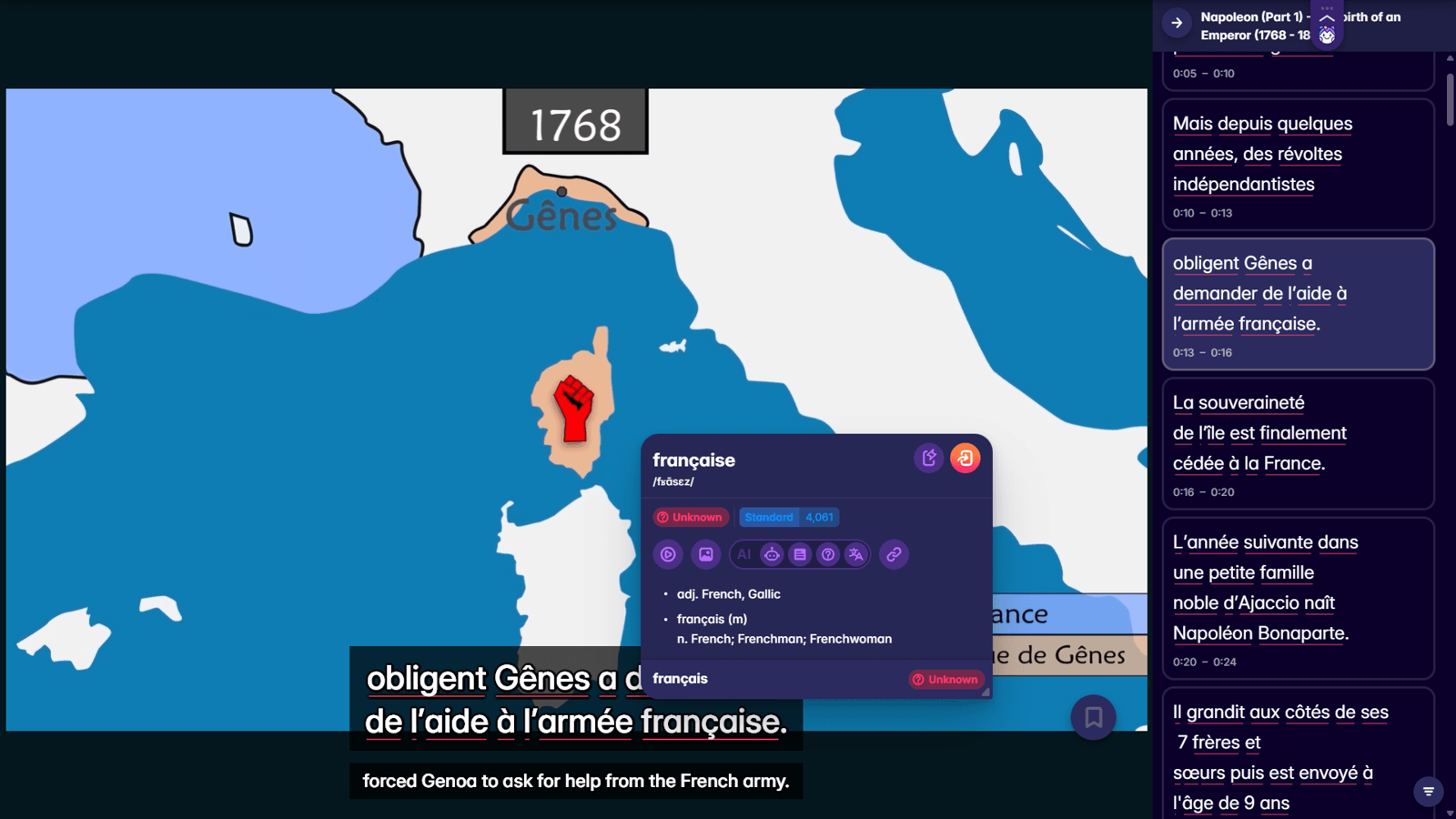
If you want to catch these phone phrases in actual French content, Migaku's browser extension and app let you look up words and save expressions while watching shows or reading articles. Makes learning from real conversations way more practical. There's a 10-day free trial if you want to check it out.
Your French phone conversation skills will improve faster than you think
Learning French phone conversation phrases might seem overwhelming at first, but you'll be surprised how quickly they become natural. The key is consistent exposure and practice. Each phone call you hear from French dramas and movies adapts you to the tone, speed, and vocabulary. And every time you make a phone call in French builds your confidence and reinforces the phrases you've learned.
If you consume media in French, and you understand at least some of the messages and sentences within that media, you will make progress. Period.
New things often feel difficult before they feel natural!☎️📞