# French Professions Vocabulary: Talk About Jobs in French
> Let's talk about your profession in French! Learn French professions vocabulary with gender forms, pronunciation, and usage. Complete guide to job names.
**URL:** https://migaku.com/blog/language-fun/french-professions-vocabulary
**Last Updated:** 2026-02-24
**Tags:** vocabulary, phrases
---
Learning job and profession [vocabulary](https://migaku.com/blog/language-fun/french-body-parts-vocabulary-guide) in French opens up a whole world of practical conversations. Whether you're traveling to France, watching French shows, or just [building your language skills](https://migaku.com/learn-french), knowing how to talk about what people do for work is super useful. This guide covers everything from healthcare workers to artists, with all the gender forms and [pronunciation](https://migaku.com/blog/language-fun/french-alphabet-pronunciation-guide) tips you need to actually use these words in real conversations.
---
## Why French professions vocabulary matters for learners
Here's the thing: professions come up constantly in everyday French. When you meet someone new, one of the first questions is usually "Qu'est-ce que tu fais dans la vie?" (What do you do for a living?). You'll hear job titles in TV shows, news articles, and casual conversations all the time.
The tricky part? French profession names change based on gender, and the rules aren't always consistent. Some professions have distinct masculine and feminine forms, while others use the same word for everyone. Plus, France has been updating how certain professions are feminized over the past few years, so you might see variations depending on the source.
Learning these terms helps you understand French culture better too. The way French people talk about work, the common professions you'll encounter, and even which jobs are considered prestigious all give you insights into how French society operates.
### How French professions vocabulary has evolved
French professions vocabulary has definitely changed over the years. The biggest shift has been the **feminization of profession names**. Back in the 20th century, many professions only had masculine forms, reflecting the reality that certain jobs were male-dominated.
As women entered more fields, the language needed to catch up. Some professions naturally had feminine forms already (like infirmière for nurse), but others required new formations. The debate over whether to say "une auteur" or "une auteure" went on for decades.
In 2019, the Académie française officially endorsed feminine forms for professions, which was a pretty big deal. This reflected usage that had already become common in everyday French, especially in Quebec and other francophone regions that had adopted feminine forms earlier than France.
Tech and modern professions have added new vocabulary too. Words like "développeur/développeuse" (developer), "community manager," and "data scientist" have entered French professional vocabulary, though some English terms are used directly.
---
## Understanding gender in French profession names
French assigns gender to every noun, and professions follow this pattern. Traditionally, many profession names only had masculine forms, but the language has evolved quite a bit.
1. **For most professions ending in -eur, the feminine form changes to -euse or -rice.** So "un chanteur" (male singer) becomes "une chanteuse" (female singer), and "un acteur" (male actor) becomes "une actrice" (female actress). Pretty straightforward once you see the pattern.
2. **Some professions ending in -ien change to -ienne for the feminine form.** A male pharmacist is "un pharmacien" while a female pharmacist is "une pharmacienne". Same goes for "musicien/musicienne" (musician).
3. **Then you have professions that traditionally used only masculine forms** regardless of who was doing the job. Words like "professeur" (teacher), "médecin" (doctor), and "ingénieur" (engineer) historically stayed masculine even for women. You'd say "Madame le professeur" which sounds weird to English speakers.
But here's where it gets interesting: France has been actively feminizing these profession names. You'll now hear "une professeure", "une médecine" or "une doctoresse", and "une ingénieure" more frequently, especially in official contexts. The Académie française even officially approved many of these feminine forms in recent years, though usage varies.
---
## Healthcare professions in French
Healthcare jobs are some of the most common professions you'll encounter when learning French vocabulary.
- Un médecin / une médecin (or une doctoresse) means doctor. The word "docteur" exists too, but médecin is more specific for medical doctors. You might also hear "un toubib" as slang for doctor.
- Un infirmier / une infirmière is a nurse. This one has had distinct gender forms for a long time since nursing was traditionally female-dominated in France.
- Un/une dentiste is a dentist. This word stays the same for both genders, you just change the article.
- Un chirurgien / une chirurgienne means surgeon. The feminine form has become much more common as more women enter surgical fields.
- Un pharmacien / une pharmacienne is a pharmacist. French pharmacies are everywhere in France and pharmacists are highly respected healthcare professionals.
- Un/une vétérinaire is a veterinarian. Another profession where the word itself doesn't change, only the article.
- Un/une kinésithérapeute (often shortened to "kiné") is a physical therapist. These professionals are super common in France and people visit them regularly for various treatments.
---
## Arts and entertainment professions
Creative professions have their own vocabulary in French, and many of these come up when discussing culture and media.
- Un acteur / une actrice means actor/actress. This is one of the classic examples of gender distinction in French professions.
- Un chanteur / une chanteuse is a singer. You'll use this word all the time when talking about music.
- Un/une artiste covers artist in general. It works for both genders without changing form.
- Un musicien / une musicienne is a musician who plays instruments.
- Un écrivain / une écrivaine is a writer. The feminine form "écrivaine" is becoming more accepted, though some still use "écrivain" for everyone.
- Un/une photographe is a photographer. Same word, different article.
- Un danseur / une danseuse means dancer. Ballet and dance are huge in French culture, so this word comes up often.
- Un réalisateur / une réalisatrice is a film director. French cinema is internationally famous, so knowing this term helps when discussing movies.
---
## Trades and service professions
Blue-collar jobs and service professions make up a huge part of the French workforce. These are practical words you'll definitely need.
- Un coiffeur / une coiffeuse is a hairdresser. You'll need this word when getting your hair cut in France!
- Un plombier / une plombière is a plumber. The feminine form is relatively new but increasingly used.
- Un électricien / une électricienne means electrician.
- Un mécanicien / une mécanicienne is a mechanic, usually for cars.
- Un boulanger / une boulangère is a baker. Given how important bread is in French culture, bakers are respected professionals.
- Un serveur / une serveuse means waiter/waitress. Essential vocabulary for dining out.
- Un cuisinier / une cuisinière is a cook or chef. France's culinary tradition makes this a prestigious profession.
- Un pompier / une pompière is a firefighter. The word comes from "pompe" (pump), and these professionals are highly respected in France.
---
## Education and legal professions
Professional careers in education and law have specific vocabulary in French.
- Un professeur / une professeure is a teacher or professor. As mentioned earlier, the feminine form has gained official recognition. You might also hear "un/une prof" as the casual shortened version.
- Un instituteur / une institutrice refers specifically to elementary school teachers. This term is a bit old-fashioned now, with "professeur des écoles" being more current.
- Un avocat / une avocate is a lawyer or attorney. The feminine form has been standard for quite a while.
- Un juge / une juge means judge. Same word, different article.
- Un/une notaire is a notary, which is a much more significant legal profession in France than in English-speaking countries. Notaries handle property sales, inheritances, and other major legal documents.
- Un/une bibliothécaire is a librarian. The word comes from "bibliothèque" (library).
---
## Business and office professions
White-collar jobs have their own set of vocabulary that's useful for professional contexts.
- Un/une comptable is an accountant. This comes from "compter" (to count).
- Un ingénieur / une ingénieure means engineer. This is a prestigious profession in France, and the feminine form is now widely accepted.
- Un/une secrétaire is a secretary or administrative assistant. This word works for both genders.
- Un directeur / une directrice is a director or manager. You'll see this title in many contexts.
- Un/une journaliste is a journalist. The word doesn't change for gender.
- Un homme d'affaires / une femme d'affaires means businessman/businesswoman. This is one where you actually change the whole phrase rather than just the ending.
- Un informaticien / une informaticienne is an IT specialist or computer scientist. Pretty essential vocabulary in 2026!
- Un commercial / une commerciale works in sales or business development.
---
## Public service and government jobs
Government and public service roles have specific terminology in French.
- Un/une fonctionnaire is a civil servant or government employee. This is a broad category that includes many different jobs.
- Un policier / une policière is a police officer. You might also hear "un agent de police" or "un flic" (slang).
- Un facteur / une factrice is a mail carrier. You will see the mail delivery service in French neighborhoods.
- Un/une maire is a mayor. Same word for both genders.
- Un député / une députée is a member of parliament or representative.
- Un/une ministre is a government minister. France has had many female ministers, so both forms are common.
---
## Common expressions about professions in French
When talking about jobs in French, you need more than just the profession names. Here are some useful phrases:
- "Je suis professeur" means "I am a teacher." Notice there's no article before the profession when you're saying what you do. You don't say "Je suis un professeur."
- "Il travaille comme médecin" means "He works as a doctor." Here you use "comme" (as) to introduce the profession.
- "Qu'est-ce que tu fais dans la vie?" is the common way to ask "What do you do for a living?"
- "Quel est ton métier?" is another way to ask about someone's job. "Métier" is another word for profession or occupation.
- "Quelle est ta profession?" is more formal but means the same thing.
- "Je cherche du travail" means "I'm looking for work."
---
## Les métiers and grammar tips
The word "métiers" is super common in French when discussing professions collectively. You'll see it in [textbooks](https://migaku.com/blog/language-fun/best-french-textbooks) as "les métiers" (the professions/trades). It's slightly more informal than "profession" and often implies skilled trades or crafts.
A quick grammar note: when stating your profession after "être" (to be), French doesn't use an article. In English, we say "I am a teacher," but in French, it's just "Je suis professeur." However, if you add an adjective, you need the article: "Je suis un bon professeur" (I am a good teacher).
The verb "travailler" (to work) is essential. "Je travaille dans un hôpital" (I work in a hospital), "Elle travaille pour une entreprise française" (She works for a French company).
When talking about someone's workplace, you use "dans" (in) for general locations: "Il travaille dans un restaurant" (He works in a restaurant). For companies or organizations, use "pour" (for): "Je travaille pour Google."
---
## Practice tips for learning the list of professions in French
Learning profession vocabulary works best when you connect the words to real contexts.
1. Watch French shows and pay attention when characters talk about their jobs. News programs often interview people and mention their professions, which gives you natural exposure to how these terms are used.
2. Create flashcards with both masculine and feminine forms together. Don't learn them separately or you'll have to relearn the gender later. Include example sentences that show the profession in context.
3. Group professions by category in your study sessions. Learn all the healthcare professions together, then move to trades, then creative fields. This helps your brain make connections and remember related vocabulary.
4. Practice introducing yourself with different professions. Even if you're not actually a firefighter, saying "Je suis pompier" out loud helps solidify the vocabulary and grammar pattern.
5. Read French job listings online. Sites like Indeed France or LinkedIn in French show real profession names and how they're used in professional contexts. You'll also pick up related vocabulary about skills and qualifications.
6. The 80/20 rule applies here too. About 20% of profession vocabulary will cover 80% of the jobs you'll actually discuss. Focus on common professions first (teacher, doctor, student, engineer, etc.) before diving into specialized vocabulary.
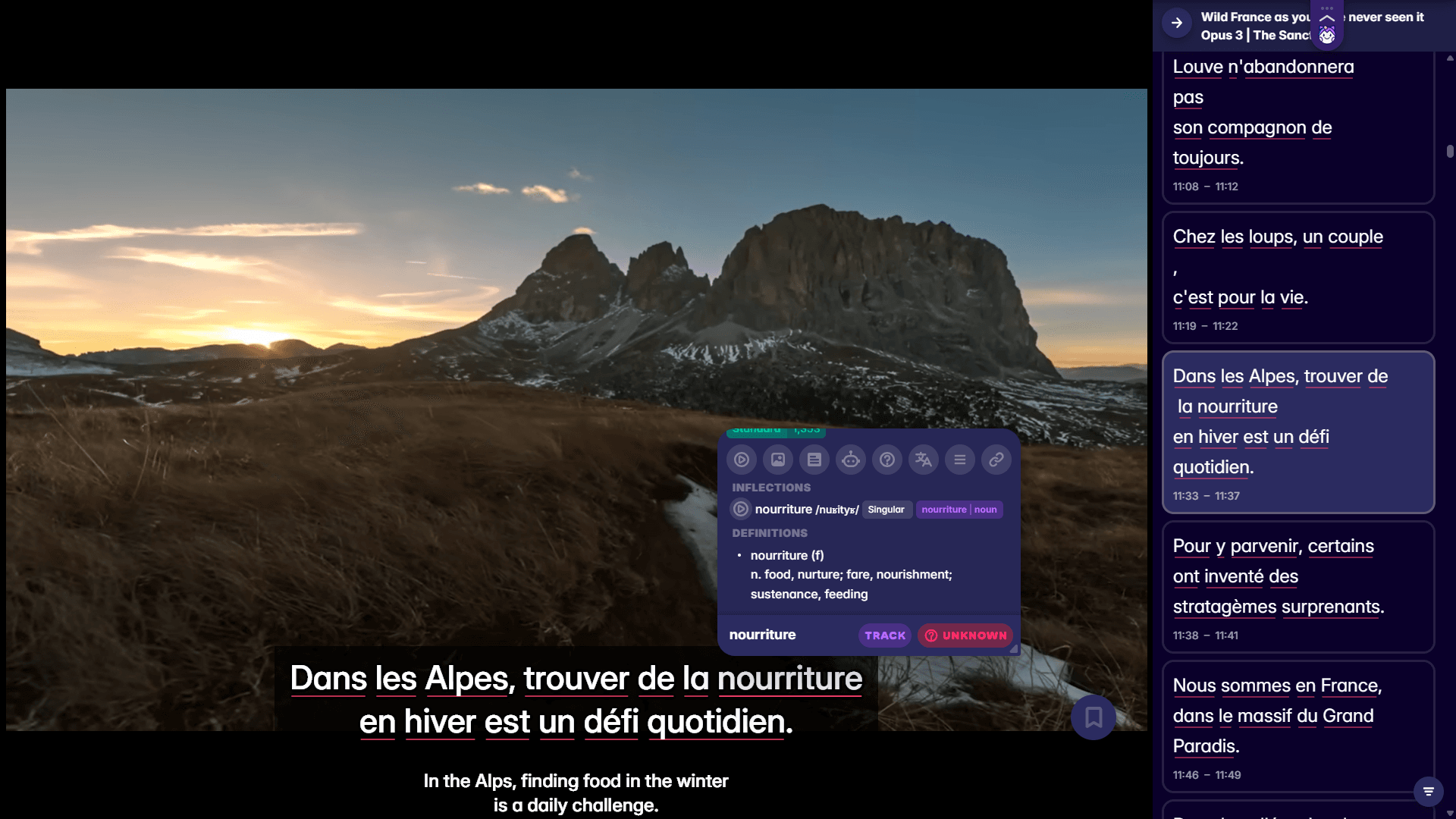
Anyway, if you want to practice this vocabulary with real French content, Migaku's browser extension and app let you look up profession names and other words instantly while watching French shows or reading articles. Makes learning from context way more practical. There's a 10-day free trial if you want to check it out.
 ---
## How about learning French vocabulary through videos?
French professions vocabulary gives you the tools to have real conversations about work, career, and daily life. The most common professional words are often used in media content as well. If you're interested in career dramas, watching content that focuses on lawyers, doctors, or other professions' work and lives can give you easy access to the related professional words.
> If you consume media in French, and you understand at least some of the messages and sentences within that media, you will make progress. _Period_.
Hear the language. Feel the contexts.
---
## How about learning French vocabulary through videos?
French professions vocabulary gives you the tools to have real conversations about work, career, and daily life. The most common professional words are often used in media content as well. If you're interested in career dramas, watching content that focuses on lawyers, doctors, or other professions' work and lives can give you easy access to the related professional words.
> If you consume media in French, and you understand at least some of the messages and sentences within that media, you will make progress. _Period_.
Hear the language. Feel the contexts.