# Learn French Relative Pronouns Qui, Que, Dont, Où
> Learn how French relative pronouns qui, que, dont, où, and lequel work. Get clear explanations, examples, and usage rules to improve your French grammar.
**URL:** https://migaku.com/blog/language-fun/french-relative-pronouns-explained
**Last Updated:** 2026-03-20
**Tags:** fundamentals, grammar
---
French relative pronouns can feel like a puzzle when you're [learning the language](https://migaku.com/learn-french), but they're actually pretty straightforward once you see how they work. These little words (qui, que, dont, où, and lequel) connect ideas in sentences and help you sound way more natural. Instead of saying two choppy sentences, you can blend them together smoothly. Let's break down exactly how each one works and when to use them.
----
## What are French relative pronouns
A relative pronoun **connects two clauses together by referring back to a noun that was just mentioned.** In English, we use words like "who," "which," "that," and "whose" to do this job. French has its own set: qui, que, dont, où, and lequel (plus its variations).
Here's a simple example. Instead of saying "I have a friend. She speaks French," you'd say "I have a friend who speaks French." That "who" is doing the heavy lifting, connecting both ideas into one smooth sentence. French works the same way, just with different rules about which relative pronoun to pick.
The tricky part? French grammar cares a lot about whether the noun is a subject, direct object, or connected to a preposition. Pick the wrong relative pronoun and your sentence sounds weird or just plain wrong. But once you learn the pattern, it becomes second nature.
----
## Qui as the subject pronoun
**Qui works when the relative pronoun acts as the subject of the clause.** Think of it as "who" or "which" in English when those words are doing the action.
Look at this sentence: "La fille qui parle français est ma soeur." That translates to "The girl who speaks French is my sister." The word "qui" refers back to "la fille" (the girl), and she's the one doing the speaking. She's the subject of that relative clause.
1. **Qui works for people and things.** You can say "Le livre qui est sur la table" (The book which is on the table) or "L'homme qui travaille ici" (The man who works here). The verb that comes after qui always agrees with the noun that qui represents.
2. **Qui never changes form.** Whether the noun is masculine, feminine, singular, or plural, you always use qui when it's the subject. Pretty straightforward compared to some other [French grammar rules](https://migaku.com/blog/language-fun/best-french-textbooks).
----
## Que as the direct object
**Que steps in when the relative pronoun is the direct object of the verb in the relative clause.** This means the noun you're referring to is having something done to it, rather than doing the action itself.
Check out this sentence: "Le film que j'ai vu était génial." That means "The film that I saw was great." The film isn't doing anything here. You (je) are doing the seeing, and the film is what you saw. That makes it the direct object, so you use que.
1. **Que becomes qu' before a vowel sound.** So you'd write "La chanson qu'elle écoute" (The song that she listens to), not "que elle."
2. **The verb in a relative clause with que agrees with the subject of that clause**, not with que itself. In "Les livres que tu as lus," the verb "lus" agrees with "livres" because of compound tense rules, but que itself stays the same.
3. **You can use que for people too**: "La femme que je connais" (The woman that I know). The key is always asking yourself: is this noun doing the action (qui) or receiving it (que)?
----
## Dont for possession and de-prepositions
**Dont handles situations where you'd use "whose" in English, or when the verb or expression normally takes the preposition "de."** This one feels weird at first because English handles these situations differently.
1. **For possession, dont works like "whose":** "C'est l'homme dont le fils est médecin" means "He's the man whose son is a doctor." You're showing that the son belongs to the man.
2. **But dont also replaces "de + relative pronoun" with certain verbs and expressions.** Lots of French verbs use "de" (parler de, avoir besoin de, se souvenir de), and when you turn these into relative clauses, you need dont.
3. **Word order matters with dont.** The sentence structure stays normal after dont: subject, then verb, then everything else. You can't rearrange things like you sometimes can in English.
Example: "Le livre dont je parle" translates to "The book that I'm talking about." In French, you say "parler de quelque chose" (to talk about something), so the relative pronoun has to be dont, not que.
Another one: "La voiture dont j'ai besoin" means "The car that I need." The expression "avoir besoin de" (to need) requires "de," so dont is the right choice.
The phrase "dont je" shows up pretty often. You'll see it in sentences like "C'est quelque chose dont je suis fier" (It's something that I'm proud of), because "être fier de" uses the preposition de.
----
## Où for location and time in French grammar
**The relative pronoun où handles places and times.** Think of it as "where" or "when" in English, depending on context.
1. **For places, it's pretty intuitive:** "La ville où j'habite" means "The city where I live." You're connecting the city to the fact that you live there.
2. **You can also use où for time references:** "Le jour où nous sommes arrivés" translates to "The day when we arrived." It's connecting a specific time to an event.
3. **Sometimes où replaces other prepositions of location.** Instead of saying something clunky with "dans lequel," you can usually just use où. "La maison où je suis né" (The house where I was born) sounds way better than trying to use another relative pronoun.
4. **It works for abstract locations too.** "C'est là où je veux aller" (That's where I want to go) uses "là où" to emphasize the location.
5. **You'll see où in expressions about direction and movement:** "Le pays où elle voyage" (The country where she's traveling). It creates a smooth connection between the place and the action happening there.
----
## Understanding lequel and its forms
Lequel gets more complicated because it changes form based on gender and number. You've got:
- lequel (masculine singular),
- laquelle (feminine singular),
- lesquels (masculine plural),
- and lesquelles (feminine plural).
1. **You use lequel mainly after prepositions.** When you need to say something like "the tool with which I work," you'd use lequel: "L'outil avec lequel je travaille."
2. **Different prepositions create contractions with lequel.** With "à," you get auquel, à laquelle, auxquels, and auxquelles. With "de," you get duquel, de laquelle, desquels, and desquelles. Example with auquel: "Le projet auquel je participe" means "The project in which I participate." The verb "participer à" needs the preposition à, and since "projet" is masculine singular, you use auquel.
3. **Honestly, you can often use où instead of lequel for places**, which makes life easier. But for other prepositions (avec, pour, sans, etc.), you need lequel and its variations.
4. **The main clause of your sentence determines which form to use.** Look at the gender and number of the noun you're referring back to, pick the matching form of lequel, and you're good.
----
## The difference between ce qui and ce que
Ce qui and ce que work a bit differently because they don't refer to a specific noun. Instead, they mean "what" or "that which" in English. They're talking about ideas or unnamed things.
- **Ce qui acts as the subject:** "Ce qui m'intéresse, c'est la musique" means "What interests me is music." The "ce qui" part is doing the interesting.
- **Ce que acts as the direct object:** "Je ne comprends pas ce que tu dis" translates to "I don't understand what you're saying." You're saying something, and "ce que" represents that thing you're saying.
The choice between ce qui and ce que follows the same subject versus object pattern as qui and que. Just ask yourself whether this unnamed thing is doing the action (ce qui) or receiving it (ce que).
You'll hear these in conversation all the time. "C'est ce que je pense" (That's what I think) or "Ce qui est important, c'est..." (What's important is...). They're super useful for expressing ideas.
----
## Common grammatical mistakes to watch out for
1. Mixing up qui and que ranks as the most common error. Remember: qui for subjects, que for direct objects. If you can identify who's doing the verb in the relative clause, you'll get it right.
2. Forgetting that que shortens to qu' before vowels happens a lot. Write "qu'il" instead of "que il" every single time.
3. Using the wrong form of lequel trips people up. You have to match gender and number to the noun, and remember those contractions with à and de.
4. Another mistake: forgetting dont when a verb takes "de." If you'd say "parler de" or "avoir besoin de" normally, you need dont in the relative clause, not que.
5. Word order with dont causes problems too. Keep the normal sentence structure: dont + subject + verb. Don't try to move things around like you might in English.
----
## How to practice French relative pronouns
Getting comfortable with relative pronouns takes repetition.
1. You need to see them in real sentences, not just grammar exercises. [Reading French content](https://migaku.com/blog/language-fun/best-french-shows-language-learners) helps you internalize the patterns naturally.
2. Try translating sentences from English to French, focusing specifically on the relative pronoun choice. Start simple: "The book that I read" becomes "Le livre que j'ai lu." Then get more complex with dont and lequel.
3. When you're reading French, pay attention to every relative pronoun you spot. Ask yourself why the writer chose qui versus que, or why they used dont. Understanding the pattern in context makes it stick.
4. [Grammar exercises definitely help](https://migaku.com/blog/language-fun/best-french-learning-apps), especially ones that make you fill in the blank with the correct relative pronoun. You can find French relative pronouns exercises in PDF format online, and taking a French relative pronouns quiz can show you where you still need work.
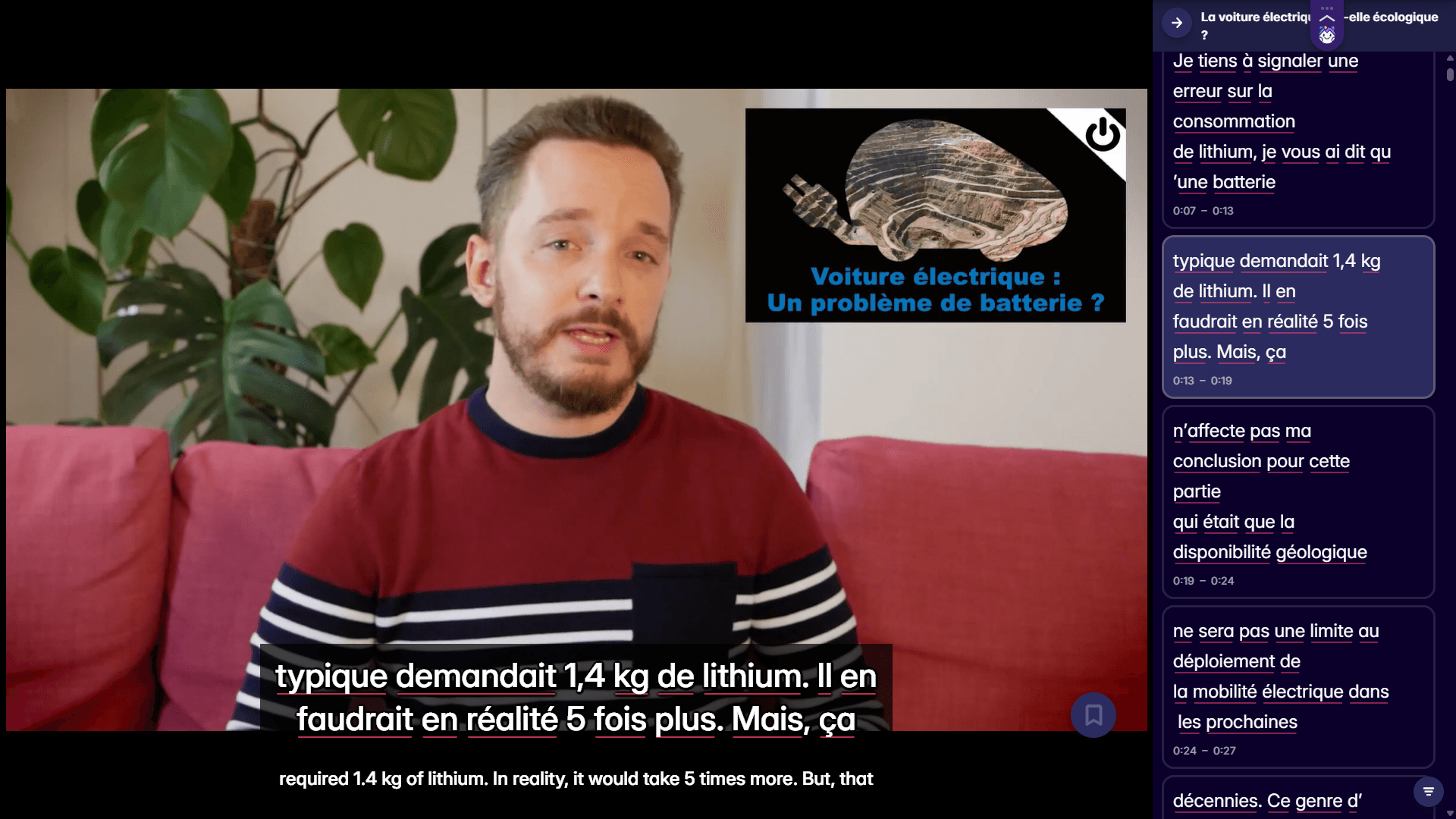
Anyway, if you want to see these relative pronouns in action while learning from real French content, Migaku's browser extension and app let you look up words and grammar instantly while watching shows or reading articles. Makes picking up these patterns way more natural than drilling exercises. There's a 10-day free trial if you want to check it out.
 ----
## These aren't just grammar rules to memorize for a test
They're essential tools for understanding more complicated sentence structures and expressing yourself clearly in French. Every conversation, every article, every book uses relative pronouns constantly. The more you actively study these grammar rules when encountering them in media consumption, the faster you can internalize them. Getting comfortable with them opens up the whole language.
> If you consume media in French, and you understand at least some of the messages and sentences within that media, you will make progress. _Period_.
The language flows smoothly when you connect clauses properly.📖
----
## These aren't just grammar rules to memorize for a test
They're essential tools for understanding more complicated sentence structures and expressing yourself clearly in French. Every conversation, every article, every book uses relative pronouns constantly. The more you actively study these grammar rules when encountering them in media consumption, the faster you can internalize them. Getting comfortable with them opens up the whole language.
> If you consume media in French, and you understand at least some of the messages and sentences within that media, you will make progress. _Period_.
The language flows smoothly when you connect clauses properly.📖