# French Sports Vocabulary: Essential Expressions and Examples
> Enjoy talking about sports you like with French sports vocabulary, including sport names, action verbs, equipment terms, and phrases.
**URL:** https://migaku.com/blog/language-fun/french-sports-vocabulary
**Last Updated:** 2026-03-22
**Tags:** vocabulary, phrases
---
If you're [learning French](https://migaku.com/learn-french) and want to talk about sports, you'll need the right vocabulary. Whether you're watching the Tour de France, chatting about football matches, or just trying to understand French sports commentary, knowing these terms makes everything easier. This guide covers the essential French sports vocabulary you'll use, from common sport names to action verbs and equipment terms.
----
## Common sports in French with pronunciation audio
Let's start with the basics. Here are the most popular sports you'll hear about in France and how to say them in French.
- Football (soccer to Americans) is called **"le football" ** or just **"le foot" ** in French. Pretty straightforward. This is the most popular sport in France, so you'll hear about it constantly.
- Tennis is **"le tennis", ** pronounced almost the same as in English but with a French accent.
- Rugby is popular in southern France. You'd say **"le rugby" ** for the sport itself.
- Basketball translates to **"le basket" ** or **"le basketball" **.
- Swimming is **"la natation", ** which comes from the verb "nager" (to swim).
Here are more sports vocabulary terms you should know:
| French | English |
| - | - |
| le cyclisme | Cycling |
| le ski | Skiing |
| la course | Racing / Running |
| le golf | Golf |
| le volleyball | Volleyball |
| l'athlétisme | Athletics / Track and field |
| la boxe | Boxing |
| l'équitation | Horseback riding |
| la gymnastique | Gymnastics |
| le hockey | Hockey |
Notice that most sports names are masculine (le), but some like "la natation" and "la course" are feminine. You'll pick up the patterns as you practice.
----
## French verbs for talking about sport
Knowing sport names is one thing, but you need verbs to actually talk about playing them. The main verb you'll use is **"jouer" ** (to play), but it works differently depending on the sport.
For team sports and games, you use "jouer à". So you'd say "Je joue au football" (I play soccer) or "Elle joue au tennis" (She plays tennis). The "au" is a contraction of "à le", and it changes to "à la" for feminine sports or "aux" for plural.
Examples with jouer:
- Je joue au basket.
*I play basketball.*
- Tu joues au rugby.
*You play rugby.*
- Nous jouons aux échecs.
*We play chess.*
But here's the thing. Not all sports use "jouer". Some sports have their own specific verbs:
- Faire de (to do/practice): "Je fais de la natation" (I do swimming)
- Nager (to swim): "Je nage tous les jours" (I swim every day)
- Courir (to run): "Il court un marathon" (He's running a marathon)
- Skier (to ski): "Nous skions dans les Alpes" (We ski in the Alps)
- Faire du vélo (to bike): "Je fais du vélo le weekend" (I bike on weekends)
The verb "faire" is super useful because it works with almost any sport. "Je fais du sport" means "I do sports" in general.
----
## Essential French equipment and clothing vocabulary
When you're talking about sports, you'll need words for equipment and what athletes wear.
| French | English |
| - | - |
| un ballon | A ball (usually for soccer or basketball) |
| une balle | A ball (usually smaller like tennis or golf) |
| une raquette | A racket |
| des chaussures de sport | Sports shoes |
| un maillot | A jersey |
| un short | Shorts |
| des baskets | Sneakers |
| un casque | A helmet |
| des gants | Gloves |
| un vélo | A bicycle |
----
## Player positions and team terms in French language
If you're watching sports in France or talking about teams, these terms come up all the time.
**General team vocabulary:**
| French | English |
| - | - |
| une équipe | A team |
| un joueur | A player (masculine) |
| une joueuse | A player (feminine) |
| l'entraîneur | The coach |
| l'arbitre | The referee |
| un adversaire | An opponent |
| le capitaine | The captain |
| un coéquipier | A teammate |
**Football positions in French:**
| French | English |
| - | - |
| le gardien de but | Goalkeeper |
| un défenseur | Defender |
| un milieu de terrain | Midfielder |
| un attaquant | Forward / Striker |
| un ailier | Winger |
----
## Winter sports and water sports vocabulary
France has amazing ski resorts in the Alps, so winter sports vocabulary is pretty important if you're visiting during ski season.
**Winter sports terms:**
| French | English |
| - | - |
| le ski alpin | Downhill skiing |
| le ski de fond | Cross-country skiing |
| le snowboard | Snowboarding |
| le patinage | Ice skating |
**Water sports are popular along the French coast and rivers:**
| French | English |
| - | - |
| la voile | Sailing |
| le surf | Surfing |
| la planche à voile | Windsurfing |
| la plongée | Diving |
| l'aviron | Rowing |
| le kayak | Kayaking |
----
## Useful phrases for sports conversations
Knowing individual words is great, but you need phrases to actually have conversations about sports. Here are some you'll use constantly.
- J'aime le sport.
*I like sports.* (in general)
- J'aime le football.
*I like soccer.*
- J'aime jouer au tennis.
*I like playing tennis.*
- Quel est ton sport préféré?
*What's your favorite sport?*
- Je fais du sport trois fois par semaine.
*I do sports three times a week.*
- Tu regardes le match ce soir?
*Are you watching the match tonight?*
- Mon équipe a gagné.
*My team won.*
- Ils ont perdu.
*They lost.*
- C'était un bon match.
*It was a good match.*
- Je m'entraîne tous les jours.
*I train every day.*
- Il est très sportif.
*He's very athletic.*
----
## Practice strategies for learning French sports vocabulary
Here's how to learn this vocabulary instead of just reading lists and forgetting everything.
1. [Watch French sports coverage](https://migaku.com/blog/language-fun/best-french-shows-language-learners). Turn on a football match with French commentary. You'll hear the same terms repeated constantly, which helps them stick. The context makes it obvious what "un but" or "une passe" means even if you're not sure at first.
2. [Read sports news in French](https://migaku.com/blog/language-fun/comprehensible-input-method-language-learning). Sites like L'Équipe cover everything from football to tennis to rugby. The articles use this vocabulary naturally, and you'll see patterns in how French speakers talk about sport.
3. Join a sports club or activity if you're in France. Nothing beats actually playing and hearing the terms used in real situations. Even just going to a gym and reading the signs helps.
4. Make your own example sentences. Don't just memorize "le tennis". Write "Je joue au tennis le samedi matin avec mon ami" (I played tennis Saturday morning with my friend). The extra context helps your brain remember.
5. [Use flashcards for equipment](https://migaku.com/blog/language-fun/anki-settings-for-language-learning) and technical terms. The basic sport names are easy, but remembering that "un ailier" is a winger or "une mêlée" is a scrum takes more repetition.
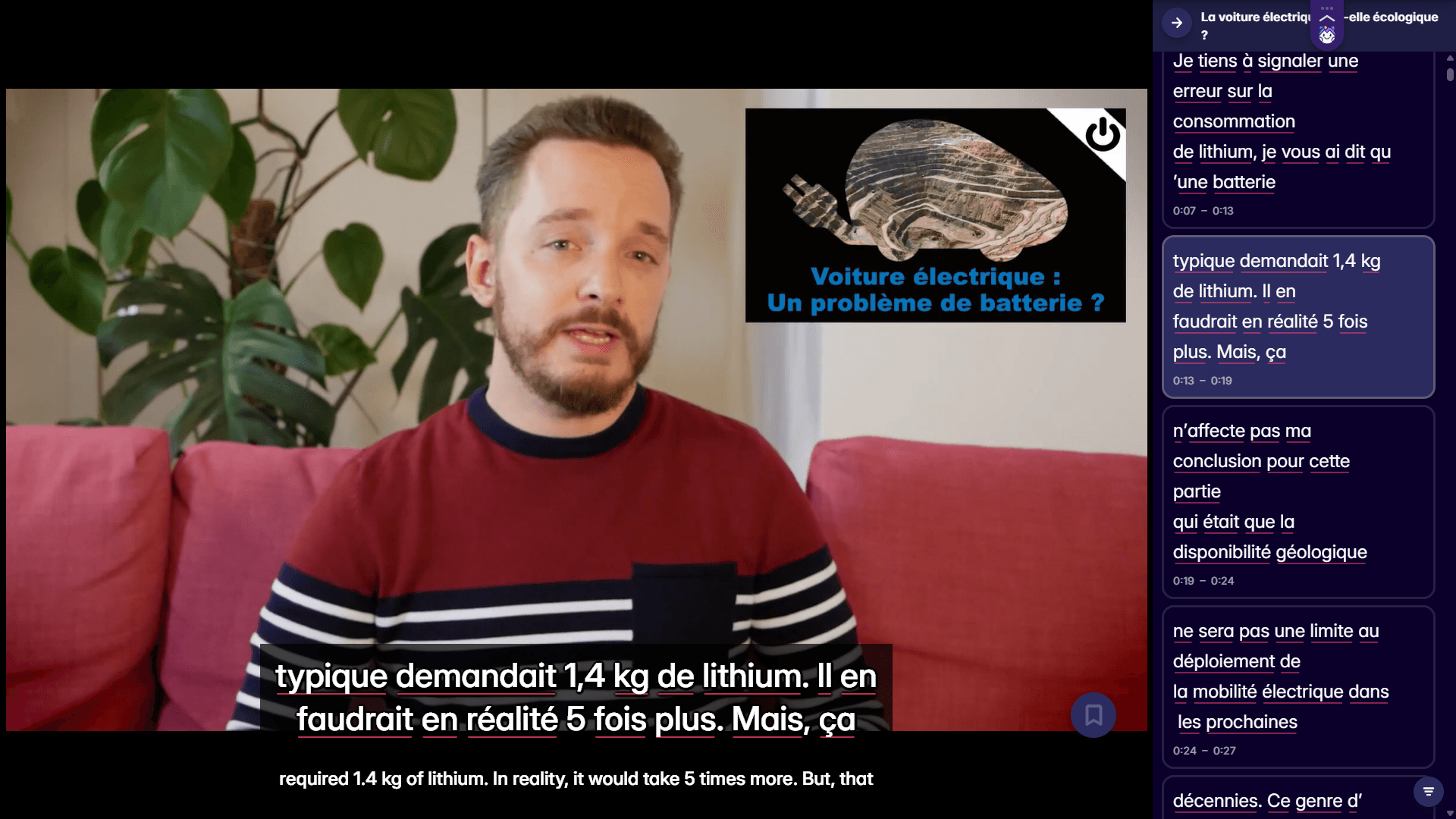
Anyway, if you want to practice this vocabulary with real French content, Migaku's browser extension and app let you look up words instantly while watching French sports coverage or reading articles. Makes the whole immersion learning thing way more practical. There's a 10-day free trial if you want to check it out.
 ----
## Learning French vocabulary for sports gives you access to the culture
Start with the major sports like football, tennis, and rugby since you'll encounter them most often. Learn the verb "jouer" and how to use it with different sports. Pick up equipment terms as you need them. The best approach is to learn this vocabulary through actual use. Watch matches, read sports news, and talk to French speakers about their favorite teams.
> If you consume media in French, and you understand at least some of the messages and sentences within that media, you will make progress. _Period_.
The repetition and context will make these words stick way better than memorizing lists!🏋️♂️💪
----
## Learning French vocabulary for sports gives you access to the culture
Start with the major sports like football, tennis, and rugby since you'll encounter them most often. Learn the verb "jouer" and how to use it with different sports. Pick up equipment terms as you need them. The best approach is to learn this vocabulary through actual use. Watch matches, read sports news, and talk to French speakers about their favorite teams.
> If you consume media in French, and you understand at least some of the messages and sentences within that media, you will make progress. _Period_.
The repetition and context will make these words stick way better than memorizing lists!🏋️♂️💪