German Clothing Vocabulary: Essential Vocabulary for Your Wardrobe
Last updated: April 5, 2026

Learning German clothing vocabulary opens up everyday conversations, from shopping at a Berlin boutique to complimenting someone's outfit at a Munich beer garden. Whether you're planning a trip to Germany, watching German fashion shows, or just want to describe what you're wearing in your target language, mastering these words makes daily life so much easier. The good news? German clothing terms follow predictable patterns once you understand the gender rules and compound word structure that make the language tick.
- Essential German clothing vocabulary to get started
- Seasonal and weather-appropriate clothing words
- Traditional German clothing terms
- Accessories and smaller clothing items
- Underwear and intimate apparel
- Adjectives to describe clothing in German
- Verbs related to clothing and fashion
- How to learn German clothing vocabulary effectively
- Where to find German clothing vocabulary resources
Essential German clothing vocabulary to get started
Let's jump into the core words you'll actually use. Every piece of clothing in German has a gender (der, die, das), and yeah, you need to memorize these along with the words themselves.
Starting with tops:
German | English |
|---|---|
das Hemd | Shirt (typically a dress shirt or button-down) |
das T-Shirt | Casual t-shirt |
der Pullover | Sweater / Pullover |
die Jacke | Jacket (from light windbreakers to heavier coats) |
Moving to bottoms:
German | English |
|---|---|
die Hose | Pants / Trousers (singular in German) |
die Jeans | Jeans (singular in German) |
der Rock | Skirt |
das Kleid | Dress |
Footwear:
German | English |
|---|---|
die Schuhe | Shoes (plural; singular: der Schuh) |
die Stiefel | Boots |
die Turnschuhe | Sneakers / Athletic shoes |
die Socken | Socks |
Seasonal and weather-appropriate clothing words
German weather varies dramatically, so you'll need vocabulary for all seasons.
Winter gear includes:
German | English |
|---|---|
der Mantel | Coat |
die Mütze | Winter hat / Beanie |
der Schal | Scarf |
die Handschuhe | Gloves (literally "hand shoes") |
For summer, you might wear:
German | English |
|---|---|
die Shorts | Shorts |
die Sandalen | Sandals |
der Badeanzug | Swimsuit |
- Ich trage einen Mantel.
I'm wearing a coat. - Sie trägt ein Kleid.
She's wearing a dress.
Rain gear has its own category:
German | English |
|---|---|
der Regenmantel | Raincoat |
der Regenschirm | Umbrella (literally "rain screen") |
These compound words make German vocabulary easier to remember once you recognize the building blocks.
Traditional German clothing terms
You've probably heard of Lederhosen and Dirndl if you've seen any Oktoberfest photos.
Lederhosen are the traditional leather shorts or breeches worn in Bavaria and Austria, typically by men. The word combines Leder (leather) and Hosen (pants).
A Dirndl is the traditional dress worn by women, featuring a bodice, blouse, full skirt, and apron.
Both Lederhosen and Dirndl show up at festivals, traditional events, and tourist areas throughout southern Germany. While they're not everyday wear for most Germans, knowing these terms helps when discussing German culture or planning festival attendance.
These traditional items represent regional identity more than national costume. A Bavarian wearing Lederhosen to Oktoberfest makes total sense, but you won't see many people wearing them in Hamburg or Berlin outside themed events.
Accessories and smaller clothing items
Accessories round out any outfit.
German | English |
|---|---|
der Gürtel | Belt |
die Krawatte | Necktie |
die Fliege | Bow tie |
die Halskette | Necklace |
die Ohrringe | Earrings |
die Armbanduhr | Wristwatch (literally "arm band clock") |
Bags follow their own patterns:
German | English |
|---|---|
die Tasche | Bag in general (from purses to totes) |
die Handtasche | Handbag / Purse |
der Rucksack | Backpack |
Hats include:
German | English |
|---|---|
der Hut | Formal hat with a brim |
die Kappe | Cap (like a baseball cap) |
die Sonnenbrille | Sunglasses (Sonne = sun, Brille = glasses) |
Underwear and intimate apparel
German | English |
|---|---|
die Unterwäsche | Underwear (general category) |
die Unterhose | Underpants |
der BH | Bra (short for Büstenhalter) |
die Socken | Socks (considered underwear-adjacent) |
der Schlafanzug | Pajamas (literally "sleep suit") |
das Nachthemd | Nightgown |
These words come up when packing for trips or shopping for basics.
Adjectives to describe clothing in German
Describing clothing requires adjectives, and German adjective endings change based on gender, case, and whether you're using definite or indefinite articles. Starting simple, here are base forms you'll use constantly.
Colors are fundamental:
German | English |
|---|---|
rot | Red |
blau | Blue |
grün | Green |
gelb | Yellow |
schwarz | Black |
weiß | White |
grau | Gray |
braun | Brown |
To say "I'm wearing a red dress," you'd say "Ich trage ein rotes Kleid." Notice how the adjective ending changes.
Size and fit adjectives include:
German | English |
|---|---|
groß | Big / large |
klein | Small |
lang | Long |
kurz | Short |
eng | Tight |
weit | Wide / Loose |
bequem | Comfortable |
Material adjectives describe what clothes are made from:
German | English |
|---|---|
Baumwolle | Cotton |
Wolle | Wool |
Leder | Leather |
Seide | Silk |
You might say "eine Jacke aus Leder" (a jacket made of leather) or "ein Pullover aus Wolle" (a wool sweater).
Verbs related to clothing and fashion
Beyond tragen (to wear), several verbs help you discuss clothing.
- Anziehen means to put on or get dressed: "Ich ziehe mich an" (I'm getting dressed). The reflexive form sich anziehen is super common.
- Ausziehen means to take off or undress: "Zieh die Jacke aus" (Take off the jacket).
- Umziehen means to change clothes: "Ich muss mich umziehen" (I need to change).
- For shopping, kaufen (to buy) and passen (to fit) are essential. "Die Hose passt mir nicht" means "The pants don't fit me."
- The verb stehen (to suit/look good on) works differently than English: "Das Kleid steht dir" literally translates as "The dress stands to you" but means "The dress suits you."
How to learn German clothing vocabulary effectively
Memorizing isolated word lists gets boring fast. Context makes vocabulary stick better.
- When you encounter clothing words in German media, whether it's a fashion show, shopping scene, or character description, you're seeing how native speakers actually use these terms.
- Flashcards work well for clothing vocabulary because you can add images. Seeing a picture of die Stiefel alongside the German word creates stronger memory connections than text alone. Apps and programs that let you create visual flashcards make this process easier.
- Labeling your own clothes at home sounds silly but actually helps. Stick a note on your Jacke, your Schuhe, your Pullover. Every time you grab that item, you see the German word. Physical interaction with the object while reading the word reinforces the connection.
- Describing your daily outfit in German, even just mentally, provides regular practice. "Heute trage ich eine blaue Jeans und einen schwarzen Pullover" (Today I'm wearing blue jeans and a black sweater). This self-talk builds fluency without needing a conversation partner.
Where to find German clothing vocabulary resources
PDF vocabulary lists exist all over the internet if you search "German clothing vocabulary PDF." These typically organize words by category (tops, bottoms, accessories) with English translations. They're decent for reference but pretty dry for learning.
Better resources include German fashion magazines, online shopping sites like Zalando (German-based), and YouTube videos about German fashion or shopping hauls. Real content shows you how these words function in natural contexts.
German language learning platforms often include clothing vocabulary in beginner courses since it's such practical, everyday terminology. Most structured courses introduce these words early, usually within the first few levels.
Instagram accounts focused on German fashion or German lifestyle content provide constant exposure to clothing vocabulary. You see the items, read the captions in German, and pick up both the words and how people actually talk about fashion.
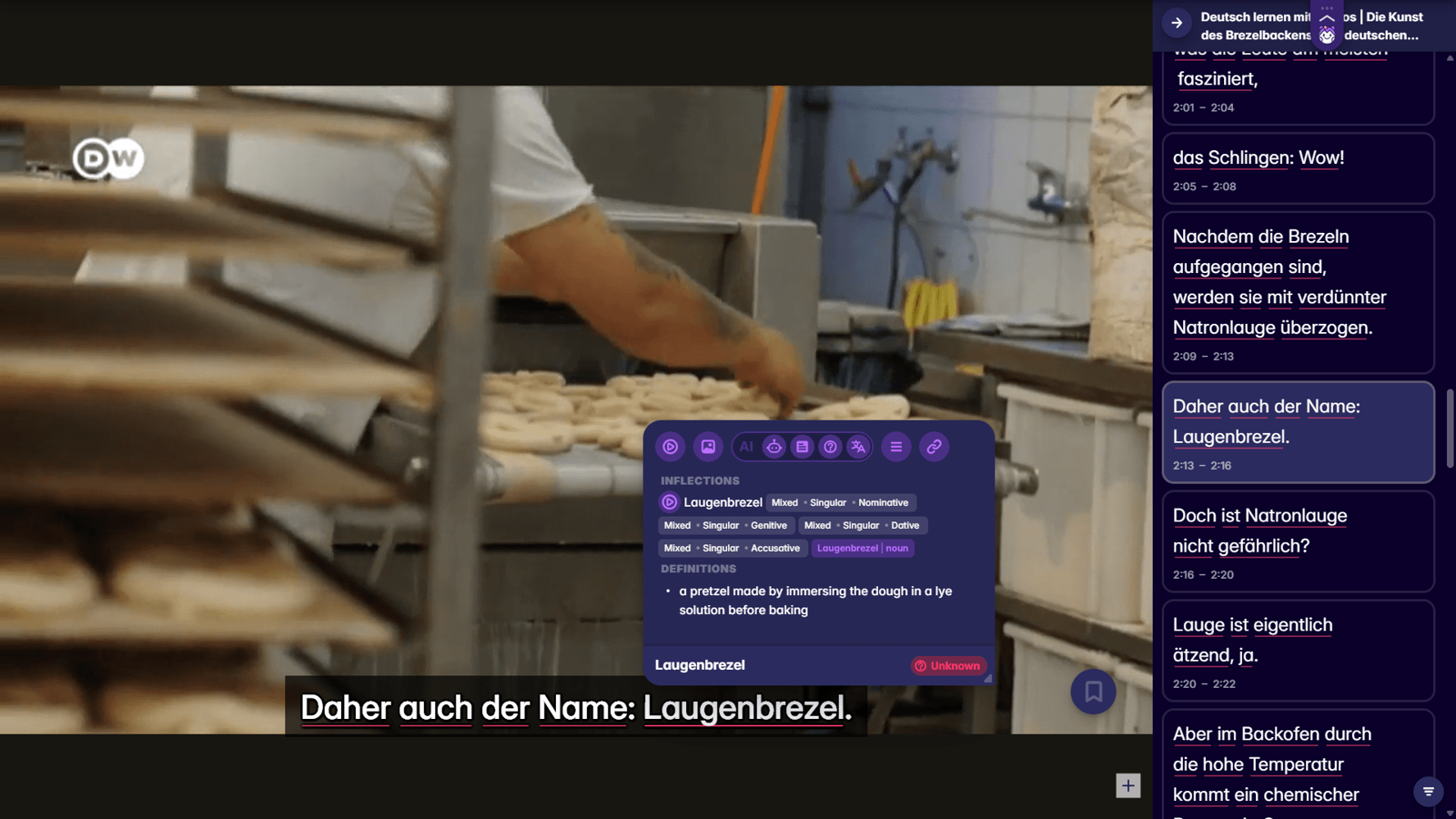
Want to actually practice this vocabulary with real German content? Migaku's browser extension and app let you look up any clothing term instantly while watching German shows or reading fashion blogs. Makes learning from context way more practical than flashcard grinding alone. There's a 10-day free trial if you want to check it out.
Your wardrobe is your classroom for learning German language
German clothing vocabulary doesn't need to be complicated. You're literally surrounded by learning materials every time you get dressed. And every time you go out for shopping, browsing through the catalogues and social media, you are picking up the trendiest clothing terms.
If you consume media in German, and you understand at least some of the messages and sentences within that media, you will make progress. Period.
Fashion vocabulary brings color and personality into language learning!🏷️👗