# German House Vocabulary: Essential German Words for Rooms and Furniture
> Common German house vocabulary for every room. Complete guide to furniture, appliances, and phrases you need to describe your home in German.
**URL:** https://migaku.com/blog/language-fun/german-house-vocabulary-rooms-furniture
**Last Updated:** 2026-03-12
**Tags:** vocabulary, phrases
---
[Learning German](https://migaku.com/learn-german) house vocabulary is one of those practical language skills that pays off immediately. Whether you're planning to study in Germany, moving there for work, or just want to describe your living space to German friends, knowing the right words for rooms and furniture makes everyday conversations way easier. This guide covers everything from das Wohnzimmer to die Küche, with all the essential vocabulary you need to talk about your home in German.
---
## Understanding German house vocabulary basics
German house vocabulary follows the same grammatical rules as the rest of the language, which means every noun has a gender and comes with its own article. You'll see der (masculine), die (feminine), and das (neuter) throughout this guide. The good news? Once you learn the article with each word, it becomes automatic.
The word for house in German is **"das Haus," ** and it's one of those fundamental terms you'll use constantly. German homes often differ from what you might find in other countries, especially in terms of layout and furniture styles, so [learning this vocabulary](https://migaku.com/blog/language-fun/best-language-learning-methods) also gives you insight into how people actually live in Germany.
Here's the thing about German vocabulary: the language loves compound words. You'll notice that many room names combine smaller words to create descriptive terms. Das Schlafzimmer (bedroom) literally means "sleep room," while das Badezimmer (bathroom) means "bath room." Pretty straightforward once you know the pattern.
---
## Room vocabulary in German
Let's start with the basic rooms you'll find in most homes. Each room has its own specific vocabulary, and knowing these terms helps you navigate housing listings, talk to landlords, or simply describe where you live.
- **Das Wohnzimmer ** is your living room, the central gathering space in most German homes. The word comes from "wohnen" (to live) and "Zimmer" (room). You'll use this term constantly when discussing apartments or houses.
- **Die Küche ** is the kitchen, and German kitchens are often smaller than what you might expect if you're coming from North America. Many rental apartments in Germany come without kitchens, which surprises a lot of people moving there for the first time.
- **Das Schlafzimmer ** means bedroom. In German housing, you'll often see apartments listed as "2-Zimmer" or "3-Zimmer," and they're counting bedrooms and living rooms, not including the kitchen or bathroom.
- **Das Badezimmer ** is your bathroom. German bathrooms typically separate the toilet from the bathing area, and you might encounter "das WC" (water closet) as a separate small room with just a toilet.
- **Das Esszimmer ** refers to a dining room, though many modern German apartments combine this space with the living room. You'll see "das Esszimmer" more often in larger homes or older buildings.
Other useful room vocabulary includes:
| German | English |
| - | - |
| Der Flur | hallway |
| Der Balkon | balcony |
| Die Terrasse | terrace or patio |
| Der Keller | basement or cellar |
| Der Dachboden | attic |
| Das Arbeitszimmer | home office or study |
| Die Garage | garage |
---
## Living room furniture and vocabulary
The living room contains some of the most essential furniture vocabulary you'll need. These words come up constantly in everyday conversations about your home.
- **Das Sofa ** is pretty universal, the couch or sofa where you relax. You might also hear "die Couch," borrowed directly from English. Der Sessel means armchair, a single comfortable chair.
- **Der Tisch ** means table, and you'll use this word for all kinds of tables. Der Couchtisch specifically refers to a coffee table in the living room.
- **Der Fernseher ** is your television. The word comes from "fernsehen" (to watch TV), literally meaning "far-seeing."
- **Das Regal ** means shelf or bookshelf, essential for storage.
Additional living room vocabulary includes:
| German | English |
| - | - |
| Der Teppich | carpet or rug |
| Die Lampe | lamp |
| Das Kissen | cushion or pillow |
| Die Gardine / Der Vorhang | curtain |
| Das Bild | picture or painting |
| Die Pflanze | plant |
| Der Schrank | cabinet or closet |
---
## Bedroom essentials in German
Your bedroom vocabulary centers around sleeping and storage.
- **Das Bett ** is the bed, one of the most basic and essential words.
- **Die Matratze ** means mattress, important when you're shopping for bedroom furniture.
- **Der Kleiderschrank ** is your wardrobe or closet. German bedrooms often use standalone wardrobes rather than built-in closets, so this piece of furniture is crucial. The word combines "Kleider" (clothes) and "Schrank" (cabinet).
- **Der Nachttisch ** means nightstand, literally "night table." You'll typically find one or two of these beside das Bett.
Other bedroom vocabulary you'll need:
| German | English |
| - | - |
| Das Kissen | pillow |
| Die Decke | blanket or duvet |
| Das Bettlaken | bed sheet |
| Der Wecker | alarm clock |
| Die Kommode | dresser or chest of drawers |
| Der Spiegel | mirror |
| Die Lampe | bedside lamp |
---
## Kitchen and dining vocabulary
- **Die Küche ** contains tons of specific vocabulary for appliances, furniture, and cooking items.
- **Der Herd ** means stove or cooktop.
- **Der Backofen ** is your oven, often a separate unit in German kitchens.
- **Der Kühlschrank ** is the refrigerator, combining "kühl" (cool) and "Schrank" (cabinet).
- **Die Spülmaschine ** means dishwasher, from "spülen" (to rinse) and "Maschine" (machine).
- **Die Spüle ** refers to the kitchen sink.
- **Der Wasserhahn ** is the faucet or tap, literally "water rooster" (kind of funny when you think about it).
Kitchen furniture and items include:
| German | English |
| - | - |
| Der Küchentisch | kitchen table |
| Der Stuhl | chair |
| Die Arbeitsplatte | countertop |
| Der Schrank | cabinet |
| Die Mikrowelle | microwave |
| Der Toaster | toaster |
| Die Kaffeemaschine | coffee maker |
| Der Wasserkocher | electric kettle |
| Der Teller | plate |
| Die Tasse | cup |
| Das Glas | glass |
| Die Gabel | fork |
| Das Messer | knife |
| Der Löffel | spoon |
---
## Bathroom vocabulary in German
- **Das Badezimmer ** has its own specific set of terms.
- **Die Toilette ** or **das WC ** both mean toilet.
- **Die Badewanne ** is the bathtub.
- **Die Dusche ** means shower.
- **Das Waschbecken ** refers to the sink or washbasin.
- **Der Spiegel ** is the mirror, typically found above the sink.
Additional bathroom vocabulary:
| German | English |
| - | - |
| Das Handtuch | towel |
| Die Seife | soap |
| Die Zahnbürste | toothbrush |
| Das Shampoo | shampoo |
| Der Föhn | hair dryer |
| Das Regal | shelf |
| Der Schrank | bathroom cabinet |
---
## Useful phrases for describing your home
Beyond individual vocabulary words, you'll want to know some practical phrases to describe your living space or talk about furniture.
"Ich wohne in einem Haus" means "I live in a house," while "Ich wohne in einer Wohnung" means "I live in an apartment." These basic phrases help you describe your living situation.
To describe what's in a room, you can say "Im Wohnzimmer gibt es ein Sofa" (In the living room there is a sofa) or "Die Küche hat einen großen Tisch" (The kitchen has a large table).
When shopping for furniture, these phrases help:
- Ich suche einen Tisch.
*I'm looking for a table.*
- Wo finde ich Stühle?
*Where do I find chairs?*
- Wie viel kostet das Bett?
*How much does the bed cost?*
To talk about your home's features:
- Meine Wohnung hat zwei Zimmer.
*My apartment has two rooms.*
- Das Haus hat einen Balkon.
*The house has a balcony.*
- Wir haben eine große Küche.
*We have a large kitchen.*
---
## Tips for learning and practicing German house vocabulary
1. Learning vocabulary works best when you connect words to real objects. Walk through your own home and label items with sticky notes showing the German word and article. Seeing "der Tisch" on your actual table reinforces the vocabulary way better than flashcards alone.
2. Pronunciation matters, especially for words with umlauts like Küche or Stühle. Listen to native speakers whenever possible. Many online dictionaries include audio pronunciation, which helps you hear the proper sounds.
3. Group vocabulary by room when you study. Your brain naturally organizes information spatially, so learning all the bedroom vocabulary together makes more sense than random lists of furniture words.
4. Practise describing your own living space out loud in German. Start simple: "Das ist mein Wohnzimmer. Es gibt ein Sofa und einen Tisch." Then add more details as you learn more vocabulary.
5. Create realistic scenarios in your head. Imagine you're showing a German friend around your home, or picture yourself apartment hunting in Germany and describing what you need. This contextual practice makes the vocabulary stick.
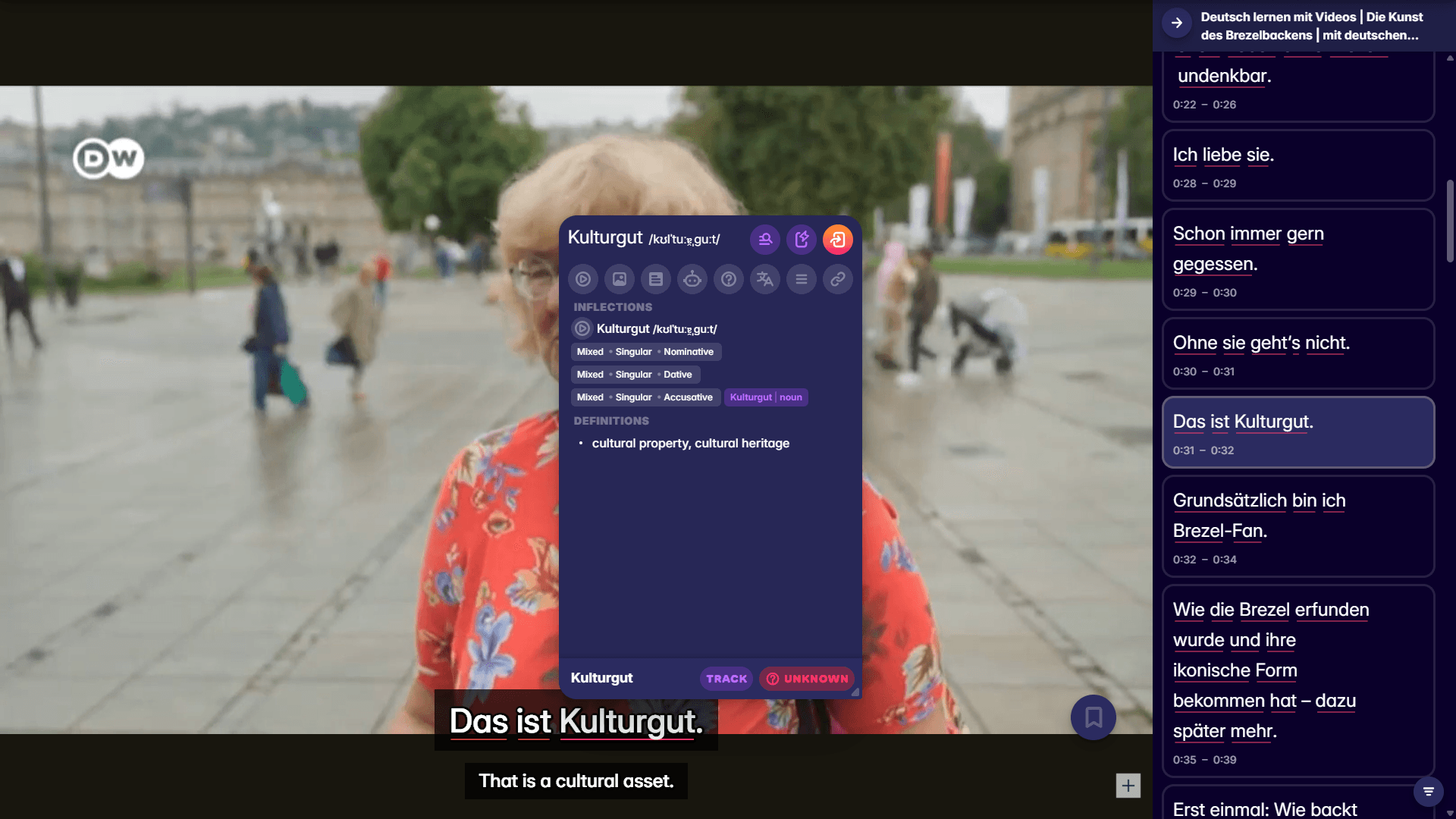
Anyway, if you want to actually use this vocabulary with real German content, Migaku's browser extension and app let you look up words instantly while watching German shows or reading articles about interior design. Makes learning vocabulary in context way more natural than memorizing lists. There's a 10-day free trial if you want to check it out.
 ---
## Learn German language through relevant media content
German house vocabulary also gives you cultural insights. Learning that many German apartments don't include kitchens, or that built-in closets are less common, helps you understand practical aspects of life in Germany that go beyond just language learning. If you pick up house vocabulary through immersion, you can learn these words together with cultural tips about living in Germany, making your learning more relevant and efficient.
> If you consume media in German, and you understand at least some of the messages and sentences within that media, you will make progress. _Period_.
A spark of interest lights hours of learning.🔥
---
## Learn German language through relevant media content
German house vocabulary also gives you cultural insights. Learning that many German apartments don't include kitchens, or that built-in closets are less common, helps you understand practical aspects of life in Germany that go beyond just language learning. If you pick up house vocabulary through immersion, you can learn these words together with cultural tips about living in Germany, making your learning more relevant and efficient.
> If you consume media in German, and you understand at least some of the messages and sentences within that media, you will make progress. _Period_.
A spark of interest lights hours of learning.🔥