German Irregular Verbs: The Most Common Irregular Verbs in German You Need
Last updated: April 3, 2026

Learning German means dealing with irregular verbs sooner or later. Unlike regular verbs that follow predictable patterns, irregular verbs change their vowels and sometimes their entire structure when you conjugate them. The good news? You only need to master about 200 irregular verbs to handle most everyday German conversations. This guide breaks down the most common ones you'll actually use, with practical examples and patterns that make them easier to remember.
- What makes a verb irregular in German
- The most essential irregular verbs you need
- Common irregular verbs for daily activities
- Vowel change patterns you can use
- Understanding präteritum forms
- Past participle formations
- Modal verbs and their irregularities
- Practical strategies to remember German irregular verbs
- Common mistakes with irregular verb conjugation
What makes a verb irregular in German
Regular verbs in German follow a simple formula. You take the infinitive, drop the -en ending, and add the appropriate endings for each person and tense. Pretty straightforward.
Irregular verbs throw that pattern out the window. They change their stem vowel in different tenses, and sometimes the consonants shift too. The verb "fahren" (to drive) becomes "er fährt" in present tense, then "fuhr" in präteritum, and "gefahren" as a past participle. Three different vowels for one verb.
German grammarians often call these "strong verbs" because they form their past tense through vowel changes rather than adding a simple -te ending like regular verbs do. You'll encounter around 200 of these in total, though only about 50-70 show up constantly in everyday speech.
The most essential irregular verbs you need
Some irregular verbs appear so frequently that you can't avoid them. Here are the absolute must-know ones.
Sein (to be)
This verb is completely irregular in every tense. In present tense, you get "ich bin", "du bist", "er ist", "wir sind", "ihr seid", "sie sind". The präteritum forms are "ich war", "du warst", "er war", and so on. The past participle is "gewesen".
You'll use sein constantly because it functions as both a main verb and an auxiliary verb for forming perfect tenses with verbs of movement.
Haben (to have)
Another auxiliary verb that's totally irregular. Present tense goes "ich habe", "du hast", "er hat", "wir haben", "ihr habt", "sie haben". The präteritum is "ich hatte", and the past participle is "gehabt".
Haben shows up in most perfect tense constructions, so you'll see it everywhere.
Werden (to become)
This one's tricky because it serves multiple functions. Present tense: "ich werde", "du wirst", "er wird". Präteritum: "ich wurde". Past participle: "geworden" (or "worden" when used as a passive auxiliary).
You need werden for future tense constructions and for forming the passive voice.
Common irregular verbs for daily activities
These verbs describe actions you talk about all the time.
Essen (to eat)
The stem vowel changes from e to i in second and third person present tense. "Ich esse", but "du isst" and "er isst". The präteritum is "ich aß", and the past participle is "gegessen".
Watch out for the double s in some forms. It catches people off guard.
Nehmen (to take)
This verb changes more dramatically. "Ich nehme" is regular, but "du nimmst" and "er nimmt" shift the vowel and add an extra m. Präteritum is "ich nahm", past participle is "genommen".
Geben (to give)
Similar pattern to nehmen. "Ich gebe", "du gibst", "er gibt". Präteritum: "ich gab". Past participle: "gegeben".
Sehen (to see)
The e becomes ie in second and third person present. "Ich sehe", "du siehst", "er sieht". Präteritum: "ich sah". Past participle: "gesehen".
Fahren (to drive/travel)
The a becomes ä in present tense second and third person. "Ich fahre", "du fährst", "er fährt". Präteritum uses a u: "ich fuhr". Past participle: "gefahren".
This verb takes sein as its auxiliary in perfect tense because it involves movement.
Vowel change patterns you can use
Many irregular verbs follow recognizable patterns, which makes memorizing them less painful.
The e to i/ie pattern
Verbs like geben, nehmen, essen, and sehen all change their e to either i or ie in second and third person present tense. Once you know one, you can often guess the others.
Other verbs in this group:
German | English |
|---|---|
sprechen | To speak |
treffen | To meet |
helfen | To help |
sterben | To die |
werfen | To throw |
The a to ä pattern
Fahren belongs to a group where the stem vowel a becomes ä in present tense. This includes:
German | English |
|---|---|
schlafen | To sleep |
tragen | To carry / To wear |
waschen | To wash |
fallen | To fall |
laufen | To run |
The präteritum for these typically uses ie or u as the vowel.
The ei to ie pattern
A smaller group changes ei to ie in präteritum.
- Bleiben (to stay) goes from "ich bleibe" to "ich blieb".
- Schreiben (to write) follows the same path: "ich schreibe" to "ich schrieb".
Understanding präteritum forms
The präteritum tense (simple past) is where irregular verbs really show their colors. Regular verbs just add -te to the stem, but irregular verbs change their vowel entirely.
You'll mostly encounter präteritum in written German, especially in novels and news articles. In spoken German, people prefer the perfect tense (haben/sein + past participle). But you still need to recognize präteritum when you read.
Common präteritum patterns include:
- a to u (fahren to fuhr)
- e to a (geben to gab)
- ei to ie (schreiben to schrieb)
- i to a (singen to sang)
The verb singen (to sing) demonstrates this nicely: "ich singe" becomes "ich sang" in präteritum, with the past participle being "gesungen".
Past participle formations
Past participles matter because you use them constantly in perfect tense constructions. Most irregular verbs form their past participle with ge- at the beginning and -en at the end, with a vowel change in the middle.
- Fahren becomes gefahren.
- Geben becomes gegeben.
- Nehmen becomes genommen.
- Sehen becomes gesehen.
Some past participles look completely different from their infinitive.
- Gehen (to go) becomes gegangen.
- Stehen (to stand) becomes gestanden.
Verbs with inseparable prefixes (like verstehen, beginnen, entscheiden) don't add the ge- prefix. "Verstehen" just becomes "verstanden".
Modal verbs and their irregularities
Modal verbs like können (can), müssen (must), wollen (want), sollen (should), dürfen (may), and mögen (like) have their own irregular patterns.
They change their stem vowel in singular present tense but keep the same form for first and third person. "Ich kann", "du kannst", "er kann". Then it switches back: "wir können", "ihr könnt", "sie können".
Their past tense forms are also irregular. Können becomes konnte, müssen becomes musste, wollen becomes wollte.
Practical strategies to remember German irregular verbs
- Group verbs by their vowel change patterns. When you learn fahren, immediately learn schlafen, tragen, and waschen alongside it. Your brain remembers patterns better than isolated items.
- Focus on the three principal parts: infinitive, präteritum, and past participle. For fahren, that's "fahren, fuhr, gefahren". Once you know these three forms, you can construct any tense.
- Use the verbs in context immediately. Don't just drill conjugation tables. Write sentences, speak them out loud, or better yet, encounter them while reading or watching German content.
- Create example sentences that matter to you personally. "Ich fahre jeden Tag zur Arbeit" sticks better than generic textbook examples if you actually drive to work daily.
- Pay attention to frequency. Verbs like haben, sein, werden, gehen, kommen, sehen, and geben show up constantly. Master these first before worrying about obscure verbs you'll rarely use.
Common mistakes with irregular verb conjugation
- The present tense vowel change trips people up constantly. They remember that fahren is irregular but forget that it only changes in second and third person singular. First person stays regular: "ich fahre".
- Another common error is mixing up which auxiliary verb to use in perfect tense. Most verbs take haben, but verbs of movement and state change take sein. "Ich bin gefahren", not "ich habe gefahren".
- People also confuse präteritum and past participle forms. The präteritum of gehen is ging, but the past participle is gegangen. They're both past forms but serve different grammatical functions.
- Forgetting that some verbs have both regular and irregular forms depending on meaning causes problems too. Hängen can be regular (to hang something up) or irregular (to be hanging).
If you want to avoid these mistakes and master German verbs by consuming German media, Migaku's browser extension and app let you look up any verb form instantly while watching shows or reading articles, so you can learn irregular verbs in actual context instead of boring lists. There's a 10-day free trial if you want to see how much faster you pick things up with real content.
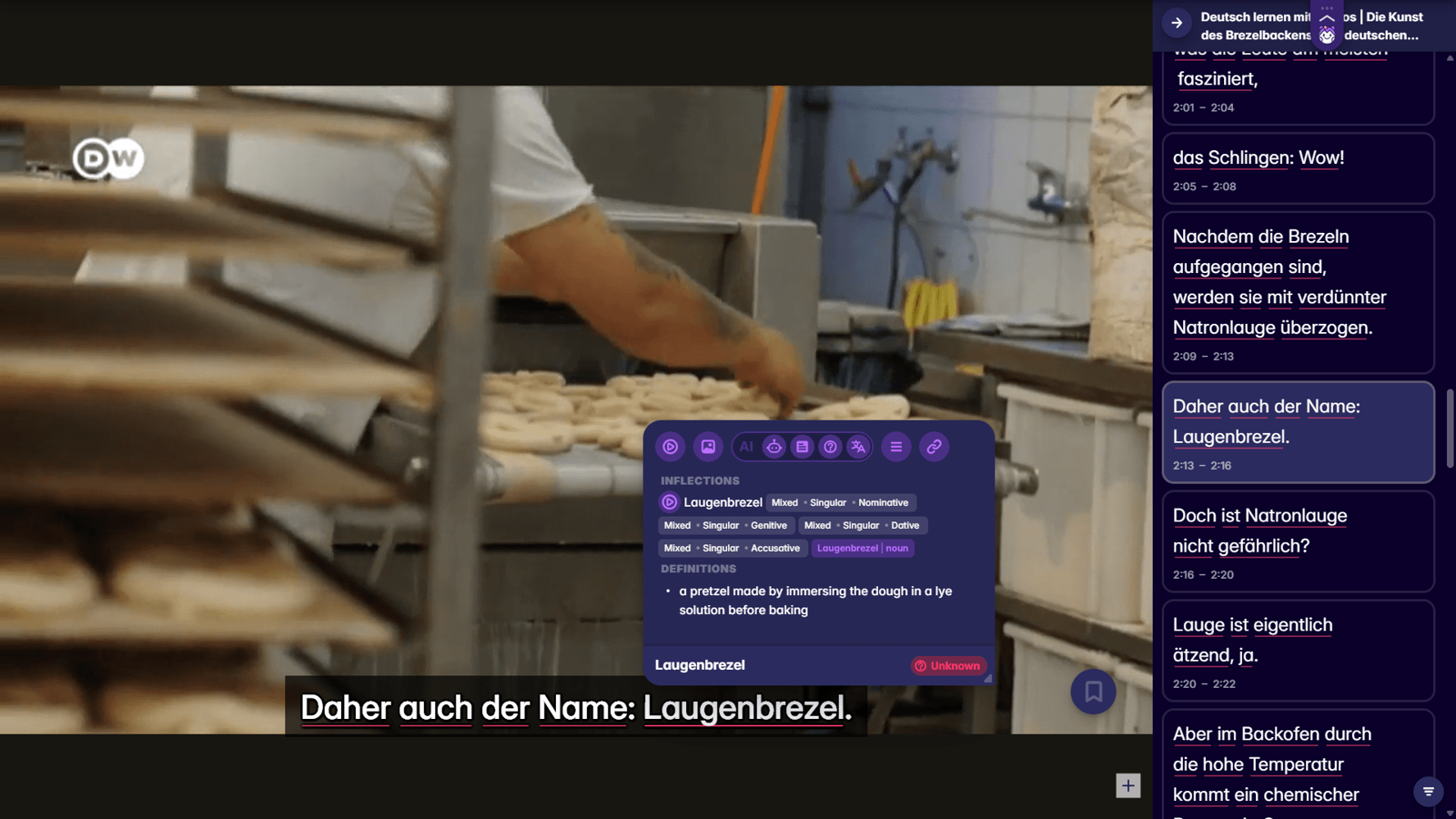
Getting irregular verbs in German from real content
Textbook lists only get you so far. You need to see these verbs in action. Look for patterns in the content you consume. News articles use präteritum heavily, while casual conversations stick to perfect tense. This helps you prioritize which forms to learn first based on your goals.
If you consume media in German, and you understand at least some of the messages and sentences within that media, you will make progress. Period.
Practice the verbs constantly. Make them yours. 💪