# German School Vocabulary: Common German Words and Phrases for School Life
> Learn German school vocabulary for subjects, supplies, and the education system. Complete guide with phrases, terms, and practical examples.
**URL:** https://migaku.com/blog/language-fun/german-school-vocabulary
**Last Updated:** 2026-03-20
**Tags:** vocabulary, phrases
---
[Learning German](https://migaku.com/learn-german) school vocabulary is one of those things that sounds super specific until you realize how much of everyday conversation revolves around education, especially if you're living in Germany or planning to study there. Whether you're a student preparing for classes, a parent navigating the German school system, or just someone trying to [learn German more effectively](https://migaku.com/blog/language-fun/best-german-learning-apps), knowing these words makes a huge difference. This guide covers everything from basic classroom supplies to the structure of the German education system itself.
----
## Basic German school supplies you need to know
Let's start with the stuff you'd find in a backpack or on a desk. These are the German words you'll use or hear pretty much daily if you're anywhere near a school environment.
| German | English |
| - | - |
| das Heft | Notebook |
| das Mäppchen / die Federtasche | Pencil case |
| der Stift | Pen / Pencil (general) |
| der Bleistift | Pencil (specifically) |
| der Kugelschreiber / der Kuli | Ballpoint pen |
| der Rucksack / die Schultasche | Backpack |
| das Lehrbuch / das Buch | Textbook |
| das Lineal | Ruler |
| der Radiergummi | Eraser |
| der Spitzer | Pencil sharpener |
| die Schere | Scissors |
| der Taschenrechner | Calculator |
| das Geodreieck | Set square |
| der Zirkel | Compass (for drawing circles) |
| die Mappe | Folder / Binder |
| das Papier | Paper |
| der Marker | Highlighter / Marker |
| der Klebestift | Glue stick |
Pretty straightforward stuff, but knowing these German vocabulary words helps you navigate any school or office supply store in Germany.
----
## German school subjects and academic terms
School subjects in German follow patterns that make them easier to remember than you'd think. Some are cognates with English, others are compound words that describe exactly what they are.
| German | English |
| - | - |
| Mathematik / Mathe | Math |
| Deutsch | German language class |
| Englisch | English class |
| Biologie | Biology |
| Chemie | Chemistry |
| Physik | Physics |
| Geschichte | History |
| Erdkunde / Geografie | Geography |
| Sport / Turnen | Physical education |
| Kunst | Art class |
| Musik | Music |
| Religion / Ethik | Religion or ethics class |
Some subjects have uniquely German names.
- **Sachkunde ** or **Sachunterricht ** is general studies for younger kids, covering science and social studies together.
- **Sozialkunde ** is social studies for older students.
The verb "to study" in German is **lernen ** for general learning or **studieren ** specifically for university-level study. This distinction matters when you're talking about your education.
When discussing performance, you need to know the grading system. German schools use a 1 to 6 scale where 1 is the best and 6 is failing. **Die Note ** means grade. **Eine Eins bekommen ** means getting an A, basically.
----
## Understanding the German school system structure
The German education system works differently from American or British systems, and the vocabulary reflects that.
- For young kids, **der Kindergarten ** is preschool (yes, English borrowed this German word). **Die Kita **, short for Kindertagesstätte, is daycare or nursery school.
- Kids start in **die Grundschule ** (primary school) from ages 6 to 10, covering grades 1 through 4 in most states.
After Grundschule, students split into different school types based on academic performance. This is where German gets specific with its school vocabulary.
- **Das Gymnasium ** is the academic track leading to university. It goes from grade 5 to 12 or 13, ending with **das Abitur **, the university entrance qualification exam. If someone says they went to Gymnasium, they're telling you they took the college prep track.
- **Die Realschule ** is the intermediate track, grades 5 to 10, leading to technical careers or further vocational training.
- **Die Hauptschule ** is the basic track, also grades 5 to 9 or 10, focusing on practical skills.
- **Die Gesamtschule ** combines all three tracks under one roof, letting students switch between levels more easily. Some German states use this model more than others.
- University is **die Universität ** or **die Uni ** for short.
- A technical college is **die Fachhochschule **. The distinction matters because they offer different types of degrees.
----
## German words and phrases for school roles
| German | English |
| - | - |
| der Lehrer | Male teacher |
| die Lehrerin | Female teacher |
| der Schüler | Male student |
| die Schülerin | Female student |
| der Direktor / die Direktorin | Principal / Headmaster |
| der Hausmeister | Janitor / Caretaker |
| die Sekretärin | School office worker |
| der Klassensprecher | Class representative (elected, taken seriously in German schools) |
| der Professor / die Professorin | Professor |
| der Dozent / die Dozentin | Lecturer / Instructor (may not have full professor status) |
----
## German vocabulary for exams and assessments
Speaking of tests, exam vocabulary in German is pretty important if you're studying the language formally or attending German schools.
| German | English |
| - | - |
| die Klausur | Written exam (longer and more formal than a Test) |
| die Prüfung | Exam (any kind, written or oral) |
| die mündliche Prüfung | Oral exam |
| die schriftliche Prüfung | Written exam |
| das Referat | Presentation or paper given in class |
| der Vortrag | Presentation (slightly more formal) |
| die Abschlussprüfung | Final exam |
| das Zeugnis | Report card / Transcript |
| die Zusammenfassung | Summary |
| die Notizen | Notes |
| die Lernkarten | Flashcards |
----
## Time and schedule vocabulary in German language
German schools run on pretty strict schedules, so time vocabulary matters.
| German | English |
| - | - |
| die Stunde | Hour / Class period |
| der Stundenplan | Class schedule / Timetable |
| die Pause | Break time / Recess |
| die große Pause | Longer break (usually mid-morning) |
| der Unterricht | Instruction / Class time in general |
| das Schuljahr | School year |
| die Ferien | Vacation / Holidays (always plural) |
| die Sommerferien | Summer holidays |
| die Weihnachtsferien | Christmas holidays |
| das Semester | Semester / Term (more common at university level) |
| das Halbjahr | Half year (more common in schools) |
----
## German phrases for classroom situations
Knowing individual vocabulary words helps, but you also need phrases to actually communicate in German school settings.
- **"Ich habe eine Frage" ** means "I have a question." Super useful phrase for any learning situation.
- **"Können Sie das bitte wiederholen?" ** means "Can you please repeat that?" You'll use this constantly when learning German.
- **"Ich verstehe nicht" ** is "I don't understand." Honest and direct.
- **"Darf ich auf die Toilette gehen?" ** means "May I go to the bathroom?" Yes, German students still ask permission like this.
- **"Wann ist die Prüfung?" ** means "When is the exam?" Die Prüfung is the general word for exam or test. Der Test is also used, especially for smaller quizzes.
- **"Ich habe meine Hausaufgaben vergessen" ** means "I forgot my homework." Die Hausaufgaben is always plural in German, even if you're talking about one assignment.
----
## Why learning German school vocabulary matters
Here's the thing about school vocabulary in German. It comes up constantly, even if you're not actually in school. Germans talk about their education system a lot, it's part of everyday conversation. You'll hear parents discussing which Gymnasium their kids attend, friends mentioning they need to buy a new Heft, or colleagues talking about their university exams.
Plus, if you want to learn German seriously, you'll probably encounter educational content. Textbooks, language courses, online tutorials all use school-related vocabulary. Understanding these German words makes everything easier.
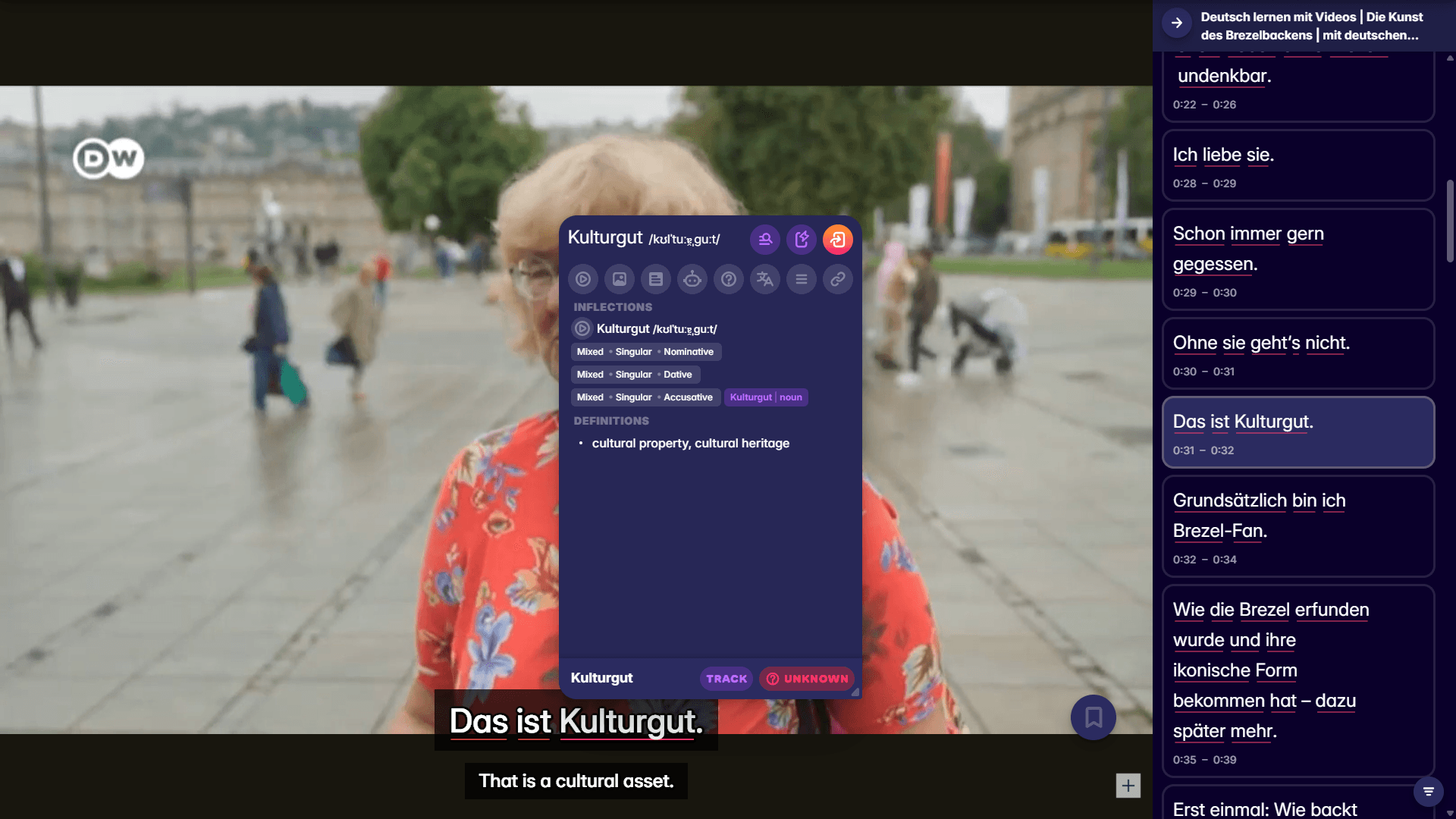
Anyway, if you want to practice this German vocabulary with real content, Migaku's browser extension and app let you look up words instantly while watching German shows or reading German articles. Makes learning school vocabulary way more natural than just memorizing lists. There's a 10-day free trial if you want to check it out.
 ----
## Are you ready for the new school year
Whether you're starting classes or just want to expand your German vocabulary, having these school-related words down makes a real difference. Practice these words in context. If you're reading German news, you'll see school vocabulary constantly. If you're [watching German shows or movies](https://migaku.com/blog/language-fun/best-german-podcasts), listen for these terms. They come up way more than you'd expect because education is such a big part of how Germans talk about their lives and society.
> If you consume media in German, and you understand at least some of the messages and sentences within that media, you will make progress. _Period_.
The more words you learn, the better you understand German society!🧑🎓📚
----
## Are you ready for the new school year
Whether you're starting classes or just want to expand your German vocabulary, having these school-related words down makes a real difference. Practice these words in context. If you're reading German news, you'll see school vocabulary constantly. If you're [watching German shows or movies](https://migaku.com/blog/language-fun/best-german-podcasts), listen for these terms. They come up way more than you'd expect because education is such a big part of how Germans talk about their lives and society.
> If you consume media in German, and you understand at least some of the messages and sentences within that media, you will make progress. _Period_.
The more words you learn, the better you understand German society!🧑🎓📚