Going to a Japanese Hospital ER as a Foreigner: What to Expect
Last updated: May 24, 2026
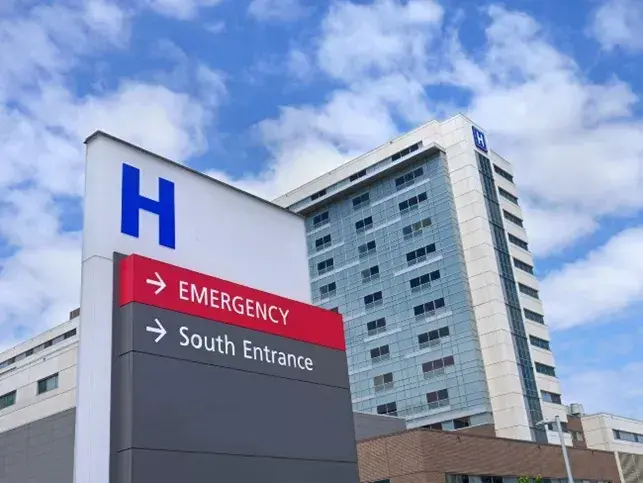
If you have a medical emergency in Japan, dial 119 for an ambulance (free of charge, regardless of nationality), or get to the nearest hospital with an emergency department. The system works well, but it assumes you speak Japanese, carry insurance, and can pay on the spot, so a little preparation goes a long way.
Last updated: May 24, 2026
When to Go to the ER vs. Call a Hotline
Japan separates true emergencies from urgent questions, and using the right channel saves time, money, and an unnecessary ambulance ride.
- 119: Life-threatening or serious injury. Operators dispatch an ambulance (kyūkyūsha, 救急車) and/or fire services. Ambulance transport is free in 2026.
- #7119: Non-emergency medical advice. As of May 2024 it covered 25 of 47 prefectures plus four major cities, reaching about 65% of Japan's population. A nurse or doctor will tell you whether to call 119, go to a clinic, or wait until morning.
- #8000: After-hours pediatric advice line for sudden children's illness. Hours and language support vary by prefecture.
- Japan Visitor Hotline (JNTO): 050-3816-2787, 24/7, in English, Chinese, Korean, and Japanese. Useful for accidents, illness, and disaster guidance, especially if you are a tourist.
- Tokyo Himawari: 03-5285-8181, daily 9:00–20:00, in English, Chinese, Korean, Thai, and Spanish. Helps you find a clinic or hospital in Tokyo.
- AMDA International Medical Information Center: 03-6233-9266, weekdays 10:00–16:00, in 8 languages including English, Chinese, Korean, Spanish, Thai, Portuguese, Filipino, and Vietnamese.
A good rule: chest pain, stroke symptoms, heavy bleeding, head injuries, breathing difficulty, severe burns, suspected fractures, or any loss of consciousness justify 119. A high fever, a deep cut that has stopped bleeding, or a flare-up of a known condition usually does not, and a #7119 call will route you correctly.
What Happens When You Call 119
The operator will likely answer in Japanese. You can still get help, but be ready with a few set phrases.
- State the emergency first: "Kyūkyū desu" (救急です, "medical emergency") or "Kaji desu" (火事です, "fire").
- Give your exact address, including building name, floor, and the nearest intersection or landmark. Japanese addresses are block-based, so GPS coordinates from your phone help.
- Describe symptoms simply: pain location, consciousness, breathing, age.
- Stay on the line. The dispatcher may relay through a three-way interpreter if you say "English please" (英語でお願いします, eigo de onegaishimasu) clearly.
National response time from a 119 call to ambulance arrival hit 10.3 minutes on average in 2023, the first time it crossed 10 minutes and roughly four minutes longer than 20 years earlier. The Tokyo Fire Department logged 935,162 emergency dispatches in 2024, with people aged 75 and older accounting for more than 40% of transports. In rural areas, the U.S. State Department notes medical help can take significantly longer to arrive.
The paramedics will assess you, ask which hospital accepts you (they call ahead), and transport you. You generally cannot choose a specific hospital, especially at night. They will go to whichever ER has capacity and the right specialty.
What to Expect Inside a Japanese ER
Japanese emergency rooms operate differently from American or European ones.
- Reception first. Even if you arrive by ambulance, someone (a family member, a friend, or you, if conscious) will be asked for ID, insurance, and contact information at the front desk.
- Triage is quieter and less visible. You will often wait in a chair rather than be roomed immediately. Serious cases get pulled back fast, but a stable patient may wait an hour or more.
- Specialists are siloed. Internal medicine, surgery, orthopedics, OB-GYN, and pediatrics are separate departments. The ER may stabilize you and hand you to a specialist the next morning. Many hospitals do not run full 24-hour services across every department.
- English is not guaranteed. Major urban hospitals and JMIP-accredited centers usually have English-capable staff or phone interpreters, but smaller regional ERs may not. Bringing a Japanese-speaking friend, or having AMDA on speed dial, helps.
- Admissions are conservative. Japanese doctors hospitalize patients readily for observation. Expect to be told to stay overnight for conditions that might be sent home elsewhere.
Japan operates about 8,500 hospitals, roughly one per 15,000 residents, and many do not offer weekend, holiday, or full 24-hour emergency coverage. If you walk in off the street on a Sunday afternoon, expect to be redirected.
Document Checklist Before You Go (or Pack in Your Wallet Now)
Keep these ready, ideally in a single pouch or a photo on your phone:
- My Number Card registered for health insurance (the main method since paper/plastic insurance cards stopped being issued in December 2025, with old cards accepted at many facilities transitionally through March 2026).
- Passport or residence card (zairyū card).
- Travel or private medical insurance card, with the 24-hour claims phone number.
- List of current medications with generic names, dosages, and allergies. Japanese pharmacies stock different brand names.
- Emergency contact for a Japanese-speaking friend, employer, or embassy.
- Cash and a credit card. Some hospitals do not accept foreign cards, and emergency bills can run into hundreds of thousands of yen before insurance reimbursement.
- A translation of your underlying conditions, if any (diabetes, anticoagulants, pacemaker, prior surgeries).
If you have a chronic condition, ask your home doctor to write a short English summary you can hand to the ER physician.
Fees and Payment: What an ER Visit Actually Costs
This is where foreigners get caught off guard. There are three overlapping fee structures in Japan.
1. Standard medical costs
- Residents enrolled in Japanese health insurance (employer-based or National Health Insurance) pay a 30% co-pay. The system covers 70%. Anyone living in Japan more than 3 months is required to enroll.
- Tourists and short-term visitors without Japanese insurance must pay 100% upfront, even in emergencies. Submit receipts to your travel insurer for reimbursement later.
2. The non-referral "selective" fee at large hospitals
Under the Health Insurance Law (April 2016 amendment, raised in October 2022), community medical support hospitals with 200 or more beds must charge first-time patients without a referral letter a minimum of:
- 7,000 yen for an initial medical visit (5,000 yen dental)
- 3,000 yen for a follow-up medical visit (1,900 yen dental)
Individual hospitals can set higher amounts. Examples in effect in 2025–2026:
Hospital | Non-referral first-visit fee |
|---|---|
St. Luke's International Hospital (Tokyo) | 8,800 yen |
Japanese Red Cross Medical Center | 11,000 yen (incl. tax) |
Tokyo Metropolitan Hiroo Hospital | 7,000 yen (medical) / 5,000 yen (dental) |
If you arrive by ambulance with a genuine emergency, this fee is generally waived. If you walk in to a major teaching hospital with a minor complaint, you will pay it.
3. The ambulance "non-admission" fee (limited but expanding)
Effective June 1, 2024, three core hospitals in Matsusaka City, Mie Prefecture (Matsusaka Chuo General, Matsusaka Municipal, and Saiseikai Matsusaka General) began charging a 7,700 yen selective medical treatment fee to ambulance-transported patients who are not subsequently hospitalized. Exceptions apply for patients with referrals, publicly funded care, and traffic or work accidents. Other municipalities are studying similar rules, so check local announcements.
The ambulance ride itself remains free nationwide in 2026. Note that Japanese ministers agreed in December 2025 to raise the core portion of medical service fees by 3% or more, the first such hike in 30 years, so expect bills to creep up over the next year.
Medical evacuation
If you need to be flown home, an air ambulance back to the United States can cost between $20,000 and $200,000 according to the U.S. State Department. The Department strongly recommends travelers buy medical evacuation insurance before arriving in Japan.
Finding an English-Speaking or JMIP Hospital
The Japan Medical Services Accreditation for International Patients (JMIP) is the national standard established as a Ministry of Health, Labour and Welfare project in fiscal year 2011. Rinku General Medical Center near Kansai International Airport was the first certified facility. JMIP hospitals are equipped with multilingual signage, interpretation services, and culturally adapted care. The current list is maintained at the JMIP registry.
Other reliable English-language options include:
- Tokyo: St. Luke's International Hospital, Japanese Red Cross Medical Center, Tokyo Midtown Clinic, the Tokyo Medical and Surgical Clinic.
- Osaka/Kansai: Rinku General Medical Center, Osaka University Hospital International Medical Center.
- Nationwide directories: Himawari (Tokyo), AMDA, and the JNTO Japan Visitor Hotline can refer you to a nearby English-capable clinic or hospital.
For non-emergencies, calling Himawari or AMDA first is usually faster than searching online in Japanese.
Common Pitfalls Foreigners Run Into
- Calling 119 for a non-emergency. Use #7119 instead. Japan logged about 7.6 million ambulance dispatches in 2023, a record, and the system is straining.
- Walking into a university hospital without a referral. You will pay the 7,000–11,000 yen selective fee. For minor issues, see a small neighborhood clinic (kurinikku, クリニック) first, get a referral if needed.
- Assuming insurance will be billed directly. Many smaller hospitals expect you to pay in full at the counter and then claim reimbursement from your insurer. Bring cash or a card with a high limit.
- Skipping the bill. Foreign visitors who fail to pay medical bills in Japan may be denied future entry, per JNTO guidance. Always settle the account.
- No Japanese phone. You need a working number for the hospital to call you back about results and follow-ups. A rental SIM or eSIM should be activated on day one.
- No insurance enrollment after 3 months. Long-term residents who skip enrollment in National Health Insurance can face back-payment demands when they finally sign up, often covering the missed months.
- Translating symptoms incorrectly. "I feel dizzy" and "I feel faint" are clinically different. If you are not confident, point at the body part, show your phone with a translation, and let the interpreter line clarify.
A bit of preparation goes further than fluent Japanese here. If you are setting up a long-term life in Japan, our apartment hunting checklist for foreigners and the Japan working holiday visa guide cover the other logistics that intersect with health insurance enrollment.
Frequently Asked Questions
Is the ambulance really free in Japan?
Yes. As of 2026, ambulance transport itself is free of charge anywhere in Japan, for residents and visitors alike. However, the hospital treatment that follows is billed normally, and in a few cities (currently Matsusaka, Mie Prefecture) you can be charged a 7,700 yen selective fee if you are not admitted.
Will my travel insurance work in a Japanese ER?
Most Japanese hospitals do not bill foreign insurers directly. You pay upfront, get an itemized receipt (ryōshūsho, 領収書), and claim reimbursement yourself. Call your insurer's 24-hour line on arrival so they can guide you and, in serious cases, arrange a guarantee of payment with the hospital.
Can I refuse the hospital the ambulance chooses?
In practice, no. Paramedics call hospitals until one with capacity accepts you. You can request a specific hospital, but if it cannot take you, they go elsewhere.
What if no one at the hospital speaks English?
Ask for the phone interpretation service (denwa tsūyaku, 電話通訳). Major hospitals are contracted with three-way medical interpretation lines. You can also call AMDA at 03-6233-9266 or Himawari at 03-5285-8181 and hand the phone to the staff member.
Do I need to bring a referral for an emergency?
No. The non-referral selective fee is waived when you arrive by ambulance for a genuine emergency, or when the hospital deems your case urgent. For non-urgent visits to a large hospital, get a referral letter (shōkaijō, 紹介状) from a local clinic first.
Who do I call if I am a U.S. citizen in serious trouble?
The U.S. Embassy Tokyo after-hours line is +81-3-3224-5000. The U.S. State Department's overseas emergency line for U.S. citizens is 888-407-4747 (U.S./Canada) or 202-501-4444 from elsewhere.
What about pediatric emergencies?
For sudden illness in a child outside clinic hours, call #8000 for advice. For anything serious (high fever with seizures, breathing difficulty, head injuries), call 119.
Knowing a handful of medical phrases in Japanese ("it hurts here," "I'm allergic to," "I take this medication") will dramatically reduce stress in an ER. Our Japanese hospital vocabulary guide covers the essentials. If you are settling in Japan for the long haul, learning Japanese from the shows, news, and conversations around you makes situations like this far less intimidating, and Migaku is built to help you do exactly that.