# How to Say Goodnight in Italian: Good Night vs Good Evening in Italian
> Learn how to say good night in Italian with buonanotte, plus romantic variations, pronunciation tips, and when to use evening greetings instead.
**URL:** https://migaku.com/blog/language-fun/good-night-in-italian
**Last Updated:** 2026-02-25
**Tags:** vocabulary, phrases
---
To say good night in Italian, the main phrase you need is "**buonanotte**" (pronounced bwoh-nah-NOH-teh). That's your go-to when you're heading to bed or saying goodbye late at night. But here's the thing: Italian has way more ways to say goodnight depending on who you're talking to and what vibe you're going for. Some are casual, some are romantic, and some are just plain sweet. I'll walk you through all the variations you actually need as an [Italian learner](https://migaku.com/learn-italian), plus when to use them so you don't accidentally sound weird.
---
## The basic phrase: Buonanotte
Let's start with the fundamentals.
> 💡 Buonanotte 💡
"Buonanotte" literally translates to "good night" in English. You can write it as one word (buonanotte) or two words (buona notte), both are correct. Most Italians write it as one word in everyday texting and informal writing, though you'll see both versions.
The word breaks down into "buona" (good) and "notte" (night). Pretty straightforward, right?
When you pronounce buonanotte, stress the "NOH" syllable. The "uo" in "buona" sounds like the "wo" in "woke," and the double "tt" in "notte" gets a sharp, crisp sound. Don't drag it out or make it sound sing-songy unless you're being dramatic.
You use buonanotte specifically when someone is going to bed or when you're parting ways late at night. This is different from evening [greetings](https://migaku.com/blog/language-fun/italian-greetings), which I'll get into later.
---
## Informal ways to say goodnight in Italian
Once you get comfortable with the full phrase, Italians actually shorten things all the time in casual conversation.
### Just saying "notte"
Among friends and family, you'll hear people drop the "buona" entirely and just say "notte." It's super casual, kind of like saying "night!" in English instead of "good night!"
You'd use this with close friends, siblings, or people you're really comfortable with. Definitely don't say this to your Italian girlfriend's parents the first time you meet them.
### Adding "bella" for emphasis
Sometimes you'll hear "bella notte" which adds a bit of warmth. It means "beautiful night" and sounds a bit more affectionate than just "notte." Young people use this with friends pretty often.
---
## Romantic Italian words to say good night
Alright, if you're trying to be sweet with someone special, Italian gives you some solid options.
### Buonanotte amore
"Buonanotte amore" means "good night, love." Amore is the Italian word for love, and it's a common term of endearment. This works for boyfriends, girlfriends, spouses, anyone you're romantically involved with.
### Buonanotte tesoro
"Tesoro" means treasure, and Italians use it like we use "honey" or "sweetheart" in English. "Buonanotte tesoro" sounds really tender and caring.
### Buonanotte caro/cara
"Caro" (masculine) or "cara" (feminine) means "dear." So "buonanotte cara" to a woman or "buonanotte caro" to a man works as a gentle, affectionate goodnight. This one's less intense than "amore" but still sweet.
### Sogni d'oro
Here's a phrase that's absolutely worth learning: "sogni d'oro." It literally means "golden dreams" or "dreams of gold," but the English equivalent is "sweet dreams."
You can say "buonanotte, sogni d'oro" to combine both, or just use "sogni d'oro" on its own. Italians say this to kids all the time, but it works for romantic partners too. It's just genuinely nice.
---
## Good evening vs. good night: Buonasera vs. buonanotte
This trips people up constantly when they're learning Italian. Let me clear it up.
- "Buonasera" means "good evening" and you use it as a greeting when you see someone in the evening hours, roughly from late afternoon (around 4 PM) until you go to bed. It's like saying hello, but time-specific.
- "Buonanotte," on the other hand, is specifically for saying goodbye when someone is going to sleep or when you're parting ways very late at night with the understanding that sleep is happening soon.
So if you run into your neighbor at 8 PM, you'd say "buonasera." If you're leaving their apartment at 11 PM and everyone's heading to bed, you'd say "buonanotte."
Is it buona sera or buona notte? Both spellings exist (as one word or two), but most modern Italian writing treats them as single words: buonasera and buonanotte.
### Buona serata
Here's another one that confuses people: "buona serata." This means "have a good evening" and you use it when you're leaving someone in the evening, but they're not necessarily going to bed yet.
Like if you finish dinner with friends at 9 PM and everyone's going their separate ways, "buona serata" works perfectly. You're wishing them a good rest of their evening, not telling them to sleep well.
---
## Useful phrases related to sleep
Beyond just saying goodnight, you might want to tell someone to sleep well or mention you're heading to bed.
### Dormi bene
"Dormi bene" means "sleep well." Dormi is the command form of the verb dormire (to sleep), and bene means well. You can use this with buonanotte or on its own.
"Buonanotte, dormi bene" is a really common combo that covers all your bases.
### Vado a letto
"Vado a letto" means "I'm going to bed." Letto is the Italian word for bed, and vado means "I go" or "I'm going."
This is super practical when you're actually announcing you're heading off to sleep. You might say "Vado a letto, buonanotte!" to your roommates or family.
### Fai bei sogni
Similar to sogni d'oro, "fai bei sogni" means "have beautiful dreams." Fai is the command form of fare (to do/make), bei means beautiful, and sogni means dreams.
This phrase feels a bit more everyday than sogni d'oro, which has that poetic golden dreams thing going on.
---
## Other useful goodnight-adjacent phrases
### A domani
"A domani" means "see you tomorrow" or "until tomorrow." You'll often hear this combined with buonanotte: "Buonanotte, a domani!"
It's practical because you're saying goodnight and confirming you'll see the person the next day.
### Ci vediamo domani
Similar vibe, but more explicit: "ci vediamo domani" means "we'll see each other tomorrow." A bit more conversational than "a domani."
### Buon riposo
"Buon riposo" means "good rest." Riposo comes from riposare (to rest), and this phrase works when someone's about to take a nap or just relax, not necessarily sleep for the night.
You might use this in the afternoon if someone mentions they're going to rest for a bit.
---
## Common mistakes to avoid
1. Don't say buonanotte when you arrive somewhere in the evening. That's what buonasera is for. Buonanotte is only for departures or bedtime.
2. Don't stress the wrong syllable. It's bwoh-nah-NOH-teh, not bwoh-NAH-noh-teh.
3. Don't forget that notte is feminine, so it's "buona notte" (with the feminine form of "good"), not "buon notte."
4. Don't use "sogni d'oro" in a business context. It's sweet and personal, definitely not for professional settings.
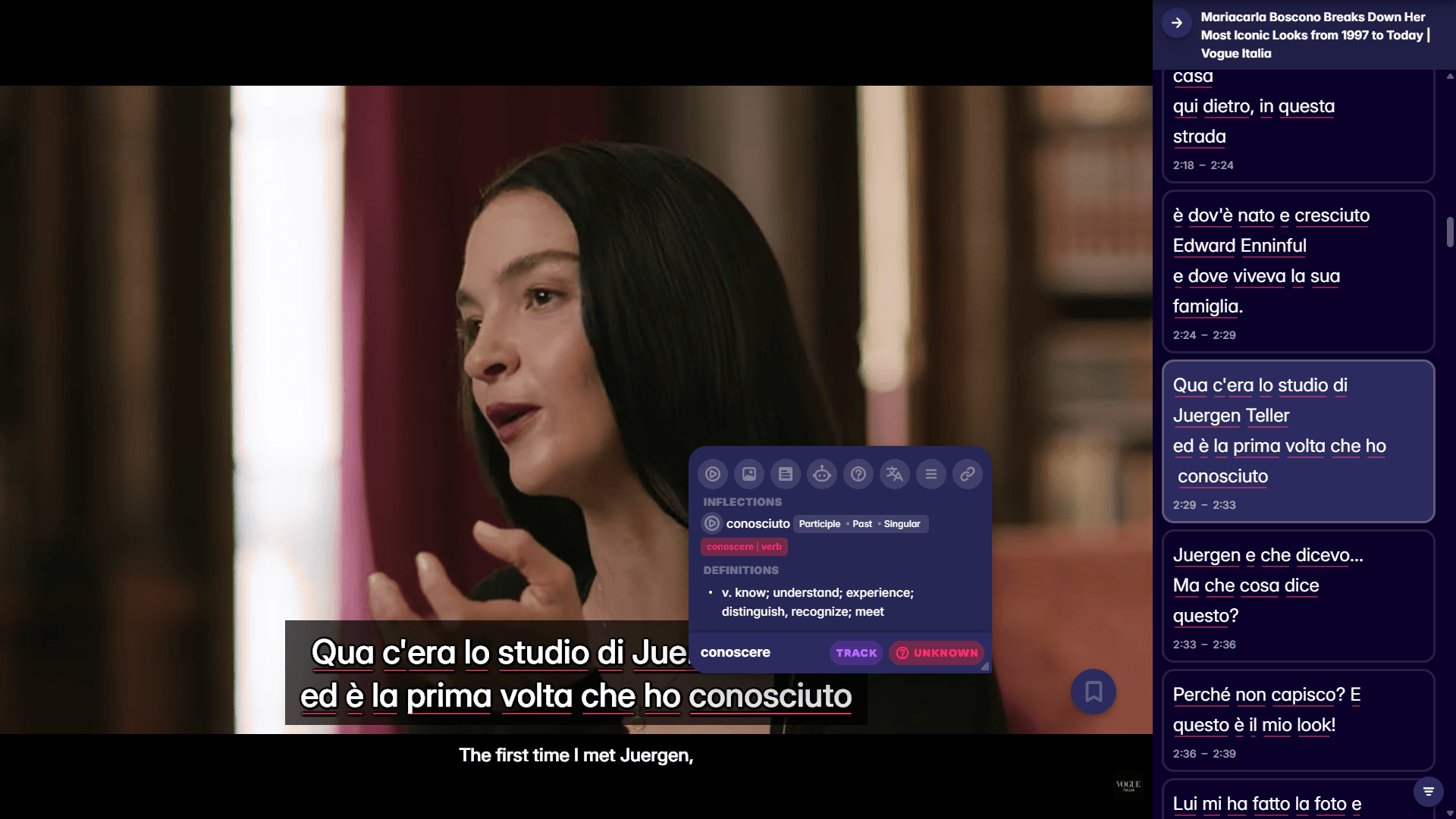
Anyway, if you want to actually practice Italian with real content, Migaku's browser extension and app let you look up words instantly while watching Italian shows or reading Italian websites. Makes learning from immersion way more practical since you can grab phrases like these in context. There's a 10-day free trial if you want to check it out.
 ---
## The difference between good night and good evening in Italian...
So to wrap this up: "buonanotte" is your main phrase for saying good night in Italian. Use it when someone's going to bed or when you're saying goodbye late at night. Remember that buonasera is for evening greetings (hello). And buona serata is for wishing someone a nice evening when you leave but they're not going to bed yet. These Italian words and phrases will genuinely make you sound more natural when speaking the language. And you will naturally pick them up as you immerse yourself in more and more Italian media content.
> If you consume media in Italian, and you understand at least some of the messages and sentences within that media, you will make progress. _Period_.
Good night. Today was a job well done.🌙
---
## The difference between good night and good evening in Italian...
So to wrap this up: "buonanotte" is your main phrase for saying good night in Italian. Use it when someone's going to bed or when you're saying goodbye late at night. Remember that buonasera is for evening greetings (hello). And buona serata is for wishing someone a nice evening when you leave but they're not going to bed yet. These Italian words and phrases will genuinely make you sound more natural when speaking the language. And you will naturally pick them up as you immerse yourself in more and more Italian media content.
> If you consume media in Italian, and you understand at least some of the messages and sentences within that media, you will make progress. _Period_.
Good night. Today was a job well done.🌙