# Grammar vs Immersion Debate: The Best Way to Learn a Language
> The grammar vs immersion debate misses the point. Here's what works for language learning and why you probably need both approaches.
**URL:** https://migaku.com/blog/language-fun/grammar-vs-immersion-debate
**Last Updated:** 2026-03-06
**Tags:** resources, discussion, deepdive, grammar
---
You've probably seen this argument play out a thousand times on Reddit. One person swears you need to study grammar tables and conjugation patterns to [understand a language](https://migaku.com/). Someone else insists that babies don't study grammar rules and they turn out fine, so just watch Netflix in your target language and you'll magically become fluent. The grammar vs immersion debate has been going on forever, and honestly, both sides are missing some pretty important nuances. Let me break down what works.
---
## What the grammar vs immersion debate is really about
When people talk about this debate, they're usually arguing about two completely different approaches to [language learning](https://migaku.com/blog/language-fun/3-things-to-learn-a-language).
- The grammar-focused approach says you should study the rules of a language systematically. Learn how verbs conjugate, understand sentence structure, and memorize the exceptions.
- [The immersion approach](https://migaku.com/blog/language-fun/immersion-learning-at-home) says you should just expose yourself to tons of native content and pick up the language naturally, the way kids do.
Here's the thing though. Most people who argue about this online are treating it like you have to pick one side completely. The grammar people act like immersion without study is useless. The immersion people treat grammar study like it's actively harmful to your progress.
The reality? You probably need both, just at different times and in different amounts depending on what you're learning.
---
## Why grammar matters (sometimes)
Let me be straight with you. Grammar study gets a bad reputation because of how it's traditionally taught. Sitting in a classroom, filling out worksheets about the past perfect continuous tense is boring as hell. That doesn't mean understanding grammar is useless.
> ✅**Grammar gives you a framework** to understand what you're seeing and hearing.
When you're watching a show in your target language and someone uses a verb form you've never encountered, having studied grammar helps you recognize what's happening. You can think "oh, that's probably the subjunctive mood" instead of just being completely lost.
This is especially true for languages that work very differently from your native language. If you speak English and you're learning Japanese, the sentence structure is basically reversed. Subject-object-verb instead of subject-verb-object. Without some grammar instruction to explain this pattern, you might spend months confused about why everything sounds backwards.
> ✅Grammar rules also **help you produce language more accurately** from the start.
Sure, you'll make mistakes either way. But if you understand basic conjugation patterns, you're less likely to fossilize incorrect forms that become harder to fix later.
I've seen language learners who avoided all grammar study for years. They could understand a lot through context, but when they tried to speak, they'd produce these weird Frankenstein sentences that technically communicated meaning but sounded really unnatural. Breaking those habits took way more effort than just learning some basic rules early on.
---
## Why immersion is absolutely essential
Okay, but here's where the immersion people are totally right. You cannot become proficient in a foreign language by only studying grammar. It's literally impossible.
Think about it this way. You could memorize every grammar rule in French. Know all the verb conjugations, understand the subjunctive, and master the gender of every noun. But if you've never actually listened to native speakers having real conversations, you're going to be completely lost the first time someone speaks to you at normal speed.
Immersion gives you things that grammar study simply cannot provide. You learn natural word order, common phrases that don't follow the "rules", how people actually talk versus how textbooks say they talk. You develop an intuition for what sounds right.
> ✅When you immerse yourself in content, you're also **learning vocabulary in context**.
Instead of memorizing that "run" can mean to jog, to operate something, to flow, and about fifty other things, you encounter each usage naturally. Your brain starts to understand the nuances without needing explicit explanation.
> ✅Plus, immersion is how you actually get good at **understanding native speakers**.
Real people don't talk like Duolingo exercises. They mumble, use slang, speak fast, cut off their sentences halfway through. The only way to get comfortable with real language is to expose yourself to tons of it.
I tried to learn Spanish in high school through pure grammar study. Got good grades, understood all the rules. Then I went to Mexico and could barely order food because real conversations didn't sound anything like the slow, careful Spanish from my textbooks. That was a pretty humbling experience.
---
## The disadvantages of pure immersion
So if immersion is essential, why not just skip grammar entirely? Well, pure immersion has some real problems.
1. First, it's incredibly slow at the beginning. When you're a complete beginner and you try to watch a show in a new language, you understand basically nothing. You can't pick up patterns if everything is just noise. Some people have the patience to push through this phase, but most learners get frustrated and quit.
2. Second, you'll likely develop some incorrect patterns without guidance. Kids learning their native language make tons of mistakes that get corrected by parents and teachers over many years. As an adult learner doing immersion alone, you might reinforce incorrect grammar for months before realizing your mistake.
3. Third, pure immersion doesn't give you a systematic way to fill gaps in your knowledge. You might never encounter certain grammar structures in the content you consume. Or you might see them but not understand what's happening without someone explaining the pattern.
4. There's also the practical issue that true immersion requires massive amounts of time. Kids learning their native language are immersed for thousands of hours before they become fluent. Most adult learners don't have 8 hours a day to dedicate to watching shows and reading books in their target language.
---
## What works for most language learners
Here's my honest take after years of learning languages and watching what works for other people. The most effective approach uses both grammar and immersion, but the ratio changes as you progress.
1. **At the beginner level, some grammar study is really helpful**. Spend maybe **20-30%** of your time learning basic structures and rules. Understand how sentences work, learn common verb conjugations, and get familiar with basic patterns. This gives you a foundation to build on.
2. **But even as a beginner, spend most of your time (70-80%) with [comprehensible input](https://migaku.com/blog/language-fun/comprehensible-input-method-language-learning).** This means content that's slightly above your current level but still mostly understandable. Not pure immersion in native content, which will be too hard. Use beginner resources, graded readers, shows with subtitles in your native language at first.
3. **As you reach intermediate level, spend maybe 10-20% of time on grammar study to fill specific gaps, 80-90% immersion in native content.** At this point, you know enough that you can learn most new grammar patterns through context. You just occasionally need to look up explanations when you keep seeing something you don't understand.
4. **Advanced learners barely need explicit grammar study.** Maybe **5%** looking up specific advanced structures, **95%** immersion. At this stage, you're refining your skills and expanding vocabulary, not learning fundamental patterns.
---
## Making immersion work for your fluency
If you want to use immersion effectively, you need to be strategic about it. Just putting on a show in your target language and zoning out doesn't do much.
1. **[Active immersion](https://migaku.com/blog/language-fun/active-vs-passive-listening-language-learning)** means you're paying attention and trying to understand. Use subtitles strategically. At first, subtitles in your native language help you follow the plot while hearing the target language. Then switch to subtitles in the language you're learning. Eventually, no subtitles.
2. **Choose content at the right level.** If you understand less than 70% of what's happening, it's probably too hard to be useful. You need enough context to figure out new words and patterns. Completely incomprehensible input is just noise.
3. **Vary your content types.** Watch shows, listen to podcasts, read articles, and follow social media accounts. Different formats expose you to different vocabulary and grammar structures. Someone who only watches anime will speak very differently than someone who reads news articles.
4. **Make it immersive in small chunks** throughout your day. Listen to a podcast during your commute. Read an article during lunch. Watch a show before bed. You don't need to quit your job and move to another country. Consistent daily exposure adds up.
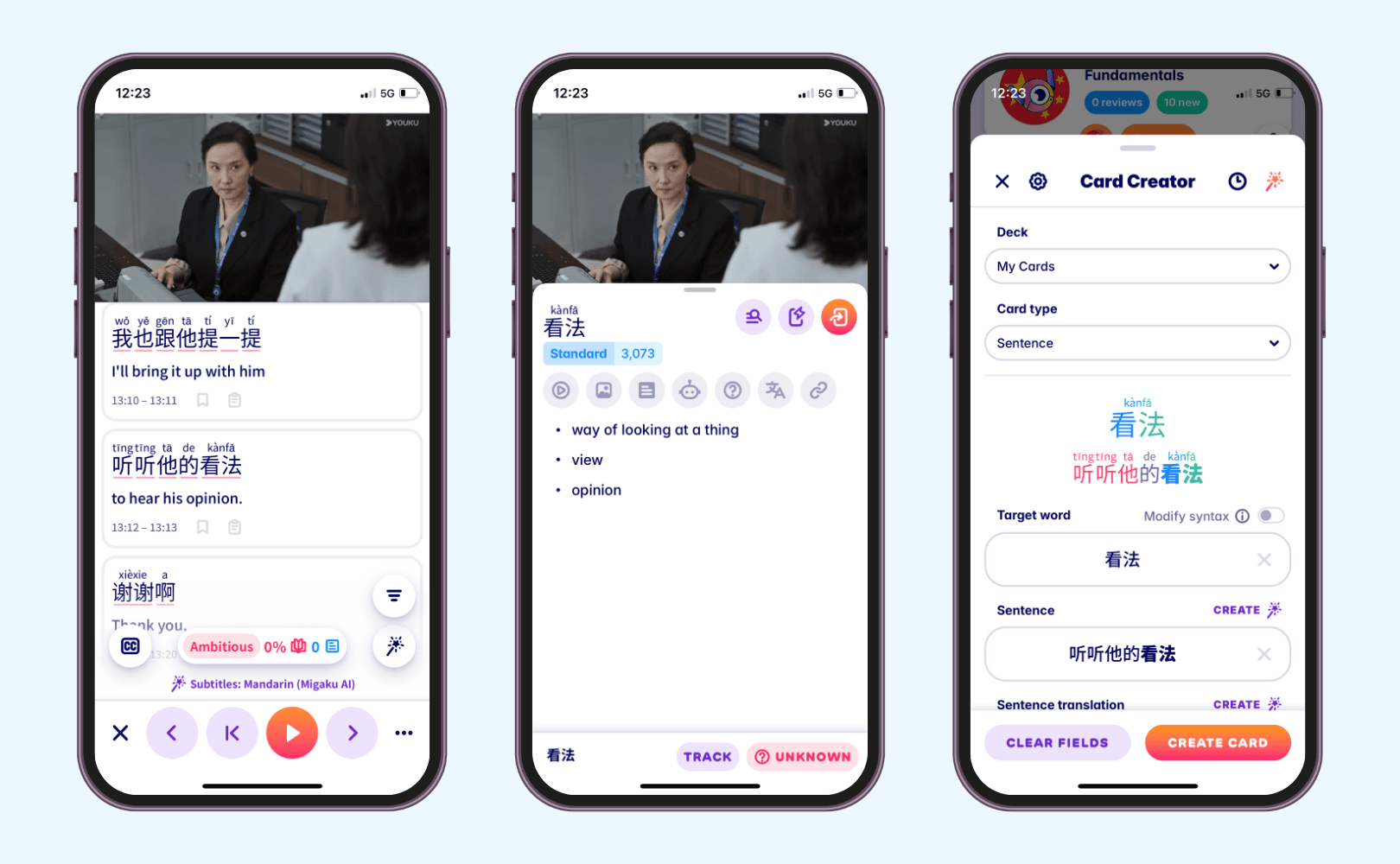
Anyway, if you want to make immersion more practical, Migaku's browser extension and app let you look up words instantly while watching shows or reading articles in your target language. You can create flashcards from real content you're interested in, which beats memorizing random vocabulary lists. There's a 10-day free trial if you want to check it out.
 ---
## FAQs
Yeah, you actually can. Your brain is pretty good at picking up patterns from repeated exposure. If you see the same grammar structure used hundreds of times correctly in different contexts, you'll internalize how it works. But it takes way longer than just having someone explain the pattern to you. Kids learning their native language do acquire all the grammar through pure immersion, but remember, they're immersed for thousands of hours over many years. They also get constant feedback and correction.
If you've noticed that language teaching has shifted away from heavy grammar focus, there's a good reason. The old grammar-translation method didn't produce fluent speakers. Students would spend years studying grammar rules and translating sentences, then couldn't have a basic conversation. Modern language teaching recognizes that communication is the goal. Grammar is a tool to help you communicate, not the end goal itself. So current methods integrate grammar instruction into communicative activities rather than treating it as a separate subject to master.
---
## So, how to learn a new language as a beginner?
Stop worrying so much about whether you should study grammar or just immerse. Try both and see what helps you progress. If grammar study makes you want to quit, do less of it. If you find immersion boring at your current level, supplement with more structured learning. Even if you only watch one episode or study one grammar rule today, you're still making progress.
> If you consume media in the language you want to learn, and you understand at least some of the messages and sentences within that media, you will make progress. _Period_.
Try out new strategies bravely!
---
## FAQs
Yeah, you actually can. Your brain is pretty good at picking up patterns from repeated exposure. If you see the same grammar structure used hundreds of times correctly in different contexts, you'll internalize how it works. But it takes way longer than just having someone explain the pattern to you. Kids learning their native language do acquire all the grammar through pure immersion, but remember, they're immersed for thousands of hours over many years. They also get constant feedback and correction.
If you've noticed that language teaching has shifted away from heavy grammar focus, there's a good reason. The old grammar-translation method didn't produce fluent speakers. Students would spend years studying grammar rules and translating sentences, then couldn't have a basic conversation. Modern language teaching recognizes that communication is the goal. Grammar is a tool to help you communicate, not the end goal itself. So current methods integrate grammar instruction into communicative activities rather than treating it as a separate subject to master.
---
## So, how to learn a new language as a beginner?
Stop worrying so much about whether you should study grammar or just immerse. Try both and see what helps you progress. If grammar study makes you want to quit, do less of it. If you find immersion boring at your current level, supplement with more structured learning. Even if you only watch one episode or study one grammar rule today, you're still making progress.
> If you consume media in the language you want to learn, and you understand at least some of the messages and sentences within that media, you will make progress. _Period_.
Try out new strategies bravely!