Grandes Écoles Explained: Admissions Path for International Students
Last updated: May 19, 2026
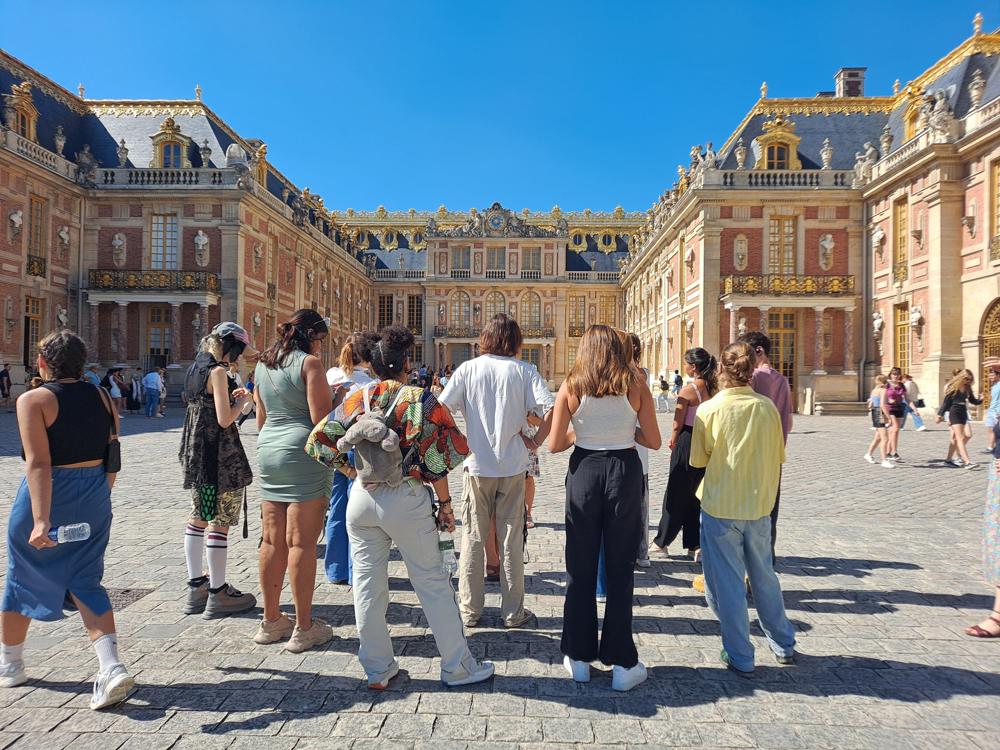
France's Grandes Écoles are selective higher-education institutions that sit outside the standard university system and recruit through their own concours (competitive exams), dedicated admissions rounds, or international tracks. For international applicants in 2026, the route depends on whether you are applying straight after secondary school, transferring at bachelor or master level, or entering a specialized program in business, engineering, art, or political science.
Last updated: May 19, 2026
What the Grandes Écoles Are (and Why the Route Differs)
The Grandes Écoles include engineering schools like École Polytechnique, ENSTA Paris, ISAE, Mines ParisTech, Institut Mines-Télécom, and AgroParisTech; business schools like HEC Paris, ESSEC, ESCP, EDHEC, EMLyon, ESCE, and INSEEC; and specialized institutions in political science, public administration, and the arts. They are typically smaller than public universities, charge higher tuition, and select students through application files, written exams, and oral interviews rather than open enrollment.
For international students, this matters because the application path is rarely a single portal. Depending on your level and target school, you will use one or more of: Études en France (the Campus France procedure), Parcoursup, MonMaster, school-specific direct admissions, or post-bac concours like SESAME or Avenir. Some art and design schools recruit via CampusArt.
France hosted 443,500 international students in 2024/25, a 3% year-over-year increase, and Grandes Écoles make up a meaningful share of that growth, particularly in engineering and management.
Which Admission Route Applies to You
Your route is determined by three things: your nationality, your current level of study, and the school's own rules. The simplified map for 2026 looks like this:
- Non-EU students applying from one of the ~70 countries connected to Études en France (USA, India, China, Brazil, Singapore, Morocco, and others): you must go through the Campus France online procedure before applying for a visa, even if the school admits you directly.
- Non-EU students from countries not connected to Études en France: apply directly to the school, then to the consulate for a visa.
- EU/EEA/Swiss, Andorran, and Canadian residents of Quebec: exempt from differentiated tuition fees and from the Campus France procedure; apply directly to schools or through Parcoursup/MonMaster.
- Post-bac applicants (entering year 1 of a Grande École or its preparatory track): often via Parcoursup or a post-bac concours like SESAME (8 April 2026 written tests) for business schools.
- Bachelor transfers and Master applicants: via MonMaster (for university-affiliated masters), the school's own portal, or for some non-EU candidates, the HDAP track within Études en France.
- Art, design, fashion, music, architecture: CampusArt registrations for 2026 opened 1 October 2025 and closed 28 February 2026.
If you are unsure, the Études en France portal will tell you during account creation whether your school is reachable through Campus France or only through direct application.
Key 2026 Calendar Dates
The French academic year starts in September, and most concours and Campus France steps run from autumn of the prior year through spring. Miss these and you wait twelve months.
Step | Date (2026 intake) |
|---|---|
Études en France applications opened | 1 October 2025 |
Études en France submission deadline (general) | 15 December 2025 |
Études en France deadline (universities) | 19 January 2026 |
Parcoursup inscriptions open | 19 January 2026 |
Parcoursup deadline to formulate wishes | 12 March 2026 |
Parcoursup deadline to confirm wishes | 1 April 2026 |
SESAME written exams | 8 April 2026 |
Études en France: universities respond by | 30 April 2026 |
Études en France: students accept by | 31 May 2026 |
Parcoursup main admission phase | 2 June – 11 July 2026 |
INSEEC Grande École oral tests | 12 June – 2 July 2026 |
CAES support for unplaced candidates opens | 1 July 2026 |
Parcoursup complementary phase | 11 June – 10 September 2026 |
School-specific calendars run on top of this. HEC Paris's Master in Management for the September 2026 intake had four rounds closing on 8 October 2025, 6 January 2026, 26 February 2026, and 16 April 2026 (all 6pm Paris time), with the intake taking place 17 August 2026. Institut Polytechnique de Paris masters apply through MonMaster between 17 February 2026 and 16 March 2026, while its PhD Track Program for 2026–2027 ran from 14 October 2025 to 20 January 2026. École Polytechnique's MSc&T September 2026 intake opened 17 September 2025 in four rounds, with scholarships reserved for round 1 and 2 applicants only.
Documents You Will Need
Grandes Écoles application files are longer than typical university applications. Build the folder before you open any portal.
- Valid passport (at least 6 months beyond planned arrival)
- Birth certificate, translated and apostilled if not in French or English
- Secondary school diploma (baccalauréat or equivalent) and transcripts
- Higher education diplomas and transcripts for transfers or master applicants
- CV in French or English depending on the program
- Motivation letter, often two: one for Campus France, one for the school
- Two or three academic recommendation letters
- Language proof: DELF/DALF B2 or C1 for French-taught programs, TOEFL/IELTS for English-taught
- GMAT, GRE, or Tage Mage for many business school masters; some engineering masters request GRE
- Portfolio for art, design, and architecture programs
- Proof of funds: at least €615/month (around €7,380/year) for the visa stage
- Civil liability and health insurance attestation (requested after admission)
Keep digital copies in PDF (under 2MB each is a common cap) and certified translations into French for any document not originally in French or English.
Step-by-Step Application Walkthrough
The sequence below assumes a non-EU applicant from an Études en France country aiming at a master's program at a Grande École starting September 2026. Adjust as needed.
- Create your Études en France account (October–November of the prior year) through your local Campus France office. The platform will list eligible schools.
- Pay the Campus France procedure fee. This varies by country. Singapore charges 320 SGD for degree-seeking mobility (with a 230 SGD rebate for recognized exchanges). The USA charges $460 for a 3-day expedited processing service, with standard processing around 3 weeks. Indian government scholarship holders (Eiffel, MOPGA, Charpak, YUDAP) are exempt from Études en France and visa fees but still pay the VFS service fee.
- Submit your wishes. DAP candidates may select up to 3 programs for L1, PASS, L.AS, and architecture. HDAP applies to L2/L3 and Master's. Submission deadline is 15 December 2025 for general programs and 19 January 2026 for universities.
- Apply in parallel to schools that recruit outside Études en France. Most Grandes Écoles use their own portals. HEC Paris MiM charges a €250 direct application fee (or €170 via Join a School in France). École Polytechnique charges around €95 for bachelor's and €80 for master's applications.
- Sit any required concours. SESAME's written tests fall on a single day, 8 April 2026. INSEEC Grande École oral tests run 12 June – 2 July 2026, with placement managed through the SIGEM platform.
- Attend your Campus France interview. Most candidates are interviewed in French or English, depending on the target program.
- Receive admission decisions. Universities respond by 30 April 2026 through Études en France. Schools running their own rounds reply within their own windows.
- Accept your offer by 31 May 2026 on Études en France. Pay any school deposit on time or you lose the seat.
- Apply for the VLS-TS long-stay student visa at your local French consulate or VFS center. Fee: €50. You must show financial proof of at least €615/month. The France Student Visa guide walks through the consular stage in detail.
- Pay the CVEC (€105 for 2025–2026) before enrolling. Without it, the school cannot register you.
- Validate your visa within 3 months of arrival and pay the €60 OFII tax stamp.
Fees and Tuition for 2026–2027
Grandes Écoles tuition varies sharply. Public engineering schools attached to ministries (École Polytechnique, ENSTA, ISAE, Mines ParisTech, Institut Mines-Télécom, AgroParisTech) have different fee structures from standard universities. Private and public business schools set their own rates.
For public institutions, the differentiated non-EU tuition fees for the 2025–2026 academic year were €2,895/year for Licence (Bachelor) and €3,941/year for Master's or engineering programs. On 21 April 2026, French Higher Education Minister Philippe Baptiste announced that almost all non-EU students for 2026/27 must pay these rates, with no more than 10% of students exempt. 60% of the remaining exemption grants are reserved for students in priority disciplines: health, digital and AI, quantum science, biotechnology, environment, energy, and space.
PhD students pay €397/year regardless of nationality, since differentiated fees do not apply at doctorate level. EU/EEA/Swiss nationals, Andorrans, and Canadian residents of Quebec are exempt from the differentiated rates.
For a private benchmark: HEC Paris MiM requires an additional €2,000 fee for international students, annual student service fees of €1,950, and €1,000 in administrative fees, on top of program tuition. Always confirm directly with the school for the current cycle.
Other mandatory costs for 2025–2026:
- CVEC: €105
- VLS-TS visa fee: €50
- OFII tax stamp: €60
- Minimum living budget for visa proof: €7,380/year
Common Pitfalls
- Treating Campus France and the school portal as the same step. They are separate. A school admit does not give you a visa; Études en France approval does not get you registered.
- Missing a single concours date. SESAME runs once, on 8 April 2026. There is no makeup.
- Applying to HEC Paris MiM in the last round expecting a scholarship. École Polytechnique MSc&T scholarships are reserved for rounds 1 and 2. Many schools follow similar logic.
- Underestimating French-language requirements. Even English-taught masters often expect B2 French for daily life and internships. Most internship interviews are conducted in French. The French Job Interview Phrases guide is a useful starting point.
- Forgetting CVEC. Without the €105 receipt, schools cannot finalize registration.
- Confusing post-graduation visas with student visas. If you want to stay after graduation, look at the France Talent Residence Permit early so the timeline lines up.
- Working over 964 hours/year. Student visa holders can work up to 964 hours per year (about 20 hours per week) without a separate permit. Exceeding it puts your status at risk.
- Assuming Quebec residence and Canadian citizenship are the same. Only Canadian residents of Quebec are exempt from differentiated fees, not all Canadians.
FAQs
Do I need to go through Parcoursup as an international student?
If you are applying from one of the Études en France countries, you generally do not use Parcoursup. You use Campus France. EU/EEA/Swiss students and French residents typically use Parcoursup for post-bac entry, including some Grandes Écoles preparatory tracks.
Can I apply to multiple Grandes Écoles in one cycle?
Yes. Through Études en France for the DAP track you may submit up to 3 program choices. Outside that, school-specific portals each have their own application, and you can apply to as many as you can afford in fees. Parcoursup allows up to 10 general wishes plus 10 apprenticeship wishes.
How long does Campus France take?
Plan 2 to 3 months from account creation through interview completion. Start in October or November of the year before your intake.
What if I am unplaced after Parcoursup?
The CAES (commission d'accès à l'enseignement supérieur) opens 1 July 2026 to help unplaced candidates. The complementary phase runs until 10 September 2026.
Are there preparatory programs I can take to enter a Grande École later?
Yes. Classes préparatoires aux grandes écoles (CPGE) are two-year intensive tracks after the baccalauréat, accessed via Parcoursup. Many international students instead enter via direct international tracks at master level.
How much money should I have in the bank for the visa?
Minimum proof is €615/month, or roughly €7,380/year. Paris and Lyon realistically need more.
Can my family come with me?
Family reunification on a student visa is restricted. Spouses typically apply for their own visitor visa. PhD candidates and those on Talent Passport tracks have more options.
Are GMAT and GRE always required?
For most business school masters, yes (or Tage Mage). Some engineering masters waive standardized tests for applicants from recognized institutions. Always check the school's own page for the cycle you are applying to.
French fluency makes everything downstream easier: internships, oral concours, daily admin, and the post-graduation job hunt. If you are headed to a Grande École, building real French through native shows, books, and conversations gives you a head start, and Migaku for French is built for exactly that.