# Happy Birthday in French: Joyeux Anniversaire & More Ways to Say Happy Birthday in French
> Learn how to say happy birthday in French with Joyeux Anniversaire, Bon Anniversaire, regional variations, and phrases for cards, songs, and celebrations.
**URL:** https://migaku.com/blog/language-fun/happy-birthday-in-french
**Last Updated:** 2026-02-23
**Tags:** vocabulary, phrases
---
You've got a French friend's birthday coming up, or maybe you're planning to celebrate in a [French-speaking](https://migaku.com/learn-french) country. Either way, you want to wish them well in their native language. The good news? Saying [happy birthday in French](https://migaku.com/blog/language-fun/excuse-me-in-french) is pretty straightforward, though there are a few variations depending on where you are and who you're talking to. Let me walk you through everything you need to know, from the basic phrases to regional differences and even the birthday song.🎵
---
## The standard way to say happy birthday in French
The most common way to wish someone a happy birthday is "**Joyeux anniversaire **." This phrase works in pretty much every French-speaking context, from casual friends to formal situations. You'll hear it at parties, see it on birthday cards, and find it written on cakes across France.
"Joyeux" means joyful or happy, while "anniversaire" translates to birthday (or anniversary, which I'll explain later). The [pronunciation](https://migaku.com/blog/language-fun/french-alphabet-pronunciation-guide) sounds like "zhwah-yuh ah-nee-vehr-sair" if you want to give it a try. The "j" sound is soft, like the "s" in "pleasure."
Another option you'll encounter is "**Bon anniversaire **," which literally means "good birthday." This phrase is equally acceptable and widely used. Some French speakers prefer one over the other, but honestly, both work perfectly fine. Think of it like saying "happy birthday" versus "have a great birthday" in English.
---
## Ways to say happy birthday in different situations
Beyond the basic phrases, you can customize your birthday wish depending on your relationship with the person. Here are some variations that sound more natural and personal:
1. For **close friends and family**, you might say "**Je te souhaite un joyeux anniversaire **," which means "I wish you a happy birthday." The "te" makes it informal and friendly.
2. If you want to be more **formal** (like with a colleague or acquaintance), swap "te" for "vous": "**Je vous souhaite un joyeux anniversaire **."
3. Want to **add more warmth**? Try "**Passe une merveilleuse journée **" (Have a wonderful day) or "**Que tous tes voeux se réalisent **" (May all your wishes come true). These sound way more thoughtful than just the basic greeting.
4. For **romantic** situations, you could say "**Joyeux anniversaire, mon amour **" (Happy birthday, my love) or "**Bon anniversaire à la personne la plus spéciale de ma vie **" (Happy birthday to the most special person in my life). Yeah, French does sound pretty romantic.
---
## What to write on a birthday card
Birthday cards in French follow similar patterns to English ones, but with some cultural touches. You can keep it simple with just "Joyeux anniversaire!" or get more elaborate.
Some common birthday card phrases include:
- Meilleurs vœux pour ton anniversaire
*Best wishes for your birthday*
- Plein de bonheur en ce jour spécial
*Lots of happiness on this special day*
- Avec toute mon affection
*With all my affection*
If you're sending a belated birthday wish, use "Joyeux anniversaire en retard" or "Bon anniversaire avec un peu de retard." The French appreciate acknowledging that you're late, just like in English.
---
## Happy birthday song in French
Yep, they absolutely do. The French birthday song uses the same melody as the English version (you know, the one that's been sung at approximately a billion birthday parties worldwide). The lyrics go like this:
> Joyeux anniversaire
>
Joyeux anniversaire
>
Joyeux anniversaire (person's name)
>
Joyeux anniversaire🎶
Pretty simple, right? Just repeat "Joyeux anniversaire" three times, insert the birthday person's name, then finish with one more "Joyeux anniversaire." Some people use "Bon anniversaire" instead, and that works too.
In Quebec, they might sing "Bonne fête à toi" (Happy celebration to you) following the same tune. The lyrics there are:
> Bonne fête à toi
>
Bonne fête à toi
>
Bonne fête, bonne fête
>
Bonne fête à toi🎶
---
## Useful birthday vocabulary in French
If you're attending a French birthday party or want to talk about birthday celebrations, these words will come in handy:
| French | English |
| - | - |
| Gâteau d'anniversaire | birthday cake |
| Bougie | a candle |
| Bougies d'anniversaire | birthday candles |
| Cadeau | gift or present |
| Fête | the party or celebration itself |
| Faire un voeu | make a wish |
| Carte d'anniversaire | a birthday card |
| Ballon | balloon |
| Décoration | decoration |
If someone asks about your age, they'll say "Quel âge as-tu?" (How old are you?) or more formally, "Quel âge avez-vous?" You'd respond with "J'ai [number] ans" (I am [number] years old). In French, you literally say "I have X years" rather than "I am X years old."
---
## Understanding "anniversaire" in different contexts
This trips up a lot of learners. "Anniversaire" can mean both birthday and anniversary in French. How do you tell the difference? Context, mostly.
When you say "Joyeux anniversaire" to someone on their birthday, it's clearly about their birth.
But what is [happy anniversary in French](https://migaku.com/blog/language-fun/bilingual-brain-benefits) for, say, a wedding anniversary? You'd say "Joyeux anniversaire de mariage" (Happy wedding anniversary). The addition of "de mariage" makes it clear you're talking about a marriage milestone.
For other types of anniversaries, you specify what you're celebrating: "anniversaire de rencontre" (anniversary of meeting), "anniversaire de travail" (work anniversary), and so on. The word itself is neutral until you add context.
---
## Regional differences you should know about
Here's where things get interesting.
So what is happy birthday in French Canadian? "**Bonne fête **" is your answer. While Quebecois speakers will understand "Joyeux anniversaire" perfectly fine, using "Bonne fête" shows you know the local variation. Pretty cool that the same language has different birthday traditions depending on which side of the Atlantic you're on.
In France, "Bonne fête" actually refers to someone's name day (saint's day), which is a completely different celebration. So if you use "Bonne fête" in Paris for someone's birthday, you might get some confused looks. Context matters a lot here.
---
## Common mistakes to avoid with French expressions on birthday
1. Don't confuse "bon anniversaire" with "bonne année" (Happy new year). They sound similar if you're not paying attention, but saying "happy new year" for someone's birthday would be pretty weird.
2. Also, remember that "anniversaire" by itself means birthday in most contexts. You don't need to say "anniversaire de naissance" (birth anniversary) unless you're being extremely specific. That sounds overly formal and a bit strange.
3. Watch out for pronunciation. The "r" sound in French comes from the back of the throat, and "anniversaire" has that sound twice. Practice it a bit so you don't sound too English when you say it.
4. And please, don't use "Bonne fête" in France for birthdays. Save that for name days, or stick with "Joyeux anniversaire" to be safe.
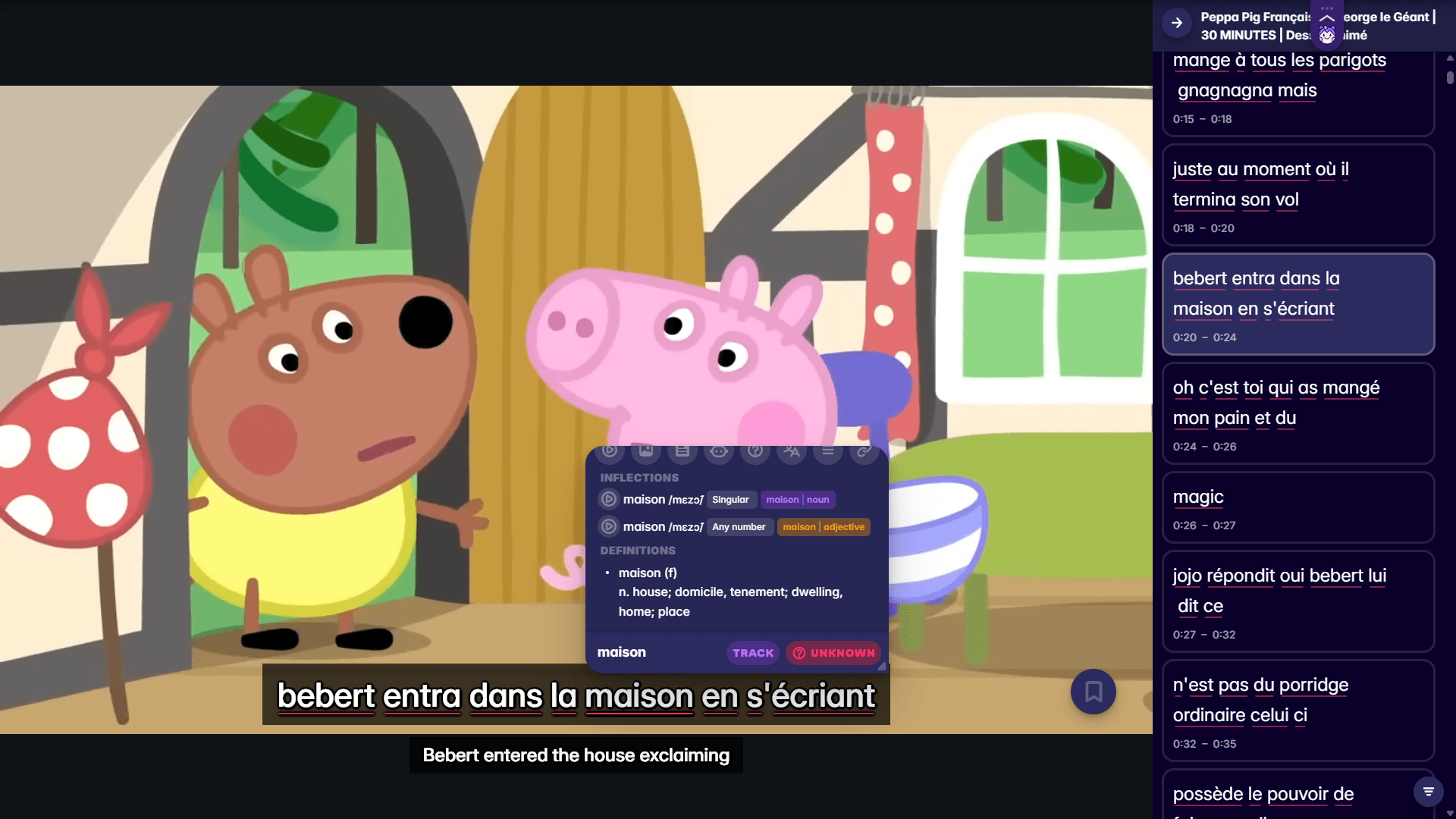
If you're learning French and want to practice these phrases in real contexts, Migaku's browser extension and app let you watch French shows and movies with instant word lookups, so you can catch how native speakers actually use these birthday expressions. Makes learning from real content way easier than just memorizing phrases. There's a 10-day free trial if you want to check it out.
 ---
## FAQs
Honestly? Yeah, pretty much. "Joyeux anniversaire" works in nearly every situation. You can say it to your boss, your grandmother, a stranger you just met at a party, or your best friend. The phrase itself is neutral enough that it doesn't come across as too formal or too casual. That said, how you deliver it matters. Adding someone's title or last name makes it more formal: "Joyeux anniversaire, Monsieur Dupont." Using just their first name or a nickname keeps it casual: "Joyeux anniversaire, Marie!"
---
## Joyeux anniversaire is just the very basic for attending a birthday party 🎊
Whether you go with "Joyeux anniversaire," "Bon anniversaire," or the Quebec version "Bonne fête," you'll be able to make someone's day a little brighter in their native language. On the other hand, if you prepare to attend a party instead of just texting birthday wishes, you need to learn some more birthday and party related vocab and expressions! The best way to [mine these sentences](https://migaku.com/blog/language-fun/sentence-mining-guide-learn-vocabulary-faster)? Definitely immersion. Pick a birthday episode or show and save all the relevant expressions to your flashcards in one go.
> If you consume media in French, and you understand at least some of the messages and sentences within that media, you will make progress. _Period_.
Learn it once. Understand it. Own it.
---
## FAQs
Honestly? Yeah, pretty much. "Joyeux anniversaire" works in nearly every situation. You can say it to your boss, your grandmother, a stranger you just met at a party, or your best friend. The phrase itself is neutral enough that it doesn't come across as too formal or too casual. That said, how you deliver it matters. Adding someone's title or last name makes it more formal: "Joyeux anniversaire, Monsieur Dupont." Using just their first name or a nickname keeps it casual: "Joyeux anniversaire, Marie!"
---
## Joyeux anniversaire is just the very basic for attending a birthday party 🎊
Whether you go with "Joyeux anniversaire," "Bon anniversaire," or the Quebec version "Bonne fête," you'll be able to make someone's day a little brighter in their native language. On the other hand, if you prepare to attend a party instead of just texting birthday wishes, you need to learn some more birthday and party related vocab and expressions! The best way to [mine these sentences](https://migaku.com/blog/language-fun/sentence-mining-guide-learn-vocabulary-faster)? Definitely immersion. Pick a birthday episode or show and save all the relevant expressions to your flashcards in one go.
> If you consume media in French, and you understand at least some of the messages and sentences within that media, you will make progress. _Period_.
Learn it once. Understand it. Own it.