# Hardest Languages to Learn for English Speakers (2026): Language Difficulty Ranking Discussed
> Discover the hardest languages to learn for English speakers based on FSI data. Arabic, Mandarin, Japanese, Korean, and Cantonese require 2200+ hours.
**URL:** https://migaku.com/blog/language-fun/hardest-languages-to-learn
**Last Updated:** 2026-03-06
**Tags:** discussion, deepdive
---
So you're thinking about learning a new language and wondering which ones will make you sweat? Good question. The hardest languages to learn depend heavily on what you already speak, and if you're an English speaker, some languages will feel like climbing Everest while others are more like a casual hike. The Foreign Service Institute has spent decades tracking exactly how long it takes diplomats to reach proficiency in different languages, and their data gives us a pretty clear picture of what you're getting into.
---
## Understanding language difficulty for English speakers
Here's the thing: difficulty isn't universal. A language that's brutal for an English speaker might be relatively straightforward for someone who speaks Korean or Arabic.
The Foreign Service Institute categorized languages into five difficulty levels based on how many classroom hours their students needed to reach professional working proficiency. These categories range from Category I (the easiest, requiring about 600-750 hours) all the way up to Category IV (the absolute toughest, demanding 2200 hours or more).
The FSI's research comes from training American diplomats, so their data specifically reflects the English-speaking experience. They've been doing this since the 1950s, which means we're looking at decades of real-world learning outcomes, not just theoretical guesswork.
---
## What makes a language hard to learn
Before we get into the rankings, let's talk about why some languages feel like you're learning three languages at once. Several factors pile up to create difficulty:
1. **Writing systems** are huge. If native English speakers are learning Spanish, they're still using the Latin alphabet they already know. But Mandarin Chinese? You're memorizing thousands of characters where each one represents meaning and sound. Arabic uses an abjad where short vowels often aren't written. Japanese combines three writing systems in a single sentence.
2. **Grammar structures** matter too. English grammar is pretty straightforward compared to languages with extensive case systems. In Finnish, a single noun can have 15 different forms depending on its grammatical role. Hungarian goes even further with agglutination, where you stack suffixes onto words to express what English would need entire phrases for.
3. **Tonal languages** add another layer. In Mandarin Chinese, the syllable "ma" can mean mother, hemp, horse, or scold depending on [which of four tones you use](https://migaku.com/blog/chinese/chinese-tone-changes). Get the tone wrong and you've said something completely different. Cantonese has six to nine tones depending on the classification system, which makes it even trickier.
4. **Word order and sentence structure** can flip everything you know. English follows subject-verb-object pretty consistently. Japanese and Korean go subject-object-verb, which means the verb you've been waiting for comes at the very end of the sentence. Arabic can be verb-subject-object in many contexts.
---
## The easiest languages to learn for English speakers
Let's start with the good news. Category I languages take about 700 hours to reach proficiency. These are mostly Romance languages like [Spanish](https://migaku.com/learn-spanish), [French](https://migaku.com/learn-french), [Italian](https://migaku.com/learn-italian), and [Portuguese](https://migaku.com/learn-portuguese). They share tons of vocabulary with English (thanks to Latin roots and Norman French influence), use the same alphabet, and have relatively familiar grammar patterns.
Spanish is probably the easiest language to learn if you're an English speaker. The pronunciation is consistent, the grammar has some complexity with verb conjugations but nothing wild, and you'll recognize thousands of cognates immediately. "Chocolate" is chocolate, "hospital" is hospital, "possible" is possible.
Dutch and Swedish also land in Category I. They're Germanic languages like English, so the basic structure feels familiar. Norwegian and Danish are similar.
---
## Category IV: The hardest languages to learn
Now we get to the monsters. Category IV includes Arabic, Mandarin Chinese, Cantonese, Japanese, and Korean. These require 2200 hours of study according to the Foreign Service Institute, which is roughly three times longer than Spanish.
### Why Arabic is one of the most difficult languages to learn
Arabic is brutal for multiple reasons.
1. First, the script reads right to left and connects letters in ways that change their shape depending on position. The letter "ba" looks different at the start, middle, or end of a word.
2. Second, short vowels usually aren't written. You need to know the word already to pronounce it correctly. Imagine reading English as "rdng Nglsh" and having to fill in the vowels from context.
3. Third, Arabic has sounds that don't exist in English. The pharyngeal consonants come from the back of your throat in ways English speakers never use. Native speakers can hear immediately when you're faking it.
4. Fourth, there's a diglossia situation. Modern Standard Arabic is what you learn in textbooks and hear on news broadcasts, but every region speaks a different colloquial dialect. Egyptian Arabic, Levantine Arabic, Gulf Arabic, and Maghrebi Arabic can be mutually unintelligible. You might study for years and still struggle to understand casual conversation in Morocco.
5. The grammar includes grammatical case markings, a dual number (separate forms for exactly two of something), and verb patterns where you insert a root into templates. The root "k-t-b" relates to writing, and you create different words by plugging it into patterns: kataba (he wrote), kitaab (book), maktaba (library), kaatib (writer).
### What makes Mandarin language learning challenging
Mandarin Chinese is difficult to learn for many English speakers, though some find the grammar refreshingly simple compared to Arabic.
1. The killer is the writing system. You need to know 2,000-3,000 characters for basic literacy and 4,000-5,000 for comfortable reading.
2. Each character represents a syllable and meaning. There's no alphabet to fall back on. You memorize that means "good" and is pronounced "hao" with a falling-rising tone. The character combines (woman) and (child), which historically suggested the concept of goodness. Some characters have logical components like this, but many are arbitrary from a learner's perspective.
3. The tones are non-negotiable. Mandarin has four main tones plus a neutral tone. Say "mai" with a falling tone and you're saying "sell." Say it with a rising tone and you're saying "buy."
4. The grammar is actually easier than English in some ways since there's no verb conjugation, no plural markers, and no articles. But that tone system and character memorization will occupy thousands of hours.
### Japanese's triple threat
1. Japanese combines three writing systems: [hiragana, katakana, and kanji](https://migaku.com/blog/japanese/japanese-writing-practice).
- Hiragana is a phonetic syllabary used for grammatical elements and native Japanese words.
- Katakana is another phonetic syllabary used mainly for foreign loanwords.
- Kanji are Chinese characters, and you need about 2,000 for basic literacy.
2. The grammar is completely different from English. Japanese is an agglutinative language where you attach suffixes to verbs to indicate tense, politeness, causation, passivity, and more. The verb "taberu" (to eat) becomes "tabesaserarenakatta" (was not made to eat) through systematic suffix stacking.
3. Word order puts the verb at the end, which means you're waiting until the final word to know if someone did something, didn't do something, wants to do something, or was forced to do something. Particles mark grammatical relationships instead of word order, so "watashi wa sushi o taberu" (I eat sushi) uses "wa" to mark the topic and "o" to mark the direct object.
4. [Politeness levels](https://migaku.com/blog/japanese/japanese-honorifics) permeate the entire language. You use different verb forms, pronouns, and vocabulary depending on social hierarchy and formality. Speaking to your boss requires different Japanese than speaking to your friend.
### Korean language for English speakers
Korean uses [Hangul](https://migaku.com/blog/korean/learn-korean-hangul), which is actually a brilliant alphabet that you can learn in a few hours. That's the good news. The grammar, though, shares Japanese's agglutinative nature and complex politeness system.
1. Verb conjugation involves stacking suffixes to express tense, mood, politeness, and connection to other clauses. The word order is subject-object-verb like Japanese. Korean also has two number systems (native Korean and Sino-Korean) that you use in different contexts.
2. The pronunciation includes sounds that don't exist in English, particularly the distinction between aspirated and unaspirated consonants. Native speakers can easily hear when you're not making these distinctions, even though they sound nearly identical to English speakers at first.
### Cantonese's tonal system
1. Cantonese takes everything difficult about Mandarin and adds more tones. Depending on how you count, Cantonese has six to nine tones.
2. The writing system uses [traditional Chinese characters](https://migaku.com/blog/chinese/simplified-vs-traditional-chinese), which are more complex than the simplified characters used in mainland China for Mandarin.
3. Cantonese also has more colloquial characters that don't appear in Mandarin, and the grammar differs in various ways. It's primarily a spoken language in the world, with Mandarin dominating formal writing in most contexts, which creates interesting learning challenges.
---
## What's the hardest language to learn for other native speakers
Language difficulty flips depending on your starting point.
- Spanish speakers find Portuguese and Italian much easier than English speakers do because they're all Romance languages. The grammar patterns, vocabulary, and even false cognates are predictable.
- Korean speakers reportedly find Japanese easier because the grammar is so similar. They still need to learn different vocabulary and writing systems, but the underlying structure feels familiar. The agglutinative nature and subject-object-verb word order transfer directly.
- Arabic speakers have an advantage with other Semitic languages like Hebrew. The root-pattern system, right-to-left script, and pharyngeal sounds are already familiar concepts.
English speakers actually have it pretty good for European languages. English borrowed so heavily from French, Latin, and other Indo-European languages that we recognize tons of vocabulary. But when we venture outside the Indo-European language family, we're starting from scratch.
---
## Others in Category III language group worth mentioning
Between the easiest and hardest sit Category III languages requiring about 1100 hours. These include Russian, Greek, Turkish, and others that are challenging but not quite at the Category IV level.
- Russian uses Cyrillic script, which takes some adjustment but isn't as complex as Arabic or Chinese writing. The grammar includes six grammatical cases where nouns, adjectives, and pronouns change form based on their sentence role. Verbs have aspect (perfective vs imperfective) that English speakers find tricky.
- Turkish is agglutinative like Japanese and Korean, with suffixes stacking to create meaning. But it uses a Latin-based alphabet and has very regular pronunciation.
---
## Making hard languages easier
1. [Immersion](https://migaku.com/blog/language-fun/comprehensible-input-method-language-learning) helps tremendously. The FSI numbers assume classroom learning, but learners who combine classes with immersion through media, conversation partners, and real-world use often progress faster.
2. Spaced repetition systems help with vocabulary and character memorization. When you're dealing with thousands of Chinese characters or Arabic vocabulary with unfamiliar roots, you need a systematic review method.
3. Focusing on spoken language first can reduce initial overwhelm. You can have conversations in Mandarin using pinyin (romanization) before tackling characters. You can speak Arabic before mastering the script. Some learners prefer this approach, while others want to learn everything together.
4. Finding content you enjoy makes the hours fly by. If you're forcing yourself through boring textbook dialogues about asking for directions, you'll burn out fast. But if you're watching Korean dramas, reading Japanese manga, or following Arabic news about topics you care about, the learning happens almost as a side effect of doing something fun.
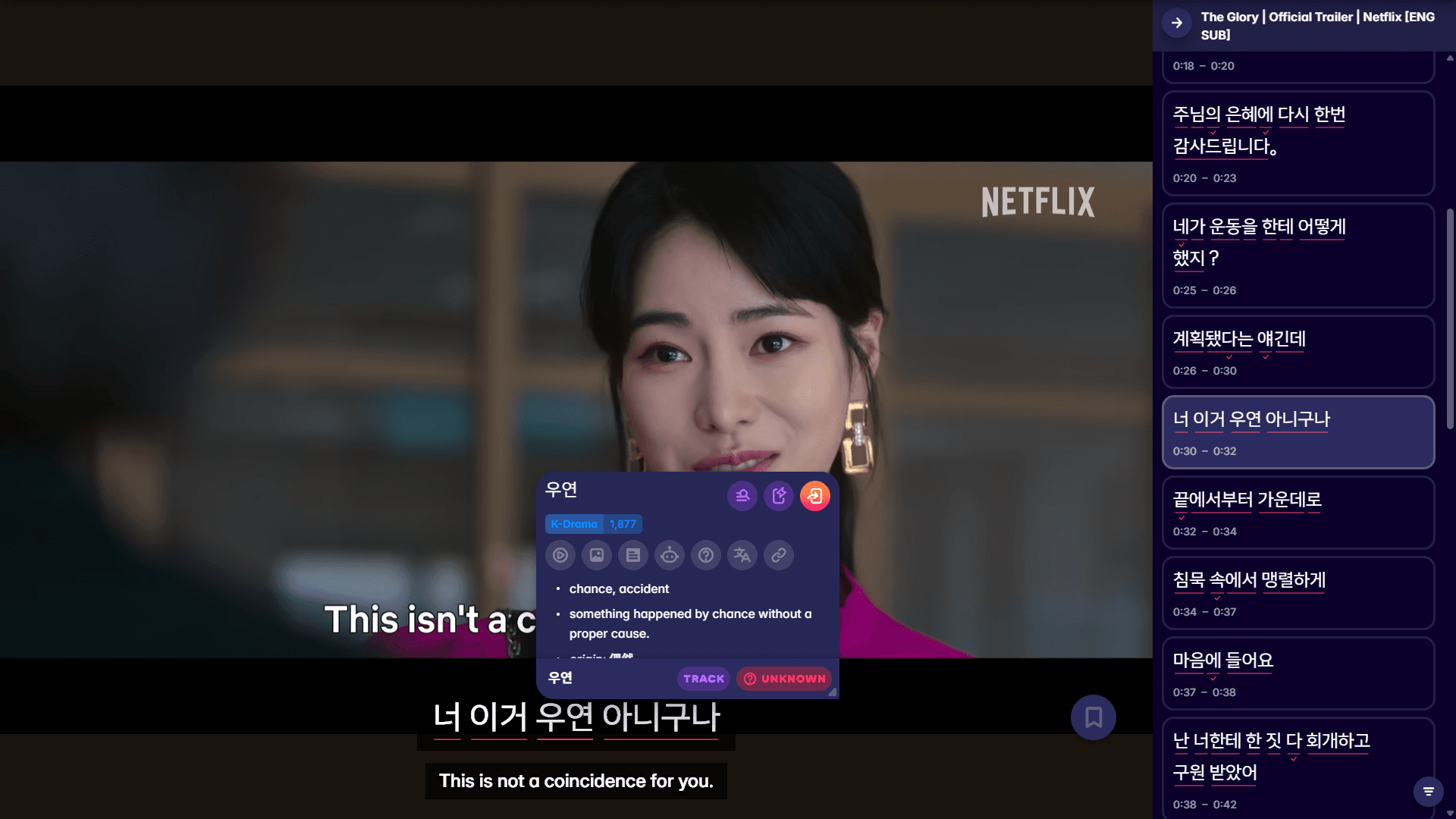
Anyway, if you're serious about tackling one of these difficult languages, Migaku's tools can help you learn from native content way more efficiently. The browser extension lets you look up words and save them for review while watching shows or reading articles in your target language. There's a 10-day free trial if you want to see how immersion learning actually works in practice.
 ---
## FAQs
The FSI numbers assume classroom learning with homework, so 2200 hours for Category IV languages means about 88 weeks of intensive study at 25 hours per week. That's nearly two years of full-time [language learning](https://migaku.com/blog/language-fun/3-things-to-learn-a-language) to reach professional working proficiency.
---
## FAQs
The FSI numbers assume classroom learning with homework, so 2200 hours for Category IV languages means about 88 weeks of intensive study at 25 hours per week. That's nearly two years of full-time [language learning](https://migaku.com/blog/language-fun/3-things-to-learn-a-language) to reach professional working proficiency.
For casual learners studying a few hours per week, you're looking at many years. If you dedicate 10 hours per week to Arabic, you'd need about four years to hit that 2200-hour mark. And that's just to reach working proficiency, which the FSI defines as speaking and reading well enough to do your job. You're still not fluent like a native speaker.
---
## Should difficulty stop you from learning complex languages?
Here's my honest take: the hardest language to learn is whichever one you're not motivated to study. I've seen people reach impressive levels in Japanese within a few years because they were obsessed with anime and manga. I've also seen people give up on Spanish after a few months because they were only learning it because someone told them it was "useful." Difficulty matters, but motivation matters more. If you're fascinated by the culture and media content of these languages, those 2200 hours won't feel like torture. You'll be engaging with content you actually care about.
> If you consume media in the language you want to learn, and you understand at least some of the messages and sentences within that media, you will make progress. _Period_.
Interest drives the best learning.🔥