Hidden Gems Near Tokyo: Day Trips Most Tourists Miss
Last updated: May 28, 2026
Tokyo sits within a 90-minute radius of mountain temples, pottery villages, canal towns, and clifftop ropeways that almost never make a first-timer's itinerary. This guide focuses on the day trips that locals and longer-term residents actually take, with current fees and access details for 2026.
Last updated: May 28, 2026
- Why Look Beyond Nikko and Hakone
- Mount Mitake: An Alpine Shrine Inside Tokyo
- Nokogiriyama and the Tokyo Bay Ferry
- Kawagoe: Edo-Period Streets 30 Minutes from Ikebukuro
- Sankeien Garden, Yokohama
- Chichibu: Mountains, Moss Phlox, and Limited Expresses
- Mashiko: Pottery Village in Tochigi
- Enoshima and the Shonan Coast
- Jogashima: The Tip of the Miura Peninsula
- Sawara: A Canal Town in Chiba
- Common Pitfalls When Day-Tripping from Tokyo
Why Look Beyond Nikko and Hakone
Nikko, Kamakura, and Hakone absorb the overwhelming majority of foreign day-trippers leaving Tokyo. They are worthwhile, but they are also crowded, expensive, and short on the kind of quiet you came to Japan for. The destinations below sit within roughly two hours of central Tokyo by train, bus, or ferry. Most can be done in a single day with an early start, and several connect with each other if you have a weekend.
A quick note on planning: confirm timetables the night before. Rural lines run less frequently than urban Tokyo trains, and missing a connection at a small station can cost you an hour. If you're still working out the basics of the city's transit network, our guide to using Tokyo Metro as a tourist covers the fundamentals before you head outbound.
Mount Mitake: An Alpine Shrine Inside Tokyo
Mount Mitake (御岳山, Mitake-san) sits inside the western edge of Tokyo Metropolis, in the Okutama region. It feels nothing like the city. A 1927 cable car climbs from Takimoto Station at 407.6m to Mitakesan Station at 831.0m in about six minutes, after which a walking path leads to Musashi-Mitake Shrine and a network of forest trails.
Costs and access (2026):
Item | Price |
|---|---|
Mitake Tozan cable car (adult) | ¥600 one-way / ¥1,130 round-trip |
Cable car (child) | ¥300 one-way / ¥570 round-trip |
Musasabi Swing ride | ¥500 (weekends/holidays only, max 2 people) |
Parking (weekday) | ¥350/hr, ¥1,500/day max |
Parking (weekend/peak) | ¥450/hr, ¥2,000/day max |
From Shinjuku, take the JR Chuo Line to Ome, then transfer to the Ome Line for Mitake Station, then a short bus ride to the cable car base. Plan five to seven hours round-trip if you're doing a moderate hike up to the Rock Garden loop.
Nokogiriyama and the Tokyo Bay Ferry
Nokogiriyama (鋸山, "Saw Mountain") sits across Tokyo Bay in Chiba Prefecture. The approach itself is part of the draw: the Tokyo Bay Ferry crosses from Kurihama to Kanaya in 40 minutes, roughly hourly. Passenger fare is ¥1,000 one-way; a standard car runs around ¥4,900.
Once in Kanaya, the Nokogiriyama Ropeway (the only ropeway in Chiba Prefecture) lifts you to the summit area in four minutes. From there a short walk reaches the west gate of Nihon-ji, a Buddhist temple dating to the 8th century that includes the famous "Hell View" overlook and Japan's largest stone-carved Buddha.
Important timing note: as of April 1, 2024, Nihon-ji's entrance (including Hell View) closes at 15:00, with gates closing at 16:00. Arrive on the late morning ferry at the latest. If you're driving, the Nokogiriyama Tozan toll road costs ¥1,000 including parking near the top.
Kawagoe: Edo-Period Streets 30 Minutes from Ikebukuro
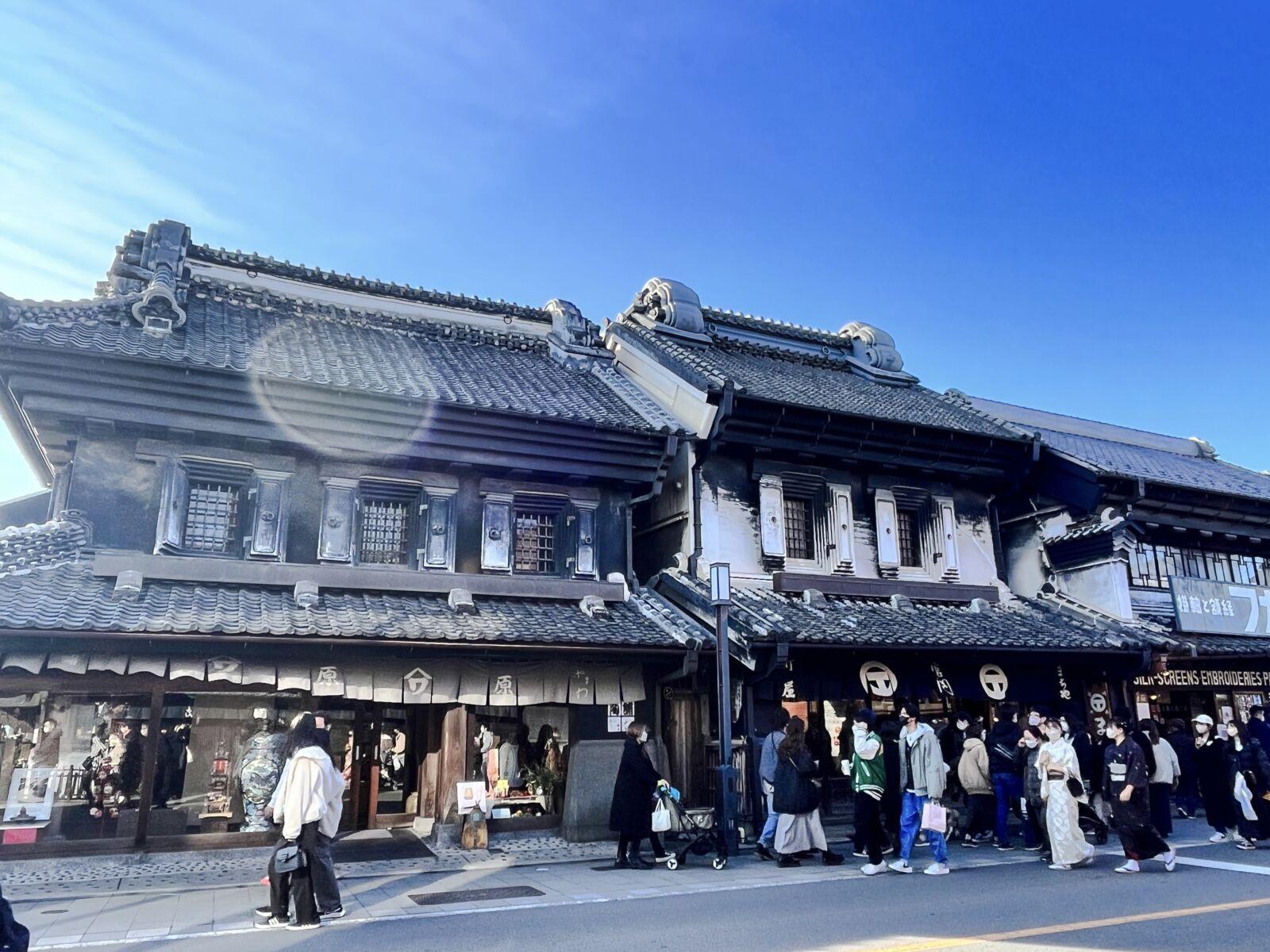
Kawagoe (川越) in Saitama Prefecture is sometimes called "Little Edo" for its preserved warehouse district of kurazukuri merchant houses. From Ikebukuro, the Tobu Tojo Line reaches Kawagoe Station in about 30 minutes; from Shinjuku, the JR Saikyo Line Express takes about 50 minutes.
Key stops:
- Kurazukuri Street: the main clay-walled warehouse district
- Toki no Kane: the wooden bell tower that has rung over the town since the Edo period
- Kawagoe Hikawa Shrine: free to enter; the shrine office runs roughly 8:00 to 18:00. Worship is free; the carp-shaped tai omikuji fortunes run about ¥300
- Kashiya Yokocho: a lane of traditional candy shops
If you can plan around it, the 2026 Kawagoe Festival falls on October 17 and 18, with massive wheeled floats parading through the old streets. It's one of the better festivals in the Kanto region and far less mobbed than Kyoto's Gion Matsuri.
Sankeien Garden, Yokohama
Most visitors to Yokohama stop at Chinatown, Minato Mirai, and the Cup Noodle Museum. Sankeien (三溪園), a 175,000 m² landscape garden in the Honmoku district, gets a fraction of that foot traffic despite housing seventeen relocated historic buildings, including a three-story pagoda from Kyoto's Tomyo-ji.
Sankeien Garden (2026):
- Hours: 9:00 to 17:00 (last admission 16:30); closed December 26 to 31
- Adult admission: ¥900 (high school and above)
- Child admission: ¥200 (elementary and junior high)
- Yokohama residents aged 65+: ¥700 with ID
- Group rate (10+): ¥800 adults, ¥100 children
- Cherry blossom season: extended evening hours until 21:00
Access is by bus from Yokohama Station or Negishi Station. Plan two to three hours for a proper visit; combine with dinner in Chinatown to round out the day.
Chichibu: Mountains, Moss Phlox, and Limited Expresses
Chichibu (秩父) sits in the mountains of western Saitama, reachable on the Seibu-Ikebukuro Line. The direct Limited Express to Seibu Chichibu costs ¥1,500 and takes 80 minutes. The regular train is ¥790 and takes two hours, typically with a transfer at Hanno.
The headline event is the Chichibu Shibazakura Festival at Hitsujiyama Park. In 2026 it runs April 3 to May 6, with peak viewing from mid-April to early May. The hillside holds over 400,000 moss phlox plants of 10 varieties across roughly 17,600 m². Festival admission is ¥500 for adults; junior high and younger are free.
Outside of moss phlox season, Chichibu is worth the trip for Mitsumine Shrine high in the mountains, the Nagatoro river gorge with its flat-bottomed boat rides, and a string of small sake breweries in town. The local miso potato is the regional snack to look for.
Mashiko: Pottery Village in Tochigi
Mashiko (益子) is the pottery town associated with Shoji Hamada and the mingei (folk craft) movement. It's two to three hours from Tokyo, usually via Utsunomiya and a local line or bus, which keeps day-trip crowds light outside festival weekends.
2026 Mashiko Pottery Festival dates:
- Spring: April 29 to May 6, 2026 (overlapping Golden Week)
- Autumn: October 31 to November 3, 2026
During festival weeks, more than 50 established shops and over 700 outdoor tents line the streets, with around 600,000 visitors over the run. Outside the festival, the town is quiet and you can take your time at the kilns.
The Shoji Hamada Memorial Mashiko Sankokan Museum, set on Hamada's former property, charges ¥1,000 for adults and ¥500 for children (free for 6 and under). It is closed Mondays.
Enoshima and the Shonan Coast
Enoshima (江ノ島) gets some attention but is still routinely skipped in favor of nearby Kamakura. The island is connected to the mainland by a bridge and has caves, a lighthouse observation tower, and clear-day views of Mount Fuji.
The Enoshima 1-Day combination ticket bundles admission to Samuel Cocking Garden, the Sea Candle observation tower, the Iwaya Caves, and use of the escalators for ¥1,100 (¥1,500 if entering Samuel Cocking Garden after 17:00). The Sea Candle's glass observation room sits at 101.5m above sea level, with views toward Mount Fuji, the Izu Peninsula, Hakone, and the Tanzawa range.
The Enoden line between Kamakura and Enoshima runs about every ten minutes; the 25-minute ride costs ¥260 and is itself worth doing for the trackside scenery.
Jogashima: The Tip of the Miura Peninsula
Jogashima (城ヶ島) is a small island off the southern tip of the Miura Peninsula, south of Yokohama. It's about as far as you can go on a day trip without rushing back, and the payoff is dramatic coastal cliffs, a working fishing port at Misaki famous for tuna, and almost no foreign tourists.
Access from Misakiguchi Station (Keikyu Line terminus):
Bus stop | Time | Fare |
|---|---|---|
Misakiko | 15 min | ¥310 |
Hakushuhi-mae | 25 min | ¥360 |
Jogashima terminal | 30 min | ¥400 |
Buses run two to three per hour. The small "Sanshiro" ferry around the island charges ¥500 adult / ¥300 child one-way, or ¥1,000 / ¥600 for an unlimited day pass.
Seasonal note: from late January, about 300,000 double-flowered daffodils bloom on the island, and from November through April, roughly 2,000 sea cormorants migrate here for the winter. It's a serious birding spot.
Sawara: A Canal Town in Chiba
Sawara (佐原) preserves an Edo-period merchant district along a working canal, with wooden boat tours and the home of Inō Tadataka, the surveyor who produced the first accurate map of Japan.
Access from Tokyo:
- By train: JR Sobu Line to Narita Station, change to the local Narita Line, 30 more minutes to Sawara Station
- By bus: express bus from Tokyo Station Yaesu Exit, about 90 minutes
- By car from Narita Airport: about 30 minutes via expressway (¥860 tolls one-way to Sawara-Katori IC)
The canal cruise runs roughly 10:00 to 16:30; adult fare is ¥1,300, ¥700 for elementary students. The Inō Tadataka Memorial Museum is open 9:00 to 16:30, with admission of ¥500 for adults and ¥250 for elementary and junior high students. Sawara pairs well with a stop at Katori Shrine, one of the oldest Shinto shrines in the Kanto region.
Common Pitfalls When Day-Tripping from Tokyo
- Underestimating return times. Many of these locations have last buses or last trains earlier than you'd expect. Confirm the final connection back to a JR mainline station before you leave Tokyo in the morning.
- Cash-only fees. Smaller temples, shrine offices, and rural buses often do not accept IC cards or credit cards. Carry ¥10,000 in cash per person for a day trip.
- Closures. Many museums close on Mondays; if Monday is a national holiday, they often close Tuesday instead. The Hamada Sankokan in Mashiko is one example.
- Golden Week. Late April through early May (and the Obon period in mid-August) turns every popular spot into a queue. Mashiko's spring pottery festival deliberately coincides with Golden Week, which is great for the festival but rough on accommodations anywhere within two hours of Tokyo.
- Weather windows. Mountain destinations like Mitake and Chichibu lose their appeal in rain or low cloud. Build in a flexible alternate (Kawagoe and Sankeien both work fine in light rain).
FAQs
How far in advance should I book Limited Express seats?
For the Seibu Chichibu Limited Express or JR Narita Line specials, same-day reserved seats are usually available outside Golden Week, Obon, and weekend mornings during shibazakura or autumn foliage season. For festival weekends, book a few days ahead.
Can I use a Japan Rail Pass for these trips?
Partially. The JR Pass covers the JR Sobu Line to Sawara, JR Chuo Line toward Mitake, and the JR Saikyo Line to Kawagoe. It does not cover the Tobu, Seibu, Keikyu, or Enoden private lines, the Tokyo Bay Ferry, or any of the ropeways and cable cars.
Which of these work as a half-day trip?
Kawagoe, Sankeien, and Enoshima are realistic half-day trips if you start by 9:00. Nokogiriyama, Mashiko, Chichibu, Jogashima, and Sawara need a full day.
What's the best hidden gem in winter?
Jogashima for the wintering cormorants and daffodils from late January, or Chichibu for the Yomatsuri night festival in early December and the ice-pillar illuminations in January and February.
Are these places foreigner-friendly without Japanese?
Kawagoe, Sankeien, and Enoshima have English signage and staff used to foreign visitors. Mashiko, Sawara, and the smaller bus routes around Jogashima do not. A translation app and a few set phrases go a long way.
For multi-day ideas that extend these day trips into a full route, see our off the beaten path Japan itinerary, or, if you're considering venturing further south, our 1-week Shikoku itinerary.
If you're spending real time in Japan, even a working level of Japanese transforms day trips like these, since the staff at rural ropeways, canal boats, and pottery kilns rarely speak English. Try Migaku if you want to learn Japanese from the kind of native content you'll actually encounter once you step outside Tokyo.