# How Are You in Italian: 8 Ways to Say How Are You in Italian Language
> Understand how to say "how are you" in Italian with come stai, come sta, and other expressions, and how to respond to formal and informal greetings.
**URL:** https://migaku.com/blog/language-fun/how-are-you-in-italian
**Last Updated:** 2026-02-25
**Tags:** fundamentals, vocabulary, phrases
---
So you want to know how to say "how are you" in Italian? There are actually several ways to ask this, and knowing when to use each one will make you sound way more natural when you're chatting with Italian speakers. The most common version is "come stai," but that's just scratching the surface when [learning Italian](https://migaku.com/learn-italian). Italian has different expressions depending on whether you're talking to your friend, your boss, or someone you just met. Let me break down all the different ways you can ask someone how they're doing in Italian, plus how to actually respond when someone asks you.
---
## The basic version: Come stai
**Come stai** is the phrase you'll hear most often when learning Italian. This is your standard "how are you" that you'd use with Italian friends, family, classmates, or anyone you're on casual terms with.
The pronunciation is pretty straightforward: "KOH-meh STAI." The "come" part means "how" and "stai" comes from the verb "stare," which means "to be" or "to stay." Literally translated, you're asking "how are you staying" or "how are you doing."
This is the informal version, which means you're using the "tu" form (the informal "you" in Italian). You'd use come stai with people your age, friends, kids, or anyone you're comfortable with. When I was in Italy back in 2025, I used this constantly with the people I met at language exchanges and cafes.
Here's the thing though: Italian makes a big distinction between formal and informal speech, way more than we do in English. So while come stai works great for casual situations, you'll need a different version for more formal contexts.
---
## The formal version: Come sta
When you need to be polite or respectful, you switch to **come sta**. This is pronounced "KOH-meh STAH" (notice the "a" sound at the end instead of "ai").
You'd use come sta with:
- People older than you (especially if you don't know them well)
- Your boss or coworkers in professional settings
- Strangers you're meeting for the first time
- Service workers in formal situations
- Anyone you want to show respect to
The difference between stai and sta comes down to the conjugation. "Stai" is the "tu" form (informal you), while "sta" is the "Lei" form (formal you, capitalized in writing to show respect). Yeah, Italian uses the third-person singular for formal address, which feels weird at first if you're coming from English.
In professional emails or business meetings in Italy, you'd definitely stick with come sta until someone tells you it's okay to switch to the informal. Better to be too polite than too casual.
---
## Casual ways to ask how are you
### Come va
This one's super common in everyday conversation. "Come va" literally means "how goes it" and works in both formal and informal situations, though you'll hear it more in casual settings.
Pronunciation: "KOH-meh VAH"
The cool thing about come va is that it's a bit more relaxed than come stai. You can use it when you're asking about how things are going in general, not just how someone is feeling. It's like asking "how's it going" instead of "how are you."
You’d use "come va la vita" (How's life going) if you want to get a bit more specific, or "come va il lavoro" (How's work going).
### Tutto bene
Here's where it gets interesting. "Tutto bene" literally means "all good" or "everything good," and Italians use it both as a question and as an answer.
As a question, you'd say "tutto bene?" with a rising intonation, kind of like "everything good?" in English. Pronunciation: "TOO-toh BEH-neh"
This is super casual and friendly. You'd use this with people you know pretty well. I heard this constantly when I was traveling around Italy, especially in more relaxed settings like bars or when running into someone you know on the street.
The phrase tutto bene is actually one of the most versatile expressions used by native Italians. You can use it to ask how someone is, to respond that you're fine, or even as a way to check if everything's okay in a situation.
### Come te la passi
This one's more colloquial, and the translation is roughly "how are you getting by" or "how are things going for you." Pronunciation: "KOH-meh teh lah PAH-see"
You'd use this with friends when you haven't seen them in a while and want to know how they've been managing. It's got a slightly more concerned or interested tone than just a basic come stai. Like you're actually asking about what's been happening in their life.
---
## Regional variations and slang
Italian varies quite a bit depending on where you are in Italy. The language has tons of regional dialects, and [greetings](https://migaku.com/blog/language-fun/italian-greetings) are no exception.
In some parts of Northern Italy, you might hear "come va la baracca" (literally "how's the shack going"), which is a playful, slangy way to ask how things are.
In Rome and central Italy, people often use "che fai" (What are you doing) as a casual greeting that serves the same purpose as "how are you." It's pronounced "keh FAI."
Down south, especially in Naples, you might hear "uagliò, tutto a posto?" which is Neapolitan dialect for "hey, everything in place?" The southern dialects get pretty different from standard Italian, honestly.
---
## Different ways to respond
Knowing how to ask is only half the battle. You need to know how to reply when someone asks you how you're doing.
### Basic positive responses
The simplest response is just "bene" (good/well). Pronunciation: "BEH-neh"
You can also say:
- "Bene, grazie" (good, thanks) - the most common polite response
- "Molto bene" (very well)
- "Tutto bene" (all good)
- "Non c'è male" (not bad) - literally "there's nothing bad"
- "Benissimo" (really well/great)
### When you're not doing great
If you're actually not doing well, you can say:
- "Così così" (so-so) - pronounced "koh-ZEE koh-ZEE"
- "Non tanto bene" (not so good)
- "Male" (bad) - though Italians don't usually give this as a casual response unless things are actually serious
- "Potrebbe andare meglio" (could be going better)
### Context examples of ways to say how are you
Here's what a typical conversation looks like:
- Person A: "Ciao! Come stai?"
- Person B: "Bene, grazie! E tu?"
- Person A: "Tutto bene!"
Notice that "e tu?" (and you?) is the standard way to return the question. If you're in a formal situation, you'd say "e Lei?" instead.
In more casual settings with friends, the exchange might be quicker:
- Person A: "Ehi, tutto bene?"
- Person B: "Sì, tutto bene. Tu?"
- Person A: "Bene!"
---
## Context matters: When to use which phrase
The situation you're in totally changes which greeting you should use. Let me break this down by context.
### Professional settings
In work emails, business meetings, or formal professional situations, stick with come sta. If you're writing, you might even use the more formal "come sta andando" (How is it going for you).
Example: When emailing a potential client or your Italian boss, you'd write something like "Buongiorno, come sta?" (Good morning, how are you?)
### Casual social situations
Let’s say you are with friends at a bar, classmates, or people your age, come stai or tutto bene works perfectly. You can be more relaxed and even use slang expressions depending on how well you know the person.
### Checking on someone's health
If someone's been sick or going through a tough time, it’s polite to ask "come ti senti?" (How do you feel?) instead of the standard come stai. This shows you're specifically asking about their wellbeing, not just making small talk.
Pronunciation: "KOH-meh tee SEN-tee"
### First meetings
When you meet someone for the first time and you're not sure whether to be formal or informal, go with come sta to be safe. Italians will usually tell you if it's okay to switch to the informal tu form by saying something like "dammi del tu" (use the informal with me).
---
## Plural forms: Asking groups how they are
What if you're asking multiple people how they're doing? Italian has specific forms for this too.
- For informal plural (like asking a group of friends), you'd say "come state?" Pronunciation: "KOH-meh STAH-teh"
- For formal plural (asking a group in a professional setting), you'd use "come stanno?" or the more formal "come state?" depending on the level of formality.
Honestly, the plural forms don't come up as much in everyday conversation unless you're specifically addressing a group as a whole.
---
## Common mistakes to avoid
When you're learning Italian greetings, here are some things that trip people up:
1. Don't mix formal and informal in the same conversation. If you start with come sta, keep using the formal Lei form throughout. Switching back and forth makes you sound confused about the relationship.
2. Don't forget that "come stai" needs a question mark or rising intonation. Without it, you're just saying "how you are" as a statement, which doesn't make sense.
3. The verb stare (to be/stay) is different from essere (to be). You can't say "come sei" to mean "how are you" because that would mean "what are you like" as in asking about someone's personality or characteristics.
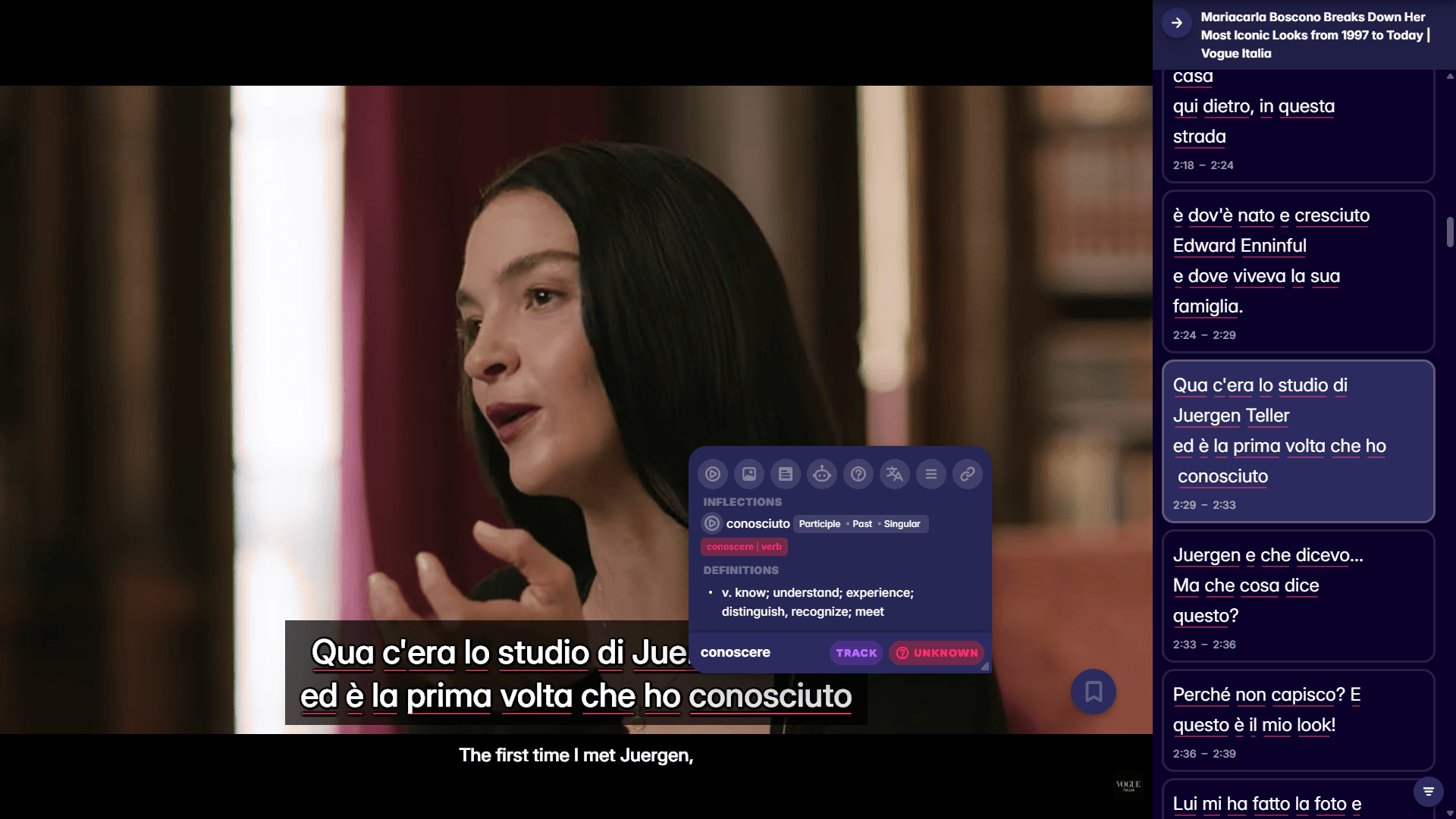
Anyway, if you want to actually practice Italian vocabulary and grammar with real Italian content, Migaku's browser extension and app let you look up words and phrases instantly while watching Italian shows or reading Italian websites. Makes learning Italian language from actual native content way more practical. There's a 10-day free trial if you want to check it out.
 ---
## The best way to learn Italian greetings
The best way to actually learn these greetings and when to use them is by hearing them in context. Watching Italian shows, listening to podcasts, or having actual conversations with Italian speakers will help you pick up the nuances way faster than just memorizing phrases.
> If you consume media in Italian, and you understand at least some of the messages and sentences within that media, you will make progress. _Period_.
Nothing teaches culture better than [immersion](https://migaku.com/blog/language-fun/break-through-language-learning-plateau).
---
## The best way to learn Italian greetings
The best way to actually learn these greetings and when to use them is by hearing them in context. Watching Italian shows, listening to podcasts, or having actual conversations with Italian speakers will help you pick up the nuances way faster than just memorizing phrases.
> If you consume media in Italian, and you understand at least some of the messages and sentences within that media, you will make progress. _Period_.
Nothing teaches culture better than [immersion](https://migaku.com/blog/language-fun/break-through-language-learning-plateau).