How Foreigners Can Get Permanent Residency (Green Card) in China
Last updated: May 14, 2026
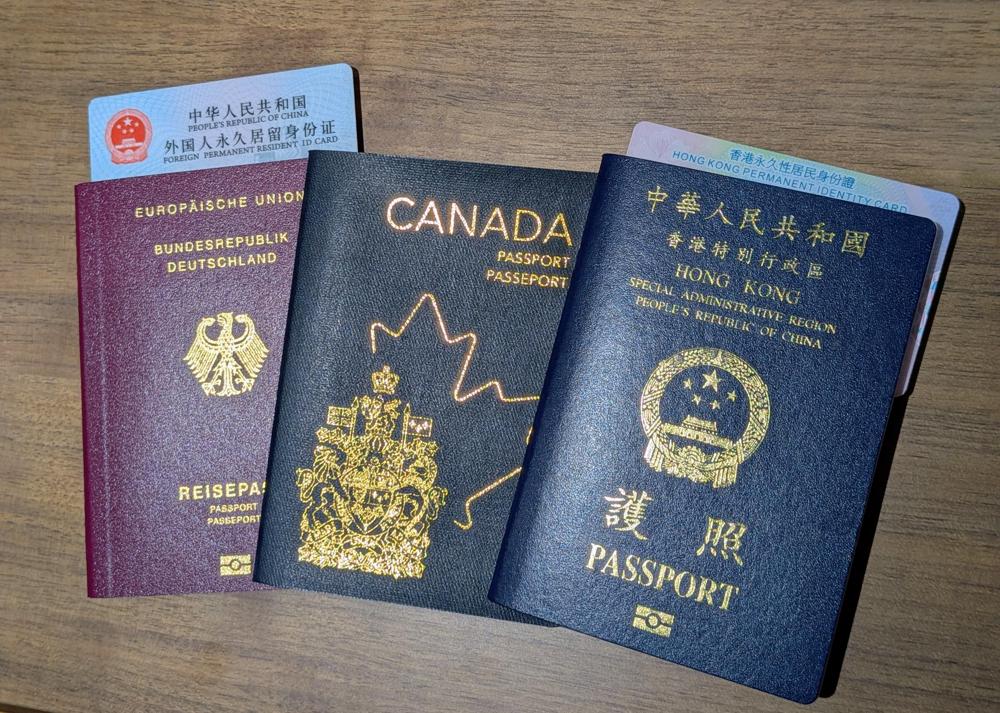
Foreigners can obtain permanent residency in China by qualifying under one of several defined tracks (investment, employment, family reunification, or special contribution), submitting an application to the National Immigration Administration through the local Public Security Bureau Exit-Entry Administration, and receiving the Foreign Permanent Resident ID Card, commonly called the "Five-Star Card" or Chinese Green Card. The program is selective: roughly 15,000 cards had been issued cumulatively in the nearly two decades since the policy began in 2004, though issuance has accelerated sharply since the redesigned card launched on December 1, 2023.
Last updated: May 14, 2026
Who Qualifies for a Chinese Green Card
China's permanent residence system is built around several distinct eligibility tracks rather than a single points-based test. You apply under the category that fits your situation, and each category has its own thresholds. The main pathways recognized by the National Immigration Administration (NIA) are as follows.
Investment track. You qualify if you have personally invested in China and maintained that investment for three consecutive years with a clean tax record. The minimum thresholds are:
- USD 2 million for investments anywhere in China
- USD 1 million if the investment is in central China
- USD 500,000 if the investment is in western China, designated key poverty-alleviation counties, or in industries listed under the "Foreign Investment Industry Guidance" catalog
Employment track (general). Foreigners holding senior posts (deputy general manager, deputy factory director, associate professor or researcher, or higher) at qualifying institutions are eligible after four consecutive years of service, with cumulative residence in China of at least three years during that period, and a clean tax record.
Employment track (salary-based, city-specific). Major cities run their own income-based routes. In Beijing, for example, the standard salary track requires four consecutive years of work in Beijing, physical residence in China of at least six months each year, an annual salary of at least CNY 500,000, and individual income tax of at least CNY 100,000 per year. A high-salary track in Beijing requires an annual salary of at least CNY 1,500,000 over the same four-year period. Shanghai operates a comparable scheme with its own thresholds; confirm current figures with the Shanghai Public Security Bureau Exit-Entry Administration before applying.
Family reunification track. Foreign spouses of Chinese citizens or existing permanent residents may apply after at least five years of marriage, five consecutive years of residence in China with no fewer than nine months physically present each year, and proof of stable income and accommodation. Minor children of Chinese citizens or PR holders, and dependent elderly parents in specific circumstances, may also qualify.
Elderly track. Foreigners aged 60 or above with no immediate family abroad, who have lived in China for five consecutive years with relatives in China, may apply on this basis.
Special contribution track. Reserved for foreigners who have made outstanding contributions to China or whose admission is in the national interest. These cases typically require nomination by a central ministry.
Note that China does not permit dual citizenship. A permanent resident card grants long-term residence and work rights but does not confer Chinese nationality.
Document Checklist
Document requirements vary by track and by city, but most applicants will need the following core documents. Originals plus notarized Chinese translations are usually required for anything issued abroad.
- Completed Application Form for Foreigners' Permanent Residence in China
- Valid passport with at least one year of remaining validity
- Current valid Chinese residence permit or visa
- Recent passport-style photographs meeting NIA specifications
- Physical examination certificate issued by a designated Chinese health and quarantine authority, dated within the last six months
- Police clearance certificate (no criminal record) from your country of nationality and from any country you have lived in for more than one year in the past five years, notarized and legalized or apostilled
- Proof of stable income and accommodation in China
- Tax records from Chinese tax authorities covering the qualifying period
Track-specific documents typically include:
- Investment track: business license of the invested entity, capital verification reports for each of the three qualifying years, audited financial statements, tax payment certificates
- Employment track: employment contract, work permit, employer's business license, position certification letter, social insurance and tax records
- Family track: marriage certificate, birth certificates for any children, the Chinese spouse's hukou booklet and ID, household registration documents
- Elderly track: proof of relationship with relatives in China, evidence of no immediate family abroad, accommodation proof
If you are coming from a work-permit background, your existing paperwork from the China Z Visa and Work Permit process will form much of the evidentiary base for the employment track. Students who later transition to work, having entered originally under the China X1 Student Visa Requirements, generally need to accumulate the required years of qualifying employment before applying.
Step-by-Step Application Process
The application is filed in China, not at an overseas consulate. The receiving authority is the Exit-Entry Administration Bureau of the local Public Security Bureau (PSB) in the city where you reside, which submits the file upward to the National Immigration Administration for adjudication.
- Confirm your eligibility track. Match your situation against the categories above and identify which set of thresholds you meet. Marginal cases are routinely rejected, so do not apply if you are short on years, salary, or residence days.
- Gather and translate documents. Foreign-issued documents (police clearances, birth and marriage certificates, degree certificates where required) must be notarized in the issuing country, legalized or apostilled (China joined the Apostille Convention in 2023, simplifying this step for most countries), and translated into Chinese by a recognized translator.
- Complete the medical examination. Use a designated Chinese international travel healthcare center. The certificate is valid for six months.
- Book an appointment. Since October 9, 2023, the NIA online platform allows foreigners to schedule appointments for permanent residence applications, check status, and arrange renewals and reissuances. Walk-in submission is still available in some cities but appointments are recommended.
- Submit the application in person. You must appear in person at the Exit-Entry Administration office. Biometrics (fingerprints, photo) are captured at submission.
- Pay the application fee. CNY 1,500 per applicant at submission.
- Wait for adjudication. By regulation, the public security organs must decide on approval or disapproval within six months of accepting the application. Shanghai has reduced its processing time to 60 days under streamlined local measures.
- Collect the Five-Star Card. On approval, pay the CNY 300 card production fee and collect the Foreign Permanent Resident ID Card. Cards for adults are valid for 10 years; cards for applicants under 18 are valid for 5 years.
Fees and Processing Time
Item | Fee (CNY) |
|---|---|
Application fee (per person) | 1,500 |
Card issuance fee | 300 |
Renewal upon expiration | 300 |
Replacement (loss or damage) | 600 |
Statutory processing time is up to six months from acceptance. In practice, processing varies significantly by city. Shanghai now targets 60 days. Beijing, Guangzhou, and Shenzhen generally complete files within three to six months. Smaller cities can take the full six months and sometimes longer if documents require clarification.
The Five-Star Card itself, in circulation since December 1, 2023, uses an 18-digit number (expanded from the previous 15-digit format) and is machine-readable across Chinese banking, transport, hotel, and government systems, which had been a major friction point with the older card. More than 10,000 Five-Star Cards had been issued in Shanghai alone by early 2026, with the annual figure doubling in 2024.
Rights and Obligations of a Chinese Green Card Holder
A Foreign Permanent Resident ID Card gives the holder:
- The right to live and work in China without a separate work permit or residence permit
- Multiple entry and exit using the card together with the passport (no visa required)
- Access to local public services, including social insurance enrollment, property purchase under the same rules as Chinese nationals in most cities, and enrollment of children in public schools
- The ability to open bank accounts, register SIM cards, book domestic flights and trains, and check into hotels using the card as primary ID
In return, you must:
- Reside in China for more than three months cumulatively each year, and at least one year cumulatively within any five-year period, to maintain the status
- Report changes of address, employer, or marital status to the local PSB
- Renew the card before its 10-year (or 5-year, for minors) expiration
- Continue to comply with Chinese law; serious criminal convictions can lead to revocation
Common Pitfalls
- Counting years incorrectly. "Four consecutive years of work" and "residence of at least six (or nine) months per year" are tracked through immigration and tax records. Long business trips abroad can break the count even if your employment contract continued.
- Tax mismatches. Salary thresholds are cross-checked against individual income tax payments. If your declared salary is high but your IIT records are low, the application will be questioned. Make sure your employer files IIT correctly every month for the entire qualifying period.
- Stale police clearances. Most clearances are accepted only if issued within six months of submission. Order them late in your preparation, not first.
- Translation quality. Cheap translations get rejected. Use a translation company that the local PSB recognizes; ask the Exit-Entry office for a list.
- Confusing PR with citizenship. Some applicants assume the Five-Star Card is a path to a Chinese passport. It is not. China does not allow dual nationality, and naturalization is a separate, very rarely granted process.
- Assuming the K visa is a shortcut. The K visa launched October 1, 2025 for young science and technology talent removes the need for employer sponsorship for entry, but it is a visa category, not a permanent residence route. Holders still need to qualify under one of the PR tracks above to obtain a green card.
Frequently Asked Questions
How many green cards does China issue each year?
Cumulative issuance reached roughly 15,000 over nearly two decades by early 2026, though annual issuance has risen quickly since the Five-Star Card relaunch in December 2023. Shanghai alone has issued more than 10,000 Five-Star Cards since the relaunch.
Can my spouse and children be included?
Yes. Dependents (spouse and minor children) of a successful applicant can apply for derivative permanent residence on the family reunification basis, provided they meet the residence and documentation requirements.
Do I need to speak Chinese to apply?
There is no formal language test for permanent residence, but the entire application is conducted in Chinese, and all interviews with PSB officers are in Chinese. Daily life as a permanent resident also relies heavily on the language, from signing leases (see Apartment Vocabulary for Housing) to dealing with tax, banking, and healthcare systems.
What happens if I leave China for an extended period?
If you fail to spend at least three cumulative months per year in China, or at least one cumulative year within any five-year period, your permanent residence can be revoked. Long absences should be planned around these minimums.
Can I apply directly from outside China?
No. You must hold a valid Chinese visa or residence permit and submit the application in person at the Exit-Entry Administration in the Chinese city where you reside.
Is the green card the same as Chinese citizenship?
No. It grants indefinite residence and work rights but not nationality. China does not permit dual citizenship.
Where can I check the latest official fees and rules?
The National Immigration Administration is the authoritative source. City-specific salary and tax thresholds are published by each municipality's Public Security Bureau Exit-Entry Administration; verify before applying.
If you're settling in China for the long term, daily life will go much more smoothly once you can read contracts, handle tax forms, and talk to officials in Mandarin. Migaku helps you build that ability from Chinese shows, news, and books you actually want to consume, so try Migaku if that fits how you want to learn.