# How to Find a Language Tutor: Tips on Finding the Best Language Tutors
> Find the perfect language tutor with our guide to top platforms like Preply and iTalki, plus tips on filtering by price, reviews, and teaching style.
**URL:** https://migaku.com/blog/language-fun/how-to-find-a-language-tutor
**Last Updated:** 2026-03-12
**Tags:** resources, discussion, deepdive
---
Finding a language tutor used to mean posting flyers at coffee shops or asking around at universities. These days, you can connect with native Spanish teachers in Madrid or French tutors in Paris without leaving your couch. The online tutoring world has exploded over the past few years, which is awesome for learners but also kind of overwhelming when you're trying to figure out where to start. Here's everything you need to know about finding a tutor who actually [fits your learning style](https://migaku.com/), budget, and goals.
----
## Why you might want a language tutor
Self-study apps and textbooks can take you pretty far, but there's something about having a real person to talk to that accelerates your learning in ways nothing else can. A good tutor gives you immediate feedback on pronunciation, catches grammar mistakes before they become habits, and pushes you to speak even when you'd rather hide behind multiple-choice exercises.
1. **The biggest advantage is personalization.** Unlike a course that treats everyone the same, a tutor can focus on exactly what you need. Maybe you're preparing for a business trip to Barcelona and need conversational Spanish fast. Maybe you've been studying French for years but freeze up during actual conversations. A tutor adapts to your specific situation instead of making you follow a one-size-fits-all curriculum.
2. **Plus, having scheduled lessons creates accountability.** It's easy to skip your Duolingo streak when you're tired, but you're way less likely to bail on a real person who's expecting you to show up.
----
## Best platforms to find online tutors
The online tutoring landscape has matured a lot by 2026. A few major platforms have emerged as the go-to spots for finding qualified teachers.
### Preply
Preply has become one of the most popular options for finding language tutors. The platform hosts thousands of teachers across pretty much every language you can think of. The interface makes it easy to filter by price, availability, and whether you want a native speaker or someone who learned the language as a second language themselves.
One thing I really like about Preply is the detailed tutor profiles. Teachers upload intro videos where they explain their teaching style, which gives you a much better sense of their personality than a static bio. You can see their hourly rate upfront, read reviews from students, and check their response time.
Preply also offers a satisfaction guarantee for your first lesson. If it doesn't work out, they'll find you another tutor or refund your money. Pretty low risk for trying someone new.
### iTalki
iTalki takes a slightly different approach by distinguishing between professional teachers and community tutors. Professional teachers have formal teaching credentials and typically charge more, while community tutors are native speakers who offer conversation practice at lower rates.
This two-tier system is actually pretty useful. If you're a complete beginner learning Spanish and need structured grammar explanations, a professional teacher makes sense. But if you're intermediate and mainly need speaking practice, a community tutor might be perfect and way more affordable.
The platform has been around since 2007, so it's had time to build up a massive teacher base. You'll find tutors for less common languages here that might not be available elsewhere. The credit system can be a bit confusing at first, but once you figure it out, booking lessons is straightforward.
### Verbling
Verbling focuses exclusively on professional teachers with teaching experience or relevant degrees. The quality bar is higher, which means prices tend to be higher too, but you're getting certified instructors who know how to structure lessons effectively.
The platform's video quality is generally solid, and they've built in some nice features like a virtual whiteboard and text chat that stays visible during lessons. If you're serious about making progress and want a more formal learning environment, Verbling is worth checking out.
### Local options and language exchange sites for language learners
Community colleges often have language teachers who offer private tutoring on the side. Local universities with international student populations sometimes have bulletin boards where students advertise tutoring services.
Sites like MyLanguageExchange and Tandem connect you with native speakers for language exchange rather than paid tutoring. You spend half the time speaking their target language and half speaking yours. It's free, though the teaching quality varies wildly since you're just chatting with regular people, not trained instructors.
----
## How to filter and select the right tutor
Here's where most people get stuck. You're looking at hundreds of tutor profiles, and they all seem pretty similar. How do you actually choose?
### Check ratings and reviews carefully
Don't just look at the overall star rating. Read through actual reviews to see what students specifically mention. Are people saying the tutor is patient with beginners? Do they customize lessons? Are they punctual and reliable?
Pay attention to reviews from students with similar goals to yours. If you want conversational practice and all the reviews praise the tutor's grammar explanations, that might not be the best match.
Be a bit skeptical of tutors with only five-star reviews and generic comments. A few four-star reviews with specific, detailed feedback often indicate more authenticity.
### Consider native speakers vs. non-native teachers
There's this assumption that native speakers automatically make better teachers, but that's not always true. Native speakers have perfect pronunciation and cultural knowledge, which is valuable. But someone who learned the language as an adult often understands the learning process better and can explain tricky grammar concepts more clearly.
For pronunciation and natural conversation flow, native speakers have an edge. For understanding why certain grammar rules exist or how to overcome specific challenges, a non-native teacher who's been through the same struggle can be incredibly helpful.
### Price ranges and what you get
Language tutor prices vary wildly based on the teacher's qualifications, location, and the language you're learning. As of 2026, you'll typically see rates anywhere from $8 to $50+ per hour.
Community tutors and teachers based in countries with lower costs of living tend to charge $8-15 per hour. Expert teachers with credentials usually charge $20-35 per hour. Specialized instruction for business language or test prep can go up to $50 or more.
Here's the thing: higher price doesn't automatically mean better teaching. I've had $10/hour tutors who were more engaging and helpful than $40/hour teachers. The sweet spot for most people seems to be around $15-25 per hour, where you're getting experienced teachers who take it seriously but aren't charging premium rates.
Many platforms offer package deals where you buy multiple lessons upfront at a discount. This can save money, but I'd recommend trying a few individual lessons first before committing to a big package.
### Availability and scheduling
Make sure the tutor's available times work with your schedule. If you're only free on weekday mornings and the tutor mainly teaches evenings in a different timezone, that's going to be a problem.
Some tutors offer flexible scheduling where you book lessons as needed, while others prefer regular weekly slots. Figure out which approach works better for your lifestyle. Regular weekly lessons create better consistency, but flexible scheduling gives you more control.
### Take trial lessons before you start learning
Most platforms let you book trial lessons at a reduced rate, usually around 30 minutes. Use these! A tutor might look perfect on paper but feel completely wrong once you actually start talking.
During trial lessons, pay attention to how well the tutor listens to your goals, whether they adjust their speaking speed to your level, and if you feel comfortable making mistakes around them. The best tutor isn't necessarily the most qualified on paper but the one you actually enjoy learning with.
----
## What to look for in your first conversation
1. When you book a trial lesson, come prepared with information about **your current level, your goals, and what kind of lessons you're looking for**. A good tutor will ask questions to understand your needs rather than launching into a generic lesson plan.
2. **Watch how they handle corrections**. Do they interrupt constantly, or do they let you finish your thoughts and then offer feedback? Neither approach is wrong, but you probably have a preference.
3. **See if they're willing to customize lessons**. If you mention you want to focus on conversation about travel topics and they insist on following a textbook curriculum, that might not be the right fit.
The chemistry matters more than you'd think. [Language learning](https://migaku.com/blog/language-fun/3-things-to-learn-a-language) involves making tons of mistakes and feeling vulnerable. You need someone who makes you feel comfortable being bad at something while you're improving.
----
## Getting the most out of online tutoring sessions
Once you've found a tutor, here's how to make your lessons productive instead of just pleasant conversations that don't move the needle.
### Come prepared
Don't show up to lessons with no idea what you want to work on. Even something simple like "I want to practice talking about my weekend" or "I keep mixing up these two verb tenses" gives your tutor direction.
If your tutor assigns homework, do it. I know that sounds obvious, but you're paying for this person's time. Getting feedback on writing you prepared or practicing concepts from the previous lesson is way more valuable than winging it every week.
### Focus on output, not just input
You can listen to podcasts and watch shows on your own time. Lessons should maximize your speaking time. A good tutor will get you talking as much as possible rather than lecturing for the whole hour.
If you find yourself mostly listening to your tutor talk, politely redirect. Something like "Can we do an exercise where I practice using these phrases?" works fine.
### Take notes during or right after lessons
Your tutor will correct mistakes and introduce new vocabulary during lessons. If you don't write this stuff down, you'll forget it immediately. Keep a document open during lessons to jot down new words, corrections, and concepts to review later.
Some platforms have built-in note-taking features. Use them. Going back through your lesson notes from previous weeks helps reinforce what you're learning.
### Be honest about what's working
If the lessons feel too easy, too hard, or too focused on the wrong things, tell your tutor. They can't read your mind. Most teachers appreciate direct feedback and will adjust their approach.
If something's not working after a few lessons and your tutor isn't receptive to feedback, it's okay to find someone else. You're the customer here.
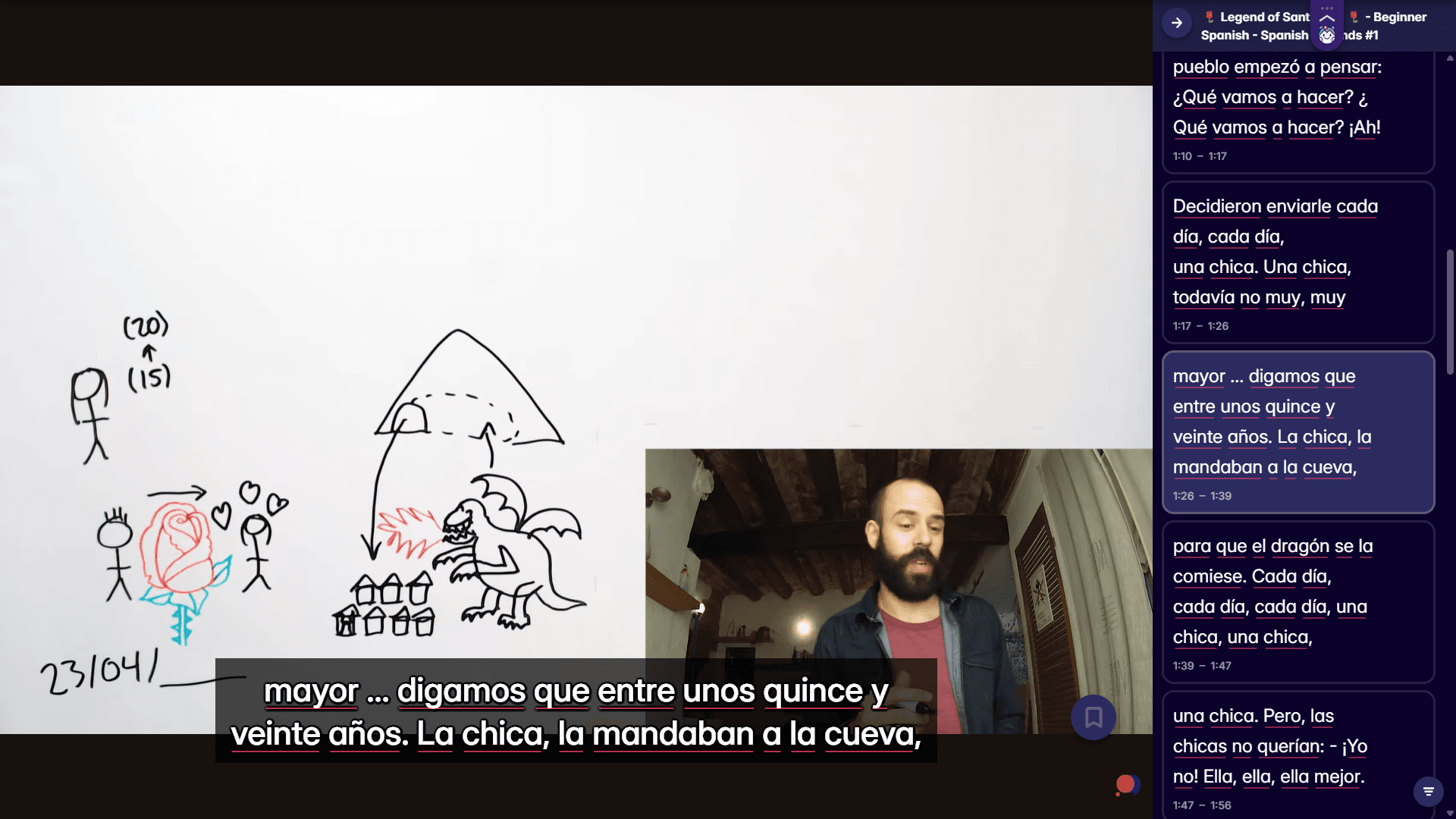
If you're working with a tutor and want to level up your independent study, Migaku's browser extension and app let you look up words instantly while reading articles or watching videos in your target language. Makes it way easier to learn from real content between lessons. There's a 10-day free trial if you want to check it out.
 ----
## Even 5-star expert tutors can't make you fluent if you don't spend time after class
The best results come from combining tutoring with independent study. Your tutor can guide you, provide feedback, and create speaking opportunities, but you need to put in work between lessons. If you are too busy, even watching videos and mining new words and sentences can help you build consistency and momentum.
> If you consume media in the language you want to learn, and you understand at least some of the messages and sentences within that media, you will make progress. _Period_.
What you do after class matters as much as what you do during it.📖☕
----
## Even 5-star expert tutors can't make you fluent if you don't spend time after class
The best results come from combining tutoring with independent study. Your tutor can guide you, provide feedback, and create speaking opportunities, but you need to put in work between lessons. If you are too busy, even watching videos and mining new words and sentences can help you build consistency and momentum.
> If you consume media in the language you want to learn, and you understand at least some of the messages and sentences within that media, you will make progress. _Period_.
What you do after class matters as much as what you do during it.📖☕