How to Use the Tokyo Metro as a Tourist Without Getting Lost
Last updated: May 23, 2026
Tokyo's subway system looks intimidating on paper, but for a tourist it's one of the easiest urban rail networks in the world to use once you understand the basics: pick the right ticket or IC card, learn to read the line colors and station numbers, and pay attention to which operator runs your line. This guide walks you through every step so you can get from Asakusa to Shibuya without standing frozen in front of a fare chart.
Last updated: May 23, 2026
What the Tokyo Metro Actually Is (and Isn't)
The phrase "Tokyo Metro" is used loosely by visitors, but underground in Tokyo you are actually dealing with two separate subway companies plus the JR network above ground. Knowing which one you are on affects your ticket, your transfer rules, and your fare.
- Tokyo Metro Co., Ltd. operates 9 lines and 180 stations across roughly 195 km of track. It carries about 6.84 million passengers per day (FY2024 figures).
- Toei Subway, run by the Tokyo Metropolitan Government, adds 4 more lines. Together with Tokyo Metro that's 13 lines and over 280 stations.
- JR East runs the Yamanote loop and other above-ground lines that most tourists also use to reach areas like Shinjuku, Shibuya, and Akihabara.
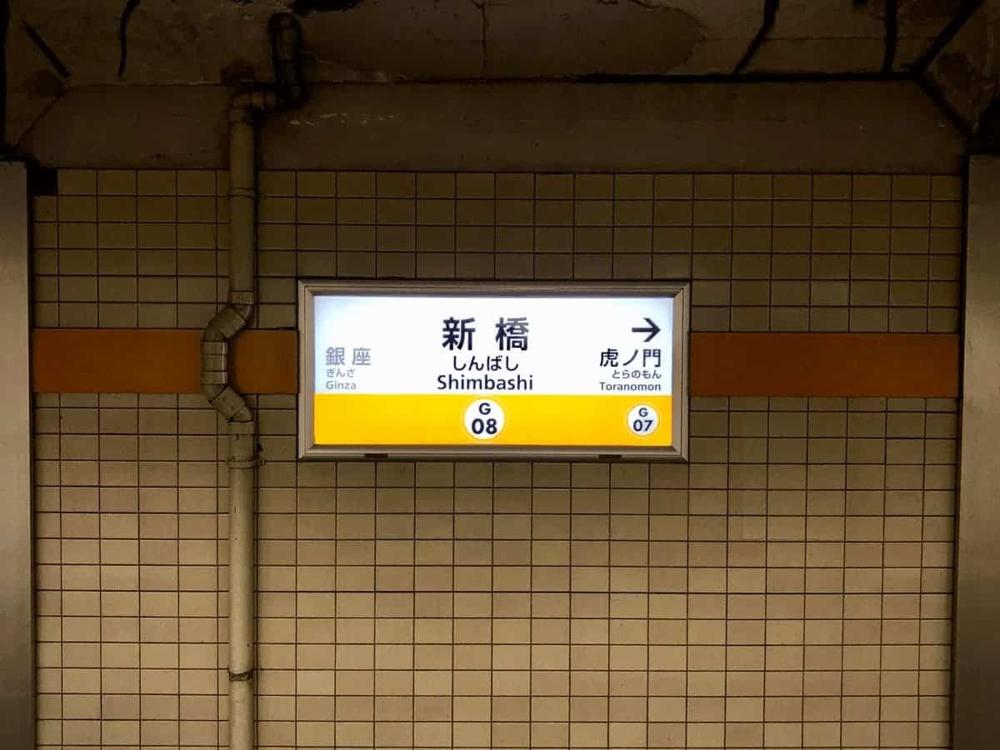
Each Tokyo Metro line has a color, a letter, and a number. The Ginza Line is orange and labeled G; Shibuya is G01, Asakusa is G19. Once you start reading stations as letter-plus-number combinations, navigation becomes much faster than trying to memorize Japanese names.
Service runs roughly 5:00 a.m. to midnight every day, with trains every 2 to 5 minutes during peak hours. There is no 24-hour service, so if you stay out past the last train, your options are a taxi or waiting until morning.
Should You Buy a Pass or Use an IC Card?
This is the single most important decision a tourist will make. The answer depends on how many rides per day you expect and which operators you'll mix.
The Tokyo Subway Ticket (best for short visits)
This is the pass designed specifically for foreign tourists. It covers unlimited rides on both Tokyo Metro and Toei Subway for a fixed period. Following the price revision that took effect on March 14, 2026, the adult fares are:
Duration | Adult fare (from March 14, 2026) |
|---|---|
24 hours | ¥1,000 |
48 hours | ¥1,500 |
72 hours | ¥2,000 |
Key rules to know:
- You must hold a foreign passport with short-term stay status, or be a Japanese passport holder living outside the Tokyo metropolitan region (Tokyo, Kanagawa, Saitama, Chiba, Ibaraki, Tochigi, Gunma, Yamanashi).
- Staff will check your passport and short-term stay stamp or sticker at purchase.
- The pass must be used within one month of purchase. The validity clock starts the first time you tap in at a gate, not at the moment of purchase.
- From 10:00 a.m. on March 25, 2026, the Tokyo Subway Ticket and the Tokyo Metro & Toei Subway Common One-Day Ticket are also available via QR code, which means you can buy them on your phone before arrival.
If you plan three or more rides a day across both operators, the pass pays for itself quickly. Two casual rides per day is usually cheaper on an IC card.
IC cards: Suica, PASMO, and the tourist versions
An IC card is a rechargeable contactless card you tap at the gate. Fares are deducted automatically and you don't have to calculate distances. The same card also works on JR lines, most private railways, buses, vending machines, and many convenience stores.
- Welcome Suica (JR East): designed for tourists. Valid 28 days from purchase, no deposit required, any leftover balance is non-refundable. Sold in denominations of ¥1,000, ¥2,000, ¥3,000, ¥4,000, ¥5,000, and ¥10,000. You can top it up to a maximum of ¥20,000. Available at JR East Travel Service Centers and dedicated vending machines at Haneda and Narita airports, plus the major Tokyo JR stations (Tokyo, Ueno, Ikebukuro, Shibuya, Shinagawa).
- Welcome Suica Mobile (iPhone and Apple Watch only): launched March 6, 2025, valid 180 days from issue. Great if you have a compatible device because there's no plastic card to recover deposit on.
- Regular Suica (green card): requires a ¥500 refundable deposit, no fixed expiry as long as it's used within 10 years. Refund process deducts a ¥220 handling fee from the balance.
- PASMO: equivalent system run by the private/subway operators. Same ¥500 deposit, top-up to ¥20,000, interoperable with 27 rail operators and 60 bus operators nationwide as of June 2025.
- TOURIST PASMO: launching in May 2026 to replace the discontinued PASMO PASSPORT. Valid 28 days from first use. Sold at Narita (fixed ¥2,000 fully loaded) and Haneda (choice of ¥1,000 to ¥10,000).
For most short trips, Welcome Suica or TOURIST PASMO is the simplest option because there's no deposit and no refund queue at the end of your visit.
Contactless credit cards
At Toei Subway stations and Keikyu Line stations, you can tap a Visa, Mastercard, or other contactless credit card directly at the gate ("Tap to Ride"). Tokyo Metro stations do not yet support this everywhere, so it's not a complete solution, but it's useful as a backup.
Single-Ride Fares If You Don't Want a Pass
If you are only making one or two rides, paper tickets are fine. Tokyo Metro single-ride fares for adults come in denominations of:
- ¥180
- ¥210
- ¥260
- ¥300
- ¥330
These include a ¥10 station barrier-free fee. Toei Subway single rides range from ¥180 to ¥430 depending on distance. Children aged 5 and under ride free; ages 6 to 11 pay half the adult fare.
Note that JR East raised its fares on March 14, 2026 for the first system-wide revision since 1987, an average increase of about 7.1%. The minimum JR base fare rose from ¥150 to ¥160, and a Tokyo to Shibuya JR ticket now costs ¥260 (up from ¥210). This affects you only on JR lines, not on the subway, but it's worth knowing if you're comparing route options.
Step-by-Step: Your First Ride
- Find a station entrance. Look for the round Tokyo Metro logo (a stylized blue M with a heart shape) or the Toei leaf logo. Larger stations have many exits labeled A1, B2, C3, and so on. Pick your entrance carefully because crossing underground between exits can take 10+ minutes at hubs like Otemachi or Shinjuku.
- Tap in at the gate. If you have an IC card, hold it flat against the panel until you hear the beep and see the gate light turn green. If you have a paper ticket or pass, insert it into the slot; it pops out the other side. Take it back; you'll need it to exit.
- Follow the line color and letter to your platform. Signage uses both English and Japanese. Every platform shows the next two or three stations in both directions so you can confirm you're going the right way.
- Board, hold on, and watch the in-car display. Most trains show the upcoming station in English, Japanese, Chinese, and Korean. Announcements are bilingual on Tokyo Metro and most Toei trains.
- Tap out at the destination gate. If you used a single ticket, the machine swallows it. If you used an IC card, the screen briefly shows the deducted fare and your remaining balance.
Transfers and Why They Get Expensive
Transfers are where tourists most often lose money. Tokyo Metro and Toei are separate companies, so a single ride that crosses between them costs more than one that stays within the same operator.
- Tokyo Metro to Tokyo Metro: 60-minute transfer grace period if you exit and re-enter at certain stations using an IC card.
- Tokyo Metro to Toei (or vice versa): there is a small discount when paying with an IC card, but it's still two separate fares added together. The Toei Oedo Line is not included in the Tokyo Metro 60-minute grace.
- Subway to JR: always a separate fare. A trip from Roppongi (Tokyo Metro) to Shibuya (JR) involves both fares.
This is exactly why the Tokyo Subway Ticket pays off so well: it eliminates the operator-split fare math for anyone hopping around all day.
Airport Connections
Getting from the airport to your hotel is its own decision tree. The most common options:
- Narita Express (N'EX): about ¥3,070 one-way to central Tokyo; children under 6 ride free if sharing a seat. Comfortable, direct to Tokyo, Shinjuku, Shibuya, Yokohama.
- Keisei Skyliner: faster to Ueno, often bundled with the Tokyo Subway Ticket. Pre-March 2026 bundle prices ran ¥2,900 / ¥3,300 / ¥3,600 for the 24/48/72-hour one-way combos and ¥4,900 / ¥5,300 / ¥5,600 round-trip. Confirm current bundle pricing on the official Keisei Skyliner site after the March 2026 revisions.
- Haneda: connected by the Tokyo Monorail and Keikyu Line; both feed into central Tokyo within 30 minutes.
If you are also considering trips outside Tokyo, look at JR Pass alternatives and regional rail options before buying a nationwide pass you might not use enough.
Common Pitfalls Tourists Make
- Buying a Tokyo Subway Ticket and then mostly riding JR. The pass does not cover JR. If your hotel is near a Yamanote Line station and you mostly hop the loop, an IC card is better.
- Trying to refund Welcome Suica balance. You can't. Spend it down on snacks, drinks, or convenience-store purchases before you leave.
- Using the wrong exit. Shinjuku has over 200 exits across multiple operators. Always check the exit letter (e.g. "East Exit" or "A5") before tapping out.
- Riding during the 7:30 to 9:00 a.m. peak with luggage. Carriages are genuinely packed. Off-peak travel with a suitcase is far less stressful.
- Forgetting the last train. Service stops around midnight. The first Yamanote train doesn't roll until about 4:30 a.m. Plan late nights accordingly.
- Assuming Toei Oedo transfers are free under the Metro 60-minute window. They aren't.
- Refund expectations on day passes. Same-day Toei tickets are not refundable after purchase, and unused discount tickets carry a ¥220 service charge on refund.
Quick Tips That Save Time
- Download an offline route app before you go. Most show real-time platform numbers and exit guidance.
- Photograph the station-area map at your exit. You'll thank yourself when you come back later.
- Carry a small amount of cash (¥1,000 notes and coins) for the rare ticket machine that doesn't take cards.
- Note that women-only cars operate on several lines during morning rush. They're clearly marked in pink.
- Pair the metro with walking: many neighborhoods are best explored on foot between two stops. For ideas on where to base yourself, see this guide on best neighborhoods in Tokyo for visitors.
- Check the weather before long underground transfer days; surfacing into a downpour at the wrong exit is miserable. A quick primer on Japanese weather vocabulary for travelers helps you read forecasts at your hotel.
FAQ
Is Google Maps reliable for Tokyo Metro?
Yes, very. It shows platform numbers, car numbers for fastest transfers, and live delay information. Apple Maps is also accurate in Tokyo.
Can I use one IC card for two travelers?
No. Each person needs their own card or ticket. Family members all tap individually at the gate.
What if I tap in but realize I'm going the wrong way?
Go to the station office (marked みどりの窓口 or staffed gate). Staff will reset your IC card or refund a paper ticket without charge if you haven't actually traveled.
Are stations accessible for wheelchairs and strollers?
Most Tokyo Metro stations have elevators and tactile paving. Staff at the gate will help with ramps if you ask; just point to the train direction.
Do I need to speak Japanese?
Not to ride. All signage and most announcements are in English. Knowing a few phrases for asking directions makes a real difference, though, especially when you surface from an unfamiliar exit.
Can I bring large luggage on the subway?
Yes, but avoid rush hour. The Narita Express and Skyliner have dedicated luggage racks, which is why many travelers prefer those for the airport leg.
Is the Tokyo Subway Ticket worth it for one day?
At ¥1,000 for 24 hours, you break even at roughly 4 to 5 rides, depending on distance. For a sightseeing day hitting Asakusa, Ueno, Ginza, and Shibuya-area, yes.
If you'd like to pick up enough Japanese to read signs, ask for directions, and understand announcements before your trip, try Migaku, a tool that helps you learn from real Japanese content like shows and news.