# Immersion Learning at Home: Immerse Yourself in a Language Learning Environment
> Create your complete language learning immersion at home using media, daily habits, and simple changes. No travel or classes needed.
**URL:** https://migaku.com/blog/language-fun/immersion-learning-at-home
**Last Updated:** 2026-03-06
**Tags:** resources, discussion, deepdive
---
You don't need to book a flight or enroll in expensive classes to get serious about [learning a language](https://migaku.com/). Creating an immersion environment at home is totally doable, and honestly, it's one of the most effective ways to build real fluency without leaving your house. The key is surrounding yourself with your target language in ways that feel natural and sustainable. I'm going to walk you through exactly how to turn your home into a [language learning](https://migaku.com/blog/language-fun/3-things-to-learn-a-language) hub, from the moment you wake up to when you go to bed.
---
## Why immersion at home works
Here's the thing about language immersion: **your brain learns best when it's constantly exposed to the language in real contexts**, not just textbook exercises. When you immerse yourself at home, you're replicating what happens when people move abroad and pick up languages naturally through daily life.
The difference between traditional studying and immersion is exposure time.
- Someone taking a class might get 3-5 hours of language contact per week.
- Someone doing immersion at home can easily hit 20-40 hours weekly just by changing their environment and media consumption habits. That's a massive difference in how quickly you'll develop language skills.
Is immersion learning at home good? Absolutely. Research shows that **[comprehensible input](https://migaku.com/blog/language-fun/comprehensible-input-method-language-learning)** (hearing and reading things you mostly understand) is how we actually acquire languages. You don't need a classroom in Paris or Tokyo when you can create that same input-rich environment in your living room.
---
## Setting up your physical space for language learning
The first step is making your home physically remind you of your target language. This creates passive learning opportunities throughout your day.
### Label everything you own
Grab some sticky notes and start labeling objects around your house. Put the target language word on your refrigerator, mirror, door, desk, lamp, whatever you see regularly. Include the article if your language uses them (like "la puerta" for Spanish or "die Tür" for German).
I know this sounds basic, but you'd be surprised how effective the language immersion at home is. You'll see these foreign language words dozens of times daily, and the repetition builds vocabulary without any conscious effort. After a few weeks, you'll know these household items cold.
### Create a dedicated corner with learning materials
Set up one spot in your home that's your language zone. This could be a desk, a comfy chair, or even just a specific cushion on your couch. Keep your language materials there: books, notebooks, headphones, whatever you use.
The psychological benefit of having a dedicated learning environment is real. When you sit there, your brain switches into language mode. It's like how some people can't work from bed because their brain associates it with sleep.
---
## Changing your digital environment for language immersion
Your phone and computer are probably the things you interact with most every day. Switching them to your target language is one of the highest-impact changes you can make.
### Switch device and app settings to immerse yourself in a language
Go into your phone settings and change the display language. Do the same for your computer, tablet, and any other devices. Yes, it'll be confusing for a few days. You'll have to figure out where the settings are and what the buttons do. That's exactly the point of how you can become fluent in a language.
This forces you to learn practical, everyday vocabulary. You'll learn words like "settings," "download," "notifications," and "battery" because you need them to function. Within a week, you'll navigate everything smoothly, and you'll have absorbed tons of useful vocabulary.
Do this with individual apps too. Change Instagram, Twitter, YouTube, your email client, everything. Each app uses slightly different language, so you'll see the same concepts expressed in various ways.
### Use a VPN for geo-specific content
One trick that really opens up your immersion options is using a VPN to access content from countries where your target language is spoken. Streaming services show different content based on your location, and a VPN lets you unlock that.
For example, if you're learning Spanish, connect to a server in Spain or Mexico. Netflix will show you their regional TV shows and way more videos in your target language. Same goes for YouTube recommendations and even Google search results.
---
## Consuming media to become fluent in a language
This is where immersion gets fun. You're going to replace most of your entertainment with content in your target language.
### Start with TV shows and movies
Pick a TV show in your target language and commit to it. Start with a subtitle setup that works for your level. Complete beginners might need subtitles in their native language at first. As you improve, switch to subtitles in the target language. Eventually, you'll want to go subtitle-free.
The key is consistency. Watching 30 minutes every single day beats binge-watching for 5 hours once a week. Your brain needs regular exposure to lock in patterns and vocabulary in the new language.
Choose content you actually enjoy. If you hate romance dramas, don't force yourself to watch them just because they're in your target language. Find crime shows, comedies, documentaries, whatever keeps you engaged.
### Add podcasts to your language immersion at home
Podcasts are perfect for immersion because you can listen while doing other things. Walking, cooking, commuting, exercising, all of these become time for learning a new language.
For beginners, look for podcasts specifically made for language learners. These use simpler vocabulary and speak more slowly. As you advance, switch to podcasts made for native speakers. News podcasts are great because they cover current events, giving you cultural context along with language practice.
Create a playlist of 5-10 podcasts and rotate through them. Having variety keeps things interesting and exposes you to different voices and speaking styles.
### Listen to music constantly
Music is an underrated immersion language learning tool. The repetition helps you memorize phrases, and the emotional connection makes vocabulary stick better.
Make playlists for different moods and activities. Upbeat songs for morning routines, chill music for studying, whatever fits your lifestyle. You'll find yourself singing along, which is speaking practice for language learning at home, even if you don't realize it.
Look up lyrics as you listen. Many streaming services show them automatically now. Seeing the words while hearing them reinforces the connection between spelling and pronunciation.
---
## Speaking practice and self-narration in foreign language learning
[You can't become fluent without speaking](https://migaku.com/blog/language-fun/output-hypothesis-language-learning), even when you're alone at home.
### Talk to yourself throughout the day like a native
This feels weird at first, but narrating your actions in your target language is incredibly effective. As you make coffee, describe what you're doing: "I'm pouring water into the kettle. Now I'm waiting for it to boil."
This builds the habit of thinking in the language. You're not translating from your native language anymore; you're directly expressing thoughts in your target language. That's what fluency actually is.
Start simple with present tense descriptions. As you improve, add past tense reflections ("I went to the store earlier") and future tense planning ("I'm going to cook dinner soon").
### Use language exchange apps and online tutors to learn a language
You need real conversation practice with actual people. Apps like HelloTalk or Tandem connect you with native speakers who want to learn your language. You help each other, usually through text, voice messages, or video calls.
For more structured practice, online tutors are worth the investment. Platforms like iTalki let you book affordable sessions with native speakers. Even 30 minutes once or twice a week makes a huge difference.
The key with speaking practice is consistency over perfection. Making mistakes is how you learn a second language. A native speaker will understand you even if your grammar isn't perfect.
---
## Reading for grammar comprehension and vocabulary building
Reading is one of the best ways to build vocabulary and internalize grammar patterns.
### Start with graded readers and easy content
Don't jump straight into novels if you're a beginner. Graded readers are books written specifically for language learners, using limited vocabulary and simple grammar. They let you read complete stories while staying in your comprehension zone.
As you advance, move to children's books, then young adult novels, then whatever interests you. The progression should feel challenging but not overwhelming.
### Read things you'd read anyway
If you normally read news, start reading news sites in your target language. If you're into cooking, find recipe blogs. If you follow certain topics on social media, find accounts that post in your target language.
This makes reading feel less like studying and more like just living your life in another language, which is exactly what immersion should be.
### Use flashcards for vocabulary retention
When you encounter new words while reading or watching content, add them to a flashcard system. This could be a physical notebook, but digital tools work better for spaced repetition.
The idea is to review words right before you're about to forget them. This locks them into long-term memory way more efficiently than cramming.
---
## Making target language immersion sustainable
Here's what actually matters: you need to enjoy this process. If you hate the shows you're watching or find the podcasts boring, you won't stick with it. Immersion learning works because you're engaging with the language so much that improvement is inevitable, but only if you actually do it consistently.
Start small. Don't try to change everything at once. Maybe this week you just change your phone language and start one show. Next week, add a podcast. Gradually build up your immersion environment until the language is just part of your daily life.
The goal is to reach a point where you're not "studying" anymore. You're just watching shows you like, reading things you're interested in, and talking about topics you care about. The fact that it's all in another language becomes secondary.
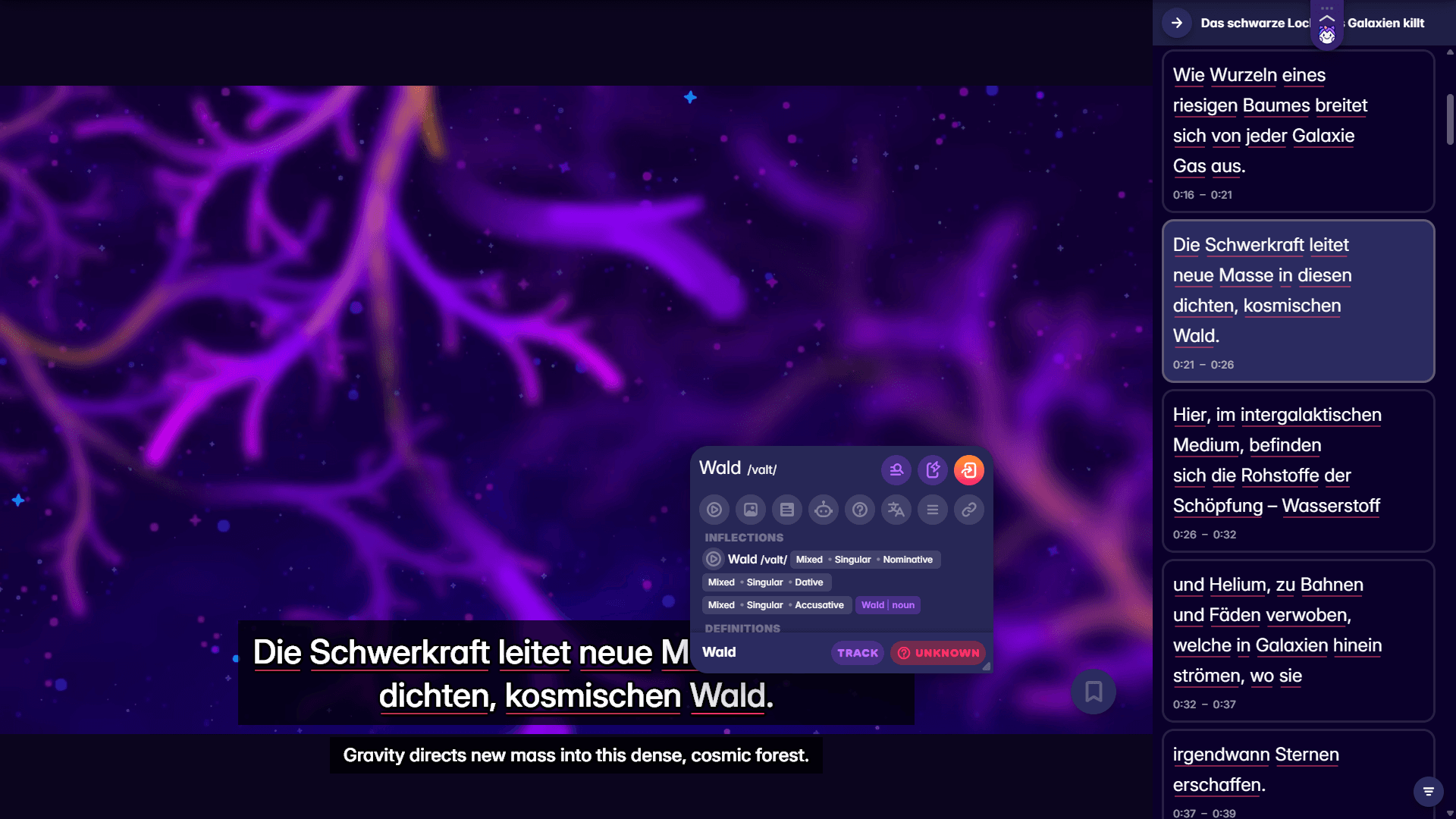
Anyway, if you want to make immersion way more practical, Migaku's browser extension and app let you look up words instantly while watching shows or reading articles online. You can create flashcards directly from what you're watching, which is pretty much perfect for immersion learning. There's a 10-day free trial if you want to check it out.
 ---
## FAQs
The 15/30/15 method is a structured approach to daily immersion that breaks your practice into three chunks: 15 minutes of intensive study (like flashcards or grammar), 30 minutes of active immersion (watching shows with full attention), and 15 minutes of review or speaking practice.
---
## FAQs
The 15/30/15 method is a structured approach to daily immersion that breaks your practice into three chunks: 15 minutes of intensive study (like flashcards or grammar), 30 minutes of active immersion (watching shows with full attention), and 15 minutes of review or speaking practice.
This method works because it combines different types of learning. The intensive study builds foundational knowledge, the active immersion applies it in context, and the review solidifies what you've learned. You can repeat this cycle multiple times throughout the day if you have the time.
A practical example: you wake up and your phone alarm goes off with labels in your target language. You make breakfast while listening to a podcast. You've labeled your kitchen items, so you see the words as you use them. You eat while watching a YouTube video from a creator who speaks your target language. Later, you read an article about a topic you're interested in. In the evening, you watch a show, then spend 10 minutes talking with a language exchange partner. That's immersive learning, your whole day touched the language multiple times in natural contexts.
---
## There's no single "best" program for immersion experience
To create an immersive environment is to create something you would enjoy, not follow a rigid curriculum. The best approach combines multiple resources based on your level and interests. Beginners benefit from structured input like language learning podcasts and graded readers alongside immersion. Intermediate learners can dive deeper into native content with support tools. Advanced learners should be consuming almost entirely native content made for native speakers.
> If you consume media in the language you want to learn, and you understand at least some of the messages and sentences within that media, you will make progress. _Period_.
Think before you act.🧠➡️💡