Input vs Output Language Learning: The Optimal Balance for Second Language Acquisition
Last updated: March 24, 2026

If you've spent any time researching how to learn a language faster, you've probably run into the input versus output debate. Some people swear by just consuming content (reading and listening), while others say you need to speak and write from day one. Here's the thing: both sides have valid points, but treating this as an either-or choice misses what actually works. The real question isn't which one is better, but how to balance them at different stages of your learning journey.
- What input and output mean in language learning
- The input hypothesis and why it dominated language learning
- The output hypothesis and what it adds to the picture
- How both theories work for second language acquisition
- Balancing ratios: How much input vs output at different levels
- Practical input activities
- Practical output in language learning
- Integration strategies that make balancing easier
- FAQs
What input and output mean in language learning
Let's get clear on definitions first.
- Input refers to any language you consume: reading books, watching shows, listening to podcasts, scrolling through social media in your target language. You're taking in the language without producing it yourself.
- Output means actively using the language: speaking with natives, writing journal entries, texting friends, and recording yourself talking. You're creating language rather than just absorbing it.
Pretty straightforward, right? But the way these two processes work in your brain is actually quite different, which is why the debate exists in the first place.
The input hypothesis and why it dominated language learning
Stephen Krashen popularized the Input Hypothesis back in the 1980s, and it changed how a lot of people think about language acquisition. His core idea was that we acquire language through comprehensible input, meaning exposure to language that's just slightly above our current level.
Krashen argued that if you get enough input you can understand (even if you have to guess some words from context), your brain naturally figures out the patterns. You don't need explicit grammar instruction or forced output practice. The language module in your brain just absorbs the rules through exposure.
This hypothesis explains why kids pick up languages so easily. They're surrounded by input all day, and they start speaking when they're ready. Nobody teaches a toddler grammatical rules about past tense formation.
The Input Hypothesis became very influential because it matched what a lot of successful learners experienced. Many polyglots report spending months just consuming content before they felt ready to speak. The comprehension came first, then production followed naturally.
The output hypothesis and what it adds to the picture
Merrill Swain developed the Output Hypothesis in the 1990s after noticing something interesting: students who got tons of comprehensible input in immersion programs still made persistent errors and struggled with certain grammatical structures.
Her research suggested that output serves specific functions that input alone can't provide.
- When you try to speak or write, you notice gaps in your knowledge. You realize you don't know how to say something, or you make an error and get corrected. This noticing function helps you pay attention to features of the language you might otherwise ignore.
- Output also lets you test hypotheses. Maybe you've seen a grammatical pattern in your input but you're not sure exactly how it works. When you try using it yourself and get feedback, you refine your understanding.
- Plus, output builds fluency through practice. Even if you understand everything in a conversation, actually producing sentences quickly requires a different kind of skill. You need to retrieve vocabulary fast, apply grammatical rules automatically, and string everything together coherently.
How both theories work for second language acquisition
The cool thing is that input and output aren't competing processes. They're complementary.
- Input builds your mental database of the language: vocabulary, phrase patterns, grammatical structures, and natural expressions.
- Output forces you to actively use that database and reveals what's missing.
Think of it like cooking. Input is watching cooking shows, reading recipes, observing chefs. Output is actually getting in the kitchen and making a dish yourself. You need both. Watching alone won't make you a good cook, but trying to cook without ever seeing it done would be incredibly inefficient.
Balancing ratios: How much input vs output at different levels
Here's where it gets practical. The ideal ratio of input to output changes as you progress.
- For absolute beginners (first 3-6 months), aim for maybe 90% input and 10% output. You need to build up basic vocabulary and get familiar with how the language sounds. Your output at this stage might be repeating phrases, doing simple writing exercises, or talking to yourself.
- At intermediate levels (6 months to 2 years), shift toward 70% input and 30% output. You have enough knowledge to practice using the language meaningfully. This is when regular conversation practice, writing practice, and getting feedback become really valuable.
- For advanced learners, you might go 50-50 or even favor output slightly in certain areas. If you're trying to develop professional fluency or work on specific skills like academic writing, you need lots of practice producing language.
These aren't strict rules. Some days you might just watch shows and read (100% input). Other days you might have a two-hour conversation session (heavy output). The ratios are more about your overall weekly or monthly balance.
Practical input activities
Good input activities share one thing: they're comprehensible and engaging. If you're lost or bored, you won't learn much.
- Reading works great because you control the pace. Start with graded readers designed for learners, then move to comics, young adult novels, and eventually native content. Use a dictionary tool to look up words, but try to understand the general meaning from context first.
- Listening is harder because you can't control the speed, but it's crucial for developing natural comprehension. You can choose podcasts for learners, YouTube channels in your target language, TV shows with subtitles in the same language (not English), and audiobooks you've already read.
One technique I love: watch the same episode of a show multiple times. First with subtitles in your target language, then without, then again with subtitles. You catch more each time, and the repetition helps phrases stick.
The key is massive quantity. You want hundreds of hours of input. That's how your brain internalizes patterns without explicit study.
Practical output in language learning
Output practice needs to match your level. Beginners shouldn't stress about having conversations. Start smaller.
- Shadowing (repeating what you hear immediately after) gives you output practice without the pressure of creating original sentences. It helps with pronunciation and rhythm.
- Writing short journal entries about your day works well because you control the topic and can look things up. Even just a few sentences daily builds the habit of formulating thoughts in the language.
- Language exchange apps let you find conversation partners. At intermediate levels, aim for at least two or three 30-minute conversations per week. Record yourself speaking about random topics and listen back to catch errors.
Advanced learners benefit from challenging output tasks: giving presentations, writing essays, debating topics, and explaining complex ideas. This pushes you to use advanced vocabulary and grammatical structures you might avoid in casual conversation.
Integration strategies that make balancing easier
The easiest way to balance input and output is to combine them in single activities.
- Watch a show, then record yourself summarizing the episode. Read an article, then discuss it with a language partner.
- Imitate what you consume. If you hear a useful phrase in a podcast, write it down and use it in conversation that week. This connects input directly to output practice.
- Join online communities in your target language. Reddit, Discord servers, forums about your hobbies. You get input from reading posts and output from writing comments. Way more engaging than textbook exercises.
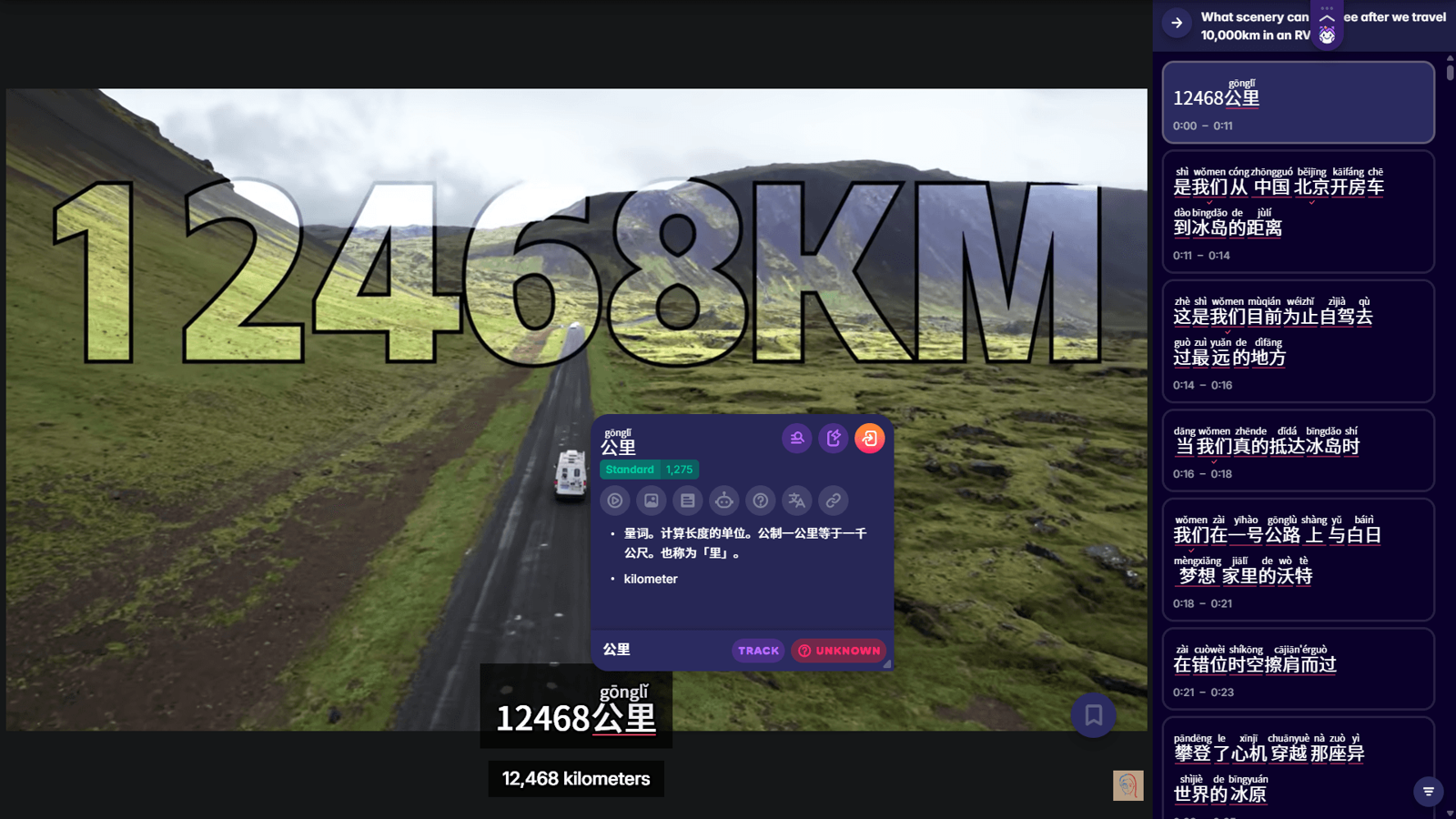
Anyway, if you want to make input practice way more effective, Migaku's browser extension and app let you look up words instantly while watching shows or reading articles in your target language. You can save phrases to review later and actually learn from native content instead of just passively watching. There's a 10-day free trial if you want to check it out.
FAQs
Everyone sounds dumb when learning a language
Every single fluent speaker you admire went through an awkward phase. You can't skip it. Start with low-pressure output. Talk to yourself. Narrate your actions while cooking. Have conversations with AIs. This builds the neural pathways without social pressure. And don't forget to build your foundation with massive input.
If you consume media in the language you want to learn, and you understand at least some of the messages and sentences within that media, you will make progress. Period.
There are four skills in language learning: reading, listening, speaking, and writing.
Train each and every one of them!💪