Italian Connectors: Basic Italian Grammar on How to Link Sentences
Last updated: March 23, 2026

If you've been learning Italian for a while, you probably know a bunch of vocabulary and can conjugate verbs pretty well. But when you try to speak or write, your sentences might feel choppy and disconnected. That's where Italian connectors come in. These linking words are what make your Italian sound natural and fluent instead of like a robot reading a shopping list. In this guide, I'll walk you through the different types of Italian conjunctions and show you exactly how to use them to connect your ideas smoothly.
What are Italian conjunctions
Italian conjunctions are words that connect sentences, clauses, or phrases together. They're the glue that holds your thoughts together when you're speaking or writing. In Italian, we call them "congiunzioni," and they work pretty much the same way as English conjunctions, though the usage can be different.
Here's the thing: Italian has way more conjunctions than just "e" (and) and "ma" (but). There are dozens of these connectors, and knowing when to use each one will seriously level up your Italian. Some conjunctions are super simple and you'll use them every day, while others are more formal and show up mostly in writing.
Coordinative vs subordinative conjunctions
Italian conjunctions fall into two main categories: coordinative and subordinative. Understanding this distinction will help you use them correctly.
- Coordinative conjunctions connect two independent clauses or elements that have equal grammatical importance. Think of them as connecting things that could stand alone as separate sentences. The main coordinative conjunctions in Italian include "e" (and), "ma" (but), "o" (or), "però" (however), and "quindi" (therefore).
- Subordinative conjunctions, on the other hand, connect a main clause with a dependent clause. The dependent clause can't stand alone as a complete sentence. These include words like "che" (that), "perché" (because), "se" (if), "quando" (when), and "mentre" (while).
Let me give you some examples. "Ho studiato e ho superato l'esame" (I studied and I passed the exam) uses a coordinative conjunction because both parts could be separate sentences. But "Ho superato l'esame perché ho studiato" (I passed the exam because I studied) uses a subordinative conjunction because "perché ho studiato" can't stand alone.
Basic Italian coordinative conjunctions
Let's start with the coordinative conjunctions since you'll use these constantly. These are divided into a few subcategories based on what they do.
Copulative conjunctions
Copulative conjunctions add information or connect similar ideas.
- The most common one is "e" (and), which you already know. But there are others: "E" becomes "ed" before words starting with "e" for smoother pronunciation. So you'd say "ed ecco" instead of "e ecco."
- "Anche" means "also" or "too" and adds emphasis. "Vengo anche io" means "I'm coming too."
- "Inoltre" and "pure" both mean "furthermore" or "moreover." These are great for adding points in conversation or writing. "Mi piace la pizza, inoltre è economica" (I like pizza, furthermore it's cheap).
- "Neanche," "nemmeno," and "neppure" all mean "not even" or "neither." These work with negative sentences. "Non mi piace la matematica, neanche la fisica" (I don't like math, not even physics).
Adversative conjunctions
These conjunctions show contrast or opposition between ideas. They're super useful when you want to express a "but" or "however" meaning.
- "Ma" is the basic "but" that you use all the time. "Voglio uscire ma piove" (I want to go out but it's raining).
- "Però" also means "but" or "however" and is really common in spoken Italian. "È simpatico, però parla troppo" (He's nice, however he talks too much).
- "Tuttavia" and "eppure" are more formal ways to say "however" or "yet." You'll see these more in writing. "Ha studiato molto, tuttavia non ha superato l'esame" (He studied a lot, however he didn't pass the exam).
- "Anzi" means "on the contrary" or "actually" and is used to correct or contradict. "Non è stupido, anzi è molto intelligente" (He's not stupid, on the contrary he's very intelligent).
Disjunctive conjunctions
These present alternatives or choices between options.
- "O" means "or" and presents alternatives. "Vuoi caffè o tè?" (Do you want coffee or tea?). It becomes "od" before words starting with "o."
- "Oppure" also means "or" but is a bit more emphatic. "Possiamo andare al cinema oppure restare a casa" (We can go to the cinema or stay home).
- "Altrimenti" means "otherwise" and shows what happens if you don't choose the first option. "Sbrigati, altrimenti perdiamo il treno" (Hurry up, otherwise we'll miss the train).
Conclusive conjunctions
These introduce conclusions or results.
- "Quindi" is super common and means "therefore" or "so." "Sono stanco, quindi vado a letto" (I'm tired, so I'm going to bed).
- "Dunque" and "perciò" also mean "therefore" and work the same way. "Piove, dunque prendo l'ombrello" (It's raining, therefore I'm taking the umbrella).
- "Allora" can mean "then" or "so" and is used constantly in conversation. "Allora, che facciamo?" (So, what are we doing?).
Italian subordinative conjunctions
Now let's get into subordinative conjunctions. These are where Italian gets really expressive because they let you show relationships between ideas in nuanced ways.
Temporal conjunctions
These indicate when something happens in relation to something else.
- "Quando" means "when" and is probably the most common temporal conjunction. "Ti chiamo quando arrivo" (I'll call you when I arrive).
- "Mentre" means "while" and shows simultaneous actions. "Ascolto musica mentre studio" (I listen to music while I study).
- "Dopo che" means "after" and "prima che" means "before." Note that "prima che" requires the subjunctive mood. "Prima che tu vada, devo dirti una cosa" (Before you go, I need to tell you something).
- "Finché" means "until" or "as long as." "Aspetto finché torni" (I'll wait until you return).
- "Appena" means "as soon as." "Ti scrivo appena posso" (I'll write to you as soon as I can).
Causal conjunctions
These explain why something happens, showing cause and effect.
- "Perché" is the main word for "because" and you'll use it constantly. "Non esco perché sono stanco" (I'm not going out because I'm tired).
- "Siccome" and "poiché" also mean "because" or "since" and are often used at the beginning of sentences. "Siccome piove, resto a casa" (Since it's raining, I'm staying home).
- "Dato che" and "visto che" mean "given that" or "seeing that." These are conversational and common. "Non esco, dato che piove." (I'm not going out, given that it's raining).
Final conjunctions
These express purpose or intention.
- "Perché" can also mean "so that" or "in order to" when expressing purpose. The meaning depends on context. "Studio perché voglio imparare" can mean both "I study because I want to learn" and "I study so that I can learn."
- "Affinché" is a more formal way to say "so that" and requires the subjunctive. "Parlo lentamente affinché tu capisca" (I speak slowly so that you understand).
Concessive conjunctions
These introduce concessions or acknowledge contrasting information.
- "Anche se" means "even if" or "even though." "Esco anche se piove" (I'm going out even though it's raining).
- "Sebbene" and "benché" mean "although" and require the subjunctive mood. "Sebbene sia stanco, continuo a lavorare" (Although I'm tired, I keep working).
- "Nonostante" means "despite" or "in spite of." "Nonostante la pioggia, sono uscito" (Despite the rain, I went out).
Conditional conjunctions
These introduce conditions or hypothetical situations.
- "Se" means "if" and is essential for conditional sentences. "Se piove, resto a casa" (If it rains, I'll stay home).
- "A meno che" means "unless" and requires the subjunctive. "Vengo a meno che tu non voglia" (I'm coming unless you don't want me to).
- "A condizione che" and "purché" mean "provided that" or "as long as." "Ti aiuto purché tu mi aiuti dopo" (I'll help you as long as you help me later).
How to use these Italian words in conversation
Knowing the Italian connectors is one thing, but using them naturally is another. Here's what helped me when I was trying to learn Italian.
- Start by picking three or four conjunctions and consciously use them for a week. Don't try to learn all of them at once. Maybe start with "però," "quindi," and "mentre" since these are super common and useful.
- Pay attention to how native speakers use these words when you're watching Italian shows or videos. You'll notice that some conjunctions are way more common in speech than in writing. "Però" and "allora" get used constantly in conversation, while "tuttavia" and "affinché" are mostly for formal writing.
- Practice connecting your thoughts out loud, even if you're just talking to yourself. Instead of thinking in separate sentences, try to link them together. "Voglio imparare l'italiano. Studio ogni giorno" becomes "Voglio imparare l'italiano, quindi studio ogni giorno."
- One thing that really helped me was writing short paragraphs and deliberately using different conjunctions. You start to get a feel for which ones sound natural in different contexts.
Common mistakes to avoid with Italian connectors
When you're learning to use Italian connectors, there are some typical mistakes that English speakers make.
- The biggest one is using "perché" for everything. Yes, it means both "because" and "why," but context matters. "Perché studi?" means "Why do you study?" while "Studio perché voglio imparare" means "I study because I want to learn." The meaning is clear from whether it's a question or statement.
- Another mistake is forgetting that some subordinative conjunctions require the subjunctive mood. Words like "benché," "sebbene," "affinché," and "prima che" need the subjunctive in the clause that follows them. This trips up a lot of learners.
- Don't overuse "e" to connect everything. In English, we can get away with stringing together sentences with "and," but in Italian, it sounds repetitive. Mix it up with other coordinative conjunctions or use subordinative ones to show relationships between ideas.
- Also, be careful with word order. Some conjunctions like "siccome" and "poiché" usually come at the beginning of sentences, while others like "però" can move around more freely.
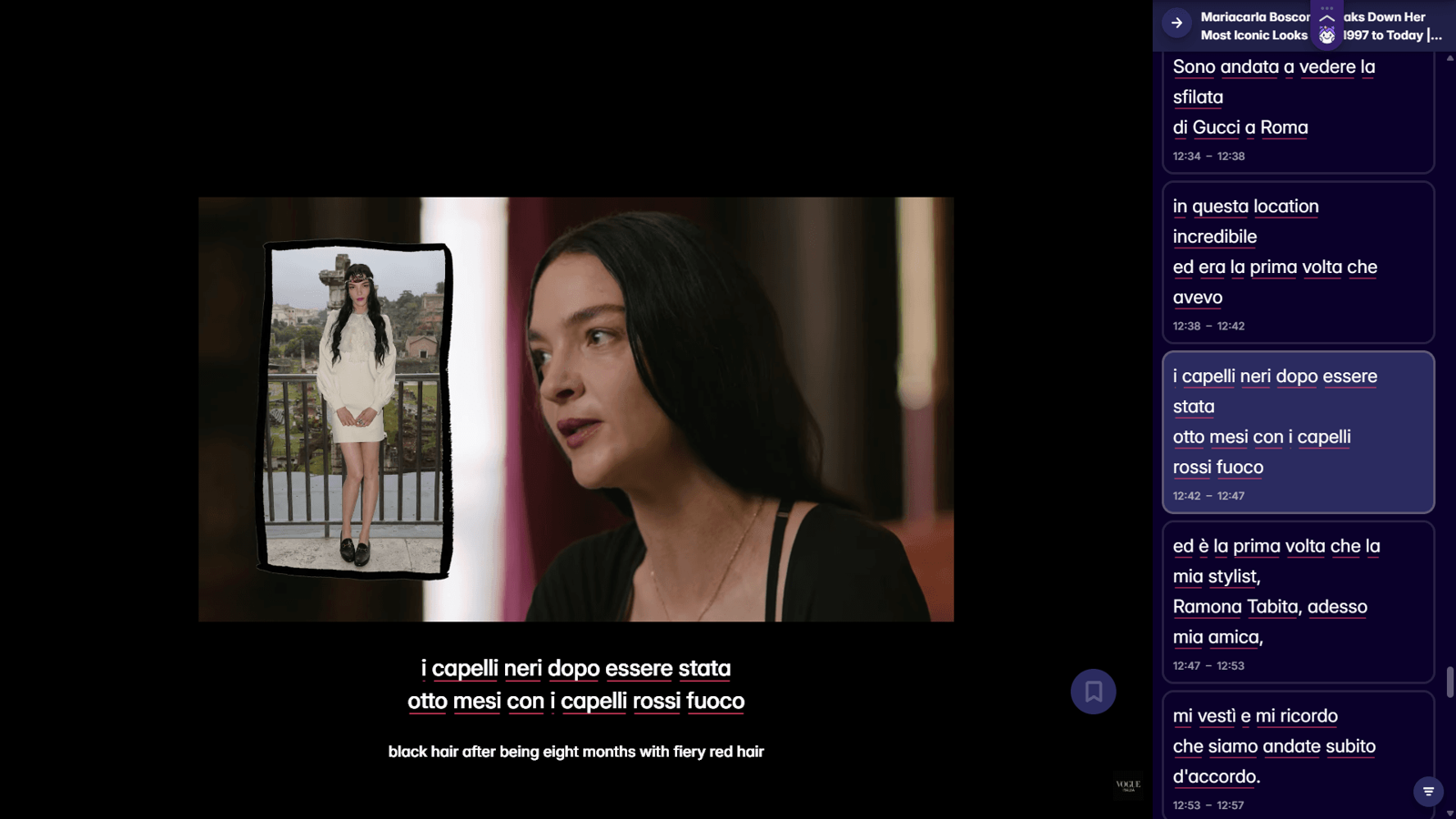
Anyway, if you want to learn Italian through real content like shows and articles, Migaku's browser extension and app let you look up words and save them instantly while you're watching or reading. It makes picking up these conjunctions way more natural since you see them in context. There's a 10-day free trial if you want to check it out.
Why mastering Italian linking words matters for fluency
Learning conjunctions might seem like a small detail in your Italian journey, but they make a huge difference in how you sound. When you use connectors well, you can express complex ideas, show relationships between thoughts, and sound way more natural. These Italian words also help you understand native speakers better. When you're watching Italian movies or listening to podcasts, recognizing conjunctions helps you follow the logic and flow of what's being said.
If you consume media in Italian, and you understand at least some of the messages and sentences within that media, you will make progress. Period.
These patterns will start to feel natural as you hear them again and again!🎧👂