# Italian House Vocabulary: Useful Home and Furniture Words in Italian Language
> Explore lists of essential Italian house vocabulary for rooms, furniture, and appliances. Practical words you'll use to describe homes and daily life.
**URL:** https://migaku.com/blog/language-fun/italian-house-vocabulary
**Last Updated:** 2026-02-24
**Tags:** vocabulary, phrases
---
[Learning Italian](https://migaku.com/learn-italian) house vocabulary might seem basic, but it can expand the daily topics you can talk about. Whether you're planning a longer stay in Italy, looking to rent an apartment in Rome, or just want to describe your home to Italian friends, this vocabulary forms the foundation of practical communication. Plus, understanding these words opens up Italian home design shows, real estate listings, and those beautiful architecture documentaries that Italy does so well.
---
## Room names and house structure
Let's start with the rooms themselves. In Italian, "house" translates to "**casa**", which you'll hear constantly. An apartment is "**un appartamento**", and these are way more common than standalone houses in Italian cities.
**The main rooms** you need to know:
| Italian | English |
| - | - |
| la cucina | kitchen |
| la camera da letto | bedroom (literally "room for bed") |
| il bagno | bathroom |
| il soggiorno | living room |
| la sala da pranzo | dining room |
| lo studio | study / office |
| la cantina | cellar / basement |
| la soffitta | attic |
One thing that trips people up: Italians often say "il salotto" for living room too, which is slightly more formal than "il soggiorno". Both work fine in conversation.
For **outdoor** and structural spaces:
| Italian | English |
| - | - |
| il giardino | garden |
| il balcone | balcony |
| la terrazza | terrace |
| il garage | garage (pronounced the Italian way) |
| le scale | stairs (always plural) |
| il corridoio | hallway |
| l'ingresso | entrance |
Quick note on articles: Italian nouns have gender, so you'll see "il" (masculine) and "la" (feminine) before these words. The article matters because adjectives need to match. Learning the article with the word from the start saves headaches later.
---
## Essential furniture vocabulary
Furniture words come up in basically every conversation about homes. Here's what you'll actually use:
**Bedroom** furniture centers around "**il letto**" (bed). You'll also need:
| Italian | English |
| - | - |
| il materasso | mattress |
| il cuscino | pillow |
| le lenzuola | sheets |
| la coperta | blanket |
| l'armadio | wardrobe / closet |
| il comodino | nightstand |
| la lampada | lamp |
**Living room** essentials:
| Italian | English |
| - | - |
| il divano | sofa |
| la poltrona | armchair |
| il tavolino | coffee table |
| la libreria | bookshelf |
| la televisione / TV | television |
| il tappeto | carpet / rug |
| le tende | curtains |
**Dining area** vocabulary:
| Italian | English |
| - | - |
| il tavolo | table |
| la sedia | chair |
| la credenza | sideboard |
One cultural note: Italian homes traditionally have smaller furniture than American homes because the spaces are typically more compact. When you're talking about furniture in Italian, you might notice this reflected in the language around size and space.
---
## Kitchen appliances and items
The kitchen (**la cucina**) deserves special attention because it's central to Italian culture. Here's your essential list:
**Major appliances**:
| Italian | English |
| - | - |
| il frigorifero / il frigo | refrigerator / fridge |
| il forno | oven |
| i fornelli | stove burners |
| la lavastoviglie | dishwasher (literally "dish washer") |
| il microonde | microwave |
| la cappa | range hood |
**Smaller appliances** and tools:
| Italian | English |
| - | - |
| il tostapane | toaster |
| la caffettiera | coffee maker (often refers to the moka pot) |
| il frullatore | blender |
| il bollitore | kettle |
**Storage** and **surfaces**:
| Italian | English |
| - | - |
| il pensile | wall cabinet |
| il cassetto | drawer |
| il lavandino | sink |
| il piano di lavoro | countertop (literally "work surface") |
The word "lavastoviglie" is pretty cool because it literally breaks down to "washes dishes". Italian does this compound word thing that makes vocabulary easier to remember once you know the pattern.
---
## Bathroom fixtures and accessories
Bathrooms in Italy can be different from what you're used to, and the vocabulary reflects this. "**Il bagno**" is your go-to word for bathroom.
**Essential fixtures**:
| Italian | English |
| - | - |
| il water / il gabinetto | toilet ("water" is commonly used) |
| la doccia | shower |
| la vasca da bagno | bathtub |
| il lavandino / il lavabo | sink |
| il bidet | bidet (standard in Italian bathrooms) |
| lo specchio | mirror |
**Bathroom items**:
| Italian | English |
| - | - |
| l'asciugamano | towel |
| il sapone | soap |
| lo shampoo | shampoo |
| il dentifricio | toothpaste |
| lo spazzolino | toothbrush |
| la carta igienica | toilet paper |
The bidet deserves mention because it's in basically every Italian bathroom, while Americans often have no idea what it's for. Knowing this word prevents awkward moments.
---
## Household appliances and utilities
Beyond kitchen and bathroom, you need vocabulary for the appliances that keep a household running:
**Laundry** and cleaning:
| Italian | English |
| - | - |
| la lavatrice | washing machine |
| l'asciugatrice | dryer (less common in Italy) |
| l'aspirapolvere | vacuum cleaner |
| il ferro da stiro | iron |
| l'asse da stiro | ironing board |
**Climate control**:
| Italian | English |
| - | - |
| il riscaldamento | heating |
| il condizionatore | air conditioner |
| il termosifone | radiator |
| il ventilatore | fan |
The washing machine (la lavatrice) is essential vocabulary because laundry comes up in practical conversations about apartments and daily routines. Many Italian apartments don't have dryers, so people hang clothes to dry, which is worth knowing culturally.
---
## Decorative items and home accessories
Once you've covered the functional stuff, these words help you describe what makes a house feel like a home:
| Italian | English |
| - | - |
| il quadro | painting / picture frame |
| la pianta | plant |
| il vaso | vase |
| la candela | candle |
| l'orologio | clock |
| il cuscino | cushion / pillow |
| la coperta | throw blanket |
These might seem less critical, but they come up constantly when people describe their homes or when you're shopping for household items in Italy.
---
## Architectural elements and features
Understanding the structure of a house requires these terms:
| Italian | English |
| - | - |
| la porta | door |
| la finestra | window |
| il muro / la parete | wall ("muro" for exterior, "parete" for interior) |
| il pavimento | floor surface |
| il soffitto | ceiling |
| il tetto | roof |
| la serratura | lock |
| la chiave | key |
| l'interruttore | light switch |
| la presa | electrical outlet |
These words become super practical when something needs fixing or when you're describing apartment features to a landlord.
---
## How to learn and remember this vocabulary
Do you really want to [take your Italian to the next level](https://migaku.com/blog/language-fun/break-through-language-learning-plateau)? Here's what actually works for learning house vocabulary:
1. Label everything in your house. Seriously, stick post-it notes with Italian words on your furniture, appliances, and rooms. Every time you use your "frigorifero" or sit on your "divano", you're getting a repetition. This beats flashcards because the context is real.
2. Create mental room tours. Close your eyes and mentally walk through your home, naming everything in Italian. This builds the vocabulary into a spatial memory system that's way more durable than a random word list.
3. Use the vocabulary in sentences, not in isolation. Don't just memorize "il letto". Say "Il mio letto è comodo" (My bed is comfortable) or "Devo rifare il letto" (I need to make the bed). The grammar practice reinforces the vocabulary.
4. Watch Italian [home design shows](https://migaku.com/blog/language-fun/comprehensible-input-method-language-learning) or real estate programs. You'll hear this vocabulary used naturally by native speakers, which helps with pronunciation and shows you how the words actually function in conversation. Plus, Italian home design content is genuinely interesting.
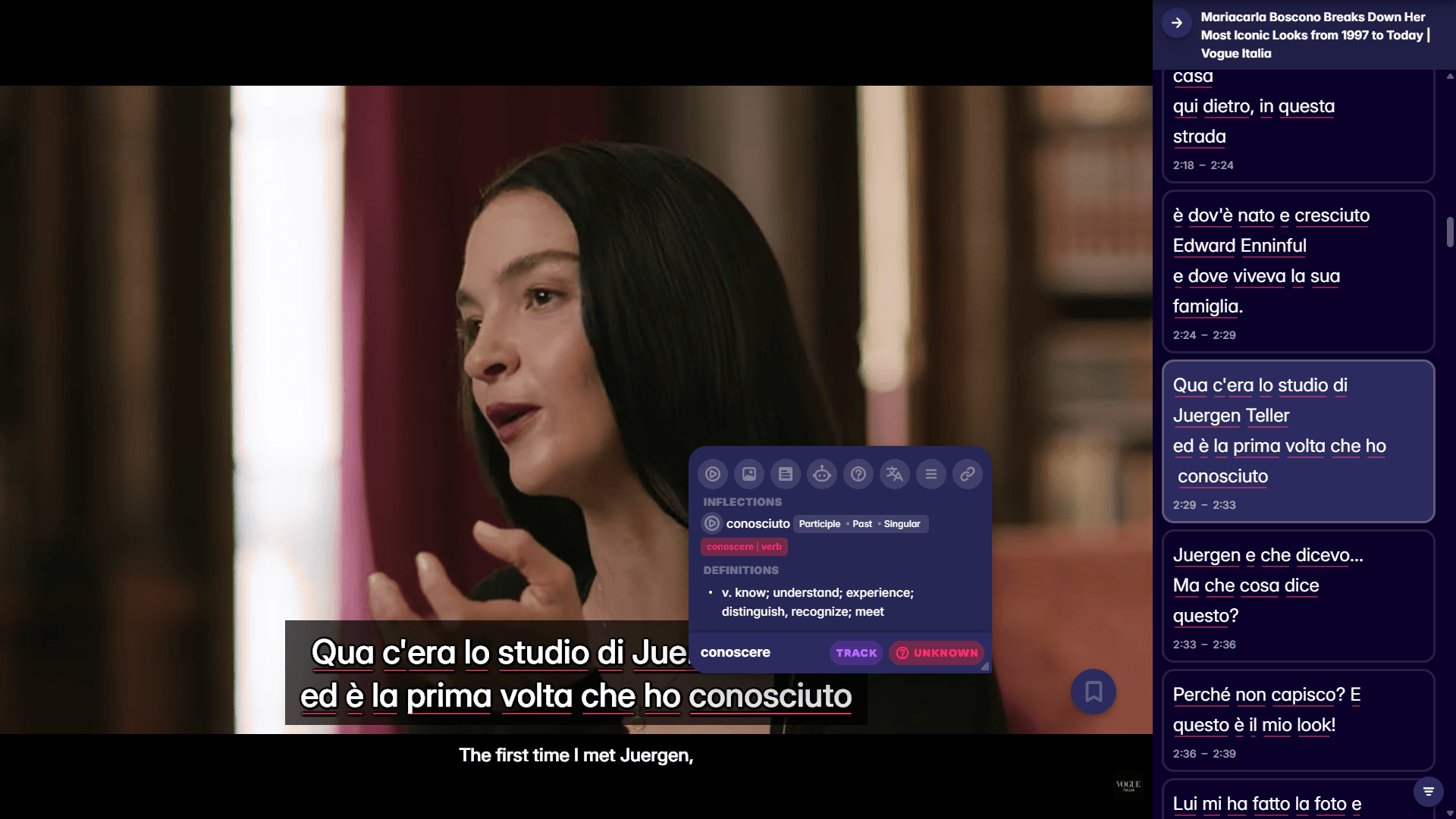
Anyway, if you want to actually use this vocabulary with real Italian content, Migaku's browser extension and app let you look up words instantly while watching Italian home design shows or reading rental listings. Makes learning from authentic material way more practical. There's a 10-day free trial if you want to check it out.
 ---
## Start describing your daily life with Italian house vocabulary
Learning Italian house vocabulary gives you a foundation for describing daily life, understanding real estate situations, and connecting with Italian culture through its domestic spaces. Language learning happens fastest when you connect these words to your actual environment, hear and use them in realistic contexts, be it shows, dramas, or your real-life situations.
> If you consume media in Italian, and you understand at least some of the messages and sentences within that media, you will make progress. _Period_.
Language is about life.🏠
---
## Start describing your daily life with Italian house vocabulary
Learning Italian house vocabulary gives you a foundation for describing daily life, understanding real estate situations, and connecting with Italian culture through its domestic spaces. Language learning happens fastest when you connect these words to your actual environment, hear and use them in realistic contexts, be it shows, dramas, or your real-life situations.
> If you consume media in Italian, and you understand at least some of the messages and sentences within that media, you will make progress. _Period_.
Language is about life.🏠