# Common Italian Idioms: Idiomatic Expressions for Everyday Conversation
> From "in bocca al lupo" to food expressions, understand the most common Italian idioms as a beginner. Tips on how to learn and mine idiomatic expressions.
**URL:** https://migaku.com/blog/language-fun/italian-idioms-common-meanings
**Last Updated:** 2026-02-24
**Tags:** culture, phrases
---
[Learning Italian](https://migaku.com/learn-italian) vocabulary is one thing, but understanding what Italians actually say in everyday conversation? That's where idioms come in. These colorful expressions pop up constantly when native speakers talk, and knowing them makes a huge difference in how natural you sound. Plus, Italian idioms are genuinely fun to learn because they often involve food, animals, and surprisingly creative imagery. Let's dig into some of the most common ones you'll hear.
---
## Animal-based idioms Italians use constantly
Italians love throwing animals into their expressions. These idioms are super common and you'll hear them all the time.
### In bocca al lupo
This is probably the most famous Italian idiom for learners. People say "in bocca al lupo" to wish someone good luck, especially before an exam, job interview, or important event. The literal translation is "in the mouth of the wolf," which sounds pretty dark.
The traditional response is "crepi il lupo" (May the wolf die), though nowadays many Italians just say "crepi" to keep it short. Some people have started saying "viva il lupo" (Long live the wolf) instead because they don't want to wish death on wolves, which is pretty funny if you think about it.
### Prendere due piccioni con una fava
This saying means "to catch two pigeons with one fava bean." It's basically the Italian version of "kill two birds with one stone," except way less violent. You use it when you accomplish two things with a single action. The fava bean detail makes it distinctly Italian, tying back to their agricultural roots.
### Essere in un mare di guai
Literally "to be in a sea of troubles," this idiom means you're in serious trouble or dealing with major problems. Italians use it when someone has really messed up or is facing difficult circumstances. The imagery of drowning in a sea of problems is pretty vivid.
### Avere le mani in pasta
This translates to "to have your hands in dough," but it means to be involved in something or to have influence over a situation. Sometimes it carries a slightly negative connotation, suggesting someone is meddling where they shouldn't be. The connection to pasta making is such a perfect Italian touch.
---
## Italian idioms and expressions of food and eating
[Food](https://migaku.com/blog/language-fun/italian-food-vocabulary-essential-dining-phrases) idioms are everywhere in Italian. These expressions show just how important eating is to Italian culture.
### Non tutte le ciambelle riescono col buco
This saying literally means "not all donuts come out with a hole." It's the Italian equivalent of "you can't win them all" or "things don't always work out as planned." Italians use it to acknowledge that sometimes things fail despite your best efforts. The donut reference is specifically about ciambelle, traditional Italian ring-shaped cakes.
### Essere buono come il pane
When someone is "good like bread," they're genuinely kind and trustworthy. Bread holds such an important place in Italian daily life that comparing someone to it is a serious compliment. You'd use this idiom to describe someone with a really good heart.
### Rendere pan per focaccia
Literally "to give back bread for focaccia," this means to give tit for tat or to get revenge. The idea is that someone gives you regular bread, so you give them back something slightly better (or in this context, you return the favor, usually in a negative sense). It's about evening the score.
### Avere le mani di pasta frolla
This translates to "having hands of shortcrust pastry" and describes someone who's clumsy or keeps dropping things. The image of delicate, crumbly pastry dough for hands is pretty hilarious. You'd say this about someone who just broke their third glass this week.
### Piangere sul latte versato
"To cry over spilled milk" exists in Italian too, and it means exactly what you'd expect. Italians say this when someone is upset about something that already happened and can't be changed. The saying reminds people to move on instead of dwelling on past mistakes.
---
## Body parts in Italian idiomatic expressions
Bocca (mouth) shows up in tons of Italian idioms beyond just "in bocca al lupo." [Body part](https://migaku.com/blog/language-fun/italian-body-parts-vocabulary-guide) idioms are super common.
### Costare un occhio della testa
This means "to cost an eye from the head," which is the Italian way of saying something is extremely expensive. You'd use this when complaining about high prices. "Quella borsa costa un occhio della testa" means that bag costs a fortune.
### Essere lungo come la fame
Literally "to be long like hunger," this describes something that drags on forever or someone who's really tall and thin. The comparison to hunger's endless feeling is pretty creative. You might say this about a boring meeting that won't end.
### Avere la testa tra le nuvole
"To have your head in the clouds" means the same thing in Italian as in English. Someone who's distracted, daydreaming, or not paying attention has their testa tra le nuvole. It's a gentle way to point out someone isn't focused.
### In bocca chiusa non entrano mosche
This saying translates to "flies don't enter a closed mouth." It's advice to keep quiet, stay silent, or mind your own business. The literal meaning is pretty straightforward, but the idiomatic usage is about knowing when not to speak up.
### Prendere qualcuno per i fondelli
This means to pull someone's leg or make fun of them. The "fondelli" part is a bit obscure (It refers to the back part of pants), but the expression is commonly used when someone is teasing or not being serious. "Mi stai prendendo per i fondelli?" means "Are you messing with me?"
---
## Common Italian everyday emotional expressions
These idioms describe feelings and states of mind that come up in regular conversation.
### Avere le mani bucate
Literally "to have holes in your hands," this describes someone who spends money too easily or can't save anything. The image of money falling through holes in your hands is perfect. You'd use this for that friend who's always broke despite earning decent money.
### Essere al verde
"To be at the green" means to be broke or out of money. The origin supposedly comes from the green bottom of candles that showed when they were almost finished. Now it just means you're financially tapped out until payday.
### Avere un diavolo per capello
This translates to "having a devil for each hair" and means being extremely angry or in a terrible mood. The imagery of having thousands of tiny devils in your hair captures that feeling of being absolutely furious about something.
### Fare il grande passo
"To take the big step" means to get married. It's a pretty universal concept, but Italians use this specific phrase all the time when talking about someone getting engaged or married. The "grande passo" is that major life commitment.
### Prendere un granchio
Literally "to catch a crab," this idiom means to make a mistake or get something wrong. You'd say "ho preso un granchio" when you messed up or misunderstood something. The crab connection isn't entirely clear, but the expression is widely used.
---
## Basic Italian weather and nature sayings
Italian proverbs often draw from natural observations and weather patterns.
### Dopo la pioggia viene il sole
"After the rain comes the sun" is the Italian version of "every cloud has a silver lining." It's an encouragement that things will get better after difficult times. Italians use this saying to comfort someone going through a rough patch.
### Rosso di sera, bel tempo si spera
This weather saying goes "red sky at night, good weather we hope." It's similar to the English "red sky at night, sailor's delight." Italian farmers and sailors used sayings like this to predict weather before modern forecasts.
### Quando il gatto non c'è, i topi ballano
"When the cat's away, the mice dance" is basically identical to the English version. It describes what happens when the boss or authority figure isn't around and everyone relaxes or misbehaves. The saying captures human nature pretty perfectly.
---
## Regional variations and where idioms come from
Italian idioms don't all come from the same place. Italy's regional diversity means different areas have their own expressions, though many have spread nationally through media and migration.
Some idioms trace back to Latin proverbs, which makes sense given Italy's history. Others come from specific historical events or local traditions. Food-based idioms often originated in regions famous for those particular dishes. The bocca al lupo saying might have roots in hunting culture or could be related to the story of Romulus and Remus being raised by a wolf.
The lingua (language) has evolved over centuries, and idioms reflect different periods and influences. Northern Italian expressions sometimes differ from southern ones, though standardized Italian in media has spread common sayings nationwide.
---
## Common mistakes language learners make
1. The biggest error is using idioms in the wrong context. Just because you learned an expression doesn't mean it fits every situation. Some sayings are casual, others more formal. Some are regional and might not be understood everywhere.
2. Another mistake is translating idioms literally when speaking English about Italian. If you tell an English speaker "I'm at the green," they'll have no idea you mean you're broke. Code-switching like this happens naturally but can cause confusion.
3. Overusing idioms is also a problem. Native speakers use them naturally and sparingly. If you cram five idioms into one conversation, you'll sound weird. Let them flow naturally when appropriate.
---
## How to learn and remember these Italian expressions
Reading lists like this is a start, but you need exposure to really internalize idioms.
1. [Watch Italian TV shows](https://migaku.com/blog/language-fun/how-to-improve-listening-comprehension) and movies where characters use these expressions naturally. When you hear "in bocca al lupo" in context, it sticks way better than just memorizing it from a list.
2. Try to notice patterns. Many Italian idioms use food, animals, or body parts. Understanding these categories helps you remember individual expressions and guess at meanings when you encounter new ones.
3. Practice using idioms in your own speaking and writing. Even if it feels awkward at first, actively incorporating these sayings helps cement them in your memory. Find language exchange partners who can tell you if you're using expressions correctly.
4. Keep a notebook or digital list of idioms you encounter. Write down the literal translation, the actual meaning, and an example sentence. Reviewing these regularly makes them part of your active vocabulary instead of just something you vaguely recognize.
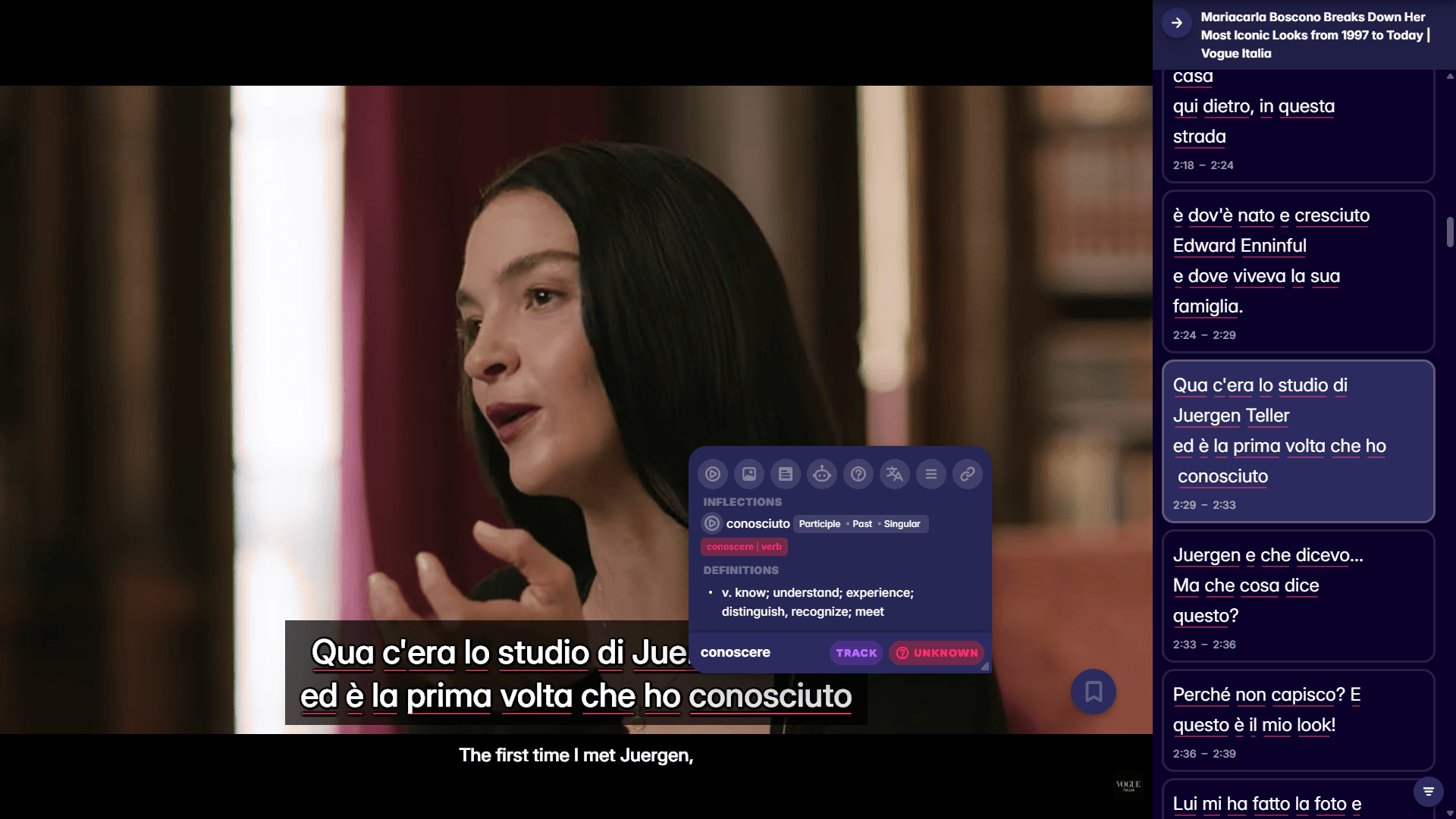
Anyway, if you want to see these idioms in real Italian content, Migaku's browser extension and app let you look up expressions instantly while watching shows or reading articles. Makes learning from actual native material way easier. There's a 10-day free trial if you want to check it out.
 ---
## Learning Italian idioms and starting with the most useful ones
If you're just beginning to learn Italian idioms, start with the super common ones. "In bocca al lupo" and its response "crepi" are essential because people say them all the time. "Costare un occhio della testa" comes up frequently when discussing prices. Note down idioms in your flashcards as you see more and more of them in media content. You will build up your knowledge of Italian idioms with time!
> If you consume media in Italian, and you understand at least some of the messages and sentences within that media, you will make progress. _Period_.
Learn from media. Learn from life.🙂
---
## Learning Italian idioms and starting with the most useful ones
If you're just beginning to learn Italian idioms, start with the super common ones. "In bocca al lupo" and its response "crepi" are essential because people say them all the time. "Costare un occhio della testa" comes up frequently when discussing prices. Note down idioms in your flashcards as you see more and more of them in media content. You will build up your knowledge of Italian idioms with time!
> If you consume media in Italian, and you understand at least some of the messages and sentences within that media, you will make progress. _Period_.
Learn from media. Learn from life.🙂