Italian Nature Vocabulary: Describe Geographical Features and Nature in Italian
Last updated: March 20, 2026
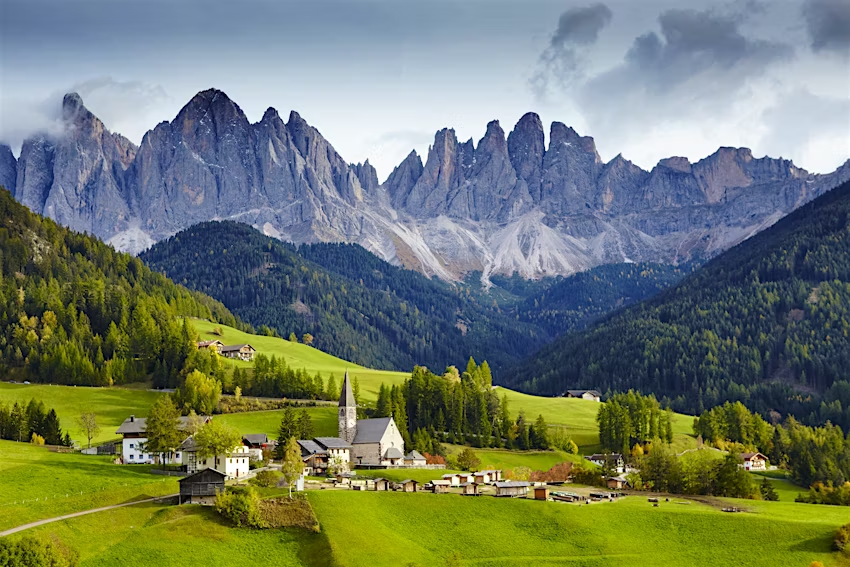
If you're learning Italian and want to talk about anything beyond pizza and espresso, you'll need some solid nature vocabulary. Italy's got everything from the Alps to Mediterranean beaches, so knowing how to describe mountains, rivers, trees, and animals makes your conversations way more interesting. Plus, nature words pop up constantly in Italian literature, songs, and everyday chat. Let's dig into the essential Italian nature vocabulary.
- Italian vocabulary for geographical features
- Flora in Italy: Trees, flowers, and plants
- Fauna: Key terms for animals in the wild
- Weather and celestial vocabulary
- Environmental and conservation terms
- Should Italian nature vocabulary be capitalized
- Practical strategies for learning the nature vocabulary lists
Italian vocabulary for geographical features
Let's start with the big landscape features. These are the words you'll use when describing where you're going or what you're seeing.
- The word "montagna" (mountain) is essential. Italy's got serious mountain ranges, and Italians love talking about them. You'll hear "Vado in montagna questo weekend" (I'm going to the mountains this weekend) all the time. The plural is "montagne."
- For water features, "mare" (sea) is huge. Italy's surrounded by water, so this word gets constant use. "Andiamo al mare" (Let's go to the sea) is basically the Italian summer motto. Related terms include "spiaggia" (beach), "costa" (coast), and "isola" (island).
- Rivers are "fiume" in Italian. Major rivers like the Po and the Arno shaped Italian history and culture. You'll also want "lago" (lake) for places like Lake Como or Lake Garda. The word "ruscello" (stream) describes smaller waterways.
- Hills are "collina" in Italian. Think Tuscan wine country. Valleys are "valle," and plains are "pianura."
- A cliff is "scogliera," which you'll hear when discussing coastal areas.
- The word "bosco" means forest or woods, while "prato" is a meadow or lawn.
Flora in Italy: Trees, flowers, and plants
Italian gardens and countryside are legendary, so plant vocabulary matters. Let's start with the basics.
The word "l'albero" (the tree) is your foundation.
Italian | English |
|---|---|
quercia | Oak |
pino | Pine |
olivo | Olive tree |
cipresso | Cypress (the tall, skinny trees you see in Tuscan postcards) |
For flowers, the general term is "fiore."
Italian | English |
|---|---|
rosa | Rose |
giglio | Lily |
margherita | Daisy |
girasole | Sunflower |
tulipano | Tulip (borrowed from other languages like English) |
Plants in general are "pianta."
Italian | English |
|---|---|
cespuglio | Bush / Shrub |
erba | Grass (also means herb in cooking contexts) |
foglia | Leaf |
ramo | Branch |
radici | Roots |
Fruit trees deserve mention because Italy's agricultural.
Italian | English |
|---|---|
melo | Apple tree (fruit: mela) |
pero | Pear tree (fruit: pera) |
ciliegio | Cherry tree (fruit: ciliegia) |
Fauna: Key terms for animals in the wild
Italian wildlife vocabulary splits between domestic and wild animals. Here's what you need for nature contexts.
Forest animals include:
Italian | English |
|---|---|
cervo | Deer |
cinghiale | Wild boar |
volpe | Fox |
lupo | Wolf (nearly extinct but have made a comeback in the Apennines) |
scoiattolo | Squirrel |
riccio | Hedgehog |
topo | Mouse |
Birds are "uccelli" in general.
Italian | English |
|---|---|
aquila | Eagle |
gufo | Owl |
corvo | Crow |
piccione | Pigeon |
rondine | Swallow |
gabbiano | Seagull (super common on the coasts) |
Insects are "insetti."
Italian | English |
|---|---|
farfalla | Butterfly |
ape | Bee |
formica | Ant |
zanzara | Mosquito |
Reptiles and amphibians:
Italian | English |
|---|---|
serpente | Snake |
lucertola | Lizard |
rana | Frog |
rospo | Toad |
Marine life matters if you're coastal.
Italian | English |
|---|---|
pesce | Fish (in general) |
delfino | Dolphin |
polpo | Octopus |
medusa | Jellyfish |
granchio | Crab |
Weather and celestial vocabulary
Some common celestial words are:
Italian | English |
|---|---|
il sole | Sun |
C'è il sole | It's sunny |
la luna | Moon |
stelle | Stars |
stella | Star (singular) |
cielo | Sky |
Words to talk about the weather in Italian:
Italian | English |
|---|---|
pioggia | Rain |
neve | Snow |
vento | Wind |
nuvole | Clouds |
tempesta | Storm |
temporale | Thunderstorm |
Temperature terms:
Italian | English |
|---|---|
caldo | Hot |
freddo | Cold |
fresco | Cool / Fresh |
mite | Mild |
temperatura | Temperature |
The four seasons are:
Italian | English |
|---|---|
Primavera | Spring |
Estate | Summer |
Autunno | Fall |
Inverno | Winter |
Environmental and conservation terms
Modern Italian includes environmental vocabulary that's become increasingly relevant.
Italian | English |
|---|---|
ambiente | Environment |
inquinamento | Pollution |
riciclaggio | Recycling |
cambiamento climatico | Climate change |
sostenibilità | Sustainability |
aree protette | Protected areas |
parchi nazionali | National parks (Italy has 25 of them as of 2025) |
conservazione | Conservation |
specie in via di estinzione | Endangered species |
ecosistema | Ecosystem |
Should Italian nature vocabulary be capitalized
Quick grammar point: Italian capitalization rules differ from English. In Italian, you don't capitalize nature words unless they start a sentence or are part of a proper name. So "montagna" stays lowercase in "Vado in montagna," but "Monte Bianco" (Mont Blanc) capitalizes "Monte" because it's a specific mountain's name.
Seasons don't get capitalized in Italian either. "Primavera" only gets a capital letter at the start of a sentence. Same with days of the week and months. This trips up English speakers who are used to capitalizing these terms.
Names of specific geographical features do capitalize: "il Mar Mediterraneo" (the Mediterranean Sea), "le Alpi" (the Alps), "il Lago di Como" (Lake Como). The general term stays lowercase, but the specific name gets capitals.
Practical strategies for learning the nature vocabulary lists
- Flashcards work great for nature vocabulary because you can pair words with images. Visual memory helps cement terms like "quercia" or "farfalla" way better than text alone. Apps and physical flashcards both do the job.
- Immersion beats drilling any day. Watch Italian nature documentaries on RAI or YouTube.
- Reading helps too. Italian hiking blogs, travel guides, and even weather reports give you repeated exposure. The repetition in natural contexts beats memorizing isolated word lists.
- Label your environment if you can. Got a houseplant? Stick an Italian label on it. See a tree outside? Look up what kind it is in Italian. This connects vocabulary to your actual surroundings instead of abstract concepts.
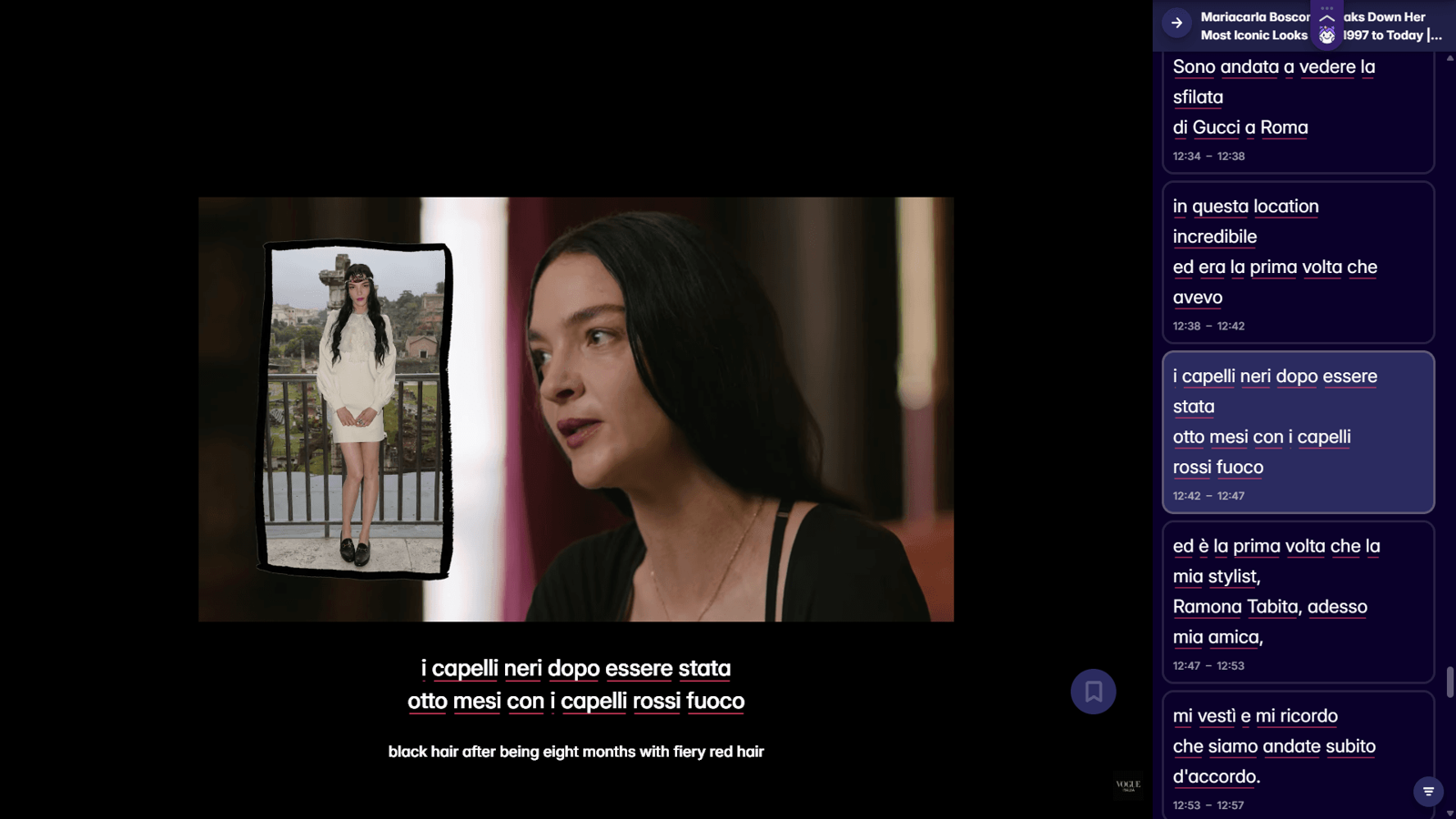
Anyway, if you want to use this vocabulary with real Italian content, Migaku's browser extension and app let you look up words instantly while watching shows or reading articles. Makes immersion learning way more practical. There's a 10-day free trial if you want to check it out.
The geography of Italy is very diverse!
You've got the dramatic peaks of the Dolomites in the north, rolling Tuscan hills in the center, and volcanic islands in the south. This natural variety means Italians have developed a rich vocabulary to describe their landscapes. Learning Italian nature vocabulary opens up huge chunks of the language you'd otherwise miss. You can describe where you're going, what you're seeing, and what the weather's doing. You can understand Italian films, songs, and books that reference the natural world.
If you consume media in Italian, and you understand at least some of the messages and sentences within that media, you will make progress. Period.
See them in sentences, hear them in speech, use them in your own output!⛰️🏞️