Italian Professions Vocabulary: Guide to Jobs and Workplace Terms
Last updated: April 8, 2026

Learning Italian vocabulary for professions and jobs opens up so many real-world conversations. Whether you're chatting with locals about what they do for work, explaining your own career, or just trying to understand Italian media better, this vocabulary comes up constantly. The good news? Italian profession names follow pretty predictable patterns once you understand how gender works. Let's dive into the essential Italian professions vocabulary you'll actually use.
Understanding gender in Italian profession names
Here's the thing about Italian professions: most of them change based on whether you're talking about a man or a woman doing the job. This isn't just a grammar exercise. It actually matters in everyday conversations.
The most common pattern you'll see is the -o ending for masculine and -a ending for feminine. Take "cameriere" (waiter) and "cameriera" (waitress). The job is the same, but the ending changes based on who's doing it.
Some professions end in -tore for men and -trice for women. A male actor is an "attore" while a female actor is an "attrice." A male director is a "direttore" and a female director is a "direttrice." Pretty straightforward once you spot the pattern.
Then you've got professions ending in -ista, which work for both genders. "Il giornalista" (male journalist) and "la giornalista" (female journalist) use the same word. The article changes, but the profession stays the same. This happens with "artista," "dentista," and several others.
Some professions keep the same form regardless of gender. "Il medico" can refer to both male and female doctors, though you'll sometimes hear people say "la medica" in more modern Italian. Language evolves, and Italian speakers have different preferences on this.
Common Italian professions
Let's start with the professions you'll encounter in daily life. These are the jobs people often talk about when making small talk or describing what they do for work.
Here is the table with male/female Italian paired together and English in sentence capitalization:
Italian | English |
|---|---|
insegnante | Teacher |
maestro / maestra | Teacher (elementary) |
professore / professoressa | Professor / High school teacher |
medico | Doctor |
infermiere / infermiera | Nurse |
farmacista | Pharmacist |
dentista | Dentist |
impiegato / impiegata | Office worker / Employee |
segretario / segretaria | Secretary |
commercialista | Accountant |
avvocato / avvocata | Lawyer |
scrittore / scrittrice | Writer |
pittore / pittrice | Painter |
musicista | Musician |
fotografo / fotografa | Photographer |
cameriere / cameriera | Waiter / Waitress |
cuoco / cuoca | Cook / Chef |
parrucchiere / parrucchiera | Hairdresser |
barista | Barista |
Practical phrases for talking about work
Knowing the vocabulary is one step. Actually using it in conversation is where things get interesting. Let me show you the phrases that come up most often.
- "Che lavoro fai?" or "Qual è il tuo lavoro?" both mean "What is your job?" You'll hear these questions all the time when meeting new people. The response is simple: "Sono" plus the profession. "Sono insegnante" (I'm a teacher). "Sono medico" (I'm a doctor).
- If you want to ask where someone works, use "Dove lavori?" (Where do you work?). The answer might be "Lavoro in un ospedale" (I work in a hospital) or "Lavoro in un ufficio" (I work in an office).
- To talk about liking or disliking your job, you'd say "Mi piace il mio lavoro" (I like my job) or "Non mi piace il mio lavoro" (I don't like my job). You could also say "Amo il mio lavoro" (I love my job) if you're really enthusiastic about it.
- When discussing what you do at work, "Faccio" (I do/make) starts many sentences. "Faccio il medico" literally means "I do the doctor" but translates to "I work as a doctor." This construction sounds weird in English but works perfectly in Italian.
- If someone asks about your field of work more generally, they might say "In che settore lavori?" (What sector do you work in?). You could answer "Lavoro nel settore dell'educazione" (I work in the education sector) or "Lavoro nel settore sanitario" (I work in the healthcare sector).
Modern Italian jobs and new vocabulary
The Italian language keeps adapting to include professions that didn't exist a generation ago. Some of these use English loanwords, while others create Italian equivalents.
Tech professions often borrow from English.
- "Programmatore" and "programmatrice" work for programmer, but you'll also hear "developer" used directly.
- "Web designer" stays in English most of the time.
- "Influencer" has become "influencer" in Italian too, though some people say "creatore di contenuti" (content creator).
Social media related jobs show this mix.
- "Social media manager" usually stays in English, though "gestore dei social media" exists.
- "Blogger" remains "blogger" in Italian.
Environmental professions have gained importance.
- "Ambientalista" means environmentalist.
- "Ingegnere ambientale" is an environmental engineer. These terms have become much more common in recent years.
Gig economy jobs present interesting challenges.
- "Fattorino" traditionally meant errand boy or delivery person, and it works for modern delivery drivers too.
- "Autista di Uber" or just "autista" covers rideshare drivers.
Professional settings and workplace vocabulary
Beyond just naming professions, you'll want vocabulary for discussing workplace situations. This comes up when talking about job searches, career changes, or work experiences.
For job searches:
- "Cercare lavoro" means to look for work.
- "Trovare un lavoro" is to find a job.
- "Perdere il lavoro" means to lose your job.
- "Curriculum" or "CV" works in Italian (they use the same abbreviation).
- "Colloquio di lavoro" means job interview.
- "Lettera di presentazione" is a cover letter.
- Talking about salary uses "stipendio" or "salario" for salary/wage.
- "Guadagnare" means to earn.
- "Aumento" means raise or increase in pay.
These phrases appear in conversations about career transitions.
People who are working with you:
- "Collega" means colleague and works for any gender.
- "Capo" means boss, though you'll also hear "responsabile" (manager/person in charge).
- "Dipendente" is employee.
When discussing work schedules:
- "orario di lavoro" means work hours.
- "Lavorare a tempo pieno" is to work full-time.
- "Lavorare a tempo parziale" means part-time work.
- "Straordinario" refers to overtime.
Regional variations and cultural context
Italian professions vocabulary doesn't change drastically across regions, but some terms have regional preferences or historical context worth knowing.
Northern Italy, especially in business centers like Milan, tends to incorporate more English terms in professional settings. You'll hear more borrowed words in tech and business contexts there.
Traditional professions sometimes have regional names or variations. "Contadino" for farmer is standard, but you might hear "agricoltore" more often in formal contexts or certain regions.
Some professions carry different social weight in Italy compared to other countries. "Professore" commands significant respect. Teachers and professors hold a higher social status in Italian culture than in many English-speaking countries.
Family businesses remain common in Italy, so you'll often hear people describe themselves by their family trade. "Faccio il panettiere come mio padre" (I'm a baker like my father) reflects this cultural reality.
Learning strategies for Italian vocabulary
Memorizing a giant list of professions sounds boring, and honestly, it doesn't work that well anyway. You need to see these words in context to actually remember them.
- Watching Italian shows where people talk about their jobs helps tremendously. Office dramas, medical shows, and crime series all feature characters discussing their professions. When you hear "Sono un avvocato" in a courtroom scene, the context makes it stick.
- Italian news programs and interviews constantly mention what people do for work. Someone being interviewed will introduce themselves with their profession, giving you natural examples of how Italians actually use this vocabulary.
- Reading Italian job listings or LinkedIn profiles in Italian exposes you to profession names in their natural habitat. You'll see how people describe their work experience and what terms they choose.
- Creating your own sentences about people you know works better than random flashcards. "Mio fratello è ingegnere" (My brother is an engineer) or "La mia amica lavora come giornalista" (My friend works as a journalist) connects the vocabulary to your actual life.
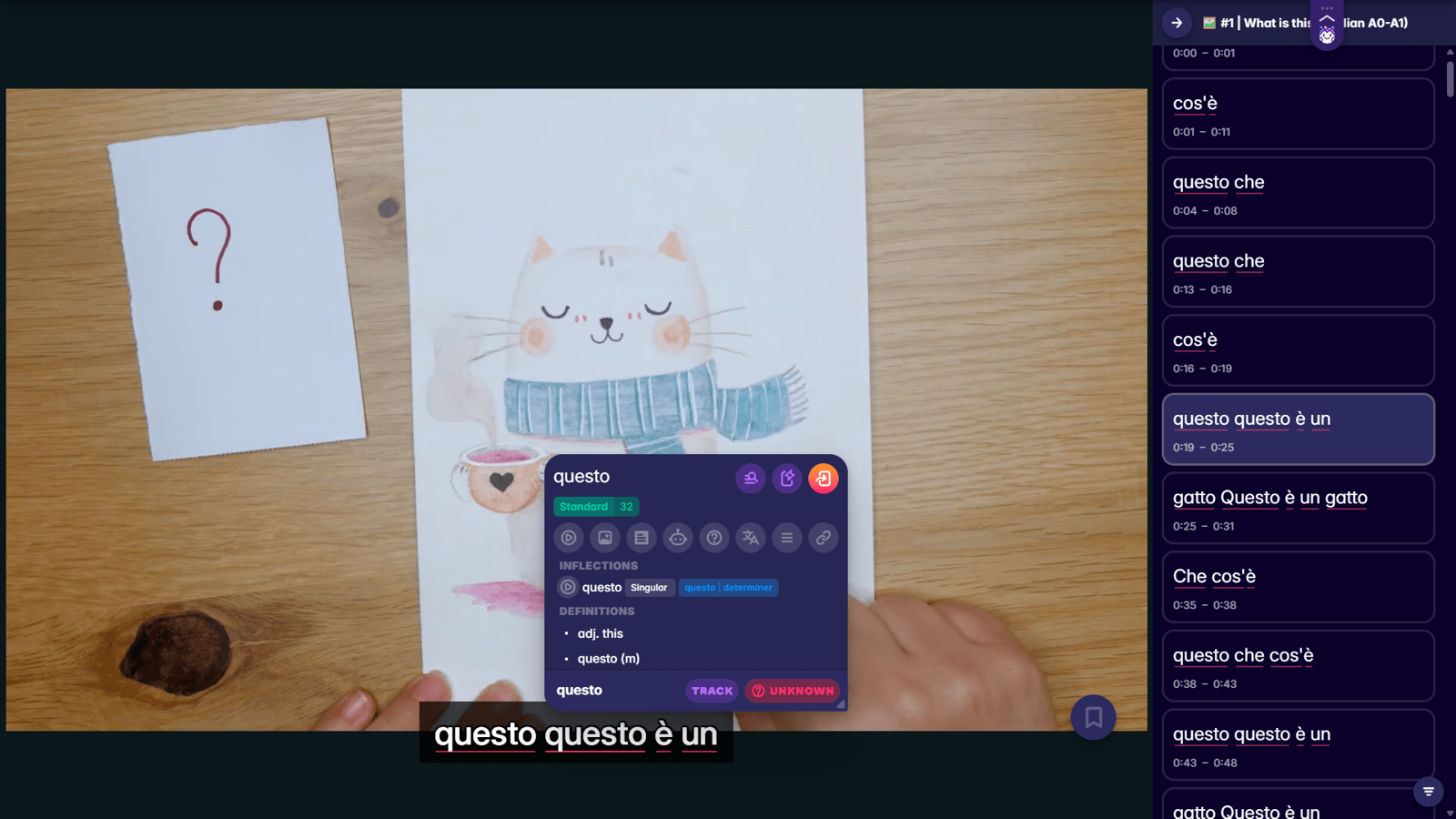
Want to learn these professions in context? Migaku's browser extension and app let you look up Italian words instantly while watching Italian shows or reading articles about careers and work life. Makes picking up this vocabulary way more natural than staring at lists. There's a 10-day free trial if you want to check it out.
It's never a waste of time to learn workplace words
Italian professions vocabulary gives you the tools to have real conversations about work, career, and daily life. The gender patterns might seem complicated at first, but they become automatic once you start using them. Pick a few professions relevant to your life and the people around you, learn those first, then expand from there as you browse through job listings, career advice blogs, and other text.
If you consume media in Italian, and you understand at least some of the messages and sentences within that media, you will make progress. Period.
Every hour you learn is a gift to tomorrow!🫡