Italian Shopping Vocabulary: What You Need to Know Before Shopping in Italy
Last updated: March 14, 2026

Shopping in Italy is one of those experiences where knowing even a handful of Italian phrases makes everything better. Whether you're haggling at a local market in Florence, buying groceries in Rome, or trying on clothes in Milan, learning Italian shopping vocabulary helps you navigate stores confidently and actually connect with shopkeepers. This guide covers the essential Italian shopping vocabulary you need for markets, supermarkets, boutiques, and everything in between.
- What Italian shopping vocabulary do you need
- Understanding Italian store types
- Basic phrases for shopping in Italian shops
- Shopping phrases for Italian markets and grocery stores
- Clothing and accessories vocabulary
- Asking about discounts and sales
- Payment and checkout Italian vocabulary
- Cultural tips for buying something in Italy
- Best way to learn Italian shopping phrases
What Italian shopping vocabulary do you need
Here's the thing: you don't need to memorize hundreds of words to shop successfully in Italy. Most shopping interactions follow predictable patterns, so focusing on about 50-60 core phrases and words will cover 90% of your needs.
The essential categories you should prioritize are:
- Greetings and basic interactions
- Asking about prices and payment methods
- Sizes and colors for clothing
- Quantities and weights for food shopping
- Polite phrases for requesting help or trying things on
These categories reflect the most common situations you'll encounter whether you're browsing a boutique or buying fresh produce at a mercato.
What makes shopping vocabulary particularly useful is that it's immediately practical. You'll use these phrases repeatedly during any trip to Italy, which means they stick in your memory faster than abstract vocabulary. Plus, Italian shopkeepers genuinely appreciate it when tourists make an effort to speak Italian, even if your pronunciation isn't perfect.
Understanding Italian store types
Italy has distinct types of shops, each with its own culture and vocabulary.
Italian | English |
|---|---|
negozio | General shop / Store |
mercato | Market (typically outdoors, selling fresh produce) |
supermercato | Supermarket |
alimentari | Small grocery store |
panetteria | Bakery |
macelleria | Butcher shop |
pescheria | Fish shop |
farmacia | Pharmacy (only sells medical items, not general goods) |
boutique | Boutique |
negozio di abbigliamento | Clothing store |
grandi magazzini | Department stores |
Markets in Italy operate on specific schedules, usually morning hours several days a week. Knowing to ask "Quando c'e il mercato?" (When is the market?) can help you plan. Many small shops close for lunch from around 1 PM to 4 PM, then reopen until 7 or 8 PM, a practice that surprises many visitors.
Basic phrases for shopping in Italian shops
Every shopping trip in Italy starts with a greeting. When you enter an Italian shop, you'll typically hear "Buongiorno" (Good morning/afternoon) or "Buonasera" (Good evening). Responding with the same greeting shows basic courtesy and sets a friendly tone.
- The phrase "Posso aiutarla?" means "Can I help you?" and you'll hear it constantly.
- If you're just browsing, respond with "Sto solo guardando, grazie" (I'm just looking, thanks).
- If you need help, say "Si, grazie" (Yes, thank you) or "Cerco..." (I'm looking for...) followed by what you need.
- "Quanto costa?" (How much does it cost?) and "Quant'e?" (How much is it?) are your go-to phrases for asking prices. For multiple items, use "Quanto costano?"
- You'll also want to know "Posso provarlo?" (Can I try it on? - masculine) or "Posso provarla?" (Can I try it on? - feminine) when shopping for clothes.
- When you're ready to purchase something, "Lo prendo" (I'll take it - masculine) or "La prendo" (I'll take it - feminine) works perfectly.
- To ask about payment methods, use "Posso pagare con carta di credito?" (Can I pay with credit card?).
Shopping phrases for Italian markets and grocery stores
Food shopping in Italy requires specific vocabulary for weights and quantities. Italian markets and grocery stores typically sell produce by weight, so you'll need to know:
- "un chilo" (one kilogram)
- "mezzo chilo" (half a kilogram)
- "un etto" (100 grams, commonly used for deli items).
- When ordering at a deli counter or market stall, start with "Vorrei..." (I would like...) followed by the quantity and item. For example, "Vorrei due etti di prosciutto" means "I would like 200 grams of prosciutto."
- The vendor might ask "Basta cosi?" (Is that all?) or "Altro?" (Anything else?), to which you can respond "Si, basta" (Yes, that's all) or continue ordering.
Common grocery items you should know include:
Italian | English |
|---|---|
pane | Bread |
formaggio | Cheese |
frutta | Fruit |
verdura | Vegetables |
carne | Meat |
pesce | Fish |
latte | Milk |
uova | Eggs |
una bottiglia | A bottle |
una scatola | A box |
un pacco | A package |
Italian supermarkets often require you to weigh your own produce. Look for the scale in the produce section, select the number corresponding to your item (usually shown on signs), and stick the printed label on your bag. This self-service system confuses many tourists initially, but it speeds up checkout significantly.
Clothing and accessories vocabulary
Shopping for clothes in Italy means knowing sizes, colors, and how to discuss fit.
- Italian sizing differs from US and UK standards, so asking "Che taglia?" (What size?) is common. "Taglia" is the word for size, and you'll see it everywhere in clothing stores.
- The key phrases for trying on clothes are "Dov'e il camerino?" (Where is the fitting room?) and the previously mentioned "Posso provarlo/provarla?"
Colors come up frequently:
Italian | English |
|---|---|
nero | Black |
bianco | White |
rosso | Red |
blu | Blue |
verde | Green |
giallo | Yellow |
grigio | Gray |
marrone | Brown |
When discussing fit, you might need:
Italian | English |
|---|---|
troppo grande | Too big |
troppo piccolo | Too small |
troppo stretto | Too tight |
troppo largo | Too loose |
Va bene | It's good |
Mi sta bene | It fits me well |
Common clothing items include:
Italian | English |
|---|---|
camicia | Shirt |
pantaloni | Pants |
gonna | Skirt |
vestito | Dress |
giacca | Jacket |
scarpe | Shoes |
borsa | Bag |
cintura | Belt |
orecchini | Earrings |
collana | Necklace |
occhiali da sole | Sunglasses |
Asking about discounts and sales
Italians love a good deal, and knowing how to ask about discounts can save you money.
- "C'e uno sconto?" (Is there a discount?) is a straightforward way to inquire. During sale seasons, you'll see "saldi" signs everywhere, the Italian word for sales.
- "Quanto costa con lo sconto?" means "How much does it cost with the discount?" If you're buying multiple items, you might ask "Fa uno sconto per due?" (Do you give a discount for two?). This works particularly well at markets where vendors expect some negotiation.
Tax-free shopping for tourists is called "tax free" or "detassazione" in Italy. If you're from outside the EU and spending over a certain amount (usually around 155 euros in one shop), ask "Posso avere il tax free?" to get the VAT refund forms. You'll need your passport for this.
Outlet stores, called "outlet" or "spaccio" in Italian, offer discounted designer goods. Italy has several major outlet centers near cities like Florence, Milan, and Rome where you can shop like a local, looking for luxury brands at reduced prices.
Payment and checkout Italian vocabulary
When you're ready to pay, head to "la cassa" (the cashier or checkout). The cashier might ask "Contanti o carta?" (Cash or card?). Respond with "Contanti" if paying cash or "Carta" or "Carta di credito" if using a credit card.
You might hear "Vuole la ricevuta?" (Do you want the receipt?) or "Vuole lo scontrino?" (Do you want the receipt? - more informal). In Italy, you're legally required to take receipts from certain businesses, so usually say "Si, grazie."
If you need a bag, ask "Posso avere una busta?" (Can I have a bag?). Many Italian shops charge for bags now, so don't be surprised if there's a small fee. Some places ask "Ha bisogno di una busta?" (Do you need a bag?).
Credit cards are widely accepted in 2026, but smaller shops and market vendors may still prefer cash. It's smart to ask "Accettate carte?" (Do you accept cards?) before shopping. Contactless payment has become standard in most Italian shops, called "pagamento contactless" or just "contactless."
Cultural tips for buying something in Italy
The Italian shopping experience differs from what you might expect in other countries.
- Shopkeepers often greet you immediately when you enter, and ignoring this greeting seems rude. A simple "Buongiorno" back is all you need.
- In smaller shops and boutiques, touching merchandise without asking first can be considered impolite. If you want to examine something closely, catch the shopkeeper's eye and gesture toward the item, or ask "Posso?" (May I?).
- Haggling works at outdoor markets, especially for non-food items like leather goods or souvenirs, but not in established shops or supermarkets. Even at markets, haggling should be friendly and respectful, not aggressive. A smile and "E possibile uno sconto?" (Is a discount possible?) goes further than demanding a lower price.
- "Tutto bene" literally means "all good" or "everything's fine." You'll hear it as both a question ("Tutto bene?" - Is everything okay?) and an answer confirming things are good. In shopping contexts, a vendor might ask this to check if you found what you needed or if you're satisfied with your purchase.
Best way to learn Italian shopping phrases
The best way to learn Italian shopping vocabulary is by using it.
- If you're planning an Italy trip, practice these phrases out loud before you go. Say them while shopping in your own country, mentally translating your usual shopping interactions into Italian.
- Create realistic scenarios in your mind. Imagine walking into a Florence leather market and asking about a bag's price, or ordering cheese at a Roman deli. This mental rehearsal makes the real situations less stressful.
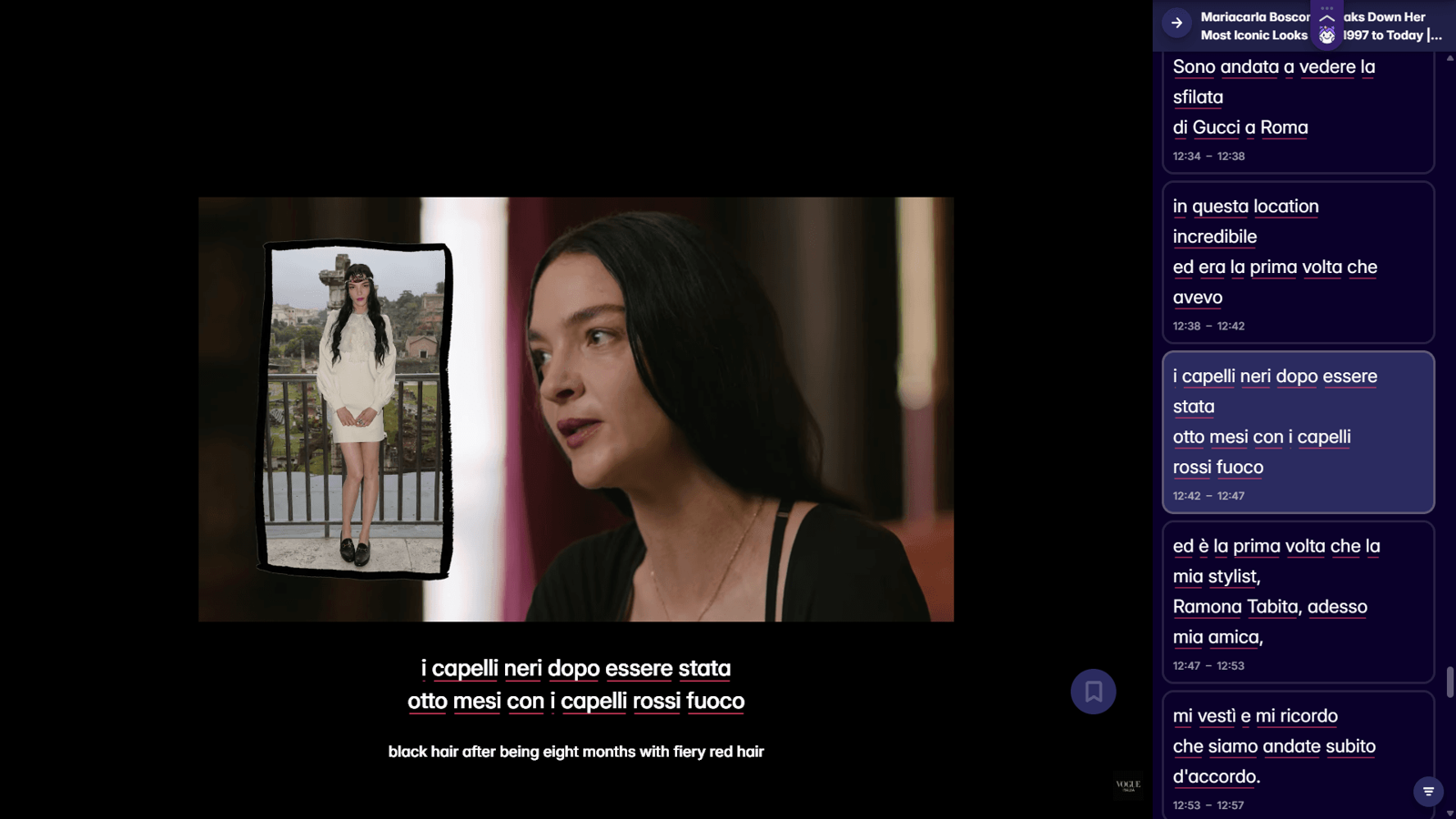
- Watching Italian shopping videos or vlogs helps tremendously. Hearing native speakers use these phrases in context reinforces pronunciation and shows you the natural flow of shopping conversations. You'll pick up body language and cultural cues that written guides can't convey.
- When you're actually in Italy, push yourself to use Italian even when shopkeepers switch to English. Politely continue in Italian, and most will follow your lead. Each successful interaction builds your confidence and improves your skills.
Anyway, if you want to practice Italian vocabulary with real content from Italy, Migaku's browser extension and app let you look up words instantly while watching Italian shows or reading Italian websites. You can build custom flashcard decks from actual shopping videos or Italian vlogs. There's a 10-day free trial if you want to check it out.
Learning Italian phrases for shopping gives you immediate benefits
You'll navigate stores more confidently, avoid misunderstandings about prices or sizes, and have more authentic interactions with locals. It also provides a foundation for broader Italian language skills. You will see shopping phrases constantly in Italian vlogs, drama episodes, and movies, which makes it all the easier to master these terms.
If you consume media in Italian, and you understand at least some of the messages and sentences within that media, you will make progress. Period.
Show respect for the culture, and the locals will notice and value.🏷️👚