# Italian Sports Vocabulary: Essential Words to Talk About Sports in Italian
> Discuss calcio, tennis, cycling, and more sports in Italian with the locals. Real examples and phrases to talk about sports like a native.
**URL:** https://migaku.com/blog/language-fun/italian-sports-vocabulary
**Last Updated:** 2026-03-13
**Tags:** vocabulary, phrases, listicle
---
If you're [learning Italian](https://migaku.com/learn-italian) and want to talk about sports, you're going to need more than just the word "calcio." Whether you're trying to follow a Serie A match, chat with Italians about their favorite teams, or just understand what's happening at the local sports bar, having solid sports vocabulary makes everything easier. This guide breaks down the essential Italian sports vocabulary with real examples you can actually use.
----
## Essential general sports terms
Before diving into specific sports, let's cover the basic vocabulary you'll need for any athletic discussion.
Here are the fundamental terms:
| Italian | English |
| - | - |
| lo sport | Sport |
| la squadra | Team |
| il giocatore / la giocatrice | Player (male/female) |
| l'allenatore / l'allenatrice | Coach (male/female) |
| il campo | Field |
| la partita | Match / Game |
| il punteggio | Score |
| vincere | To win |
| perdere | To lose |
| pareggiare | To tie / To draw |
When talking about playing sports, Italian uses two different verbs depending on the activity. You use "giocare a" for team sports and ball games, and "fare" for individual sports or activities. So you'd say "giocare a calcio" (to play soccer) but "fare nuoto" (to do swimming). This distinction trips up a lot of learners, but once you get it, it becomes automatic.
----
## Popular sports in Italy
Italy has a strong sports culture that goes way beyond just soccer. Understanding which sports matter most to Italians helps you prioritize your vocabulary learning.
### Calcio (soccer/football)
Soccer dominates Italian sports culture. When someone says "lo sport" without context, they probably mean calcio. The Serie A league attracts massive viewership, and team loyalty runs deep. You'll hear people discussing calcio everywhere.
Key calcio vocabulary:
| Italian | English |
| - | - |
| il pallone | The ball |
| il portiere | Goalkeeper |
| il difensore | Defender |
| il centrocampista | Midfielder |
| l'attaccante | Forward / Striker |
| il gol | Goal |
| il rigore | Penalty kick |
| il fallo | Foul |
| il fuorigioco | Offside |
| l'arbitro | Referee |
| il tifoso / la tifosa | Fan |
When Italians score a goal, you'll often hear "Gol!" shouted enthusiastically. Commentators might also yell "Rete!" (literally "net"). The excitement is real and loud.
Example sentence:
- La squadra ha segnato tre gol nella prima partita.
*The team scored three goals in the first half.*
### Tennis
Tennis has a solid following in Italy, especially during major tournaments. Italian players have made their mark internationally, keeping interest high.
Tennis vocabulary:
| Italian | English |
| - | - |
| il tennis | Tennis |
| la racchetta | Racket |
| la palla | Ball |
| il campo da tennis | Tennis court |
| il servizio | Serve |
| il set | Set |
| il rovescio | Backhand |
| il dritto | Forehand |
| il torneo | Tournament |
Example:
- Gioco a tennis ogni sabato mattina.
*I play tennis every Saturday morning.*
### Pallavolo (volleyball)
Volleyball, or "pallavolo," is quite popular in Italy, with both men's and women's leagues attracting fans. The term combines "palla" (ball) and "volo" (flight).
Volleyball terms:
| Italian | English |
| - | - |
| la pallavolo | Volleyball |
| la rete | Net |
| schiacciare | To spike |
| il muro | Block |
| la battuta | Serve |
| la ricezione | Reception |
Example:
- La mia amica gioca a pallavolo in una squadra professionista.
*My friend plays volleyball on a professional team.*
### Ciclismo (cycling)
Cycling holds special significance in Italian sports culture. The Giro d'Italia is one of cycling's grand tours, and you'll see people following it religiously every May.
Cycling vocabulary:
| Italian | English |
| - | - |
| il ciclismo | Cycling |
| la bicicletta / la bici | Bicycle / Bike |
| il ciclista | Cyclist |
| la tappa | Stage |
| la maglia rosa | Pink jersey (worn by Giro d'Italia leader) |
| pedalare | To pedal |
| la salita | Climb / Ascent |
Example:
- Il ciclismo è molto popolare nel nord Italia.
*Cycling is very popular in northern Italy.*
### Other popular sports
| Italian | English |
| - | - |
| il nuoto | Swimming |
| lo sci | Skiing |
| il basket / la pallacanestro | Basketball |
| la Formula Uno | Formula One |
| la scherma | Fencing |
| il pugilato | Boxing |
| l'atletica | Athletics / Track and field |
----
## Common verbs and phrases for talking about sports
Beyond just naming sports, you need verbs and phrases to actually discuss what's happening.
Action verbs:
| Italian | English |
| - | - |
| giocare | To play |
| allenarsi | To train / To practice |
| correre | To run |
| saltare | To jump |
| tirare | To shoot / To throw |
| passare | To pass |
| segnare | To score |
| difendere | To defend |
| attaccare | To attack |
Useful phrases:
- Fai sport?
*Do you play sports?*
- Quale sport pratichi?
*Which sport do you practice?*
- Tifo per...
*I'm a fan of...*
- Chi ha vinto?
*Who won?*
- Qual è il punteggio?
*What's the score?*
- La partita è finita in pareggio.
*The match ended in a tie.*
----
## Team sports vocabulary
Team sports require specific vocabulary for positions, strategies, and game situations.
General team terms:
| Italian | English |
| - | - |
| la squadra di casa | Home team |
| la squadra ospite | Away team |
| il capitano | Captain |
| la panchina | Bench |
| il gioco di squadra | Teamwork |
| la formazione | Lineup / Formation |
| la sostituzione | Substitution |
| il tempo supplementare | Extra time |
Understanding these terms helps you follow game commentary and participate in discussions about strategy and performance.
----
## Equipment and venues
Different sports require different equipment and take place in specific locations. Here's the vocabulary you need.
Equipment (l'attrezzatura):
| Italian | English |
| - | - |
| il pallone | Ball (for soccer) |
| la palla | Ball (general) |
| la racchetta | Racket |
| la mazza | Bat |
| i guanti | Gloves |
| il casco | Helmet |
| le scarpe da ginnastica | Sneakers |
| la divisa | Uniform |
Venues:
| Italian | English |
| - | - |
| il campo | Field |
| lo stadio | Stadium |
| la palestra | Gym |
| la pista | Track / Rink |
| la piscina | Pool |
| il campo da tennis | Tennis court |
| il campo da calcio | Soccer field |
Example:
- Dobbiamo comprare un nuovo pallone per giocare domenica.
*We need to buy a new ball to play on Sunday.*
----
## Cheering and reactions
Sports wouldn't be sports without emotional reactions. Here's what you'll hear (and want to say) during matches.
Cheering expressions:
- Forza!
*Come on! / Let's go!*
- Dai!
*Come on!*
- Bravo! / Brava!
*Well done!*
- Grande!
*Great!*
- Fantastico!
*Fantastic!*
Disappointment:
- Dai, no!
*Oh no!*
- Che peccato!
*What a shame!*
- Mannaggia!
*Darn it!*
When a team scores, you might hear the crowd chant the team name or simply roar "Gol! Gol! Gol!" The energy at Italian sporting events is intense.
----
## Regional variations and cultural notes
Sport in Italy varies by region. Northern Italy has strong cycling and winter sports traditions, while soccer dominates everywhere but with fierce local rivalries. Understanding these cultural nuances makes your sports vocabulary more meaningful.
The rivalry between teams like Juventus, Inter, and Milan goes beyond just sports. It's cultural identity. When you learn to talk about sports in Italian, you're tapping into something Italians care deeply about.
Also worth noting: Italians often use the English word "sport" but pronounce it Italian-style. You'll hear both "lo sport" and "gli sport" (plural). The article changes based on whether the noun starts with certain consonant clusters.
----
## Common mistakes to avoid
When using Italian sports vocabulary, watch out for these typical errors:
1. Mixing up "giocare a" and "fare." Remember: team sports and ball games use "giocare a," while individual sports use "fare." You play soccer (giochi a calcio) but you do swimming (fai nuoto).
2. Forgetting gender agreements. Sports terms have gender, and your adjectives need to match. "La squadra è brava" (The team is good), not "bravo."
3. Using English pronunciation for borrowed terms. Even though "tennis" is the same word in both languages, you need to pronounce it the Italian way.
----
## Building your vocabulary to talk about sports in Italian
1. Start with the sports you actually care about. If you love soccer, dive deep into calcio vocabulary. If cycling is your thing, focus on ciclismo terms. You'll remember vocabulary better when it connects to your interests.
2. [Watch Italian sports broadcasts](https://migaku.com/blog/language-fun/best-italian-shows-language-learners) or read sports news in Italian. The context helps cement the vocabulary, and you'll pick up natural phrases that textbooks don't teach. Commentary during matches is repetitive in a good way, reinforcing key terms.
3. Practice using the vocabulary in sentences, not just memorizing lists. Try describing a recent match you watched or talking about your own sports activities in Italian. The more you use these words actively, the more natural they become.
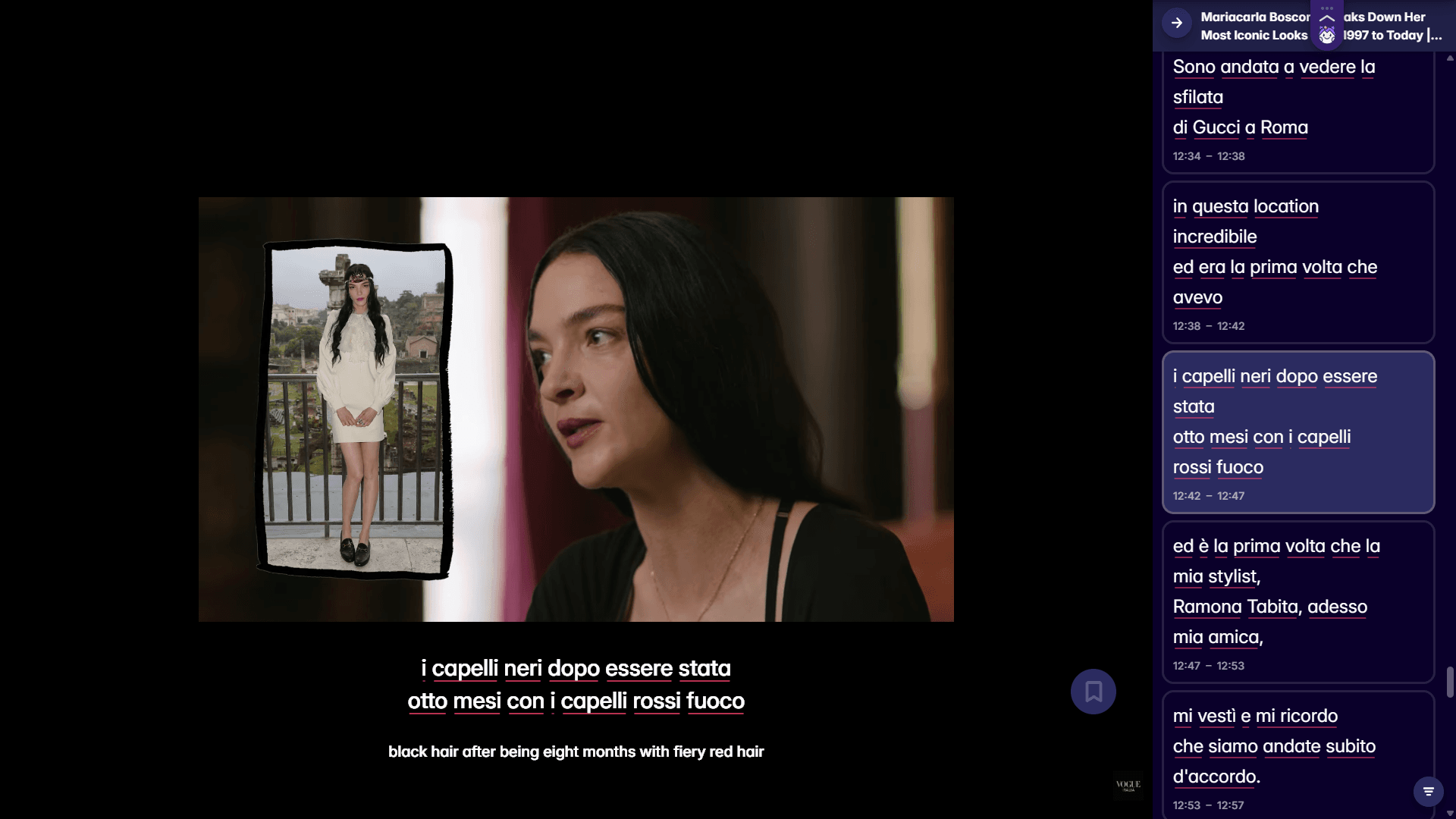
If you want to [level up your Italian learning](https://migaku.com/blog/language-fun/best-language-learning-methods) with real content, Migaku's browser extension and app let you look up sports vocabulary instantly while watching Italian matches or reading sports articles. You can save words directly to your study decks and learn them in context. There's a 10-day free trial if you want to check it out.
 ----
## Why sports vocabulary matters for Italian learners
Sports come up constantly in Italian conversation. Like, seriously constantly. Italians are passionate about athletics, especially soccer, and you'll hear people discussing matches, players, and scores everywhere from cafes to office break rooms. If you can't talk about sports in Italian, you're missing out on a huge chunk of everyday conversation. Plus, sports vocabulary gives you practical language that you'll encounter in newspapers, TV broadcasts, and social media. The terminology is specific enough to [expand your vocabulary](https://migaku.com/blog/language-fun/comprehensible-input-method-language-learning) but common enough that you'll actually use it. Pretty useful combination.
> If you consume media in Italian, and you understand at least some of the messages and sentences within that media, you will make progress. _Period_.
Understand why you learn, and how to learn!📚🧑🎓
----
## Why sports vocabulary matters for Italian learners
Sports come up constantly in Italian conversation. Like, seriously constantly. Italians are passionate about athletics, especially soccer, and you'll hear people discussing matches, players, and scores everywhere from cafes to office break rooms. If you can't talk about sports in Italian, you're missing out on a huge chunk of everyday conversation. Plus, sports vocabulary gives you practical language that you'll encounter in newspapers, TV broadcasts, and social media. The terminology is specific enough to [expand your vocabulary](https://migaku.com/blog/language-fun/comprehensible-input-method-language-learning) but common enough that you'll actually use it. Pretty useful combination.
> If you consume media in Italian, and you understand at least some of the messages and sentences within that media, you will make progress. _Period_.
Understand why you learn, and how to learn!📚🧑🎓