Italian Tipping Etiquette: Why You Mostly Shouldn't, and When You Should
Last updated: May 24, 2026
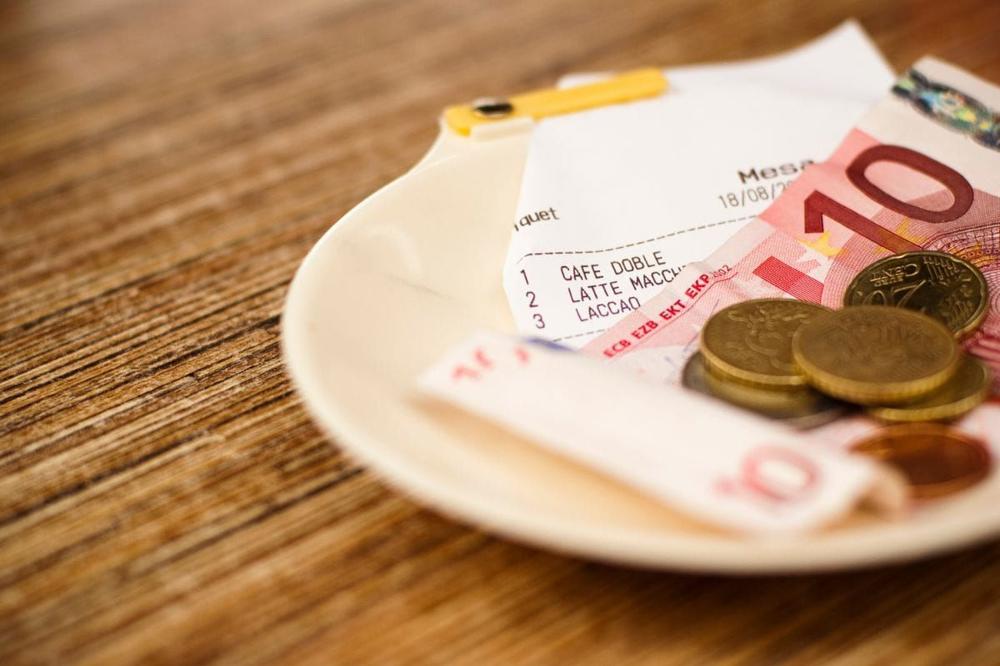
Tipping in Italian restaurants is not expected, not built into wages, and in most situations not done by Italians themselves. There are a few specific cases where a small tip is appropriate, but the default behavior is to pay the bill as printed and walk out.
Last updated: May 24, 2026
The Short Answer: Italy Is Not a Tipping Country
If you arrive in Italy expecting the 18–22% restaurant tipping math of the United States, recalibrate. Italian servers are paid through sector-wide collective bargaining agreements (CCNL Pubblici Esercizi), not through a tipped sub-minimum wage. There is no national statutory minimum wage in 2026, but CCNL coverage in the private sector is close to 100%, and hospitality pay floors sit around €7 per hour as a base before allowances. Servers are employees with contracts, paid leave, and severance accrual (TFR). They do not depend on your generosity to make rent.
The practical consequence: locals usually leave nothing, or round up by a euro or two at most. A 15% tip will not insult anyone, but it will mark you instantly as a foreign visitor, and in some restaurants it will be quietly redistributed in ways you didn't intend.
There are still moments when a tip is the right move. The point of this guide is to tell you exactly when those moments are, and how to leave money in a way that actually reaches the person who served you.
Coperto and Servizio: What You're Already Paying
Before any tipping conversation, you need to understand what is already on your bill. Two charges show up regularly in Italian restaurants, and tourists routinely confuse them with tips. They are not tips.
Coperto is a per-person cover charge. It pays for your seat, the table linens, cutlery, bread, and the right to sit there as long as you like. Typical ranges:
Setting | Typical coperto per person |
|---|---|
Neighborhood trattoria, non-tourist area | €1 to €3 |
Tourist-area restaurant | €1 to €4 |
Higher-end or famous tourist venue | up to €5 |
The coperto goes to the restaurant, not to your server. It is legal nationwide as long as it is printed on the menu before you order. Article 180 of the Royal Decree No. 635/1940 (TULPS) requires the price list to be visibly displayed.
Servizio is a service charge, usually 10% to 15% (occasionally up to 20%) of the bill, more common in tourist zones and on group bookings. When servizio is applied, no additional tip is needed. Like coperto, it must be disclosed on the menu in advance to be enforceable.
If either charge appears on your bill but was not on the menu, you can refuse it and ask for it to be removed. If it was disclosed, it is considered part of the price you agreed to when you ordered.
The Lazio Exception (Rome and Surroundings)
If you are eating in Rome or anywhere else in the Lazio region, the rules change. Regional Law No. 21 of 29 November 2006, Article 16, explicitly prohibits restaurants from charging coperto as a separate line item. The law remains in force in 2026.
What this means in practice:
- A line literally labeled "coperto" on a Roman restaurant bill is not legal. You can politely ask for it to be removed, and the restaurant is obliged to comply.
- Many Lazio restaurants work around the ban by charging for "pane" (bread) instead, or by applying a "servizio" percentage. Both of these are legal as long as they are clearly indicated on the menu before you sit down.
- The Italian consumer association Codici and Roman news outlets have reported for years that the 2006 ban is widely ignored, and that most diners do not know they can contest the charge. You can. Be polite, point at the line, and ask: "Il coperto non è permesso nel Lazio, può toglierlo?"
Outside Lazio (Tuscany, Lombardy, Campania, Sicily, Veneto, and the rest), coperto is fully legal and standard.
When You Should Actually Tip
Here is the short list of situations where leaving something is appropriate, with realistic amounts.
- Exceptional sit-down restaurant service. If a server has genuinely gone out of their way (course pacing on a long meal, sommelier advice, accommodating a dietary request well), 5% to 10% in cash is generous and appreciated. Italians who tip at all tip at this level, not American levels.
- Café or bar, seated at a table. Counter service: nothing. Table service in a tourist area: round up, or leave €0.50 to €1 in coins.
- Taxis. Round up to the next euro on short rides. €1 to €2 for help with luggage or a longer journey.
- Hotel porters. €1 to €2 per bag.
- Housekeeping. €1 to €2 per day, left on the pillow or nightstand with a note if you want to be sure it isn't mistaken for forgotten change.
- Tour guides and drivers. €5 to €10 per person for a half- or full-day private tour is customary if you enjoyed the experience.
For a normal pizza-and-wine dinner with attentive but unremarkable service, leaving nothing is completely fine. Round up the bill if you want to leave the coins, and that is enough.
How to Tip So It Reaches Your Server
This is the part most guides get wrong. Italian point-of-sale terminals generally do not have a tip line. There is no prompt on the card reader asking if you want to add 15%, 20%, or 25%. If you add a tip to a card payment by asking the server to charge a higher amount, that money goes to the restaurant's account, and whether it reaches the server depends entirely on the house. It often doesn't.
The rule:
- Tip in cash. Leave euros directly on the table or hand them to your server when you leave.
- Hand it to the person, not the host. If your waiter was the one who made the meal good, give the cash to that waiter.
- Don't write a tip amount on a card slip. Most slips don't have that field, and even when they do, the path from there to the server's pocket is unreliable.
A practical habit: carry a small stash of €1, €2, and €5 coins and bills specifically for tips and rounding up. Italy still runs heavily on small cash for these courtesy transactions even as card payments dominate everything else.
How Tips Are Taxed in Italy (Useful If You Live There)
If you are an expat working in Italian hospitality, or running a small restaurant or B&B, the tax treatment of tips changed recently and is worth knowing.
- Customer tips in hotels and catering are treated as employment income.
- A 5% substitute tax applies (instead of regular IRPEF), unless the worker waives it.
- From 2025, the share of annual employment income eligible for this favorable treatment rose from 25% to 30%.
- The eligibility cap on the prior year's income rose from €50,000 to €75,000.
- Tips in this regime are exempt from INPS and INAIL social security contributions, and excluded from TFR (severance) calculation, but they still count for deductions and certain benefit thresholds.
For business expense purposes, the 2025 Italian Budget Law tightened the rules: meals and travel reimbursements must be paid by a traceable method (credit card, debit card, or other electronic means) to qualify for tax-exempt reimbursement and corporate deductibility. Cash tips don't fit this requirement, so if you are expensing a client lunch, keep your card on the bill itself and leave any tip separately in cash. Don't expect to recover the tip through expenses.
For the latest figures, check Agenzia delle Entrate, INPS, and CNEL directly.
Common Pitfalls for Foreign Diners
A short list of mistakes I see repeated by visitors and newer expats:
- Treating coperto as a tip. It isn't. The server sees none of it. If you leave coperto and add 20% on top, you have just paid two charges for the same thing.
- Adding 20% to the card payment. As above, this rarely reaches the server. If you must tip on card, tip a token amount and leave the real tip in cash.
- Tipping at the bar counter. Standing at the espresso bar, you pay €1.20, you say grazie, you leave. Tipping the barista is not done. If you want to be friendly, drop the small change from your espresso into the small dish near the till.
- Tipping the restaurant owner. If the person serving you is also the owner (very common in family-run trattorias outside the cities), a tip can feel awkward. A sincere compliment about the food, repeated business, and a recommendation to friends is worth more.
- Assuming servizio means the server gets 10%. Servizio is a restaurant-controlled service fee. House policy decides where it ends up.
- Not reading the menu before sitting down. TULPS requires the price list to be visible. If you can't see coperto or servizio listed before you order, and one appears on the bill, you can challenge it.
- Confusing IVA (VAT) with a service fee. IVA is value-added tax, already included in menu prices for restaurants. It is not a tip and not a service charge.
FAQs
Is tipping rude in Italy?
No. It is just not expected. A small tip for good service is welcomed; a large American-style tip will be accepted without complaint but is unusual.
What if the menu has no prices visible?
That violates Article 180 of TULPS. Ask for the price list before you order, or leave.
Can I refuse the coperto?
In Lazio, yes, if the line is literally labeled "coperto." Elsewhere in Italy, no, as long as the amount was printed on the menu.
How much do Italians actually tip?
Most Italians leave nothing or round up by a euro or two. A 5–10% cash tip is considered generous and reserved for genuinely good experiences.
Do I tip the pizza delivery person?
A euro or two if the order is large or the weather is bad. Otherwise, no.
Should I tip in cash or by card?
Cash. Italian terminals usually don't have a tip line, and card-added tips often don't reach the server.
Is service ever included automatically?
Yes, when "servizio" is printed on the menu and added to the bill, typically 10–15%. When it is, you don't need to add anything else.
What about wine bars and aperitivo spots?
Same logic as restaurants. Round up or leave a euro or two if you sat at a table and were served. Nothing if you stood at the bar.
If you're settling into life in Italy and want to handle these everyday interactions in Italian instead of pointing and hoping, you can also dig into Italian coffee culture and bar etiquette, the differences between Roman, Neapolitan, Sicilian, and Bolognese dining, and the rhythms of Italian work culture and the August shutdown. Reading the menu, understanding the bill, and asking a server to remove an improper coperto all go more smoothly when you can do them in Italian. Migaku is built around learning a language from the native content you actually consume in daily life, which is a reasonable fit if you're putting down roots in Italy.