Japan Cherry Blossom Itinerary: 2 Weeks Following the Bloom
Last updated: May 29, 2026
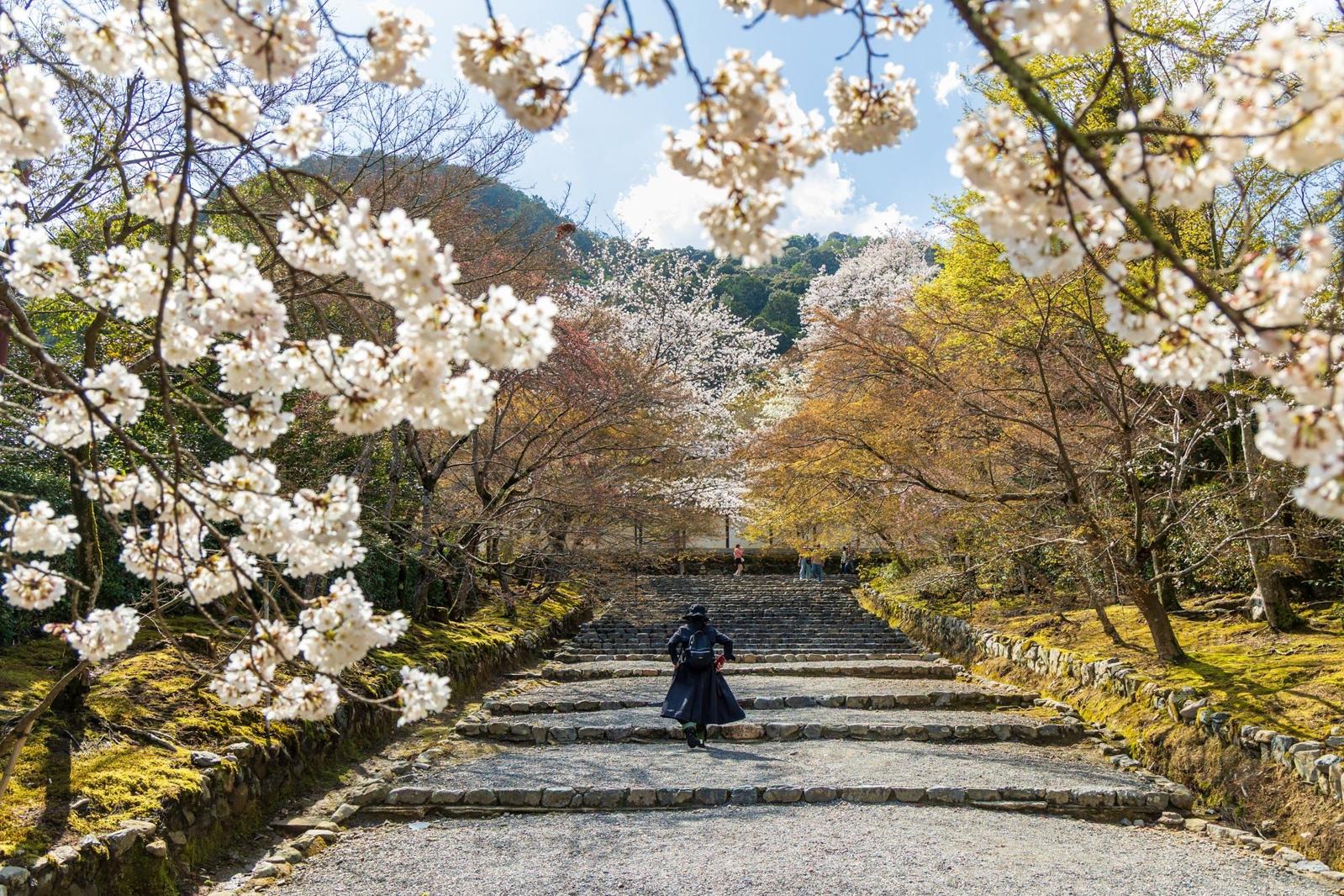
A two-week Japan cherry blossom itinerary works best when you chase the bloom front from south to north, starting in Tokyo around late March and ending in Kanazawa or Tohoku in early to mid-April. In 2026, the practical sweet spot for full bloom across Tokyo, Kyoto, and Osaka is roughly March 29 through April 7, with northern destinations peaking a week or two later.
Last updated: May 29, 2026
Why Two Weeks Is the Right Length for Cherry Blossoms
Cherry blossoms (桜, sakura) bloom for only about a week to ten days in any given city, and full bloom (mankai, 満開) lasts just three to five days. A weekend trip almost always lands too early or too late somewhere. Two weeks gives you a buffer of roughly ten days of overlapping bloom windows across multiple regions, so even if Tokyo peaks earlier than forecast you can shift north and catch later blooms in Kanazawa, Takayama, or Hokkaido.
The Japan Meteorological Corporation tracks roughly 1,000 viewing sites and updates forecasts weekly from January onward. For 2026 the headline dates are:
- Tokyo: flowering March 19, full bloom March 27 (full bloom confirmed by the Japan Meteorological Agency on March 28, 2026)
- Nagoya: flowering March 19
- Kyoto: flowering March 23, peak April 1
- Osaka: flowering March 24, full bloom around March 31
- Kanazawa: flowering March 31, full bloom April 6
- Hokkaido (Sapporo, Hakodate, Matsumae): late April through mid-May
If you can only pick one fortnight, March 25 to April 8 covers the strongest concentration of peak bloom across the main Honshu corridor.
Entry Requirements and Costs to Budget For in 2026
Before you book flights, check these baseline costs and rules.
Visa and entry
- Citizens of the US, UK, Canada, Australia, and most EU countries can enter Japan visa-free for stays up to 90 days.
- Japan's eVISA system, launched September 1, 2025, lets eligible nationals apply online for short-term tourist visas of up to 90 days. Processing through an embassy or consulate typically takes about a week.
- Current tourist visa fees, where required, are ¥3,000 for single-entry and ¥6,000 for multiple-entry. Larger fee hikes have been proposed but not implemented; verify with the Ministry of Foreign Affairs (MOFA) before applying.
Departure tax (Sayonara tax)
The international tourist departure tax rises from ¥1,000 to ¥3,000 per person on July 1, 2026. Tickets issued on or before June 30, 2026 keep the ¥1,000 rate. Children under 2 and transit passengers leaving within 24 hours are exempt. For a late-March or early-April departure you'll still pay the lower rate, but if you push your trip into July you'll feel the difference.
Accommodation tax
Kyoto restructured its lodging tax effective March 1, 2026 into five tiers:
Room rate per person/night | Tax per person/night |
|---|---|
Under ¥6,000 | ¥200 |
¥6,000–¥19,999 | ¥400 |
¥20,000–¥49,999 | ¥1,000 |
¥50,000–¥99,999 | ¥4,000 |
¥100,000+ | ¥10,000 |
Tokyo charges ¥100 per person/night on rooms ¥10,000–¥14,999 and ¥200 from ¥15,000. Osaka Prefecture charges ¥200 from ¥5,000, ¥400 from ¥15,000, and ¥500 from ¥20,000. Sapporo introduced its own accommodation tax on April 1, 2026. For reservations made on or after March 1, 2026 in Tokyo, Osaka, and Kyoto, the tax is billed separately at check-in even on prepaid bookings.
Should You Buy a JR Pass for This Trip?
The Japan Rail Pass remains the simplest way to cover long-distance moves, but you need to do the math.
2026 prices for the ordinary JR Pass:
- 7-day: ¥50,000
- 14-day: ¥80,000
- 21-day: ¥100,000
- 7-day Green Car: ¥70,000
Overseas-agent prices are scheduled to rise on October 1, 2026 (7-day ordinary increases to ¥53,000), so if you book before then you lock in the lower rate. Children aged 6–11 pay half; under 6 travel free with a paying adult.
For a Tokyo → Kyoto → Osaka → Kanazawa → Tokyo loop, a 14-day pass usually pays off if you also add a day trip or two (Hiroshima, Nikko, Himeji). Keep two caveats in mind:
- Nozomi and Mizuho Shinkansen still require a surcharge for pass holders, roughly ¥4,960 for Tokyo–Kyoto. Plan on Hikari or Sakura services instead.
- From April 1, 2026, pass orders made on the official site can be picked up at reserved-seat ticket machines with passport readers at Tokyo, Shinjuku, Shibuya, Ikebukuro, Ueno, Shinagawa, Hamamatsucho, Haneda T3, Narita T1/T2, and Sendai. No more standing in JR ticket office queues.
A new unified JR EAST PASS launches March 14, 2026 with a 10-day option, which can be a better fit if you stay east of Nagoya.
The 14-Day Route: Following the Bloom North
This itinerary assumes a late-March arrival, but you can shift everything by 5–7 days if forecasts move. Always check the latest bloom map a week before departure.
Days 1–4: Tokyo (target dates March 26–29)
Fly into Haneda or Narita. Tokyo's bloom in 2026 peaked around March 27–28, so the last week of March is your window.
Viewing sites worth your time:
- Shinjuku Gyoen (新宿御苑). Admission ¥500 for adults, ¥250 for seniors 65+ and high schoolers. Junior high age and younger are free. Advance online reservations are required on designated peak-season days in 2026, so book before you fly.
- Ueno Park (上野公園) for classic hanami picnics and crowds.
- Meguro River (目黒川) for evening illuminations along a 4 km canal of overhanging trees.
- Chidorigafuchi (千鳥ヶ淵) by the Imperial Palace moat, best at dawn before tour buses arrive.
Use these four days to recover from jet lag, sort your JR Pass voucher exchange, and visit Asakusa and Shibuya in the gaps between viewing spots. For more unusual stops on the way out of the capital, the 2-Week Japan Itinerary Off the Beaten Path lays out alternatives.
Days 5–6: Hakone or Mt. Fuji area (March 30–31)
Take the Tokaido Shinkansen to Odawara, then the Hakone Tozan line. Cherry trees ring Lake Ashi and frame Fuji on clear mornings. Note that the Mt. Fuji climbing season runs July 1 to September 10, 2026, with a ¥4,000 fee on all four trails and mandatory online reservations, so spring visitors stay at the foothills and admire the snow-capped cone from below.
Days 7–10: Kyoto (April 1–4)
Kyoto peaks around April 1 in 2026. Four nights gives you room for both major sites and quieter neighborhoods.
- Philosopher's Path (哲学の道) at dawn, before the crowds reach Ginkaku-ji.
- Maruyama Park (円山公園) for its weeping cherry centerpiece, lit at night.
- Heian Shrine (平安神宮) gardens for weeping varieties that often peak slightly later.
- Arashiyama for the Katsura River, Tenryu-ji, and a bamboo grove that's almost tolerable at 7 AM.
- Daigo-ji (醍醐寺), historically the site of Toyotomi Hideyoshi's famous 1598 cherry blossom party.
Kyoto's bus system is slow during sakura season. Walk, use the subway, or rent a bicycle.
Day 11: Osaka or Nara day trip (April 5)
Osaka's Mint Bureau (造幣局) opens its sakura tunnel to the public for about a week each April. Check the current year's dates as soon as they're announced. Nara's Mount Yoshino (吉野山), with 30,000 cherry trees on a single mountainside, is a strong alternative if you don't mind a longer day.
Days 12–14: Kanazawa and the Japan Alps (April 6–8)
Kanazawa hits full bloom around April 6, 2026. Kenroku-en (兼六園), one of Japan's three great gardens, opens for free admission during sakura season (usually a 7–10 day window announced each March). Higashi Chaya District's wooden teahouses and the Nagamachi samurai quarter round out the city in two days.
If you have energy for one more leg, push into the Japan Alps for Takayama and Matsumoto, both of which peak a few days later than Kanazawa. The Japan Alps Itinerary for Mountain Scenery covers the practical logistics. Travelers with a few extra days who want to extend the bloom into late April should look at the 10-Day Tohoku Itinerary Skipping Crowds, since Hirosaki Castle and Kakunodate typically peak between April 20 and early May.
Return to Tokyo via the Hokuriku Shinkansen for your outbound flight.
Budget Snapshot for Two Weeks
Approximate per-person costs in 2026, mid-range:
Item | Estimate |
|---|---|
14-day JR Pass (ordinary) | ¥80,000 |
Accommodation (14 nights, 3-star) | ¥140,000–¥210,000 |
Accommodation tax (Kyoto/Tokyo/Osaka mix) | ¥3,000–¥6,000 |
Food (¥4,000/day) | ¥56,000 |
Attractions and local transit | ¥25,000 |
Departure tax (before July 1, 2026) | ¥1,000 |
Carry some cash. Japan is more card-friendly than five years ago, but smaller shrines, ryokan, and rural buses are still cash-only.
Tax-Free Shopping Rules Change Mid-Trip Season
If you shop, note that Japan switches to a refund-based tax-free system on November 1, 2026. Through October 31, 2026, the current point-of-sale exemption still applies: spend ¥5,000 or more (pre-tax) per store per day, show your passport, and pay tax-free at the register. After November 1, you pay the 10% consumption tax at purchase and claim a refund at the airport within 90 days of buying. Spring cherry blossom travelers are still under the old system. Note that items shipped overseas directly from stores have not qualified for the exemption since April 1, 2025, so carry purchases out with you.
Common Pitfalls to Avoid
- Booking accommodation late. March 2026 set an all-time record with 3.62 million foreign arrivals, and Q1 broke 10 million visitors for the first time. Kyoto and central Tokyo hotels for late March / early April should be booked four to six months out.
- Trusting one forecast. Early forecasts can shift by a week. Check the Japan Meteorological Corporation update closest to your departure and have a Plan B city.
- Overpacking the schedule. Cherry blossom photography rewards early starts (6–8 AM). If you plan late nights and 9 AM departures, you'll miss the good light and hit the worst crowds.
- Forgetting the Nozomi surcharge. Pass holders boarding Nozomi or Mizuho trains without paying the supplement face penalty fares.
- Ignoring weather. Heavy rain or wind can strip blossoms in 24 hours. Front-load your most important viewing sites in each city.
- Assuming credit cards work everywhere. Convenience-store ATMs (7-Eleven, Lawson, FamilyMart) reliably accept foreign cards. Use them.
FAQs
When exactly should I fly in for 2026?
For Tokyo and Kyoto peaks, arrive between March 25 and March 28. For a route that ends in Kanazawa or Tohoku, March 28 to April 1 also works. Hokkaido travelers should aim for late April through mid-May.
Is a JR Pass worth it for a cherry blossom trip?
For a Tokyo–Kyoto–Kanazawa–Tokyo loop with side trips, the 14-day pass at ¥80,000 generally pays off. For a purely Tokyo-and-Kyoto trip, single tickets are often cheaper.
Do I need to reserve seats on the Shinkansen?
During sakura season, yes. Unreserved cars fill quickly. Reserve at JR ticket machines, the official JR Pass site, or station counters.
Are picnics under the trees actually allowed?
In most public parks, yes, with some sites restricting alcohol or tarps. Shinjuku Gyoen prohibits alcohol; Ueno Park and Maruyama Park allow it. Check signs.
What if I miss the bloom entirely?
If Honshu peaks early, head to Hokkaido (Sapporo, Matsumae, Hakodate) for late April through mid-May, or to higher elevations in the Japan Alps where bloom lags by 7–14 days.
If you're heading to Japan for two weeks of sakura, picking up some Japanese ahead of time makes ordering at small izakaya, reading train signs, and chatting with ryokan staff far more enjoyable. Migaku is built to help you learn from real Japanese shows, news, and books, which is a natural fit for trip prep.