Japan Specified Skilled Worker (SSW) Visa: Industries and Eligibility
Last updated: May 28, 2026
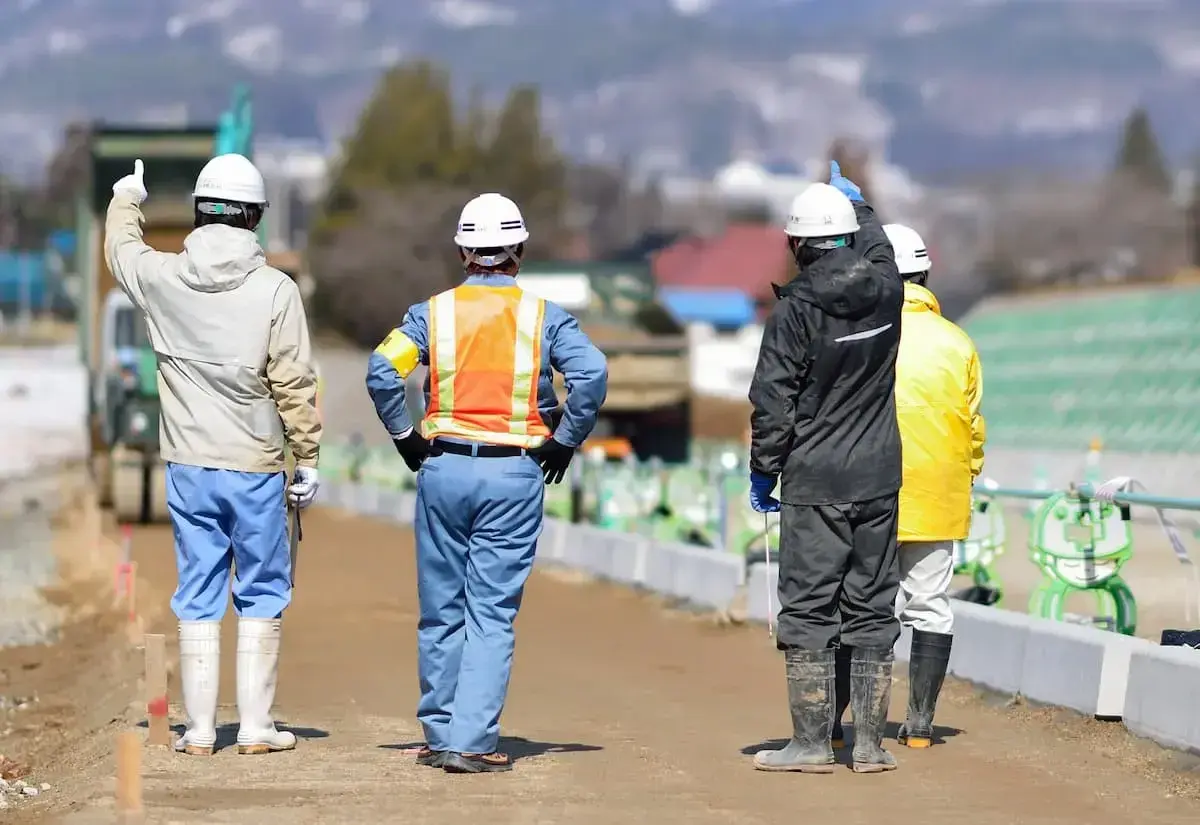
Japan's Specified Skilled Worker (SSW) visa is a work status for foreign nationals who can demonstrate job-ready skills in one of 16 designated industries facing labor shortages, without needing a university degree or prior training in Japan. It was created in April 2019 by the Immigration Services Agency under the Ministry of Justice, and it remains the most direct legal route for blue-collar and skilled service workers to live and work long-term in Japan.
Last updated: May 28, 2026
What the SSW Visa Is and Who It's For
The SSW status of residence was established to bring in foreign specialists who are immediately ready to work in specific industrial fields, without the lengthy apprenticeship structure of the older Technical Intern Training Program. Two sub-categories exist:
- SSW Type 1 (特定技能1号): For workers with practical knowledge and basic Japanese. Total stay is capped at 5 years, and family members cannot accompany the worker. Periods of stay are issued in 1-year, 6-month, or 4-month blocks.
- SSW Type 2 (特定技能2号): For workers with advanced skills in qualifying fields. No upper limit on length of stay, family members may join, and periods of stay are issued in 3-year, 1-year, or 6-month blocks. The first foreign national was granted SSW Type 2 in April 2022.
In both categories, salaries must match what Japanese workers in the same role receive. As of the end of January 2025, there were roughly 287,882 SSW (i) residents in Japan according to preliminary Ministry of Justice figures, and the program continues to grow.
The 16 Eligible Industries in 2026
Following the Cabinet decision of March 29, 2024, the SSW program covers 16 industrial fields. The April 2024 update also renamed "Machine Parts and Tooling Industries" to "Manufacture of Industrial Products."
The 16 fields are:
- Care worker (nursing care)
- Building cleaning management
- Manufacture of Industrial Products (renamed in 2024)
- Industrial machinery manufacturing
- Electric, electronics, and information industries
- Construction
- Shipbuilding and ship machinery
- Automobile repair and maintenance
- Aviation
- Accommodation
- Agriculture
- Fishery and aquaculture
- Food and beverage manufacturing
- Food service
- Automobile transportation (added 2024)
- Railway, forestry, and lumber/wood industry sectors (added 2024)
The automobile transportation field opened to SSW workers in December 2024, and the first foreign bus driver under SSW began service in February 2025.
Important note on the Food Service field
New Certificates of Eligibility for SSW Type 1 in the Food Service field have been suspended from April 13, 2026, because the field's 50,000-worker cap for the FY2024–2028 period is expected to be reached by May 2026. Applicants targeting restaurant work should monitor the Immigration Services Agency support site for any reopening.
Eligibility Requirements
To qualify for SSW Type 1, an applicant must:
- Be 18 years of age or older.
- Be in good health.
- Pass a sector-specific skills evaluation test for the chosen field, typically administered by Prometric or by a sector body such as the Japan Association for Construction Human Resources (JAC) for construction.
- Pass a Japanese language test at JLPT N4 level or higher, or the JFT-Basic (A2) test. Care worker applicants must also pass an additional nursing-care Japanese test.
- Have no record of serious immigration or criminal infractions in Japan.
Exemption for former Technical Intern Trainees
Applicants who have satisfactorily completed Technical Intern Training (ii) are generally exempt from both the skills test and the Japanese language test when transitioning to SSW Type 1 in the same field. This is the most common conversion pathway used inside Japan.
SSW Type 2 eligibility
Type 2 requires a higher-level skills test in the relevant field and, in most fields, experience supervising or leading other workers. Type 2 is now open across most of the 16 industries, although the care worker field is handled separately under the long-established "Nursing Care" residence status.
Document Checklist
Documents are submitted by the applicant overseas (via a Certificate of Eligibility process) or by the applicant and employer together if changing status inside Japan. A typical set includes:
- Valid passport and a recent photograph (4 cm × 3 cm).
- Certificate of Eligibility (COE) application form, completed by the prospective employer.
- Skills evaluation test pass certificate.
- Japanese language test pass certificate (JLPT N4 or JFT-Basic), unless exempt.
- Employment contract specifying wages equal to a Japanese worker in the same role.
- Support plan from the accepting organization or a registered support organization.
- Tax and social-insurance documents for the employer.
- Health certificate.
- Pre-Entry Tuberculosis Screening certificate for nationals of the Philippines, Vietnam, Indonesia, Nepal, Myanmar, and China applying for medium- to long-term visas.
- For applicants from countries with bilateral Memoranda of Cooperation (Philippines, Vietnam, Indonesia, Myanmar, Nepal, and others), additional sending-country clearances may be required, though an MOC itself is not a prerequisite.
Application Steps
The process differs slightly depending on whether the applicant is overseas or already in Japan.
From overseas
- Pass the sector skills test and the Japanese language test in your home country or another approved testing location.
- Sign an employment contract with a Japanese accepting organization.
- The employer in Japan files the Certificate of Eligibility (COE) application with the regional Immigration Services Agency office. The COE itself is free of charge.
- Once issued (often delivered digitally by email since March 17, 2023), the COE is sent to the applicant.
- The applicant submits the COE, passport, and visa application to the Japanese embassy or consulate in their country of residence.
- After visa issuance, the applicant enters Japan, receives a Residence Card at the port of entry, and registers their address at the local municipal office within 14 days.
Inside Japan (status change)
Applicants already in Japan on another status (often Technical Intern Training) file a Change of Status of Residence application directly with the regional Immigration Services Agency. The COE step is replaced by the change-of-status filing.
Fees and Processing Times
Fees were revised on April 1, 2025. Online filing is now cheaper than in-person filing across most categories.
Item | In-person | Online |
|---|---|---|
Certificate of Eligibility (COE) | Free | Free |
Change of Status / Extension of Period of Stay | JPY 6,000 | JPY 5,500 |
Certificate of Authorized Employment | JPY 2,000 | JPY 1,600 |
Permanent Residency application | JPY 10,000 | JPY 10,000 |
Processing times to plan around:
- COE issuance: typically 1 to 3 months.
- Visa stamping at embassy/consulate after receiving the COE: usually about one week if all documents are in order.
- Change of status inside Japan: commonly 1 to 2 months, sometimes longer during peak periods.
Check the official source for the latest figures, as additional fee revisions have been reported but not all are finalized for FY2026.
Quotas: What the 2024–2028 Caps Mean for You
The Japanese Cabinet's March 2024 decision set a target of accepting up to 820,000 SSW Type 1 workers over the five years from FY2024 to FY2028, more than doubling the original 345,000 ceiling set in 2019.
In December 2025, the government proposed revising the SSW Type 1 cap to 805,700 workers and combining it with a new Employment for Skill Development (ESD) status capped at 426,200, for a combined total of about 1.23 million through FY2028. The ESD status is scheduled to replace the Technical Intern Training Program in 2027.
Quotas are allocated per industry, which is why the Food Service field has now been paused for new COEs. Construction, accommodation, care work, and agriculture currently have substantial remaining capacity, but applicants should always confirm the current sector status with the Immigration Services Agency before paying for test fees and relocation.
Common Pitfalls
- Applying for the wrong field. Skills tests are field-specific. Passing the food-service test does not let you work in accommodation, even though the tasks overlap.
- Assuming family can come on Type 1. They cannot. Spouses and children may join only once you transition to SSW Type 2 or another qualifying status.
- Counting Technical Intern years toward the 5-year SSW Type 1 limit. They do not count, but the 5-year SSW Type 1 cap is strict. Plan your move to Type 2 well before year five.
- Missing the tuberculosis pre-screening. Applicants from the six designated countries who skip this step will have their visa application rejected outright.
- Wage undercutting. Employers must pay at least the rate paid to Japanese workers in the same role. If a contract pays less, immigration will reject the COE.
- Relying on an unregistered support organization. The accepting company must either run its own compliant support plan or contract a registered support organization. Verify the registration number.
SSW vs. Other Japan Work Visas
The SSW is not the only route to working in Japan, and it is worth comparing before committing.
- The Highly Skilled Professional visa uses a points-based system, leads to permanent residency faster, and is aimed at researchers, engineers, and business managers with degrees and higher salaries. See our guide to the Japan Highly Skilled Professional Visa.
- If you want to come to Japan first and look for work, the Job Seeker Designated Activities Visa gives recent graduates and former workers time on the ground.
- For long-term planning, review the routes to Getting Permanent Residency in Japan, including how SSW Type 2 time can count toward PR eligibility.
FAQs
Can I switch employers on an SSW visa?
Yes. Unlike the old Technical Intern program, SSW workers may change employers within the same industrial field. You must notify the Immigration Services Agency within 14 days of the change and file a new support plan with the new employer.
Does my SSW Type 1 time count toward permanent residency?
No. Time on SSW Type 1 does not count toward the standard 10-year residency requirement for PR. SSW Type 2 time does count.
What Japanese level do I really need?
The minimum is JLPT N4 or JFT-Basic (A2). In practice, employers strongly prefer N3, especially in care work and customer-facing service jobs. Construction and manufacturing sites can often operate at the N4 minimum.
Can I bring my spouse on SSW Type 1?
No. Only SSW Type 2 holders may bring a spouse and children on a Dependent visa.
Where do I take the skills test?
Prometric administers most SSW skills tests in major cities across Asia. The construction sector uses tests administered by JAC. Check each sector body's website for the test calendar.
What happens at the 5-year limit on Type 1?
You must either move to SSW Type 2 (by passing the higher-level skills test) or leave Japan. There is no extension beyond the 5-year cap on Type 1.
Is the COE really free?
Yes. The COE issued by the Minister of Justice is free of charge. The visa sticker fee at the embassy is separate and varies slightly by country.
Can I apply without an employer?
No. SSW requires a signed employment contract with a Japanese accepting organization before the COE can be filed.
If you're heading to Japan on an SSW visa, getting comfortable with everyday Japanese (especially the workplace vocabulary specific to your field) will make settling in much smoother. Migaku is built for picking up a language from real Japanese content like dramas, YouTube, and news articles.