Korea Tourist Visa Requirements by Nationality (2026)
Last updated: May 12, 2026
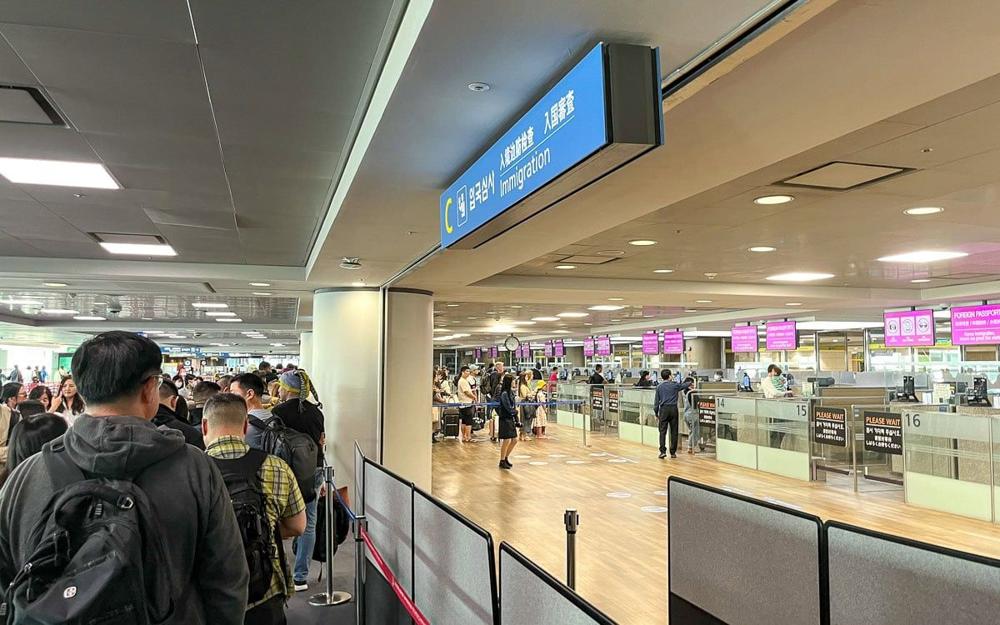
Whether you need a Korean tourist visa depends almost entirely on your passport. Most Western European, North American, and developed Asia-Pacific nationals can enter Korea visa-free (usually with K-ETA), while citizens of around three dozen countries must apply for a C-3 short-term visa before traveling.
Last updated: May 12, 2026
How Korea Classifies Tourist Entry
Korea's Ministry of Foreign Affairs (MOFA) and the Ministry of Justice run three parallel tracks for short-term visitors:
- Visa-free entry under a bilateral waiver agreement. Applies to passport holders from countries that have a reciprocal visa exemption with Korea. Most travelers in this group still need K-ETA pre-authorization (or a temporary K-ETA exemption, where applicable).
- Visa-free entry under presidential decree. A discretionary list of countries Korea admits for tourism and goodwill purposes without a formal treaty. Stays are typically capped at 30 or 90 days depending on nationality.
- C-3 Temporary Visit visa. Required for nationals of countries with no visa waiver. The most common subcategory for tourists is the C-3-9 Tourist Visa, which is issued as a single-entry visa valid for 3 months.
Korean short-term tourist visas fall under the C-3 (Temporary Visit) category within the broader Non-profit and Short-term Stay Visa classification. The rules below are current as of May 2026; embassies update fees and reciprocity tables periodically, so always cross-check the consulate that serves your country of residence.
Who Does NOT Need a Tourist Visa
If your country has a visa waiver agreement with Korea (or appears on the presidential-decree list), you can fly in for tourism without applying at an embassy. You will, however, almost always need K-ETA approval before boarding.
The visa-free track typically covers:
- Western Europe: UK, Ireland, France, Germany, Netherlands, Belgium, Luxembourg, Spain, Italy, Portugal, Austria, Switzerland, Denmark, Finland, Sweden, Norway, Iceland, Greece, Malta, and others.
- North America: United States and Canada.
- Oceania: Australia and New Zealand.
- Developed Asia: Japan, Hong Kong, Taiwan, Singapore, Malaysia, Brunei.
- Latin America: Argentina, Brazil, Chile, Mexico, Uruguay, Costa Rica, Panama, Dominican Republic, and others.
- Middle East: Israel, UAE, Saudi Arabia, Bahrain, Kuwait, Oman, Qatar.
The Norwegian Embassy of Korea explicitly confirms that Norwegian and Icelandic citizens can enter Korea via K-ETA without applying for a tourist visa. The same logic extends to most other waiver-country passport holders.
Length of stay varies by agreement. The most common allowances are 90 days (US, UK, most EU, Australia, New Zealand, Canada), 30 days (a number of Latin American and Southeast Asian countries), and 60 or 180 days for a small number of nationalities under specific bilateral terms. Verify your exact allowance on your embassy page before booking.
Who DOES Need a Tourist Visa
Korea's foreign ministry maintains a defined list of nationalities that must apply for a C-3 tourist visa from their home country. As of 2025–2026, this list includes citizens of:
China, Philippines, Indonesia, Bangladesh, Vietnam, Mongolia, Thailand, Pakistan, Sri Lanka, India, Myanmar, Nepal, Iran, Uzbekistan, Kazakhstan, Kyrgyzstan, Ukraine, Nigeria, Ghana, Egypt, Peru, Syria, Sudan, Macedonia, Kosovo, Cuba, Palestine, Iraq, Yemen, Afghanistan, Cameroon, Somalia, Gambia, and Senegal.
A few notes on this list:
- Thailand appears on the visa-required list in some embassy guidance but is also frequently granted visa-free tourist entry under presidential decree. Thai nationals should always check the most recent advisory from the Korean embassy in Bangkok before traveling, since this status has shifted multiple times in recent years.
- Ukraine appears on the list but Ukrainian nationals are exempt from visa fees regardless of stay period.
- Chinese group tourists can travel via designated travel agencies under simplified processing, with a reduced fee structure (see the fees section).
K-ETA: The Step Most Visa-Free Travelers Forget
If you are from a visa-waiver country, you are not done after checking your passport. The Korea Electronic Travel Authorization (K-ETA) is a separate online pre-screening you must complete before boarding a flight to Korea.
A few practical points:
- K-ETA is processed online, not at an embassy.
- Approval is typically valid for multiple entries over a fixed period.
- Transfer passengers who need to enter Korea due to itinerary changes or to reclaim baggage must obtain either a visa or K-ETA approval.
- Korea has periodically run temporary K-ETA exemption schemes for specific nationalities to boost tourism. These come and go, so verify current status before your trip.
For a walk-through of the application process, see our K-ETA Application for Korea guide.
C-3 Tourist Visa: Document Checklist
If you must apply for a visa, the standard document set across Korean consulates is consistent. Based on guidance from the Korean Embassy in Norway and other missions, expect to provide:
- Completed visa application form (signed).
- Passport valid for at least 6 months beyond intended stay, plus a photocopy of the bio page.
- One color passport photo (typically 35mm x 45mm) taken within the last 6 months.
- Round-trip flight reservation or itinerary.
- Hotel booking or accommodation confirmation for the full duration of stay.
- Detailed travel itinerary (day-by-day plan).
- Proof of funds: payslips or certificate of bank balance covering the last 3 months, demonstrating ability to cover the entire cost of travel.
- Employment certificate or proof of student status (where applicable).
- For visiting friends/family: an invitation letter and copy of the host's ID/residence card.
- Visa fee, paid in local currency or via the Korea Visa Portal.
Processing at the Korean Embassy in Norway takes approximately 10 working days after submission of physical documents. Other consulates run on similar timelines, though peak season (June through August, and around Lunar New Year) can stretch this out.
The C-3-9 Tourist Visa is issued only as a single-entry visa valid for 3 months. The embassy advises against applying more than 3 months before your intended entry, since the visa would expire before use.
Fees by Nationality (2026)
Korean visa fees are set by individual embassies based on reciprocity, so the same visa can cost very different amounts depending on where you apply. The figures below are taken from the Korean Embassy in Singapore's published 2026 schedule, effective January 1, 2026, and from the Korea Visa Portal.
At the Korean Embassy in Singapore (effective Jan 1, 2026)
Nationality | Single <90 days | Single >90 days | Double | Multiple |
|---|---|---|---|---|
Standard | S$52 | S$78 | S$91 | S$117 |
United Kingdom | S$169 | S$265 | S$286 | S$326 |
United States | S$59 (flat, all categories) | S$59 | S$59 | S$59 |
Australia | S$104 | varies | varies | C-3-4 commercial: free |
Russia | S$70 | S$104 | S$117 | S$156 |
Iran | S$70 | up to | up to | S$156 |
Vietnam (C-3) | S$26 | varies | varies | varies |
Via the Korea Visa Portal (USD, online e-application)
Visa Type | Fee |
|---|---|
Single-entry, ≤90 days | USD 40 |
Single-entry, ≥91 days | USD 60 |
Double-entry | USD 70 |
Multiple-entry | USD 90 |
Vietnamese C-3 single-entry | ~USD 30 |
Chinese group tourist (via designated agency) | USD 15 |
Fees paid via the Korea Visa Portal incur additional surcharges for credit card usage and electronic payment services. Payments are accepted only in USD by international credit card.
Fee Exemptions
A notable group of nationalities are exempt from Korean visa fees regardless of stay period:
- Full exemption (all stays): Spain, Italy, Taiwan, Japan, Ukraine, Barbados, Thailand, Colombia, Liberia, Dominican Republic.
- Exempt for stays ≤90 days: Sweden.
- Exempt for stays ≥91 days: Israel, Peru.
- H-1 Working Holiday visa exemption: Japan, Hong Kong, France.
- Mongolia: exempt for ≤90-day visas on regular passports, and for ≥31-day visas on diplomatic/official passports.
- Philippines: exempt for C-3 business or tour visas of 59 days or less.
All Korean visa fees are non-refundable regardless of application outcome, as the fee covers processing and evaluation costs.
Common Pitfalls
A few mistakes show up repeatedly with travelers heading to Korea:
- Skipping K-ETA because you have a visa-waiver passport. Visa-free does not mean walk-on. Without a valid K-ETA (or current exemption) you will be denied boarding.
- Applying for a tourist visa more than 3 months in advance. The C-3-9 is valid for only 3 months from issuance. Time it correctly.
- Booking non-refundable flights before approval. Always wait for visa or K-ETA approval before paying for non-refundable accommodation or flights, especially if you are from a visa-required country.
- Insufficient proof of funds. Three months of bank statements is the standard. A single screenshot showing today's balance is usually rejected.
- Assuming the embassy in your country charges the same as another country's. Reciprocity rules mean a UK national pays a very different fee in Singapore than in London. Use the consulate that serves your residence.
- Overstaying. Korea takes overstays seriously, with fines, deportation, and entry bans of up to 10 years for serious cases.
- Treating a transit as visa-exempt. Transfer passengers who need to enter Korea (itinerary changes, baggage reclaim) must hold a visa or K-ETA.
FAQs
Can I extend my stay in Korea on a tourist visa?
C-3 visa holders can sometimes apply for an extension at a local immigration office, but extensions for tourism are granted sparingly and usually only in cases of medical or humanitarian need.
Do children need their own visa or K-ETA?
Yes. Every traveler regardless of age needs their own travel authorization. Minors typically need additional documents (birth certificate, parental consent) for visa applications.
Can I work on a tourist visa?
No. The C-3 is strictly for tourism, family visits, business meetings, conferences, and short non-paid activities. Any compensated work requires a separate visa category.
Is the K-ETA fee the same for everyone?
K-ETA pricing and the current eligible-country list are managed by the Korean immigration authority. Check k-eta.go.kr for the latest figures, since amounts and eligibility have been adjusted multiple times.
What if my country recently changed status?
Korea has periodically added and removed countries from its visa-waiver and K-ETA-exemption lists. Always confirm with your nearest Korean embassy within 30 days of travel.
Can I apply online instead of going to the embassy?
Many nationalities can use the Korea Visa Portal at visa.go.kr for e-applications. Some applicant categories still require in-person submission of biometrics or original documents.
How is Korea's system different from Japan's?
The waiver lists overlap heavily but are not identical, and Japan has no equivalent to K-ETA pre-authorization for most travelers. For a side-by-side, see Japan Visa-Free Travel Requirements and Japan 2026 Visa Rules.
If you're heading to Korea and want to get comfortable with 한국어 before you land, try Migaku to learn from real Korean shows, news, and YouTube.