# Language Learning Motivation: How to Stay Motivated to Learn a Language
> Struggling with language learning motivation? Get practical strategies to stay motivated, overcome plateaus, and build sustainable habits.
**URL:** https://migaku.com/blog/language-fun/language-learning-motivation-how-to-stay-motivated
**Last Updated:** 2026-03-06
**Tags:** discussion, deepdive
---
You know that feeling when you download a language app, spend three days crushing lessons, and then suddenly your streak dies because life got busy? Yeah, we've all been there. [Language learning](https://migaku.com/blog/language-fun/3-things-to-learn-a-language) motivation is tricky because unlike a two-week fitness challenge, [learning a language takes months or even years](https://migaku.com/). The excitement fades, progress feels slow, and suddenly that new language you were pumped about becomes another abandoned project. But here's the thing: motivation isn't some magical force you either have or don't have. It's something you can actively build and maintain with the right strategies.
---
## What drives language learning motivation
Before jumping into tactics, let's talk about what motivates people to learn languages. Research shows there are two main types: **intrinsic and extrinsic motivation**.
1. Intrinsic motivation comes from internal rewards like enjoying the process or feeling personally fulfilled.
2. Extrinsic motivation involves external factors like getting a promotion or passing an exam.
**Most successful language learners tap into both**. You might start learning Japanese because you need it for work (extrinsic), but you'll stick with it longer if you genuinely enjoy anime or manga (intrinsic). The best language learning motivation combines practical goals with personal passion.
Studies on language learners show that intrinsic motivation correlates more strongly with long-term success. When students feel motivated by genuine interest rather than just grades or requirements, they practice more consistently and retain information better. This matters because language learning isn't a sprint; it's a marathon that requires showing up even when you don't feel like it.
---
## How to get motivated to learn a new language in the first place
Getting started is often the hardest part. If you're struggling to even begin, you need a compelling reason that resonates personally. Generic goals like "being [bilingual](https://migaku.com/blog/language-fun/bilingual-brain-benefits) sounds cool" won't cut it when things get tough.
1. **Try this: write down three specific situations where knowing your target language would genuinely improve your life.** Maybe it's understanding your grandmother's stories in her native language, reading research papers in your field, or navigating your favorite city without a translator. The more vivid and personal, the better you can get motivated to learn a language.
2. **Another approach is to start small and build momentum**. Don't commit to two hours daily right away. Start with 10 minutes of something enjoyable like a podcast episode or a few pages of a comic book, to begin your language learning journey. Once you experience small wins, your brain starts associating the language learning process with positive feelings, which naturally builds motivation.
3. **Connect with the culture early**. Watch a movie, cook a traditional dish, or listen to music in your target language. This creates emotional connections that pure grammar study never will. When you start learning a new language with cultural context already in place, you have built-in reasons to continue the process of learning.
---
## Switching up your study methods to stay motivated
Doing the same thing every day kills motivation faster than anything else. Your brain craves novelty, and language learning offers endless variety if you take advantage of it.
- If you've been grinding flashcards to learn new words for weeks, switch to watching YouTube videos with subtitles.
- If you've been doing textbook exercises, try writing a journal entry or texting with a language exchange partner.
The content you're learning stays consistent, but the delivery method changes.
> 💡 Try This Out! 💡
Here's what motivates me to keep learning: Rotate between four different activities throughout the week. Mondays might be podcast listening, Tuesdays are reading practice, Wednesdays are conversation exchange, and Thursdays are watching shows. This can keep your learning fresh because the same activity is not repeated two days in a row.
Different methods also target different skills. Flashcards build vocabulary, but they can't improve your speaking skills. Watching content trains your listening comprehension, but doesn't help you produce language. Mixing methods ensures balanced progress, which can keep you focused because you're improving across multiple dimensions.
The 15/30/15 method is another solid approach for structuring variety. Spend 15 minutes on active recall (flashcards or quizzes), 30 minutes on [immersion](https://migaku.com/blog/language-fun/comprehensible-input-method-language-learning) (reading or listening), and 15 minutes on production (speaking or writing). This one-hour block hits multiple skills and keeps your brain engaged through different types of challenges.
---
## Visualizing achievable goals and remembering your why
Reconnecting with your original purpose can maintain motivation in language learning. But you need more than just remembering why you started. You need to visualize the specific outcomes you're working toward.
**Create a vivid mental image of yourself using the language successfully.** Picture the exact conversation you want to have, the book you want to read without a dictionary, or the trip you want to take where you navigate entirely in the local language. The more detailed this visualization, the more powerful it becomes.
I keep a document on my phone with my language goals written in present tense, like "I understand podcasts about history without subtitles" or "I read news articles and only look up a few words per page." When I'm dragging, I read through this list and imagine already being that person. It sounds cheesy, but it genuinely works.
**Physical reminders help too.** Some language learners create vision boards with images representing their goals. Others set their phone wallpaper to a photo from the country where their target language is spoken. These constant visual cues keep your motivation alive even during busy weeks when you barely have time to study.
**Track your progress visibly.** Keep a simple log of what you accomplished each week. Seeing "watched 3 episodes, read 20 pages, had 1 conversation" written down proves you're moving forward even when it doesn't feel like it. Progress tracking transforms abstract effort into concrete evidence.
---
## Making language learning fun and genuinely rewarding
If studying feels like punishment, you won't stick with it. Period. The most sustainable language learning happens when you enjoy the process.
1. Gamification helps, but not in the superficial "collect badges" way. Language learning apps like Duolingo integrate rewards and spaced repetition to keep you going. Gamification can help you stay motivated to learn day after day.
2. Reward yourself for milestones, but make the rewards meaningful. After finishing a textbook chapter, don't just check a box. Treat yourself to an episode of a show you've been saving, or buy that novel you've been eyeing. Create positive associations between effort and pleasure.
3. Join challenges or find accountability partners. When you commit to a 30-day reading challenge with other language learners, you get social motivation on top of personal goals. Sharing progress and celebrating wins together makes the journey more enjoyable and keeps you showing up.
Here's something that changed my approach: I stopped treating "study time" and "fun time" as separate categories. Reading manga in Japanese is both entertainment and learning. Watching Korean variety shows is both relaxing and skill-building. When you learn languages through content you'd consume anyway, motivation becomes automatic.
---
## Building community and connecting with native speakers
Humans are social creatures. Learning alone in your room with language apps gets lonely and demotivating fast. Community transforms language learning from an isolated grind into a shared experience.
1. Finding a language exchange partner provides mutual motivation. You're not just accountable to yourself anymore. Someone else is counting on you to show up for your weekly conversation. This external accountability keeps you consistent even when personal motivation wavers.
2. Online communities like Reddit's language learning forums, Discord servers, or Facebook groups connect you with people at similar levels. Seeing others struggle with the same grammar points or celebrate the same breakthroughs reminds you that you're not alone. Plus, experienced learners share resources and strategies that can reignite your enthusiasm.
3. Native speakers offer something textbooks can't: authentic cultural context and genuine human connection. When a native speaker compliments your pronunciation or laughs at a joke you made in their language, that emotional reward fuels weeks of continued effort. These moments prove that communication is actually happening.
4. Local meetups and language cafes exist in most cities. Even in 2026 with all our digital tools, meeting face-to-face creates stronger motivation to learn a language. There's something about physically showing up to a place where everyone's learning languages together that makes the commitment feel more real.
---
## Tips to stay motivated to learn a language today
If you're reading this because your motivation is currently in the gutter, here are some things you can do right now:
1. Pick one piece of content you're genuinely excited about in your target language. A song, a video, a comic, anything. Consume it today, even if you don't understand everything. Reconnect with why the language interested you in the first place.
2. Remind yourself of one specific thing you can do now that you couldn't do three months ago. Maybe you can understand simple conversations, read children's books, or recognize hundreds of words. Acknowledge your progress to fluency.
3. Change your study location or time. If you always study at your desk at night, try a coffee shop in the morning. Novel environments can reset your mental approach.
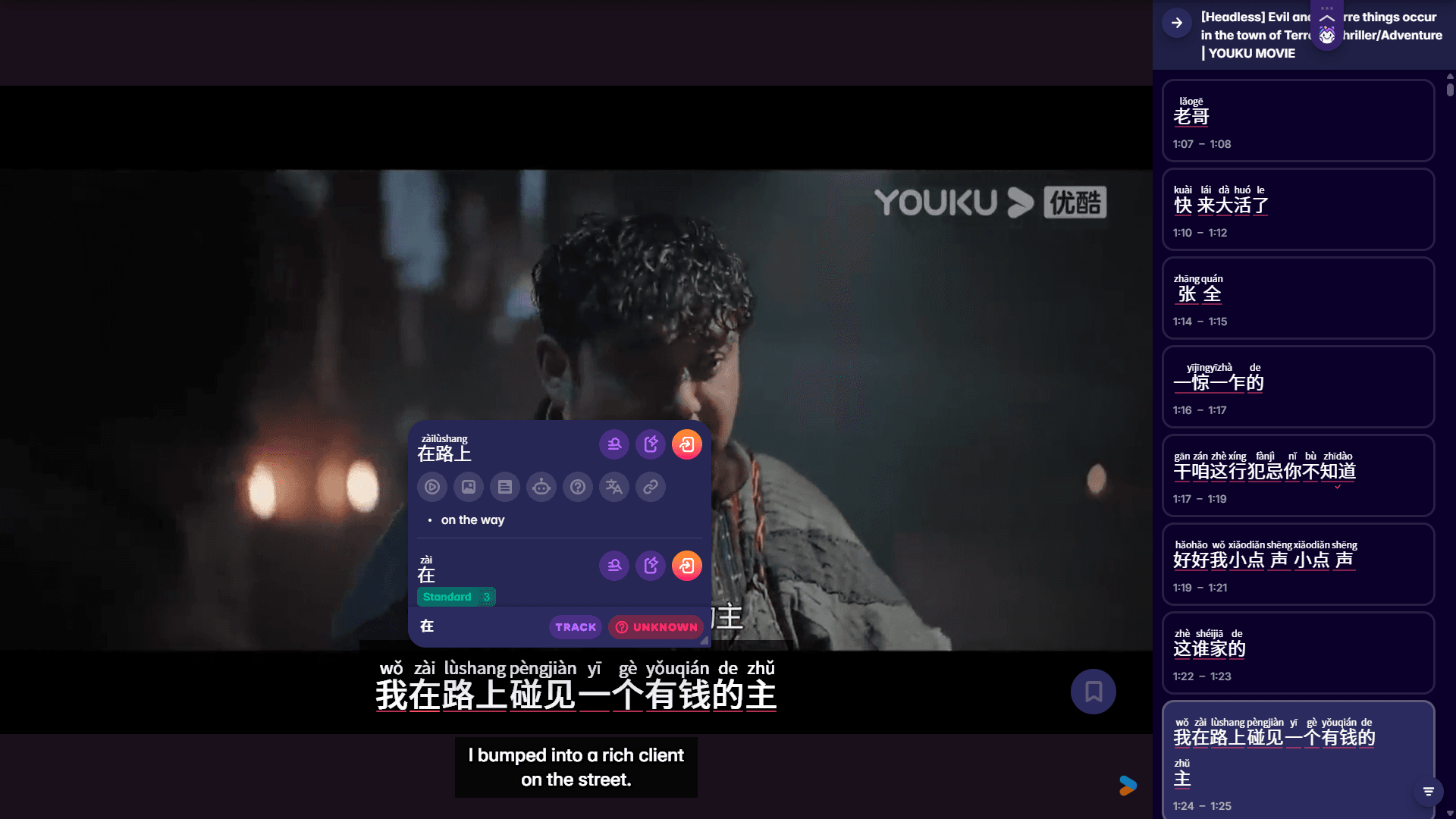
Anyway, if you want to actually use these strategies with real content, Migaku's browser extension and app let you look up words instantly while watching shows or reading articles. Makes immersion learning way more practical. There's a 10-day free trial if you want to check it out.
 ---
## Find your "fuel" if you're currently learning a language
Remember the intrinsic and extrinsic motivations I mentioned at the very start? To stay motivated, you need to keep looking for new motivations to fuel your progress. Sometimes intrinsic motivation works, sometimes an exam is what you need to keep you going! Find genuinely entertaining content in your target language. If you love cooking, watch cooking shows. If you're into gaming, play games with audio in your target language. The more motivations you can get, the better it is.
> If you consume media in the language you want to learn, and you understand at least some of the messages and sentences within that media, you will make progress. _Period_.
Motivation grows through strategy.💯
---
## Find your "fuel" if you're currently learning a language
Remember the intrinsic and extrinsic motivations I mentioned at the very start? To stay motivated, you need to keep looking for new motivations to fuel your progress. Sometimes intrinsic motivation works, sometimes an exam is what you need to keep you going! Find genuinely entertaining content in your target language. If you love cooking, watch cooking shows. If you're into gaming, play games with audio in your target language. The more motivations you can get, the better it is.
> If you consume media in the language you want to learn, and you understand at least some of the messages and sentences within that media, you will make progress. _Period_.
Motivation grows through strategy.💯