Language Learning With Audiobooks: How to Use Audiobooks to Learn Foreign Languages
Last updated: March 29, 2026

You've probably seen those language learning audiobook courses on Audible or Spotify and wondered if they actually work. Here's the thing: audiobooks can be an incredible tool for language learning, but only if you use them the right way. Most people just press play and zone out, which is basically useless. But when you combine audiobooks with active listening techniques, text reinforcement, and the right content for your level, you can make serious progress in your target language. Let me show you exactly how to do it.
- Can you actually learn a language by listening to audiobooks
- Starting with structured language learning audiobooks
- Moving to native content at your level
- The text and audio combination method
- Active listening techniques for foreign language learning
- Best platforms and apps for language learning audiobooks
- Choosing the right audiobook for your study level
- How to build a consistent audiobook practice
- Common mistakes learners make
Can you actually learn a language by listening to audiobooks
Yes, but there's a catch. You can't just passively listen while doing the dishes and expect to become fluent. That's the mistake most people make.
Audiobooks work for language learning when you engage with them actively. This means listening multiple times, following along with text, repeating phrases out loud, and actually focusing on what you're hearing. The audio itself trains your ear to recognize native pronunciation, intonation patterns, and natural speech rhythm, things you can't really get from textbooks alone.
Research shows that listening comprehension is one of the most challenging skills to develop in a new language. Audiobooks give you thousands of hours of native speaker input, which is exactly what your brain needs to start recognizing word boundaries and common phrases. But you need to understand at least some of what you're hearing for it to stick.
The FBI's Foreign Service Institute actually uses audio-heavy methods to train diplomats in new languages quickly. They combine intensive listening with speaking practice and text study, usually getting learners to conversational proficiency in 6-12 months for languages like Spanish or French. The key? They listen to the same content repeatedly until they can shadow it perfectly.
Starting with structured language learning audiobooks
If you're a beginner, don't jump straight into Harry Potter audiobooks in Spanish. You'll get frustrated and quit within a week.
Start with audiobooks specifically designed for language learners. The two best series are Pimsleur and Paul Noble. I've used both, and they work differently but effectively.
- Pimsleur uses spaced repetition within each 30-minute lesson. A native speaker prompts you to construct sentences, and you respond out loud during the pauses. It feels weird talking to yourself at first, but this active recall method works. You're not just listening, you're producing the language. They cover Spanish, French, Italian, Japanese, and about 50 other languages.
- Paul Noble takes a more relaxed approach. He breaks down the grammar logic in English while teaching you to build sentences piece by piece. His courses are available on Audible and work great for European languages. The pacing is slower than Pimsleur, which some people prefer.
Both of these will cost you around $15-30 per course level on Audible. There are also free options like Language Transfer (available as podcasts on Spotify), which uses a similar building-block method. The audio quality is rougher, but the teaching is solid.
Moving to native content at your level
Once you've finished a beginner course, you need to transition to content made for native speakers. This is where real progress happens.
Children's books are your best friend here. Not picture books for toddlers, but chapter books for 8-12 year olds. The vocabulary is everyday and useful, the plots are engaging enough to keep you interested, and the language isn't overly simplified like learner materials.
- For Spanish, try El Principito (The Little Prince) or the Diary of a Wimpy Kid series if you can find Spanish audiobook versions.
- For French, Le Petit Nicolas is perfect.
- Japanese learners can look for simplified versions of popular light novels.
Best sellers in your target language are the next step up. Popular fiction uses conversational vocabulary and dialogue, which is exactly what you need. Harry Potter audiobooks exist in basically every major language and are great because you probably already know the story. That prior knowledge helps you understand context even when you miss specific words.
I listened to the first Harry Potter book in Japanese after about 6 months of study. I understood maybe 40% on the first listen, but that number jumped to 70% after the second time through. Your brain starts filling in gaps when it recognizes patterns.
The text and audio combination method
Here's the technique that makes audiobooks effective: read and listen at the same time.
Get the ebook version and the audiobook version of the same book. Kindle and Audible have a feature called Whispersync that syncs them automatically, which is pretty cool. As you listen to the narrator, follow along with the text.
This does two things.
- First, you connect the sounds you're hearing with the written words, which helps you recognize them later in conversation.
- Second, you can instantly look up words you don't know without stopping the audio flow.
After you've gone through a chapter with both text and audio, listen again without the text. You'll notice you understand way more the second time. The words you looked up will start to stick because you're hearing them in context repeatedly.
For vocabulary building, keep a running list of new words you encounter. Don't try to memorize every single word, just the ones that appear multiple times or seem particularly useful. An app like Anki or even a simple notebook works fine for this.
Active listening techniques for foreign language learning
Passive listening is basically background noise. Your brain tunes it out. You need to engage actively.
Shadowing is the most effective technique I've found. Play a sentence or short phrase, pause, and repeat it out loud trying to match the speaker's pronunciation, speed, and intonation exactly. It feels awkward, but it trains your mouth muscles and your ear simultaneously.
- Method 1: Start with 30-second chunks. Listen to a paragraph, pause, and try to repeat as much as you remember. You won't get it all at first. That's fine. Rewind and try again. Do this 3-4 times until you can reproduce most of it.
- Method 2: Listen to a chapter, then immediately try to summarize what happened out loud in your target language. Even if you're just stringing together basic sentences, you're forcing your brain to process and produce the language, which is where real learning happens.
Speed variation helps, too. Most audiobook apps let you adjust playback speed. If something is too fast, slow it down to 0.75x until you can follow along. Once that feels easy, bump it back to normal speed. Some advanced learners even practice at 1.25x to challenge their comprehension.
Best platforms and apps for language learning audiobooks
Audible is the obvious choice. They have the largest selection of audiobooks in multiple languages, and the app works smoothly. You can get Spanish, French, German, Italian, Portuguese, Japanese, and English content easily. The membership is about $8.99 per month.
Spotify has been adding more audiobook content recently. They have some language learning courses and a decent selection of popular books in major languages. If you already have Spotify Premium, it's worth checking what's available in your target language before paying for another service.
iTunes has audiobooks too, but the interface is clunky compared to Audible. Still, they sometimes have different titles available, especially for less common languages.
For free options, check Librivox. They have public domain audiobooks read by volunteers in tons of languages. The narration quality varies wildly, but you can't beat free. Good for classics if you're at an intermediate level.
Some language-specific apps worth mentioning:
- Beelinguapp shows text and audio side by side for beginner content in 23 languages.
- LingQ has a huge library of audiobooks with integrated vocabulary tools. Both have free tiers you can try.
Choosing the right audiobook for your study level
Be honest about where you actually are. If you're a beginner who just finished a basic course, you're probably A2 level at best. Don't grab a complex novel yet.
- For A2-B1 learners, look for graded readers with audio. These are books specifically written with limited vocabulary for learners. Publishers like Penguin Readers and Oxford Bookworms have audio versions. They're a bit boring sometimes, but they build confidence.
- B1-B2 learners can handle young adult fiction and simpler best sellers. Mystery novels work great because the plot keeps you engaged even when you don't catch every word. Try to pick books where you understand at least 60-70% on the first listen.
- B2 and above, you can read pretty much anything. Pick genres you actually enjoy. If you hate romance novels in English, you'll hate them in Spanish too. I wasted money on a French thriller everyone recommended before realizing I just don't like thrillers.
One trick: listen to the sample before buying. Every audiobook platform lets you preview the first few minutes. If the narrator speaks too fast or uses an accent you can't understand, find a different recording.
How to build a consistent audiobook practice
Consistency beats intensity every time. Listening for 20 minutes every single day will get you further than cramming 3 hours on Sunday.
- Attach your audiobook practice to an existing habit. I listen during my morning walk, which I do anyway. Some people listen during their commute, while cooking, or before bed. Find a time slot that already exists in your routine.
- Set realistic goals. "I'll finish one audiobook per month" is way more achievable than "I'll listen for 2 hours every day." Start small and build up.
- Track your progress somehow. I keep a simple list of books I've finished with dates and a rough estimate of how much I understood. Seeing that the comprehension percentage increases over months is genuinely motivating.
- Mix up your content. Don't just do fiction. Listen to language learning podcasts, audiobook versions of non-fiction, and even news broadcasts if you're advanced enough. Variety keeps your brain engaged and exposes you to different vocabulary domains.
Common mistakes learners make
- The biggest mistake is passive listening. Playing Spanish audiobooks in the background while you work does almost nothing. Your brain needs to actively process the language for it to stick.
- Another mistake is starting too hard. I've seen people buy advanced literature audiobooks when they're still beginners because "immersion is best." Yeah, but if you understand less than 30% of what you're hearing, you're just listening to noise. Your brain can't extract patterns from complete chaos.
- Listening only once is also wasteful. You should listen to the same content at least twice, preferably three times. The first time you get the gist, the second time you catch details you missed, the third time you start to internalize phrases and structures.
- Not speaking along is a missed opportunity. Audiobooks give you perfect pronunciation models. If you're just listening without trying to reproduce the sounds, you're only training your ears, not your mouth. You need both.
- Giving up too early is the final mistake. The first few weeks of audiobook learning feel slow and frustrating. You'll miss most of what you hear. That's normal. Your brain is adapting. Give it at least a month of consistent practice before deciding if it works for you.
If you want to make immersion learning even more effective, Migaku's browser extension and app let you look up words instantly while watching shows or reading articles in your target language. You can save sentences directly to flashcards with one click. There's a 10-day free trial if you want to check it out.
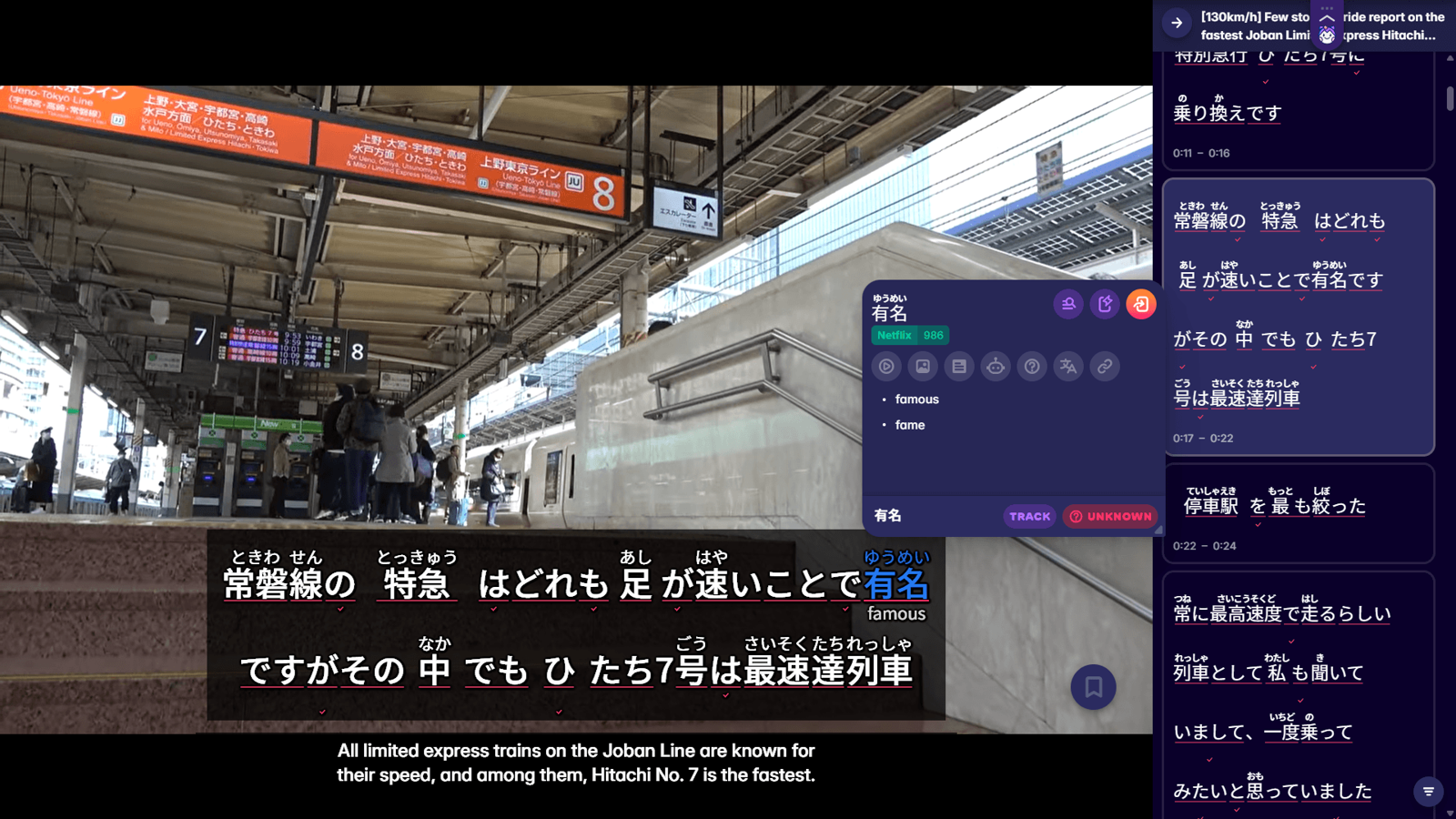
Audiobooks are practical tools for developing language skills through context
Start with a structured course like Pimsleur if you're a beginner, then gradually move to native content at your level. Combine audio with text, practice active techniques like shadowing, and listen to the same content multiple times. Pick a platform that works for your budget and language, and most importantly, make it a daily habit.
If you consume media in your target language, and you understand at least some of the messages and sentences within that media, you will make progress. Period.
It may take time to improve your listening, but you will get there.